Food Hygiene
 Health & Safety
 Safeguarding
 First Aid
 Business Skills
 Personal Development

Leftover salmon is too good to waste, yet many people struggle to reheat it properly. Whether it was baked, grilled, pan-fried, or roasted, salmon can easily lose its natural moisture if it’s exposed to high temperatures. Thankfully, a few simple techniques can help you enjoy leftovers that taste almost as good as when they were freshly cooked.
This guide explains the best ways to reheat salmon, how to keep it moist, the safest storage practices, and the common mistakes to avoid. By the end, you’ll know exactly which reheating method suits your kitchen and how to enjoy every bite without compromising on flavour or texture.
Table of Contents
Can You Reheat Salmon Without Drying It Out?
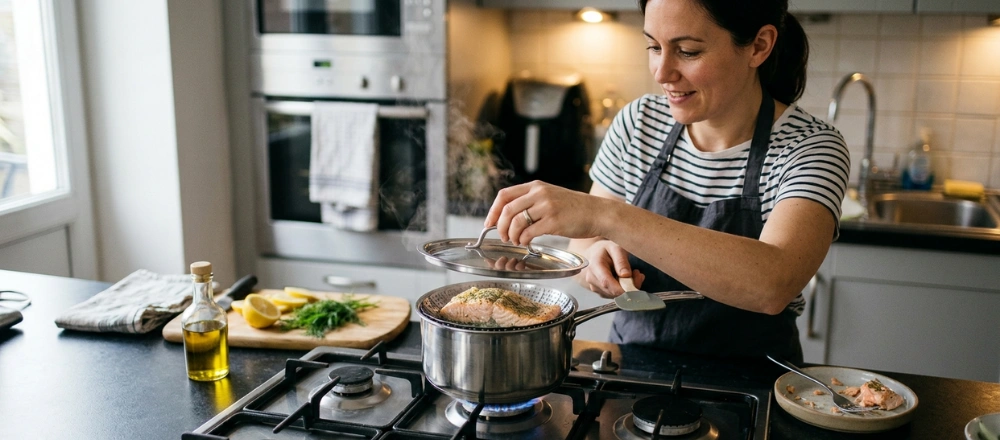
Reheating salmon successfully is all about protecting its natural moisture. Unlike many other proteins, salmon is delicate and continues to cook quickly when exposed to heat. Choosing the right temperature and reheating method helps preserve its soft texture while reducing the risk of it becoming dry or tough.
Why Salmon Becomes Dry When Reheated
Salmon naturally contains healthy oils that give it its rich flavour and flaky texture. When reheated at a high temperature, these oils begin to disappear, leaving the fish dry and less enjoyable to eat.
Overheating also causes the protein fibres to tighten, squeezing out moisture that cannot be replaced afterwards. This is why even perfectly cooked salmon can become rubbery if it spends too long being reheated.
Is It Safe to Reheat Cooked Salmon?
Yes, cooked salmon is perfectly safe to reheat as long as it has been stored correctly after the original meal. It should be refrigerated promptly and kept chilled until you’re ready to eat it again.
Reheat only the portion you plan to eat and ensure it is heated thoroughly before serving. Following basic food safety practices helps reduce the risk of bacteria growing while keeping the salmon safe to enjoy.
The Secret to Keeping Salmon Moist During Reheating
Keeping salmon moist starts before you even switch on the oven or hob. Gentle heat and a little added moisture help the fish warm through gradually without drying the surface.
- Reheat at a low temperature.
- Add a small amount of butter, olive oil, or water.
- Cover the salmon while it heats.
- Remove it as soon as it is warmed through.
- Avoid cooking it for longer than necessary.
These simple habits make a noticeable difference to the finished result. Instead of ending up with dry, flaky fish, you’ll retain much more of the moisture and flavour that make salmon such a popular choice.
How to Reheat Salmon
Different reheating methods suit different situations. Some are ideal for large fillets, while others are better when you’re short on time. Whichever method you choose, the goal remains the same: warm the salmon gently without cooking it all over again.
Reheating Salmon in the Oven
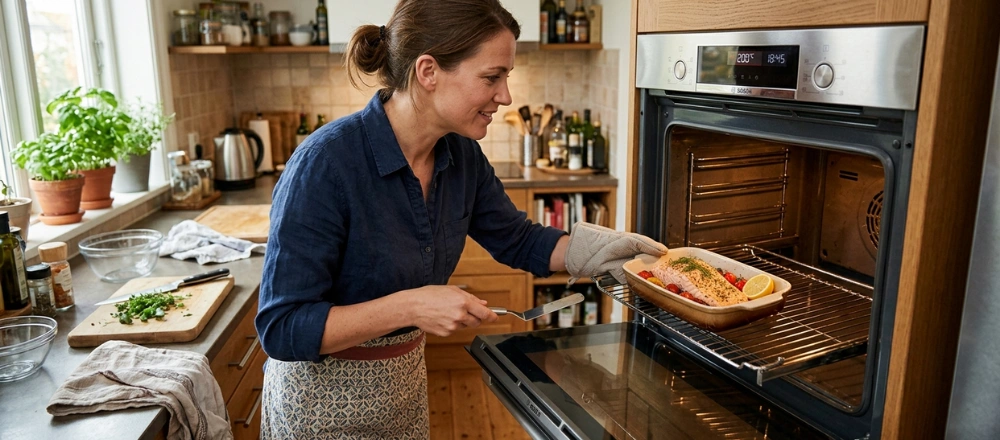
The oven is one of the most reliable ways to reheat salmon because it provides gentle, even heat. It’s particularly suitable for whole fillets or larger portions that need consistent warming from edge to centre.
- Preheat the oven to 120°C–135°C.
- Place the salmon in an oven-safe dish.
- Add a small amount of butter, stock, or water.
- Cover the dish loosely with foil.
- Heat for around 10–15 minutes, depending on thickness.
- Remove once the salmon is warmed through.
Using the oven takes a little longer than other methods, but it produces excellent results. The slow heating process helps preserve moisture and keeps the salmon soft rather than dry or overcooked.
Reheating Salmon on the Stovetop
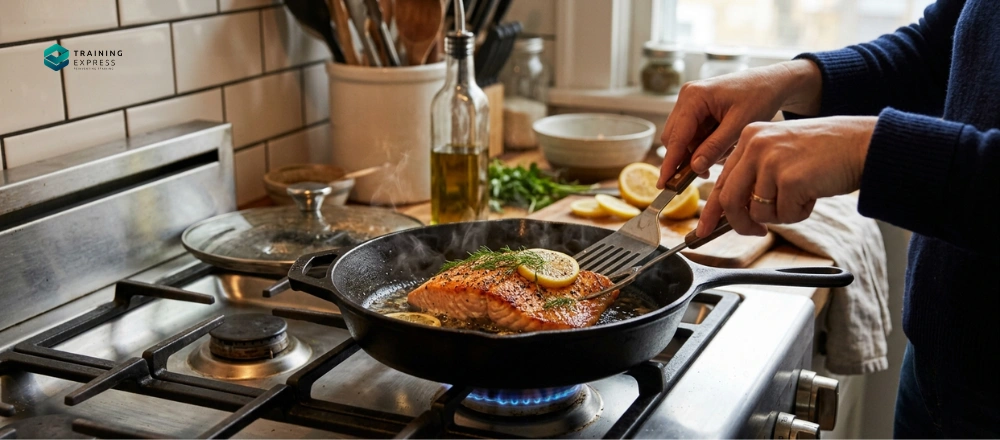
The stovetop works well when reheating individual portions and offers good control over the cooking temperature. Keeping the heat low is the key to preventing the fish from drying out too quickly.
- Use a non-stick or well-seasoned frying pan.
- Heat the pan over a low setting.
- Add a little butter or olive oil.
- Place the salmon skin-side down where possible.
- Cover the pan with a lid.
- Turn the salmon carefully if needed.
This method allows you to monitor the salmon throughout the reheating process. As long as the heat stays gentle, the fish should remain moist while developing a pleasant, freshly warmed texture.
Reheating Salmon in the Air Fryer
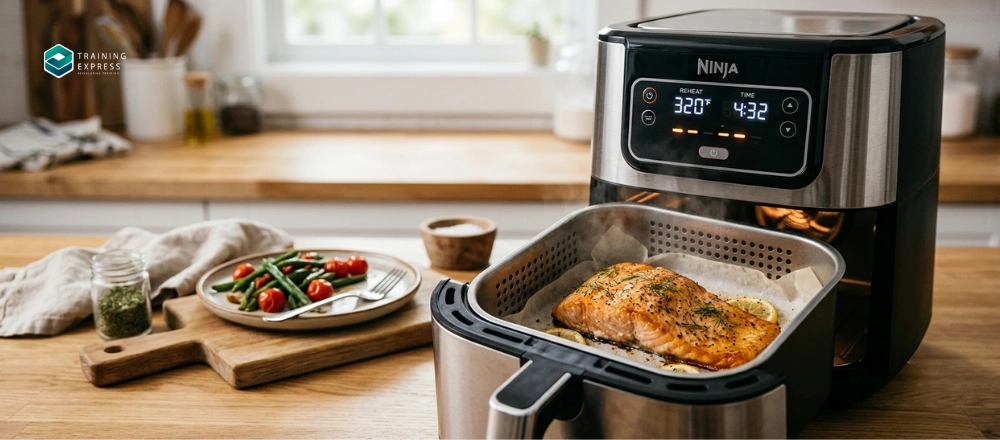
Air fryers are quick and convenient, but they can dry out salmon if the temperature is too high. Lower settings help circulate warm air without removing too much moisture from the fish.
- Preheat the air fryer to around 160°C.
- Lightly brush the salmon with oil or melted butter.
- Place it in the basket without overcrowding.
- Heat for 4–6 minutes.
- Check regularly to avoid overcooking.
Although the air fryer is faster than the oven, it requires closer attention. Checking the salmon frequently helps ensure it stays tender instead of becoming dry around the edges.
The Microwave Trick for Reheating Salmon
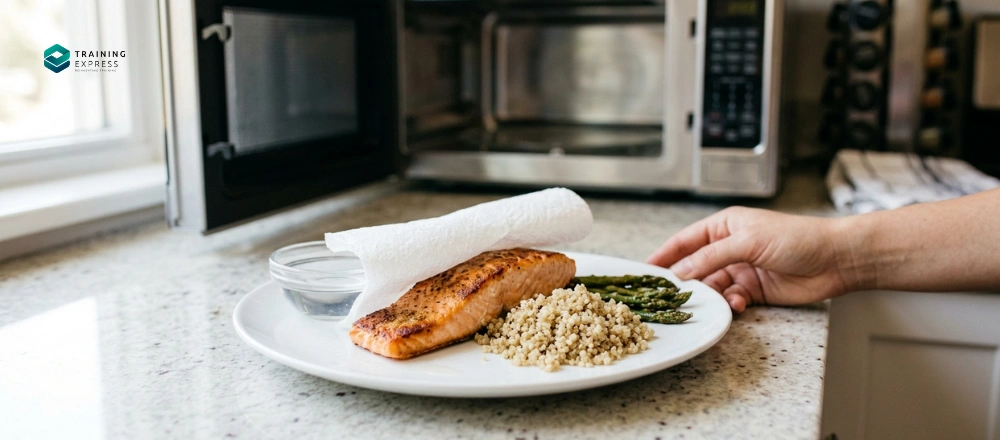
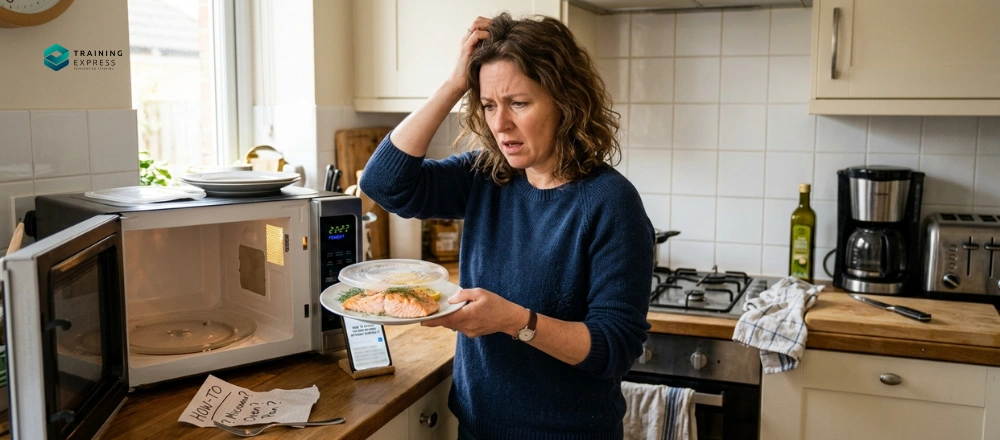
The microwave is often seen as the quickest option, but it needs a little care to produce good results. Using reduced power helps the salmon heat evenly instead of becoming tough.
- Place the salmon on a microwave-safe plate.
- Add a few drops of water or melted butter.
- Cover loosely with a microwave-safe lid.
- Heat using medium power.
- Warm in short intervals, checking between each one.
This method is ideal when you’re in a hurry or reheating a small portion for lunch. Keeping the power lower and heating gradually helps the salmon retain much more of its natural moisture.
Read Now: Can You Reheat Prawns? Methods and Tips
How to Reheat Salmon Without Drying It Out
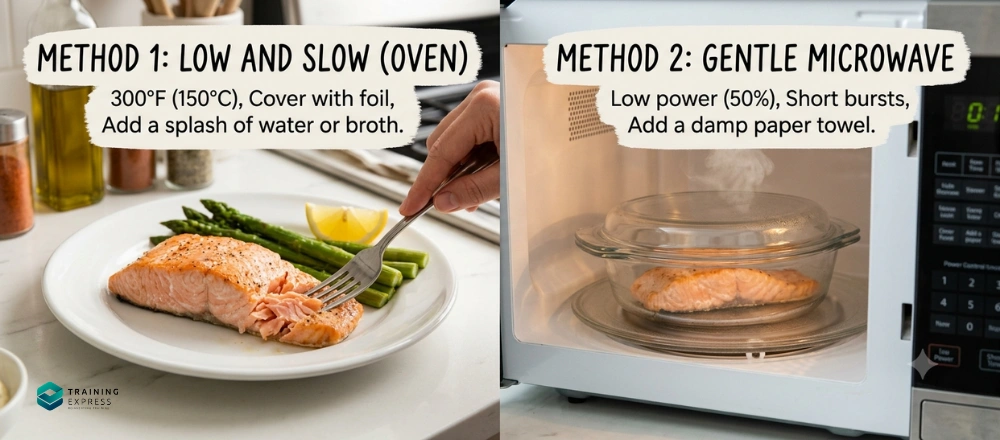
Preventing salmon from drying out doesn’t require special equipment. A few simple techniques can make a significant difference, regardless of whether you’re using an oven, pan, air fryer, or microwave.
Add Moisture Before Reheating
A small amount of added moisture helps replace what the salmon naturally loses during reheating. This creates a gentler cooking environment and reduces the chance of the fish becoming dry.
Use Low Heat Instead of High Heat
High temperatures might seem like the quickest solution, but they usually do more harm than good. Gentle heat allows the salmon to warm gradually without forcing moisture out of the flesh.Choosing patience over speed almost always delivers better results. A few extra minutes of reheating can leave you with salmon that still tastes fresh and feels pleasantly flaky.
Cover the Salmon While Reheating
Covering salmon traps steam around the fish, helping to prevent moisture from escaping too quickly. This simple step is especially useful when using the oven or microwave.
- Use aluminium foil in the oven.
- Cover pans with a fitted lid.
- Use a microwave-safe cover.
- Leave a small gap for steam to escape.
- Remove the cover once reheating is complete.
Creating a gentle steaming effect helps the salmon heat more evenly from the inside out. It also reduces the risk of the surface drying before the centre is fully warmed.
Avoid Reheating It More Than Once
Every reheating cycle removes more moisture and increases the likelihood of the salmon becoming dry. Repeated reheating can also reduce the overall quality of the fish.For the best taste and texture, divide leftovers into smaller portions before storing them. This allows you to reheat only what you need, keeping the remaining salmon fresh for another meal.
Food Safety and Hygiene Rules for Reheating Salmon
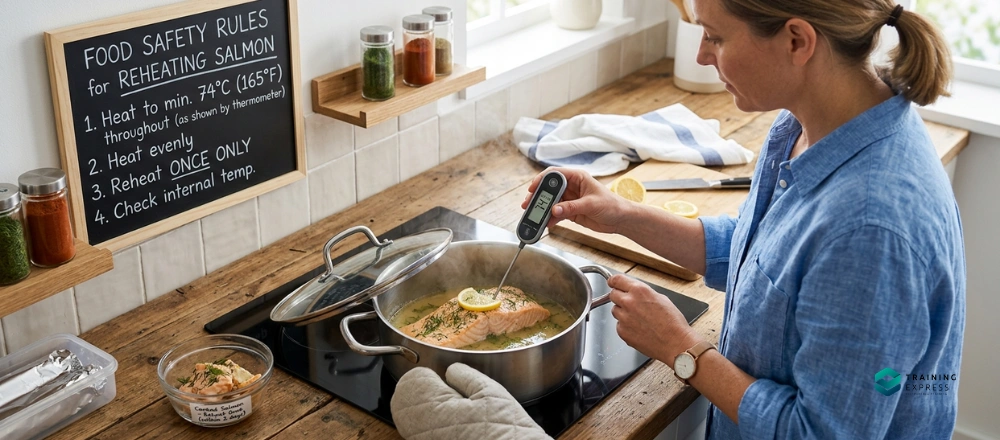
Reheating salmon properly is just as important as choosing the right cooking method. Even if you manage to keep the fish moist, poor storage or unsafe reheating practices can affect both its quality and safety. Following a few simple hygiene rules helps you enjoy leftover salmon with confidence.
How Long Can Cooked Salmon Be Stored?
Cooked salmon should be cooled and refrigerated as soon as possible after serving. Leaving it at room temperature for too long increases the risk of harmful bacteria developing.When stored in an airtight container in the fridge, cooked salmon is generally best eaten within 3–4 days. If you know you will not use it within that time, freezing it is the better option to maintain both freshness and quality.
Safe Internal Temperature for Reheated Salmon
When reheating salmon, the goal is to warm it thoroughly without overcooking it. Using a food thermometer is the easiest way to check that it has reached a safe serving temperature.The internal temperature should reach 74°C (165°F) before eating. Once it reaches this point, remove it from the heat straight away to avoid drying it out unnecessarily.
Signs That Leftover Salmon Should Be Discarded
Food doesn’t always become unsafe because of its age alone. Paying attention to its appearance and smell can help you decide whether it should be eaten or thrown away.
- A strong or unpleasant smell.
- A slimy or sticky surface.
- Discolouration that wasn’t there before.
- Signs of mould.
- Uncertainty about how long it has been stored.
If anything seems unusual, it is always safer to discard the salmon. It is never worth risking food poisoning just to avoid wasting leftovers.
Safe Storage Practices Before Reheating
Good reheating starts with good storage. The way salmon is stored after cooking has a direct impact on both its safety and its texture when reheated later.
- Cool the salmon before refrigerating.
- Store it in a clean, airtight container.
- Keep the fridge at the correct temperature.
- Separate cooked salmon from raw foods.
- Label frozen portions with the storage date.
Taking a few moments to store salmon properly makes reheating much easier. It also helps preserve the fish’s flavour while reducing unnecessary food waste.
Mistakes to Avoid When Reheating Salmon
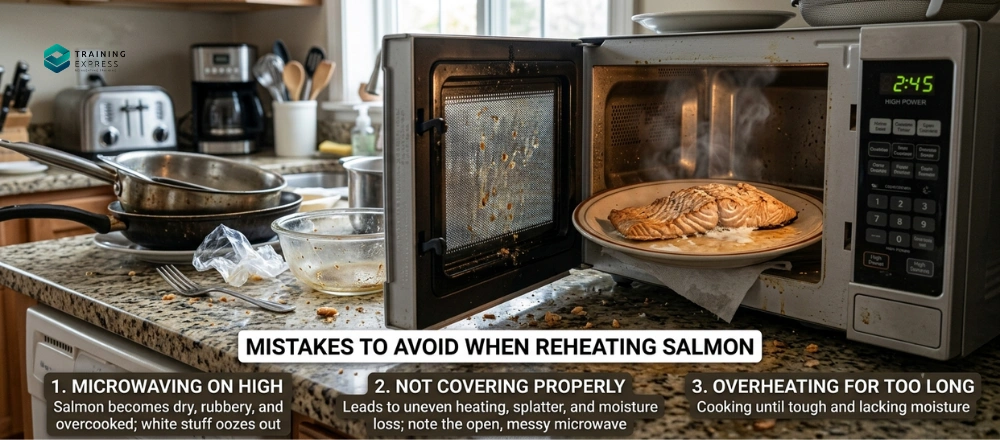
Many people blame reheated salmon for being dry, but the problem usually comes from how it is reheated. Avoiding a handful of common mistakes can make a noticeable difference to the final result.
Using Excessive Heat
High temperatures may seem faster, but they quickly remove moisture from the fish. The outside often dries out before the centre has had time to warm through.Choosing a lower temperature gives the salmon a much better chance of staying tender and flavourful from the first bite to the last.
Overcooking the Fish
Salmon is delicate and doesn’t need long to reheat. Even a few extra minutes can cause it to lose its soft texture and become chewy.Once the salmon is heated through, serve it immediately. Allowing it to continue cooking only reduces its quality.
Reheating Straight from the Freezer
Frozen salmon should not be placed straight into the oven or pan for reheating. The outside can become overcooked while the centre remains cold.Allowing the salmon to defrost safely first helps it heat evenly, giving you a much better texture and a more enjoyable meal.
Forgetting to Cover the Salmon
Leaving salmon uncovered allows moisture to escape throughout the reheating process. This often results in dry edges and a less appealing texture.Using foil, a lid, or a microwave cover helps trap steam, making it easier to retain the fish’s natural moisture.
Reheating Multiple Times
Every reheating cycle affects both the texture and the quality of the salmon. Repeated heating also increases food safety risks if the fish is repeatedly cooled and warmed.Only reheat the amount you intend to eat. This keeps the remaining portions fresher and reduces unnecessary waste.
How to Defrost Salmon Safely?
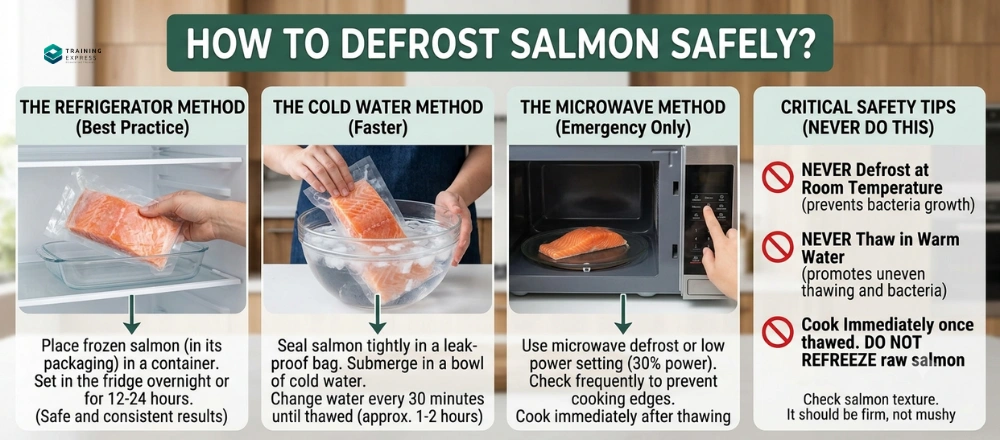
Defrosting salmon correctly is an important step before reheating. Proper thawing allows the fish to warm evenly, helping you avoid dry edges and cold centres while maintaining good food safety.
Defrosting Overnight in the Refrigerator
The refrigerator is the safest and most reliable place to thaw cooked salmon. Although it takes longer, the fish remains at a consistently safe temperature throughout the process.Simply transfer the frozen salmon to the fridge the night before you plan to eat it. By the following day, it should be fully thawed and ready to reheat.
Cold Water Defrosting Method
If you’re short on time, cold water can speed up the thawing process while still keeping the salmon safe.
- Keep the salmon sealed in a leak-proof bag.
- Submerge it in cold water only.
- Replace the water every 30 minutes.
- Reheat soon after thawing.
- Never use warm or hot water.
This method is much quicker than refrigerator thawing while still helping the salmon retain its texture. Once thawed, it should be reheated without unnecessary delay.
Can You Defrost Salmon in the Microwave?
Most microwaves include a defrost setting that can be used when you’re in a hurry. However, it requires careful attention because salmon can begin cooking if left for too long.If you use this method, reheat the salmon immediately afterwards. Leaving partially thawed fish at room temperature is not recommended.
Defrosting Mistakes to Avoid
Small mistakes during thawing can affect both food safety and the quality of the salmon.
- Leaving salmon on the kitchen counter.
- Using hot water to speed up thawing.
- Refreezing thawed salmon repeatedly.
- Forgetting to reheat it promptly after microwave defrosting.
- Leaving thawed salmon in the fridge for too long.
Avoiding these habits helps ensure your salmon remains safe to eat while preserving its flavour and texture for reheating.
Simple Tips to Follow While Reheating Salmon
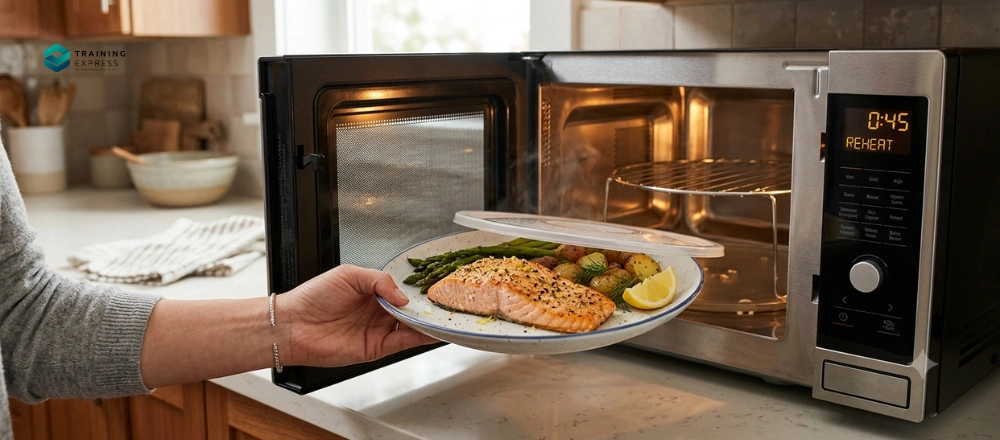
A few simple habits can make reheated salmon taste noticeably better. These tips take very little effort but help preserve moisture, improve flavour, and reduce the chances of overcooking.
Add Lemon, Butter, or Olive Oil for Extra Moisture
Adding a little moisture before reheating helps protect the salmon from drying out. It also refreshes the flavour without overpowering the natural taste of the fish.A light coating is usually enough to keep the salmon tender while giving it a fresher, more enjoyable finish.
Reheat Only What You Plan to Eat
Heating the whole batch every time increases the chances of drying out the fish. It also reduces the overall quality of the remaining leftovers.Reheating individual portions allows each serving to stay fresher, making future meals much more enjoyable.
Choose the Right Reheating Method for Your Portion Size
Different portion sizes respond better to different reheating methods, so selecting the right one helps achieve better results.
- Large fillets are best suited to the oven.
- Individual portions work well on the hob.
- Small servings can be reheated in the microwave.
- Air fryers are ideal for quick reheating.
- Always use gentle heat regardless of the method.
Matching the reheating method to the portion size improves both texture and flavour. It also makes it much easier to avoid overcooking.
Use a Food Thermometer for Best Results
A food thermometer removes the guesswork from reheating salmon. Instead of relying on appearance alone, you can be confident that the fish has reached a safe temperature.It also helps prevent unnecessary cooking, allowing you to remove the salmon from the heat as soon as it is ready to serve.
Final Thoughts
Reheating salmon doesn’t have to result in dry, tough, or flavourless fish. By using gentle heat, adding a little moisture, and choosing the right reheating method, you can enjoy leftovers that remain tender, flaky, and satisfying.
Good food safety habits are just as important as the reheating method itself. Storing cooked salmon correctly, reheating it to a safe temperature, and avoiding common mistakes all help protect both its quality and your health.
Whether you prefer using the oven, stovetop, air fryer, or microwave, the best approach is to match the method to your portion size and take your time. A little extra care goes a long way in preserving the flavour and texture that make salmon such a popular choice.
Frequently Asked Questions (FAQ)
Can you reheat salmon twice?
It is best not to reheat salmon more than once. Each time it is reheated, the fish loses more moisture, making it drier and less enjoyable to eat. Repeated reheating can also increase the risk of bacterial growth if it has not been stored properly. For the best quality and safety, only reheat the portion you plan to eat.
What is the best temperature to reheat salmon?
A low oven temperature of around 120°C–135°C is ideal for reheating salmon. Gentle heat warms the fish evenly without removing too much of its natural moisture. This helps preserve its soft, flaky texture and rich flavour. Avoid using high temperatures, as they can quickly dry out the salmon.
Can you eat cold leftover salmon?
Yes, you can eat cold leftover salmon if it has been stored safely in the refrigerator after cooking. It should be kept in an airtight container and eaten within 3–4 days. Cold salmon is perfect for salads, sandwiches, wraps, or pasta dishes. Always check that it smells and looks fresh before eating.
How long does cooked salmon last in the fridge?
Cooked salmon will usually stay fresh in the fridge for 3–4 days when stored in a sealed container. Refrigerate it as soon as it has cooled to help maintain its quality and freshness. If it develops a sour smell, slimy texture, or unusual appearance, it should be thrown away. When in doubt, it’s always safer not to eat it.
Should salmon be covered while reheating?
Yes, covering salmon during reheating helps trap steam and retain its natural moisture. You can use foil in the oven, a lid on the hob, or a microwave-safe cover depending on the reheating method. This simple step prevents the fish from drying out and keeps it tender. It is one of the easiest ways to improve the final texture.

Robert Lawrence
Author | Specialises in Food and Safety
Robert Lawrence is an e-learning specialist and tutor at Training Express, with experience creating practical resources and strategies to support learners and enhance their professional development.