Food Hygiene
 Health & Safety
 Safeguarding
 First Aid
 Business Skills
 Personal Development
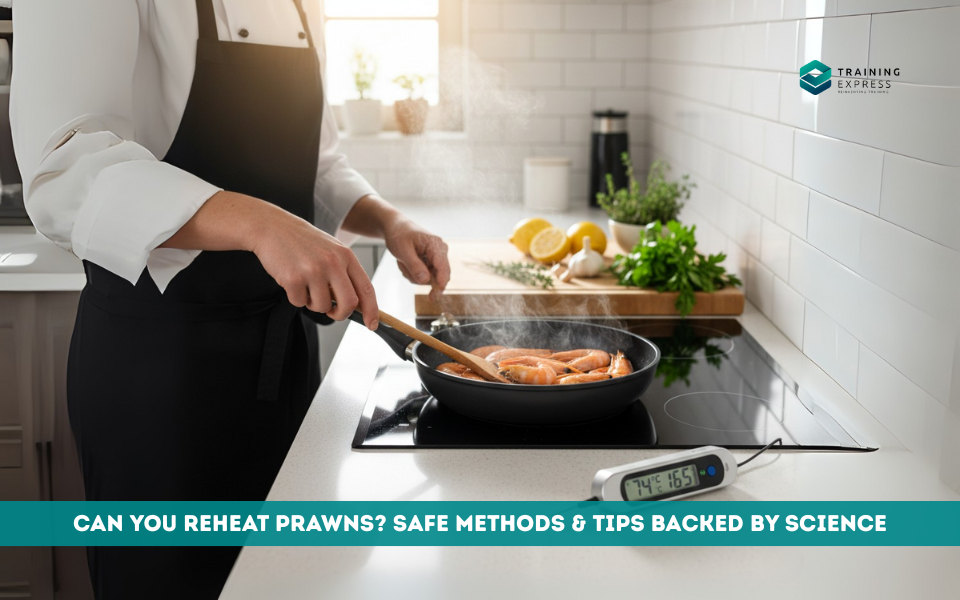

Yes! you can reheat prawns safely. Prawns are a favorite seafood choice around the world, enjoyed in curries, stir-fries, pasta, and grilled dishes. But when it comes to leftovers, the big question is: Can you reheat prawns safely? Unlike some foods that reheat easily, prawns are delicate, and if handled improperly, they can become unsafe to eat or lose their juicy texture.
Seafood is highly perishable, and prawns are no exception. If not stored and reheated properly, bacteria such as Vibrio or Salmonella can quickly develop. Food safety experts recommend reheating prawns only once and ensuring they reach at least 74°C (165°F) before serving to make them safe for consumption.
The challenge isn’t just safety—it’s also about keeping the prawns tender and flavorful. Since prawns are low in fat and high in protein, they can easily turn rubbery when overheated. That’s why knowing the right reheating methods backed by science is essential. In this article, we’ll explore safe and effective ways to reheat prawns without compromising taste or texture.
Table of Contents
How Can You Reheat Prawns Safely?
Reheating prawns safely starts with proper storage. If prawns are not stored correctly right after cooking, no reheating method can make them safe to eat later. Always refrigerate cooked prawns within 2 hours of cooking, and consume them within 2–3 days. If freezing, prawns can last up to 3 months when properly sealed in an airtight container.
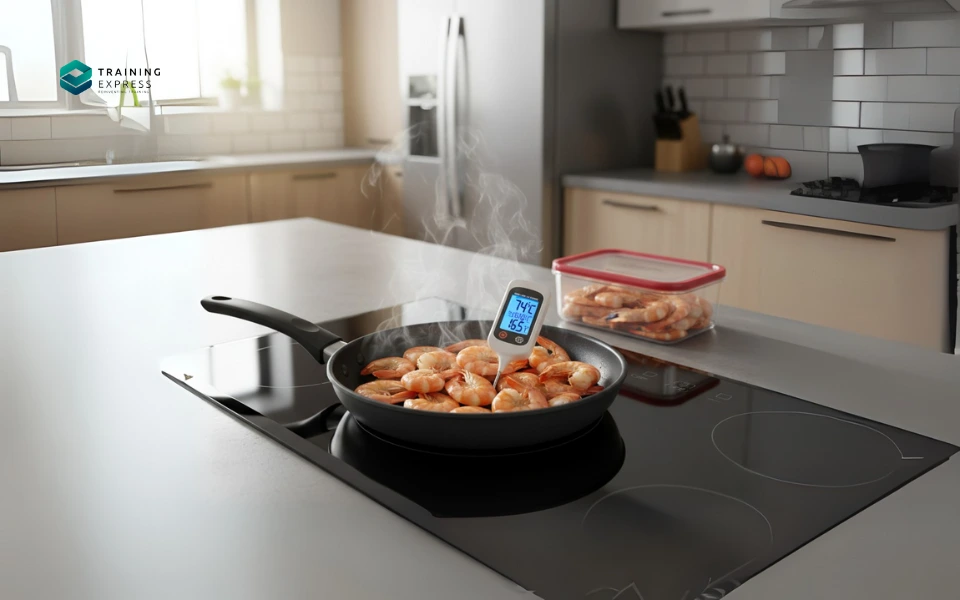
When reheating, food safety experts recommend:
- Temperature rule: Prawns must reach at least 74°C (165°F) throughout before serving.
- One-time reheating only: Reheating multiple times increases bacterial risk.
- Small portions: Reheat prawns in small batches to ensure even heating.
- Avoid room temperature exposure: Never leave cooked prawns at room temperature for more than 2 hours.
The goal is not just to kill potential bacteria but also to retain flavor and texture. Gentle reheating is key. High heat methods, such as microwaving on full power or deep frying for too long, can ruin prawns’ delicate structure. Instead, slow, controlled reheating is often the best choice.
But which method works best? Let’s break down the most common techniques and their pros and cons.
Read Our Trending Blog: Can You Reheat Rice? Yes, But Do it Safely!
Best Ways to Reheat Prawns
There are several methods for reheating prawns, each with its own benefits. The method you choose should depend on the dish, the prawn type (boiled, grilled, or frozen), and the equipment you have at home.
- Oven: Great for baked dishes and grilled prawns.
- Microwave: Quick but risky for overcooking.
- Stovetop: Best for stir-fries and curries.
- Steaming: Gentle and retains moisture.
- Deep Fryer: Best for breaded or battered prawns.
- Electric Wok: Ideal for Asian stir-fries.
Let’s look at each reheating method in detail.
Reheating Prawns in the Oven
The oven is one of the most reliable ways to reheat prawns, especially if they’re baked, grilled, or roasted. It provides even heating and helps retain flavor without drying them out.
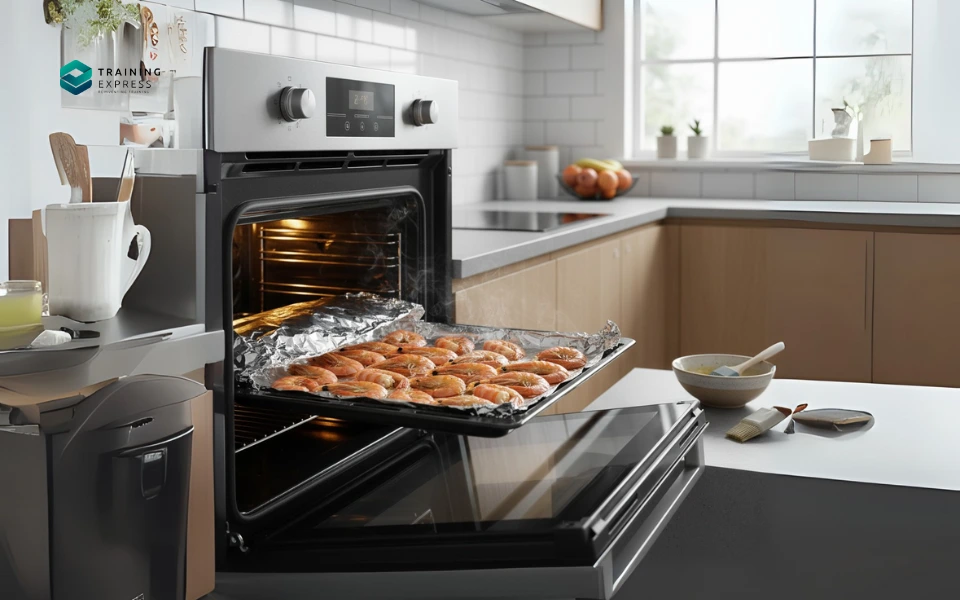
Steps to reheat prawns in the oven:
- Preheat the oven to 180°C (350°F).
- Place prawns on a baking tray lined with foil.
- Lightly drizzle with olive oil or cover with foil to retain moisture.
- Heat for 10–15 minutes, checking after 8 minutes.
- Ensure the internal temperature reaches 74°C (165°F).
Pros:
- Even heating throughout
- Ideal for grilled or roasted prawns
- Retains smoky or seasoned flavors
Cons:
- Takes longer than microwave or stovetop
- Can dry out if not covered properly
Oven reheating works best for larger servings and prawns served with marinades, garlic butter, or sauces that prevent them from drying out.
Reheating Prawns in the Microwave
The microwave is the fastest reheating method, but it can be tricky. Prawns can go from tender to rubbery in seconds. To avoid this, always use medium power and cover the prawns with a damp paper towel to trap moisture.
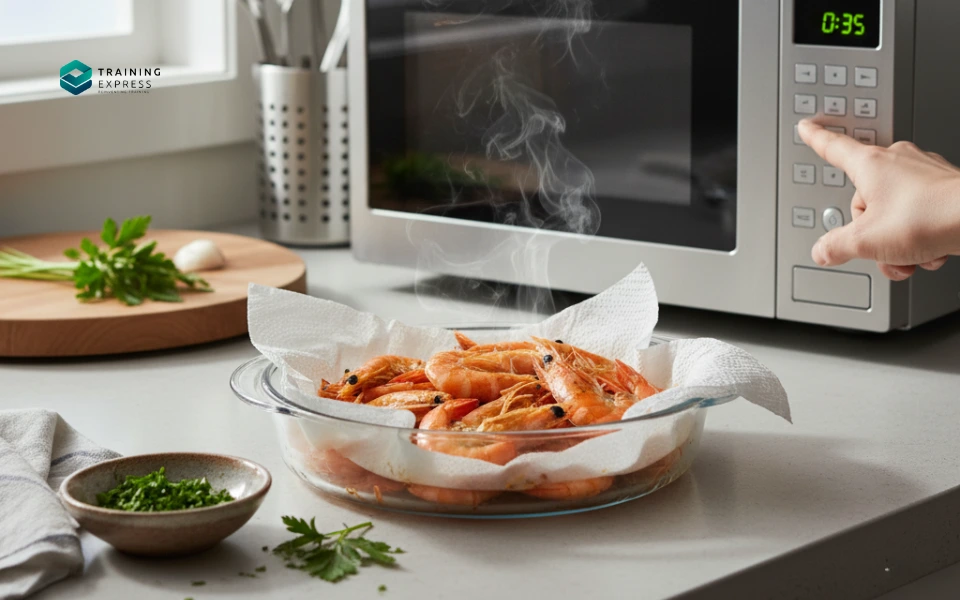
Steps to reheat prawns in the microwave:
- Place prawns in a microwave-safe dish.
- Cover with a damp paper towel or microwave lid.
- Heat on 50% power for 30-second intervals.
- Stir or flip prawns between intervals.
- Check temperature and stop once prawns are hot.
Pros:
- Quick and convenient
- Best for small portions
- No need for extra equipment
Cons:
- High risk of overcooking
- Uneven heating in some microwaves
Microwaving is best for quick meals, but always proceed with caution to avoid ruining the texture.
Reheating Prawns on the Stovetop
The stovetop is one of the most versatile ways to reheat prawns, especially if you’re dealing with saucy dishes like curries, stir-fries, or pasta.
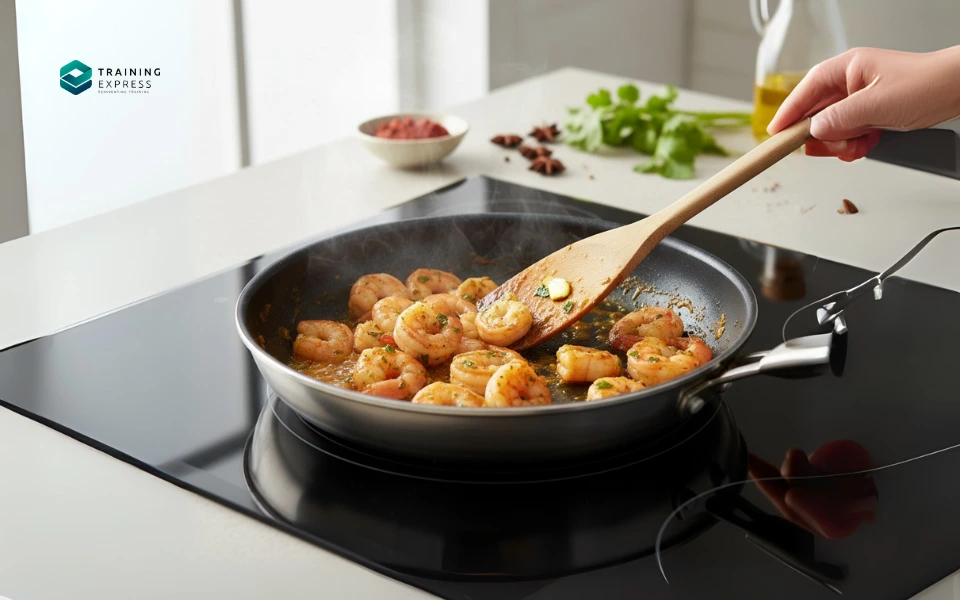
Steps to reheat prawns on the stovetop:
- Heat a non-stick pan with a little oil or butter.
- Add prawns and stir gently over medium heat.
- Cook for 3–5 minutes until evenly heated.
- For dishes with sauce, heat the sauce first, then add prawns last.
Pros:
- Great for mixed dishes
- Allows more control over cooking
- Can enhance flavors with extra seasoning
Cons:
- Can dry out if heated too long
- Requires close attention
The stovetop method is ideal if you want to quickly reheat leftovers without compromising flavor.
Reheating Prawns Using the Steam
Steaming is one of the gentlest and healthiest ways to reheat prawns. Unlike dry heat methods, steaming locks in moisture and prevents prawns from turning rubbery. This method is especially useful for plain boiled prawns or prawns that need to retain their natural sweetness and juiciness.
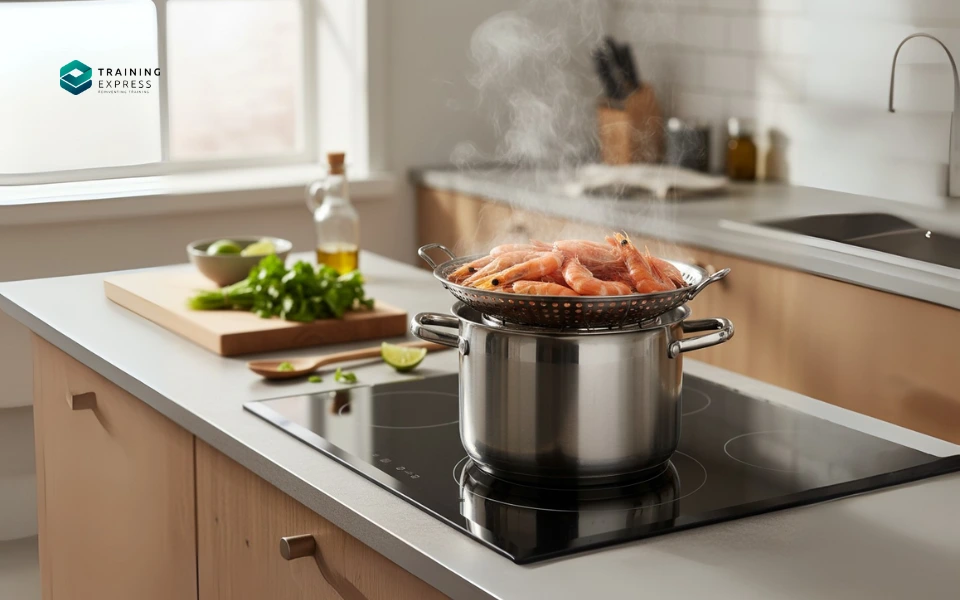
Steps to reheat prawns using steam:
- Fill a pot with water and bring it to a gentle simmer.
- Place prawns in a steamer basket or colander above the water.
- Cover with a lid and let the steam warm the prawns for 5–7 minutes.
- Check to ensure prawns are heated evenly and reach 74°C (165°F).
Pros:
- Retains natural flavor and juiciness
- Prevents prawns from drying out
- Gentle and healthy method
Cons:
- Takes longer than microwaving
- Requires a steamer or setup
Steaming is a great option if you want prawns to taste almost as fresh as when they were first cooked. It’s the closest thing to reheating without sacrificing taste or texture.
Reheating Prawns Using the Deep Fryer
For breaded or battered prawns, deep frying is often the best choice. It restores crispiness and enhances flavor, making leftovers taste freshly fried. However, this method is not recommended for plain prawns, as they can become greasy or overcooked.
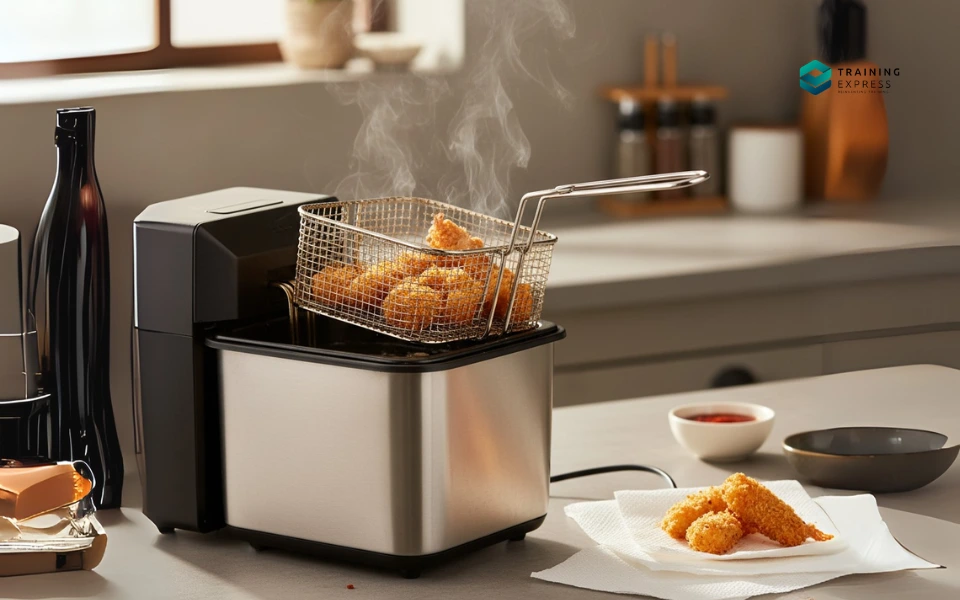
Steps to reheat prawns using a deep fryer:
- Preheat oil to 175°C (350°F).
- Place prawns in small batches into the hot oil.
- Fry for 2–3 minutes until crispy and heated through.
- Remove and drain on paper towels.
Pros:
- Restores crispiness in fried prawns
- Delicious results for breaded prawns
- Quick method
Cons:
- High in oil and calories
- Can overcook plain prawns
- Requires caution with hot oil
This method works best when you want restaurant-style fried prawns without losing the crunchy coating.
Reheating Prawns Using an Electric Wok
The electric wok is a popular choice for Asian-inspired dishes like stir-fries or noodle bowls. It provides high heat for quick reheating while preserving the prawns’ texture.
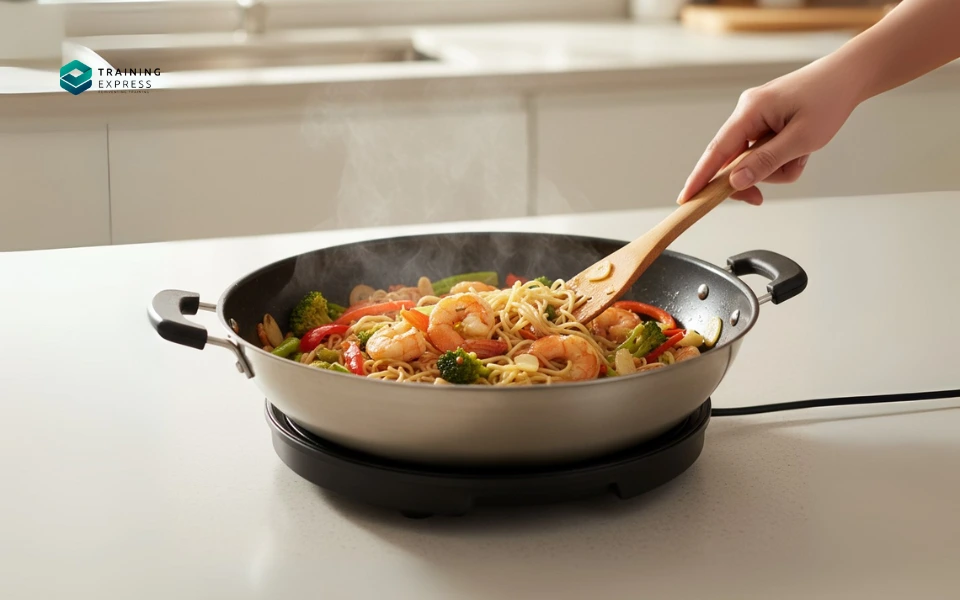
Steps to reheat prawns in an electric wok:
- Preheat wok to medium-high heat.
- Add a small amount of oil, garlic, or ginger for extra flavor.
- Toss prawns with vegetables or noodles for 2–4 minutes.
- Ensure prawns are evenly heated before serving.
Pros:
- Ideal for stir-fries and noodle dishes
- Adds extra flavor during reheating
- Quick and efficient
Cons:
- Can overcook prawns if left unattended
- Requires monitoring and stirring
This method is great if you’re reheating prawns as part of a complete meal. The wok ensures even heat distribution and enhances flavor at the same time.
How Should You Reheat Frozen Prawns?
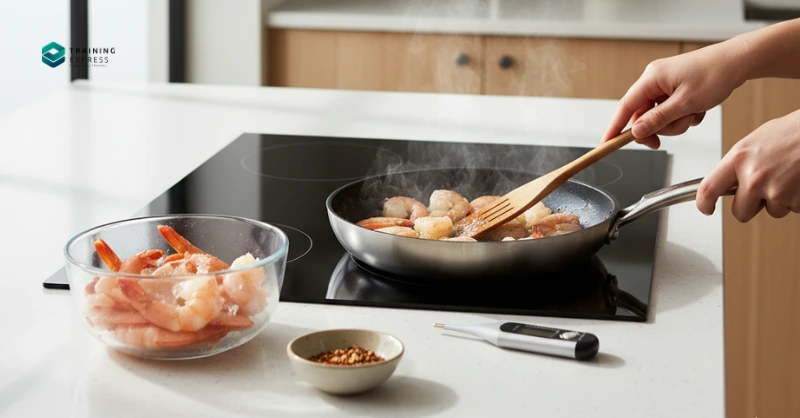
Frozen prawns need extra care when reheating. The biggest mistake people make is cooking them straight from frozen, which often results in uneven heating and rubbery texture. Instead, prawns should be properly thawed before reheating.
Thawing methods:
- Refrigerator thawing (best method): Place prawns in the fridge overnight.
- Cold water thawing: Place prawns in a sealed bag and submerge in cold water for 30–45 minutes.
- Avoid room temperature thawing, as it increases bacterial growth risk.
Reheating frozen prawns safely:
- Once thawed, reheat using oven, stovetop, or steaming.
- Always check internal temperature reaches 74°C (165°F).
- Do not refreeze prawns after thawing and reheating.
The key is slow thawing and gentle reheating. This ensures prawns maintain their natural taste without becoming chewy.
How Should You Reheat Boiled Prawns?
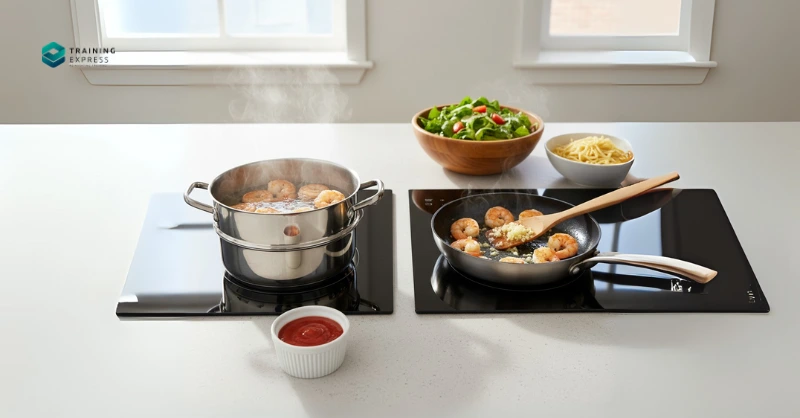
Boiled prawns are delicate, and reheating them improperly can easily turn them tough and rubbery. The best methods are steaming or gentle stovetop heating.
Steps to reheat boiled prawns (steaming method):
- Place prawns in a steamer basket.
- Steam for 5 minutes over simmering water.
- Serve immediately with dips or sauces.
Steps to reheat boiled prawns (stovetop method):
- Heat a little butter, garlic, or broth in a pan.
- Add prawns and toss for 3–4 minutes.
- Remove immediately once heated.
Boiled prawns are often served with cocktail sauces, salads, or pasta. Gentle reheating keeps them tender and flavorful without losing their natural sweetness.
How Should You Reheat Grilled Prawns?
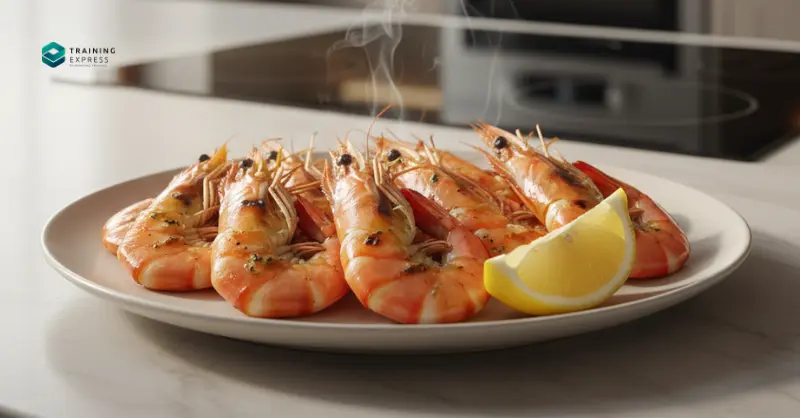
Grilled prawns often have a smoky, charred flavor that makes them unique. When reheating, the goal is to preserve that grilled taste without drying them out. The oven or stovetop methods work best here, as they provide controlled heat.
Steps to reheat grilled prawns in the oven:
- Preheat oven to 180°C (350°F).
- Place prawns on a baking sheet, lightly brushing with olive oil or melted butter.
- Cover loosely with foil to prevent drying.
- Bake for 8–10 minutes until heated through.
Steps to reheat grilled prawns on the stovetop:
- Heat a non-stick skillet with a splash of olive oil.
- Add prawns and cook on medium heat for 3–4 minutes.
- Flip once to ensure even heating.
Pros:
- Retains smoky flavor from grilling
- Can be reheated with sauces or marinades
- Works for skewered or loose prawns
Cons:
- Easy to dry out if heated too long
- Needs constant checking
If you want grilled prawns to taste close to fresh, add a squeeze of lemon or a brush of garlic butter after reheating to restore moisture and enhance flavor.
How Should You Reheat Prawns as Part of a Finished Dish?
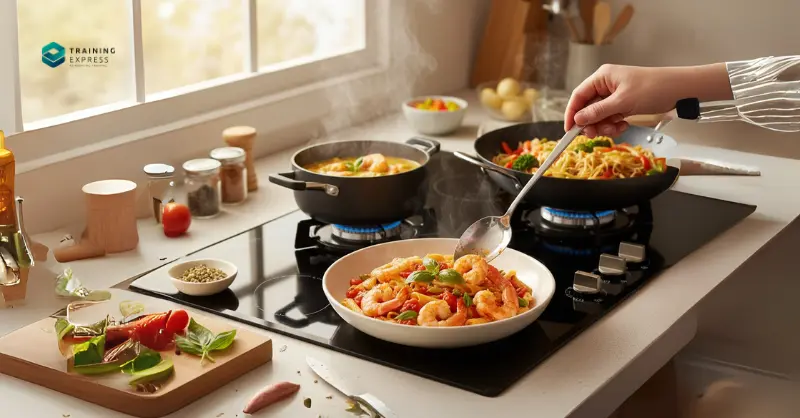
Prawns are often served in dishes like curries, stir-fries, fried rice, pasta, and soups. Reheating them as part of a complete dish requires balancing flavors while avoiding overcooking the prawns.
For pasta or rice dishes:
- Heat the sauce or rice first, then add prawns last.
- Stir gently until prawns are heated through.
- This prevents prawns from being reheated for too long.
For curries or soups:
- Reheat the sauce or broth separately until hot.
- Add prawns just before serving.
- Simmer for only 2–3 minutes to warm them without overcooking.
For stir-fries:
- Heat vegetables and sauces in the wok or skillet.
- Add prawns at the very end and toss for a short time.
This method works well because prawns don’t need much reheating—just enough to reach safe temperature. By focusing on reheating the dish instead of the prawns themselves, you keep their texture soft and flavorful.
How Many Times Can You Reheat Prawns?
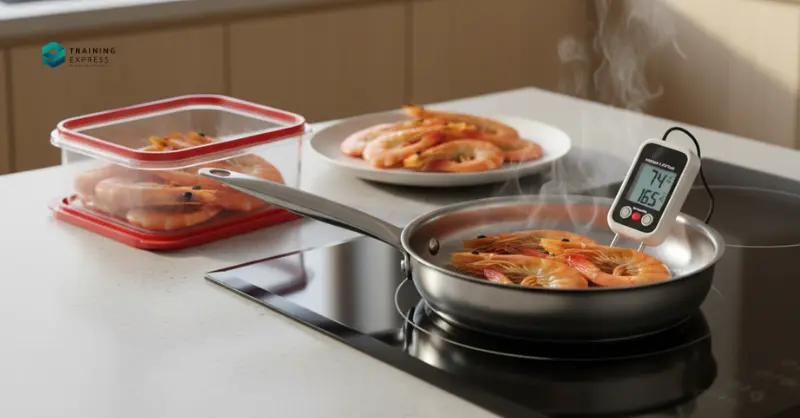
Food safety experts agree: prawns should only be reheated once. Reheating multiple times increases the risk of bacterial growth and foodborne illness, even if the prawns are stored in the fridge.
The main reason is temperature fluctuation. Each time prawns are cooled and reheated, they spend time in the “danger zone” of 5°C–60°C (41°F–140°F), where bacteria multiply rapidly.
Key rules:
- Cooked prawns → Store within 2 hours.
- Reheat prawns → Only once, and eat immediately.
- Leftovers after reheating → Should be discarded, not stored again.
Even though it may feel wasteful, it’s better to portion prawns before cooking or reheating to avoid unnecessary risks.
How Long Should You Reheat Prawns?
The reheating time for prawns depends on the method you use. The golden rule is to heat them until they reach 74°C (165°F) inside, but not longer than necessary.
Approximate reheating times:
- Oven: 8–15 minutes (covered with foil)
- Microwave: 1–2 minutes (in 30-second intervals)
- Stovetop: 3–5 minutes on medium heat
- Steaming: 5–7 minutes
- Deep fryer: 2–3 minutes
- Electric wok: 2–4 minutes
Overheating prawns is the main reason they become rubbery. The trick is to heat them just enough to be safe but not so much that they lose texture.
Food Safety and Hygiene Rules for Reheating Prawns
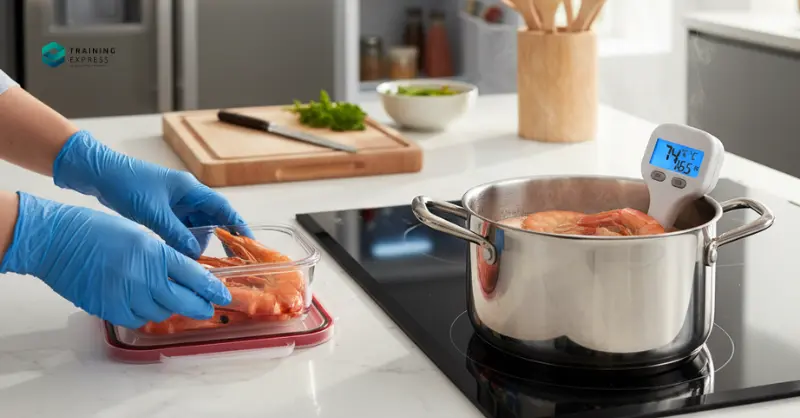
Reheating prawns safely is not just about the method—it starts with how they’re stored and handled. Following hygiene rules can make the difference between a delicious meal and a food poisoning risk.
Storage guidelines:
- Refrigerate prawns within 2 hours of cooking.
- Keep in an airtight container to prevent cross-contamination.
- Consume refrigerated prawns within 2–3 days.
- For longer storage, freeze prawns immediately and use within 3 months.
Hygiene tips:
- Wash hands and utensils thoroughly before handling prawns.
- Avoid thawing prawns at room temperature.
- Always reheat prawns to 74°C (165°F).
- Do not reheat prawns more than once.
By following these safety rules, you not only protect your health but also ensure prawns maintain their flavor and texture after reheating.
Common Signs and Symptoms of Food Poisoning

The most common signs and symptoms of food poisoning may include:
- Abdominal cramps or stomach pain
- Nausea or feeling sick
- Vomiting
- Diarrhea
- Dark or tarry stools (melena)
- Difficulty swallowing
- Dizziness or lightheadedness
- General weakness
- Headache
- Fever or chills
- Tingling or numbness in the hands and feet
Which One is Better: Prawns or Shrimps?
The debate between prawns and shrimps is an old one, especially since the terms are often used interchangeably in many countries. While they look similar and are both delicious seafood options, they differ in several ways, including biology, flavor, and texture.
Biological differences:
- Prawns belong to the suborder Dendrobranchiata, while shrimps belong to Pleocyemata.
- Prawns generally have straighter bodies, while shrimps have a curled shape.
- Prawns live mostly in freshwater, while shrimps are typically found in saltwater.
Nutritional comparison (per 100g cooked):
| Nutrient | Prawns | Shrimps |
|---|---|---|
|
Calories |
~105 kcal |
~99 kcal |
|
Protein |
20g |
24g |
|
Fat |
1.7g |
1.4g |
|
Omega-3 fatty acids |
High |
High |
|
Cholesterol |
Moderate |
Slightly higher |
Taste and texture:
- Prawns are slightly sweeter, meatier, and larger, making them great for grilling or curries.
- Shrimps are firmer and slightly brinier, working well in stir-fries and pasta dishes.
Ultimately, neither is “better”—it depends on personal preference and the recipe you’re making. Both prawns and shrimps are excellent sources of lean protein and essential nutrients, making them healthy choices for seafood lovers.
How to Store Prawns?
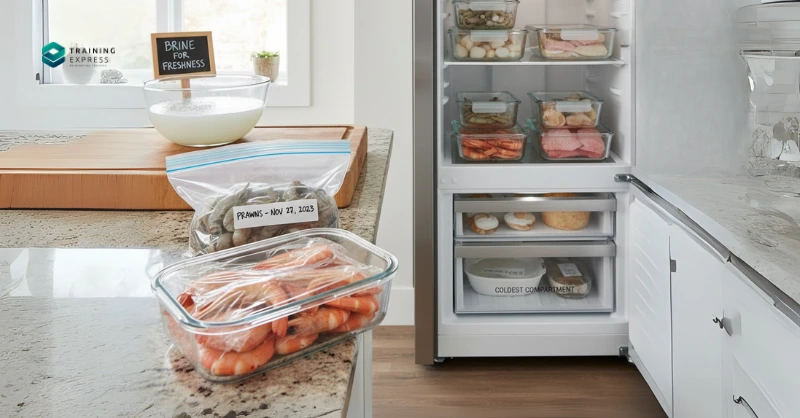
Storing prawns correctly is the first step in ensuring they can be reheated safely later. Because prawns are highly perishable, even small mistakes in storage can make them unsafe to eat.
Refrigeration:
- Place cooked prawns in an airtight container or wrap tightly with plastic wrap.
- Store in the coldest part of the fridge (below 4°C / 40°F).
- Consume within 2–3 days.
Freezing:
- If you don’t plan to eat prawns within a couple of days, freeze them immediately.
- Place prawns in a freezer-safe bag, removing as much air as possible.
- Label with the date and use within 3 months for best quality.
Thawing:
- Thaw prawns overnight in the refrigerator.
- For quicker thawing, place in a sealed bag and submerge in cold water.
- Never thaw at room temperature.
Extra tip: To extend shelf life, store prawns in a brine solution (saltwater) before refrigeration. This helps preserve their flavor and freshness.
How to Stop Prawns from Going Rubbery?

One of the biggest challenges when reheating prawns is avoiding that unpleasant rubbery texture. Overcooking is the number one culprit, but with the right techniques, you can keep prawns tender and juicy.
Tips to prevent rubbery prawns:
- Gentle heat: Use low to medium heat when reheating instead of blasting them with high heat.
- Moisture retention: Cover prawns with foil in the oven, use a damp paper towel in the microwave, or steam them to lock in moisture.
- Add sauce or broth: If reheating prawns in a dish, reheat the sauce first and add prawns last. Liquids help protect their texture.
- Short cooking time: Prawns only need a couple of minutes to reheat properly—don’t exceed recommended times.
- Use butter or oil: Tossing prawns in butter, olive oil, or garlic sauce can add flavor and prevent drying out.
Think of prawns like steak: once they’re overcooked, you can’t bring them back. The secret is treating them gently and reheating only until they’re just hot enough to be safe.
Final Words
So, can you reheat prawns safely? The answer is yes, but only if you do it properly. The key is storage, timing, and temperature control. Always refrigerate prawns within two hours of cooking, reheat them to at least 74°C (165°F), and never reheat them more than once.
Whether you choose the oven, microwave, stovetop, steamer, deep fryer, or electric wok, each method has its own strengths. The trick is matching the reheating method to the type of prawns and dish you’re working with. Steaming is best for boiled prawns, ovens for grilled ones, and deep frying for breaded prawns.
Above all, remember that prawns are delicate. Handle them gently, and you’ll be rewarded with leftovers that taste almost as good as freshly cooked.
Frequently Asked Questions (FAQ)
Are cooked prawns ok to eat the next day?
Yes, as long as they’ve been stored in the refrigerator within 2 hours of cooking and consumed within 2–3 days.
Is it okay to reheat shrimp in the microwave?
Yes, but do it carefully. Use 50% power and heat in 30-second intervals to prevent them from turning rubbery.
Can I reheat ready-to-eat prawns twice?
No. For safety reasons, prawns should only be reheated once.
Is it safe to reheat seafood twice?
No. Reheating seafood multiple times increases the risk of bacterial growth and food poisoning.
Is it safe to eat reheated shrimp?
Yes, as long as they reach an internal temperature of 74°C (165°F) and were stored correctly beforehand.
Can you reheat prawn toast the next day?
Yes, but the oven or air fryer is recommended to restore crispiness. Avoid microwaving as it makes the toast soggy.

Robert Lawrence
Author | Specialises in Food Safety
Robert Lawrence is an e-learning specialist and tutor at Training Express, with experience creating practical resources and strategies to support learners and enhance their professional development.
Related Blogs