Food Hygiene
 Health & Safety
 Safeguarding
 First Aid
 Business Skills
 Personal Development


Yes, you can reheat chicken. Do it once, and get it steaming hot all the way through, not just warm on the outside.
That’s it, really. Leftover roast, last night’s curry, the half-eaten takeaway in the fridge: it can all be brought back to life. The trick is doing it safely without turning good chicken into something you’d rather chew than eat.
So here’s what works, what doesn’t, and the few rules you shouldn’t bend.
The Quick Rules for Storing and Reheating Chicken
- ✓Fridge it fast. Get cooked chicken cooled and into the fridge within 2 hours.
- ✓Eat it within 48 hours. That's the Food Standards Agency's advice for leftovers. Can't manage that? Freeze it.
- ✓Reheat it once. Only warm up what you're going to eat.
- ✓Make sure it's steaming hot throughout. If you've got a food thermometer, aim for 75°C in the thickest part.
Table of Contents
Best Methods to Reheat Chicken
Short on time? Here’s every method side by side. The full how-to for each one is just below.
| Method | Heat | Time | Best for | What you get |
|---|---|---|---|---|
| Oven | 180°C (160°C fan) | 15–25 min | Roast chicken, bone-in pieces, big batches | Juicy meat, crisp skin if you uncover it at the end |
| Air fryer | 180°C | 4–8 min | Wings, drumsticks, breaded or fried chicken | The crispiest result, and quick |
| Microwave | Medium power | 2–4 min, in bursts | Curries, stews, sliced chicken in sauce | Fastest, but plain chicken can dry out |
| Hob (frying pan) | Medium heat | 5–8 min | Sliced or shredded chicken, stir-fries | Even heat and a little colour |
Whichever you choose, the finish line is the same: steaming hot all the way through.
How to Reheat Chicken (Step by Step)
Chicken dries out when it’s reheated because the moisture that’s left has nowhere to go but out. So every method below does two things: adds a bit of moisture back, and heats it gently enough that the middle catches up with the outside.
How to Reheat Chicken in the Oven (Best for Roast Chicken)
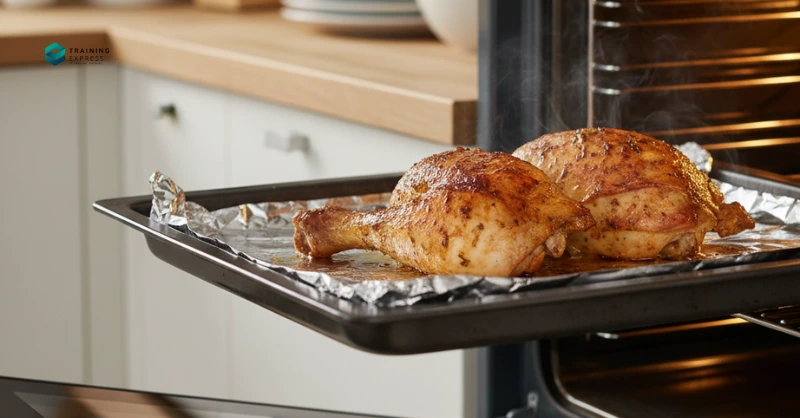
The oven is slower, but it’s the kindest to chicken. If you’ve got leftover roast or bone-in pieces, this is the one.
- Preheat: Set the oven to 180°C (160°C fan).
- Add moisture: Put the chicken in an ovenproof dish with a splash of stock or water in the bottom. A couple of tablespoons is plenty.
- Cover: Wrap the dish loosely in foil. This traps the steam and stops the meat drying out.
- Heat: Give it 15–20 minutes for pieces, or 20–25 minutes for larger chunks of a roast.
- Crisp it up: Want crispy skin? Take the foil off for the last 5 minutes.
- Check: Cut into the thickest piece. It should be steaming hot right through, with no cool bits in the middle.
Chef’s tip: Let it come out of the fridge for 10 minutes while the oven heats. It warms through more evenly than chicken that’s fridge-cold.
How to Reheat Chicken in the Air Fryer (Best for Crispy Chicken)
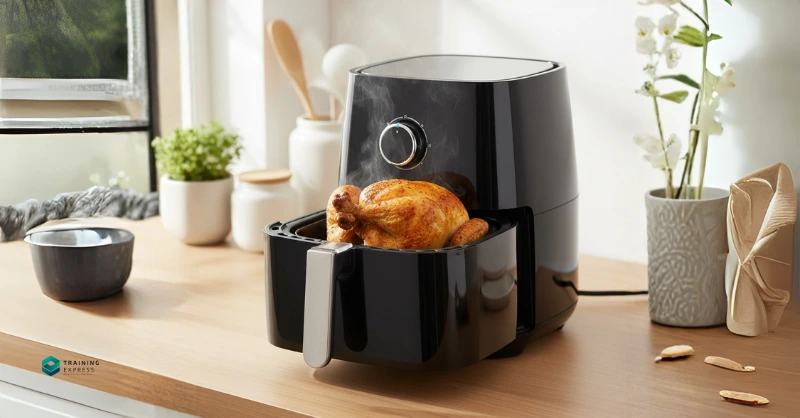
If soggy, sad chicken is your worst nightmare, the air fryer is your friend. It’s brilliant for wings, drumsticks, and anything breaded.
- Preheat: Run the air fryer at 180°C for 3 minutes.
- Spread out: Put the chicken in a single layer. Don’t pile it up, or the pieces underneath will steam instead of crisp.
- Heat: Cook for 4–8 minutes, depending on size. Smaller bits like strips take about 4 minutes; drumsticks need nearer 8.
- Flip: Turn everything halfway through.
- Check: Make sure the thickest piece is hot all the way through before serving.
Chef’s tip: A light spray of oil brings the skin back to life. Skip it for breaded chicken, which already has enough.
How to Reheat Chicken in the Microwave (Quickest, but Watch It)
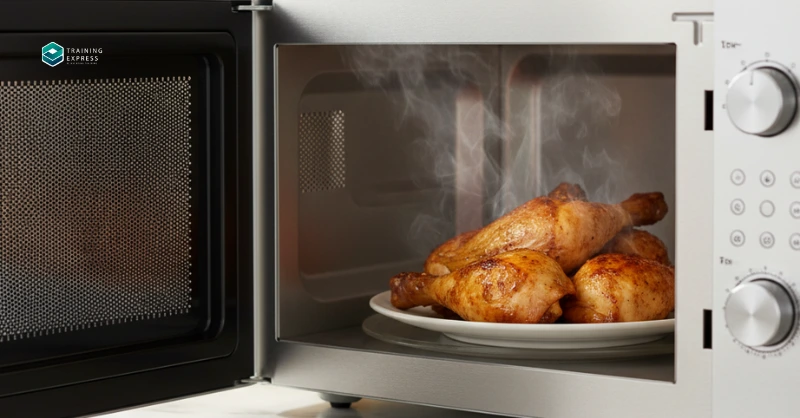
The microwave is fast, and for chicken in a sauce it’s perfectly good. Plain chicken breast is where it struggles, because microwaves heat unevenly and dry the edges before the middle is hot.
- Prep: Put the chicken on a microwave-safe plate. Thick pieces go round the outside; thinner bits sit in the middle.
- Add moisture: Sprinkle over a tablespoon of water or stock.
- Cover: Use a microwave lid or a plate on top to trap the steam.
- Heat in bursts: Medium power for 1 minute, then stir or turn. Repeat until it’s hot, usually 2–4 minutes in total.
- Rest: Leave it for a minute. The heat keeps spreading into any cooler spots.
- Check: Steaming hot throughout? Then it’s ready.
Chef’s tip: Curries and stews need a good stir halfway. The FSA warns that microwaved food can be scorching at the edges and still cold in the middle.
How to Reheat Chicken on the Hob (Best for Sliced or Shredded Chicken)

A frying pan is the quickest route for chicken that’s already sliced or pulled. It’s ideal if it’s going into a wrap, a stir-fry, or fried rice.
- Heat the pan: Medium heat, with a little oil or butter.
- Add the chicken: Spread it out in the pan.
- Add a splash: A couple of tablespoons of stock or water, then pop a lid on.
- Heat: Give it 5–8 minutes, stirring now and then.
- Finish: Take the lid off for the last minute if you want a bit of colour.
- Check: Every piece should be steaming hot.
Chef’s tip: Chicken in sauce can go in a saucepan instead. Bring it to a simmer and keep it bubbling for a couple of minutes, stirring so nothing catches.
How Many Times Can You Reheat Chicken?
Once. That’s the Food Standards Agency’s guidance, and it’s a good rule to live by.
Here’s why. Every time chicken cools down and warms back up, it spends time in the “danger zone” between 8°C and 63°C. That’s where bacteria multiply fastest. Reheat it properly and you’ll kill most of them, but some bacteria leave behind toxins that heat doesn’t destroy. Each round of cooling and reheating gives them another chance.

And even if safety weren’t an issue, the chicken gets drier and stringier every time. Third-time-round chicken isn’t something anyone enjoys.
How to avoid the problem:
- Portion it before you store it. Split leftovers into meal-sized tubs, so you only ever reheat what you’ll eat.
- Don’t put reheated chicken back in the fridge. If it’s been reheated and not eaten, bin it.
- Cook, freeze, reheat is fine. The FSA says you can freeze cooked food, but you can only reheat it once after that.
Reheating Takeaway, Roast and Frozen Chicken
Not all leftover chicken starts in the same place. Here’s how to handle the usual suspects.

Takeaway Chicken
Fried chicken, peri-peri, chicken tikka masala: all fine to reheat, as long as it went in the fridge within 2 hours of arriving. If it sat on the coffee table all night, it goes in the bin, not the oven.
Fried or breaded chicken: Air fryer or oven, every time. The microwave turns the coating soft.
Curry or chicken in sauce: Microwave or saucepan, stirring until it’s bubbling hot.
Remember the rice: If it came with rice, that needs extra care. Read our guide on whether you can reheat rice before you warm it up.
Leftover Roast Chicken
Strip the meat off the bones once it’s cooled a little. It cools faster, takes up less room in the fridge, and reheats more evenly. Keep any gravy or juices, as they’re perfect for adding back in when you reheat.
Frozen Cooked Chicken
The safest route is to thaw it in the fridge overnight, then reheat it within 24 hours. That’s in line with the FSA’s defrosting advice.
In a rush? Use the microwave’s defrost setting, then reheat it straight away. Small pieces and chicken in sauce can be reheated from frozen in a pan or microwave, but it takes longer, and you’ll need to stir often and check the middle is steaming hot. For bigger pieces, defrost first. It’s too easy for the outside to be done while the centre is still icy.
How Long Does Leftover Chicken Last?
In the UK, the FSA says to eat leftovers within 48 hours, or freeze them if you won’t get to them in time. You’ll see “3–4 days” on a lot of websites, but that’s American guidance. Stick to 2 days and you’re on the safe side.
| Where it is | How long it's good for |
|---|---|
| Room temperature | 2 hours max, then into the fridge or the bin |
| Fridge (0–5°C) | Up to 48 hours |
| Freezer | Best eaten within about 3 months for taste and texture |
| Defrosted in the fridge | Reheat and eat within 24 hours |
How to Store Leftover Chicken Properly
Good reheating starts with good storage. Get this bit right and the rest is easy.
- Cool it quickly. Spread it out on a plate or tray rather than leaving it in a big pile. It’ll cool faster, and you can get it in the fridge well within 2 hours.
- Use airtight containers. A lidded tub or a sealed freezer bag keeps it moist and stops fridge smells sneaking in.
- Keep the fridge at 0–5°C. That’s what the FSA recommends. Lots of fridges run warmer than people think, so a cheap fridge thermometer is worth having.
- Label it. Write the date on the tub. “I’m sure it was Tuesday” isn’t a food safety system.
- Freeze early, not on day two. If you know you won’t eat it in time, freeze it on the day it’s cooked.
Common Mistakes When Reheating Chicken
Most reheating problems come down to the same handful of slip-ups.
- Warming it instead of reheating it. Lukewarm isn’t good enough. As the FSA puts it, reheating means cooking again, not just warming up.
- Blasting it on full power. High heat cooks the outside to leather before the middle is hot. Medium heat and a bit more patience give a much better result.
- Forgetting the moisture. A splash of stock, water, or leftover gravy makes a huge difference. Dry chicken in, drier chicken out.
- Reheating the whole batch. Then putting half back in the fridge. Only reheat what you’ll eat.
- Leaving it out to cool overnight. It’s tempting after a big Sunday roast, but chicken left out for hours isn’t safe to eat, however well you reheat it.
- Using a slow cooker. It heats too gently, so the chicken sits in the danger zone for too long. Use the oven or hob instead.
How to Tell If Leftover Chicken Has Gone Off
Before you reheat, give it a quick once-over. Bin it if you notice any of these:
- A sour or eggy smell
- A slimy or sticky feel
- Grey or green patches
- It’s been in the fridge for more than 2 days and you’re not sure when it was cooked
One important catch: chicken can look and smell fine and still carry enough bacteria to make you ill. Your nose is a backup, not a replacement for the 48-hour rule. When in doubt, throw it out.
Final Words
Reheating chicken isn’t complicated. Cool it fast, eat it within 2 days, reheat it once, and make sure it’s steaming hot all the way through. Pick the method that suits what you’ve got: the oven for roasts, the air fryer for anything crispy, the microwave for curries, and the hob for sliced chicken.
If you work with food, or just want the full picture on keeping food safe at home, our Level 2 Food Hygiene and Safety for Catering course covers storage, cooking, and reheating in more depth. You might also like our guide on whether you can reheat prawns.
Frequently Asked Questions (FAQ)
Can you eat leftover chicken cold?
Yes. If it was cooled quickly, kept in the fridge, and eaten within 2 days, cold chicken is perfectly safe. Think sandwiches, salads, and wraps. The rules only kick in once you start heating it.
Is it safe to eat chicken that was left out overnight?
No. Cooked chicken shouldn’t be at room temperature for more than 2 hours. After a night on the side, bacteria may have produced toxins that reheating won’t get rid of. It’s not worth the risk.
Can you reheat chicken from frozen?
Small pieces and chicken in sauce, yes, as long as it ends up steaming hot all the way through. For larger pieces, defrost in the fridge first and reheat within 24 hours.
How do you know reheated chicken is hot enough?
It should be steaming hot throughout, with no cool spots in the middle. If you’ve got a probe thermometer, check the thickest part reads 75°C.
How do you keep chicken juicy when reheating?
Add a splash of stock or water, cover it, and use medium heat. The oven with foil on top is the most reliable way to keep it moist.
How long can leftover chicken stay in the fridge?
Up to 48 hours, according to the Food Standards Agency. If you won’t eat it by then, freeze it.
Can you reheat chicken in a slow cooker?
It’s best not to. Slow cookers take too long to get the chicken out of the danger zone. Reheat it in the oven, microwave, or a pan, then transfer it to a slow cooker to keep warm if you need to.

Ryan Bisset
Author | Specialises in Food Hygiene & Safety
Ryan Bisset is an Food Hygiene & Safety specialist and tutor at Training Express, with experience creating practical resources and strategies to support learners and enhance their professional development.
Related Blogs