Food Hygiene
 Health & Safety
 Safeguarding
 First Aid
 Business Skills
 Personal Development
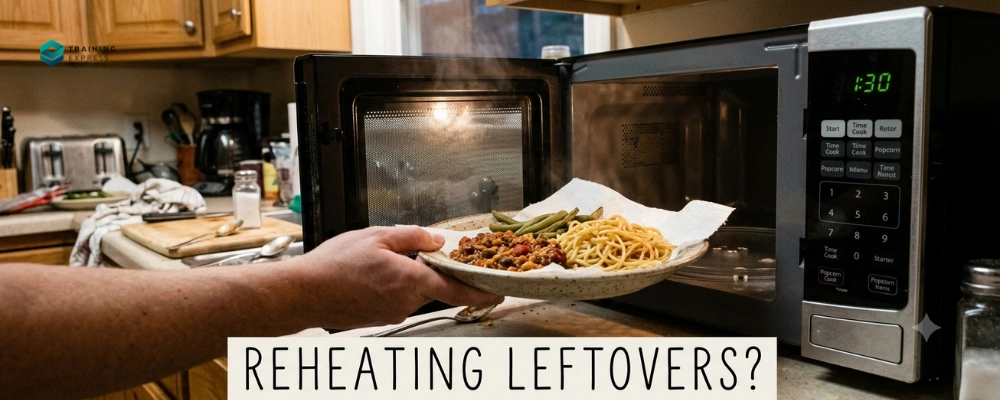

Leftovers can be a lifesaver on busy days, but reheating them the wrong way can quickly turn a perfectly good meal into something dry, rubbery, soggy, or simply disappointing. We’ve all been there: pizza that turns chewy in the microwave, fries that lose their crunch, or chicken that comes out dry and tough.
The good news is that most leftovers can taste surprisingly close to freshly cooked food when they’re reheated properly.
Not every leftover reheats the same way. Some dishes regain their texture in the oven, others do best on the stovetop, and many everyday leftovers can be warmed quickly in the microwave.
Knowing which method to use helps preserve texture, flavor, and moisture while ensuring your food reaches a safe temperature. Whether you’re reheating last night’s pizza, leftover rice, or a bowl of soup, a few small adjustments can make a big difference.
Table of Contents
What Is the Best Way to Reheat Leftovers?
The best way to reheat leftovers is to use the same cooking method that originally prepared the food whenever possible. Oven-cooked foods usually reheat best in the oven, soups and sauces often perform better on the stovetop, and many everyday leftovers can be reheated quickly in the microwave.
Reheating food slowly and evenly helps maintain texture and prevent food from drying out.
The Golden Rule of Reheating Leftovers
If there’s one rule worth remembering, it’s this:
Reheat food using the same type of heat that cooked it originally.
A roasted chicken that was cooked with dry heat generally reheats better in the oven. Soup that simmered on the stovetop often tastes best when reheated in a saucepan. Fried foods regain more of their crispness in an air fryer or oven than they do in a microwave.
This isn’t a hard rule for every dish, but it works surprisingly well for most leftovers.
Pizza is a perfect example. The microwave often leaves the crust soft and chewy, while a hot oven or skillet helps restore the crisp crust and melted cheese.
The same approach works for casseroles, roasted vegetables, pasta dishes, and many other leftovers.
The Best Way to Reheat Leftovers in the Oven
The oven is often the best choice for leftovers that were originally baked, roasted, or fried. It reheats food gradually, helping it stay crispy on the outside while warming evenly on the inside.
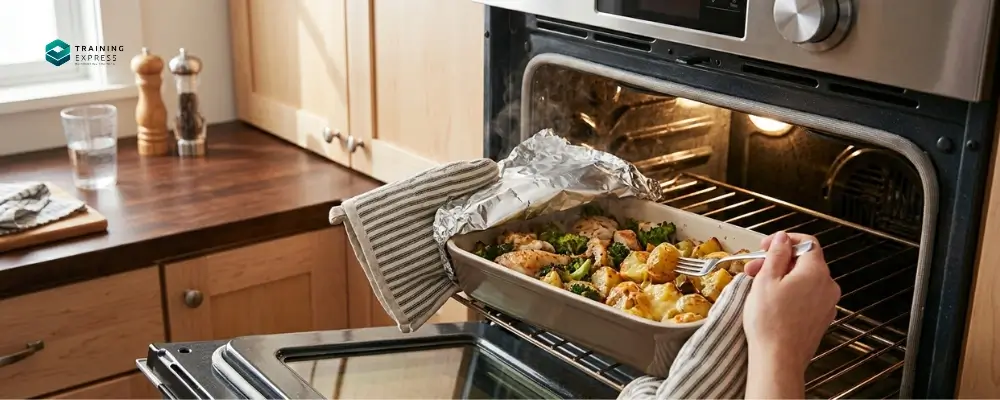
Unlike the microwave, which can create steam and make certain foods soggy, the dry heat of an oven helps restore texture. That makes it especially useful for pizza, roasted vegetables, casseroles, fried foods, and cooked meats.
As a general rule, most leftovers reheat well at 350°F (175°C). This temperature is hot enough to warm food thoroughly without drying it out too quickly.
Best Foods to Reheat in the Oven
The oven works particularly well for:
- Pizza
- Roasted chicken
- Casseroles
- Lasagna
- Roasted vegetables
- Garlic bread
- Fried foods
- Baked pasta dishes
How to Reheat Pizza in the Oven
Few leftovers are more disappointing than soggy pizza. While the microwave is convenient, it often leaves the crust soft and chewy.
For better results, place pizza slices on a baking tray or directly on the oven rack and heat them at 375°F (190°C) for about 8 to 10 minutes. The cheese melts again, and the crust regains some of its original crispness.
If you’re reheating only one or two slices, a skillet can work just as well.
Reheating Casseroles and Baked Dishes
Casseroles and baked pasta dishes usually reheat beautifully in the oven because they cook evenly.
Cover the dish loosely with foil to prevent the top from drying out. Heat at 350°F (175°C) until the center is hot, which typically takes 20 to 30 minutes depending on the size of the portion.
Removing the foil during the last few minutes can help restore a crisp topping.
Reheating Roasted Meats and Vegetables
Roasted chicken, turkey, beef, and vegetables often lose moisture during storage. Adding a small splash of broth or water to the baking dish can help prevent them from drying out.
Cover the food loosely with foil and reheat at 325°F to 350°F until warmed through.
A Few Oven Reheating Tips
- Preheat the oven before adding food.
- Spread food in a single layer whenever possible.
- Cover dishes that may dry out.
- Use a wire rack for fried foods to help maintain crispness.
- Avoid very high temperatures, which can dry out leftovers before the center becomes hot.
When texture matters, the oven is usually worth the extra few minutes.
The Best Way to Reheat Leftovers on the Stovetop
The stovetop is one of the most overlooked ways to reheat leftovers, but it often delivers some of the best results. Because you can control the heat and stir the food as it warms, the stovetop helps leftovers heat evenly without drying out.
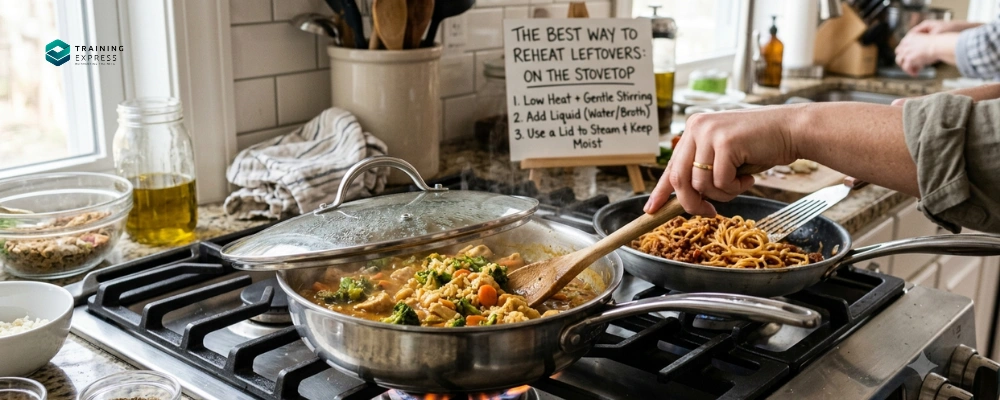
This method works especially well for soups, sauces, pasta dishes, rice, stir-fries, and cooked vegetables.
Low to medium heat is usually best. Reheating food too quickly can cause sauces to separate, pasta to stick, or delicate ingredients to overcook.
Soups and Stews
Soup is one of the easiest leftovers to reheat. Simply pour it into a saucepan or pot and warm it over medium heat, stirring occasionally.
If the soup has thickened in the refrigerator, add a splash of water, stock, or milk to restore its original consistency. Cream-based soups benefit from gentle heat to prevent curdling.
Once the soup begins to simmer and is heated throughout, it’s ready to serve.
Pasta and Sauces
Leftover pasta can sometimes become dry after a day in the refrigerator. The stovetop helps bring back some of its moisture.
Place the pasta in a skillet or saucepan with a small amount of water, broth, or extra sauce. Cover the pan and heat over low to medium heat, stirring occasionally.
This method helps prevent the pasta from becoming rubbery, which can sometimes happen in the microwave.
Rice and Grain Dishes
Rice often dries out during storage, but it can easily be revived.
Add a tablespoon or two of water to the pan, cover it with a lid, and heat over low heat. The steam created inside the pan helps restore moisture and makes the rice softer.
The same technique works well for quinoa, couscous, and other cooked grains.
Stir-Fries and Sautéed Vegetables
Many stir-fries reheat surprisingly well in a skillet. A small amount of oil can help restore some of the original texture and flavor.
Cook over medium heat while stirring frequently. This prevents vegetables from becoming overly soft and helps meat or tofu heat evenly.
Seafood and Delicate Foods
Fish and seafood can dry out quickly if reheated too aggressively. Gentle heat on the stovetop often produces better results than a microwave.
Cover the pan and cook over low heat until just warmed through. Overheating seafood can make it tough, so patience is important.
Stovetop Reheating Tips
- Use low to medium heat whenever possible.
- Add a small amount of liquid to dry foods.
- Stir regularly for even heating.
- Cover the pan to trap moisture.
- Avoid boiling delicate sauces or cream-based dishes.
When moisture and texture matter, the stovetop is often the closest you can get to freshly cooked food.
The Best Way to Reheat Leftovers in the Microwave
The microwave is the fastest way to reheat leftovers, which explains why most of us use it every day. It’s convenient, easy, and perfect for busy mornings, quick lunches, or late-night meals.
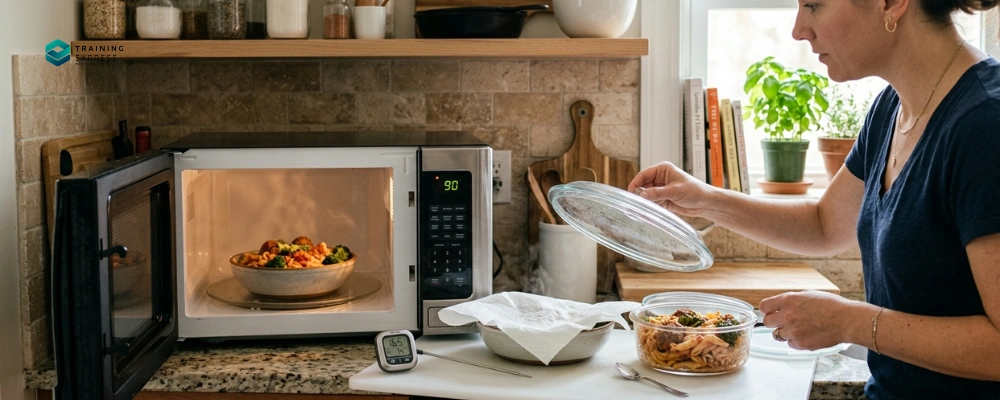
The problem is that microwaves don’t always heat food evenly. One part of the dish may be steaming hot while another remains cold. Some foods become rubbery, while others dry out or turn soggy.
Fortunately, a few small adjustments can make a big difference.
Best Foods to Reheat in the Microwave
The microwave works particularly well for:
- Rice and grain dishes
- Cooked vegetables
- Soups
- Stews
- Mashed potatoes
- Pasta with sauce
- Casseroles
- Leftover meals with several ingredients
Foods that rely on crisp textures, such as fried foods or pizza, generally perform better in the oven or air fryer.
Cover Your Food
One of the easiest ways to improve microwave results is to cover the food loosely while it heats.
A microwave-safe lid, plate, or damp paper towel helps trap steam and prevents food from drying out. This is especially useful for rice, pasta, and vegetables.
Stir or Rotate Food Halfway Through
Microwaves often create hot and cold spots. Stirring soups, sauces, and casseroles halfway through reheating helps distribute heat more evenly.
If your microwave does not have a rotating turntable, turning the dish manually can also help.
Use Lower Power Settings
Many people automatically heat food at full power, but lower settings can produce better results.
Heating food at 50% or 70% power allows the heat to spread more evenly and reduces the risk of overcooking the edges while the center remains cold.
Common Microwave Mistakes to Avoid
- Overheating food until it becomes dry.
- Reheating everything at full power.
- Forgetting to stir halfway through.
- Heating food uncovered.
- Trying to crisp fried foods in the microwave.
The microwave may not be perfect for every leftover, but when used correctly, it can produce quick and surprisingly good results.
How to Reheat Specific Foods
Some leftovers have their own quirks. While the oven, stovetop, and microwave all have their strengths, certain foods respond better to specific reheating methods.
Here are some of the best ways to bring common leftovers back to life.
How to Reheat Pizza
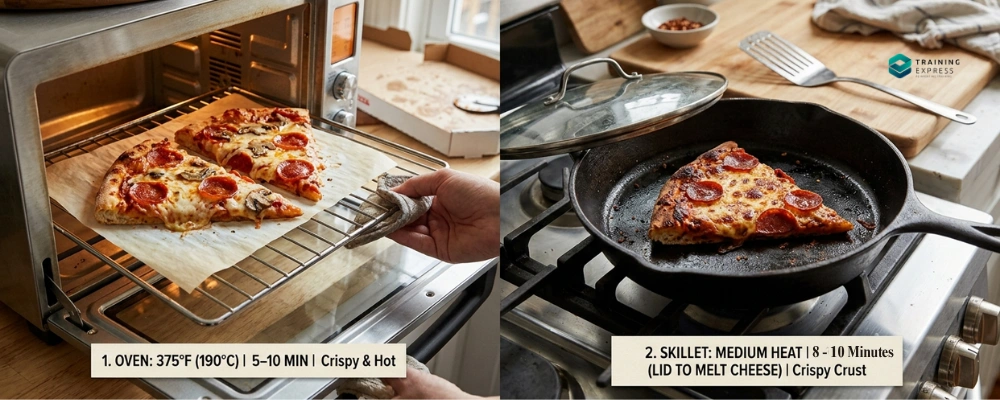
Pizza is one of the most popular leftovers, but reheating it incorrectly can leave the crust soft and chewy. The oven or skillet usually works better than a microwave because it helps restore the crispy texture.
Best method: Oven
Steps:
- Preheat your oven to 190°C (375°F).
- Place the pizza slices on a baking tray.
- Heat for around 8–10 minutes until the cheese melts and the crust becomes crispy.
- Check that the pizza is heated thoroughly before eating.
Alternative method: Skillet
Steps:
- Place the pizza slice in a dry pan over medium heat.
- Cover the pan with a lid to help melt the cheese.
- Heat for a few minutes until the base becomes crisp and the topping is warm.
How to Reheat Rice
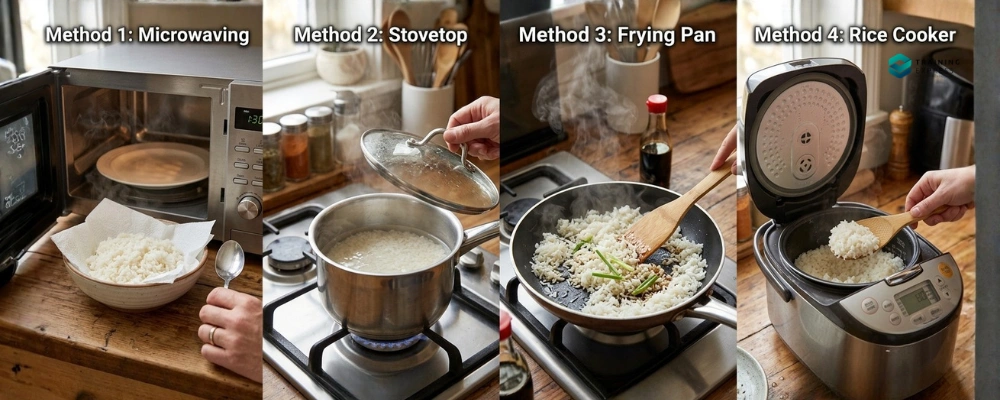
Rice can become dry and hard after being stored in the fridge. Adding a little moisture before reheating helps restore its texture.
Best method: Microwave
Steps:
- Place rice in a microwave-safe bowl.
- Add a tablespoon of water and mix gently.
- Cover with a microwave-safe lid or damp paper towel.
- Heat for 1–3 minutes, stirring halfway through.
- Make sure the rice is steaming hot before serving.
Alternative method: Stovetop
Steps:
- Add rice to a saucepan with a small amount of water.
- Cover with a lid.
- Heat on low temperature while stirring occasionally.
- Continue until the rice is evenly heated.
How to Reheat Fried Foods
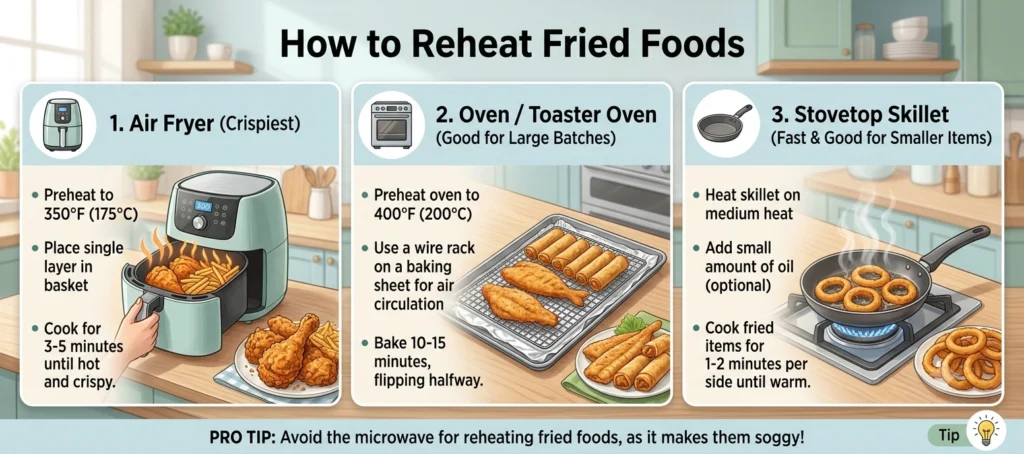
Fried foods such as fried chicken, chips, and onion rings often lose their crispiness in the microwave. Using dry heat helps bring back their original texture.
Best method: Air fryer or oven
Steps:
- Preheat the air fryer or oven to 190°C (375°F).
- Place food in a single layer.
- Heat for several minutes until crispy and hot.
- Avoid overcrowding to allow proper air circulation.
How to Reheat Chicken
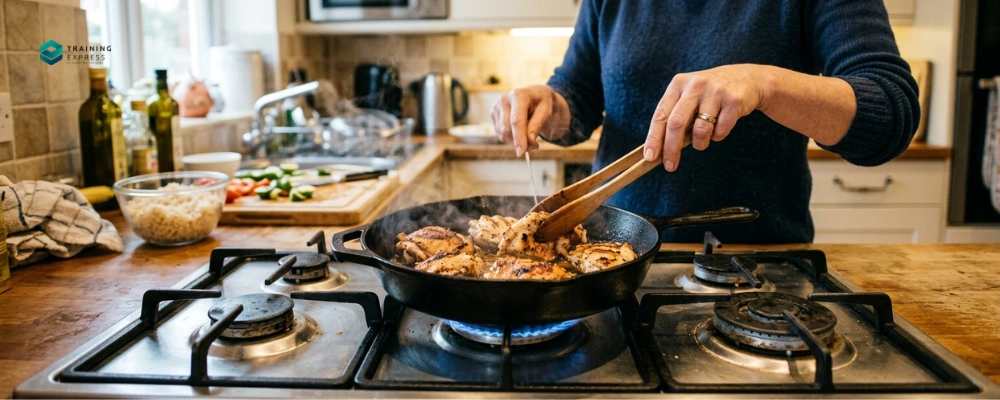
Chicken can become dry when reheated, especially lean pieces like chicken breast. Using gentle heat and adding moisture helps keep it tender.
Best method: Oven
Steps:
- Preheat the oven to 175°C (350°F).
- Place chicken in an oven-safe dish.
- Add a small splash of water or broth.
- Cover with foil to trap moisture.
- Heat until the chicken reaches 74°C (165°F) internally.
Alternative method: Microwave
Steps:
- Place chicken on a microwave-safe plate.
- Cover it with a microwave-safe lid.
- Heat in short intervals.
- Turn the chicken halfway through for even heating.
How to Reheat Steak
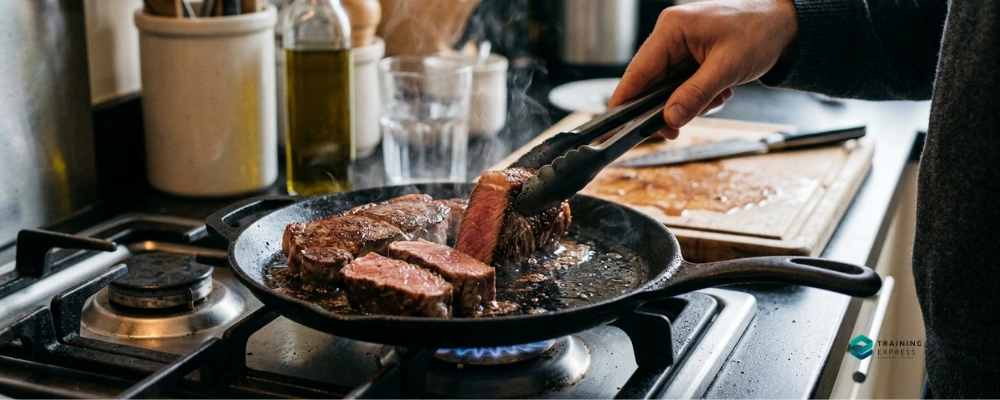
Steak can become tough if reheated too quickly at high temperatures. Gentle reheating helps maintain its texture.
Best method: Oven + quick sear
Steps:
- Preheat the oven to around 120°C (250°F).
- Place steak on a tray and heat slowly.
- Remove once warmed through.
- Quickly sear in a hot pan for a few seconds to restore the outer texture.
How to Reheat French Fries
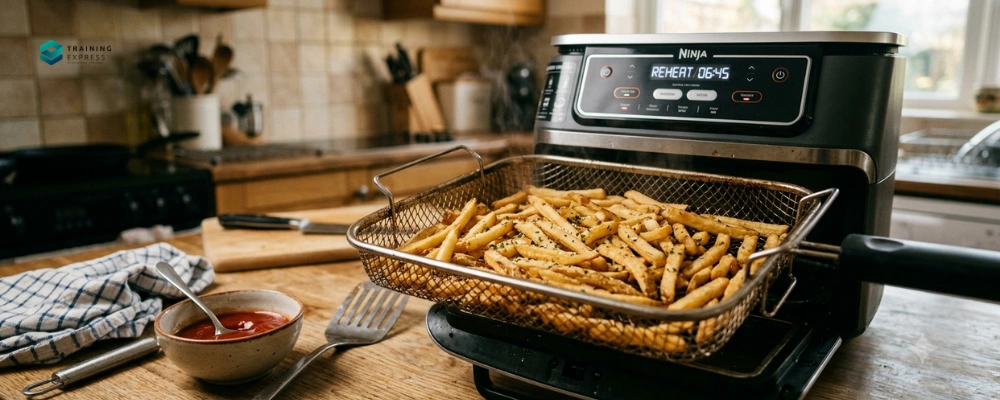
French fries are one of the hardest leftovers to reheat because they can quickly become soggy. Avoid microwaving them if you want a crispy texture.
Best method: Air fryer
Steps:
- Preheat the air fryer to 200°C (400°F).
- Spread fries evenly in the basket.
- Heat for 3–5 minutes.
- Shake halfway through for even crisping.
Alternative method: Oven
Steps:
- Place fries in a single layer on a baking tray.
- Heat until crispy and hot.
- Avoid stacking fries as this can make them soft.
How to Reheat Seafood
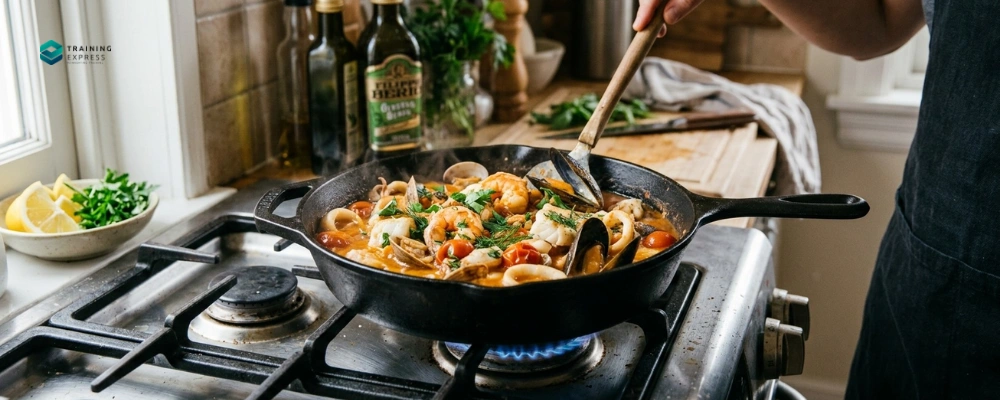
Seafood needs gentle reheating because high temperatures can make it dry and rubbery.
Best method: Oven or stovetop
Steps:
- Place seafood in a covered dish.
- Add a small amount of butter, broth, or lemon juice.
- Heat slowly until warmed through.
- Remove from heat as soon as it reaches the desired temperature.
For best quality, avoid repeatedly reheating seafood because each reheating cycle can affect its texture and flavour.
Common Mistakes That Ruin Leftovers
Even the best leftovers can end up dry, soggy, or unevenly heated if they’re reheated the wrong way. Fortunately, most reheating problems come down to a few common mistakes.
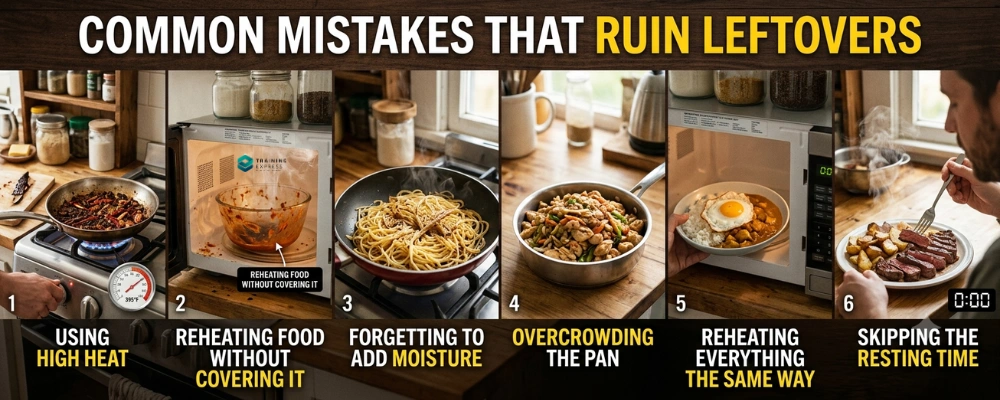
Using High Heat
It might seem faster to turn the oven up to 450°F or microwave food at full power, but high heat often causes the outside to overcook before the center has time to warm up.
Reheating Food Without Covering It
Many leftovers lose moisture during storage, and reheating them uncovered can dry them out even further.
Covering dishes with foil, a lid, or a microwave-safe cover helps trap moisture and keeps food from becoming tough or dry.
Forgetting to Add Moisture
Rice, pasta, chicken, and cooked vegetables often need a little help when reheating.
A splash of water, broth, milk, or extra sauce can make a surprising difference. The added moisture creates steam and helps restore texture.
Overcrowding the Pan
Whether you’re using a baking tray, skillet, or air fryer basket, overcrowding can prevent food from heating evenly.
Leaving some space between pieces allows heat to circulate properly and helps maintain crispness.
Reheating Everything the Same Way
Not all leftovers respond well to the microwave. Pizza, fried foods, and roasted vegetables usually benefit from dry heat, while soups and sauces often do better on the stovetop.
Choosing the right reheating method is often the biggest factor in preserving flavor and texture.
Skipping the Resting Time
After microwaving, letting food sit for a minute or two allows the heat to spread more evenly.
This simple step helps eliminate cold spots and improves the overall texture of the food.
Avoiding these common mistakes can make leftovers taste far closer to the original meal and help you get better results regardless of which reheating method you choose.
Food Safety Tips for Reheating Leftovers
Reheating leftovers isn’t just about taste and texture. Food safety matters too. While most leftovers are perfectly safe to eat, proper storage and reheating can help reduce the risk of foodborne illness.
Reheat Leftovers to 165°F (74°C)
As a general guideline, leftovers should be reheated until they reach an internal temperature of 165°F (74°C).
This temperature helps ensure that food is heated thoroughly and safely. A food thermometer can be particularly useful when reheating large portions, casseroles, soups, or cooked meats.
Refrigerate Leftovers Promptly
Leftovers should ideally be refrigerated within two hours of cooking. Storing food in shallow containers helps it cool more quickly and evenly.
Know How Long Leftovers Last
Most cooked leftovers can safely stay in the refrigerator for three to four days.
As a general guide:
| Food | Refrigerator Storage Time |
|---|---|
| Cooked chicken | 3–4 days |
| Cooked rice | 3–4 days |
| Pizza | 3–4 days |
| Soup and stews | 3–4 days |
| Cooked seafood | 1–2 days |
| Cooked vegetables | 3–4 days |
If leftovers develop an unusual smell, texture, or appearance, it’s usually best to discard them.
Can You Reheat Leftovers More Than Once?
Yes, leftovers can be reheated more than once if they have been stored properly and reheated thoroughly each time.
However, repeated reheating may gradually affect texture, flavor, and moisture. To avoid unnecessary reheating, consider dividing leftovers into smaller portions before storing them.
Avoid Reheating Large Portions All at Once
Large containers often heat unevenly, leaving some areas hot and others cold.
Dividing leftovers into smaller portions helps food reheat more evenly and reduces the risk of cold spots.
When in Doubt, Throw It Out
If you’re unsure how long leftovers have been stored, or if they smell or look unusual, it’s usually safer to discard them.
Quick Reheating Temperature Guide
If you’re unsure which reheating method to use, this quick guide can help. While exact times may vary depending on portion size and appliances, these temperatures work well for most leftovers.
| Food | Best Method | Recommended Temperature |
|---|---|---|
| Pizza | Oven or skillet | 375°F (190°C) |
| Fried foods | Oven or air fryer | 375°F (190°C) |
| Chicken | Oven | 350°F (175°C) |
| Casseroles | Oven | 350°F (175°C) |
| Lasagna | Oven | 350°F (175°C) |
| Roasted vegetables | Oven | 350°F (175°C) |
| Soup and stews | Stovetop | Medium heat |
| Pasta | Stovetop or microwave | Medium heat |
| Rice | Microwave or stovetop | Low to medium heat |
| Steak | Low oven | 250°F (120°C) |
| Seafood | Stovetop or oven | Low heat |
| French fries | Air fryer or oven | 400°F (200°C) |
These temperatures are designed to warm food gradually while helping preserve texture and moisture.
Can You Reheat Leftovers in an Air Fryer?
Air fryers have become one of the most popular ways to reheat leftovers, especially foods that benefit from a crispy texture.
Pizza, French fries, fried chicken, roasted vegetables, and breaded foods often reheat exceptionally well in an air fryer because the circulating hot air helps restore crispness.
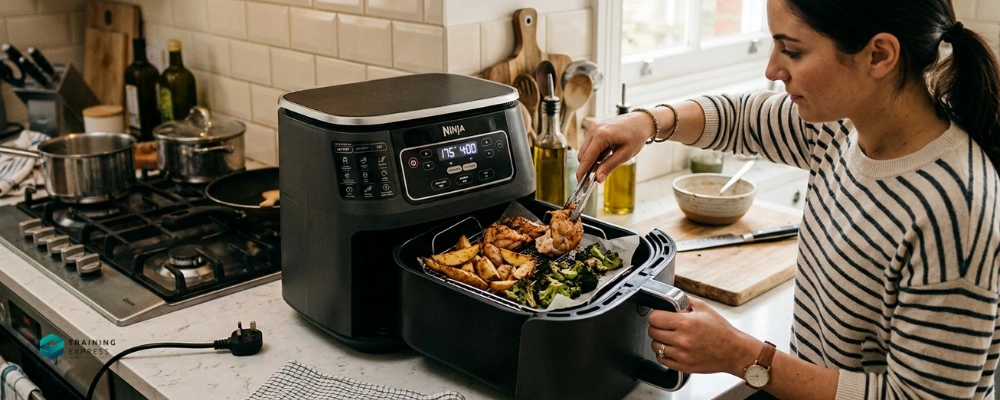
Most leftovers can be reheated at 350°F to 375°F (175°C to 190°C) for several minutes, depending on the food and portion size.
Avoid overcrowding the basket, as this can prevent the air from circulating properly. Shaking the basket halfway through cooking also helps ensure even reheating.
While an air fryer isn’t necessary for every leftover, it can often produce results that are closer to freshly cooked food than a microwave.
Learn More About Safe Food Handling
Reheating leftovers safely is only one aspect of good kitchen practice. Understanding food hygiene, temperature control, storage, and contamination prevention can help you prepare and handle food more confidently.
Our online Food Safety and Food Hygiene courses provide essential guidance on safe food handling practices for both home cooks and those working in catering, hospitality, or food service environments.
Final Thoughts
Leftovers don’t have to feel like second-best meals. With the right reheating method, many dishes can taste remarkably close to when they were first cooked.
The key is to match the reheating method to the food itself. Ovens work well for foods that need crispness, stovetops help restore moisture, and microwaves offer speed and convenience when used correctly.
A few simple adjustments—adding moisture, using lower heat, covering dishes, and reheating food gradually—can make a significant difference.
Whether you’re warming up leftover pizza, reheating soup for lunch, or bringing yesterday’s roast back to life, choosing the right method can help preserve flavor, texture, and moisture while reducing food waste.
Sometimes the best meal isn’t the one you cook today. It’s the one you know how to reheat properly.
Frequently Asked Questions (FAQ)
Is It Safe to Reheat Leftovers Twice?
Yes, leftovers can usually be reheated more than once if they have been stored properly in the refrigerator and reheated thoroughly each time. However, repeated reheating may affect texture and flavor, so it’s often better to reheat only the portion you plan to eat.
What Temperature Should Leftovers Be Reheated To?
Most leftovers should reach an internal temperature of 165°F (74°C) before serving. This helps ensure the food is heated evenly and safely.
How Long Can Leftovers Stay in the Refrigerator?
Most cooked leftovers remain safe in the refrigerator for three to four days. Seafood is generally best eaten within one to two days, while soups, cooked meats, rice, and pasta usually keep for up to four days.
Can You Reheat Rice Safely?
Yes. Rice can be safely reheated if it has been cooled quickly, refrigerated promptly, and heated thoroughly. Adding a small amount of water before reheating helps restore moisture and improve texture.
Is It Better to Reheat Food in the Oven or Microwave?
It depends on the food. The oven usually produces better results for pizza, fried foods, and roasted dishes because it helps maintain texture. The microwave is faster and works well for soups, rice, vegetables, and many everyday leftovers.
Why Do Leftovers Taste Different the Next Day?
As food cools and sits in the refrigerator, its flavors continue to develop and change. In some dishes, such as soups, stews, and curries, the ingredients have more time to blend together, which can create a richer flavor.
Why Do Leftovers Become Soggy?
Sogginess usually happens when steam becomes trapped during reheating. Microwaves often create moisture that softens crispy foods. Using an oven, skillet, or air fryer can help restore texture.
What Foods Should Not Be Reheated?
Most leftovers can be safely reheated when stored properly. However, delicate foods such as seafood can become overcooked easily, and cream-based sauces may separate if heated too quickly. Gentle reheating methods usually produce the best results.
Does Training Express offer food safety courses?
Yes. Training Express offers online food safety and food hygiene courses designed to help learners understand safe food handling, temperature control, food storage, and contamination prevention. These courses can help individuals working in catering, hospitality, and food service environments develop practical food safety knowledge.

Robert Lawrence
Author | Specialises in Health & Social Care
Robert Lawrence is an e-learning specialist and tutor at Training Express, with experience creating practical resources and strategies to support learners and enhance their professional development.