How to Get a Food Hygiene Certificate
Getting a food hygiene certificate is straightforward. Choose the level that matches your role, complete the online training, pass the assessment and download your certificate.
1
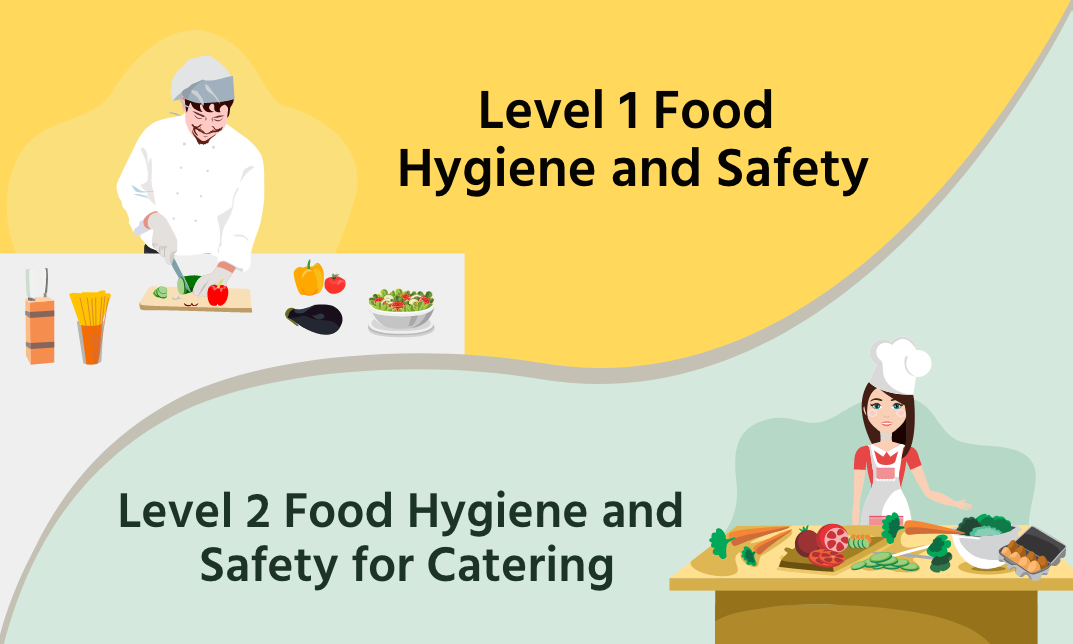
Choose Your Level
Use the guidance below to match the food hygiene course to your role and level of responsibility.
2
Enrol Online
Complete your purchase and get instant access to your course without waiting for a start date.
3
Study at Your Own Pace
Work through short, manageable modules at a pace that suits you, using your preferred device.
4
Take the Assessment
Complete the multiple-choice assessment at the end of the course. The pass mark is usually 60%.
5
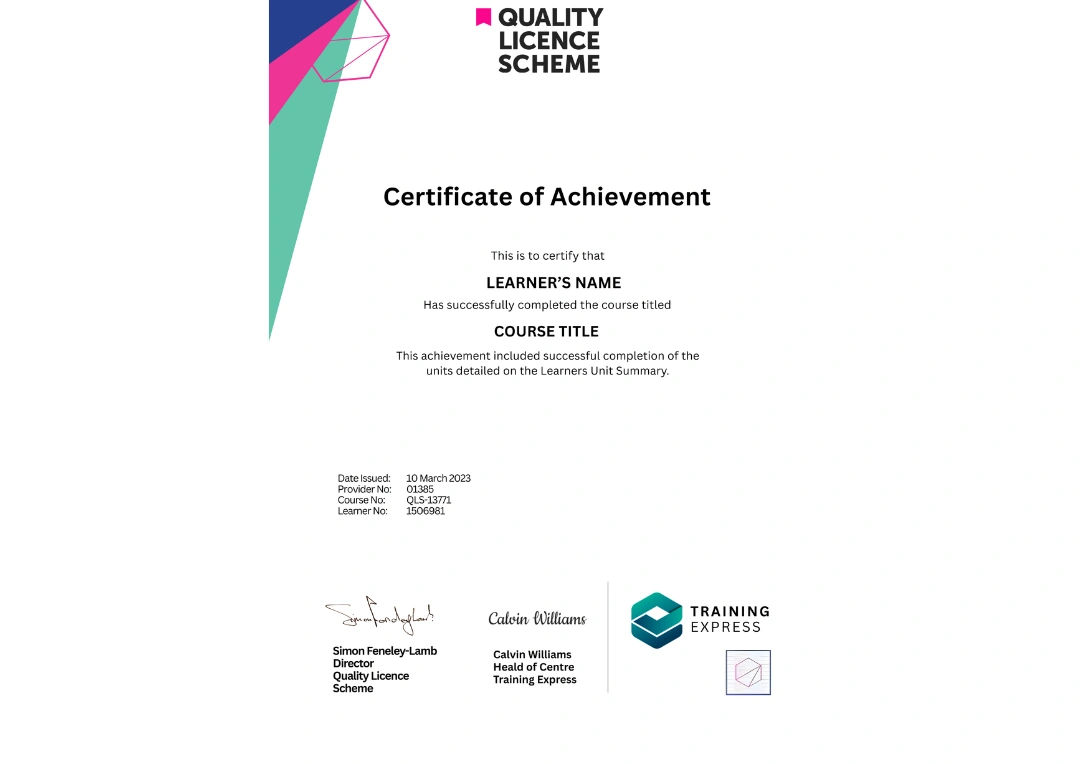
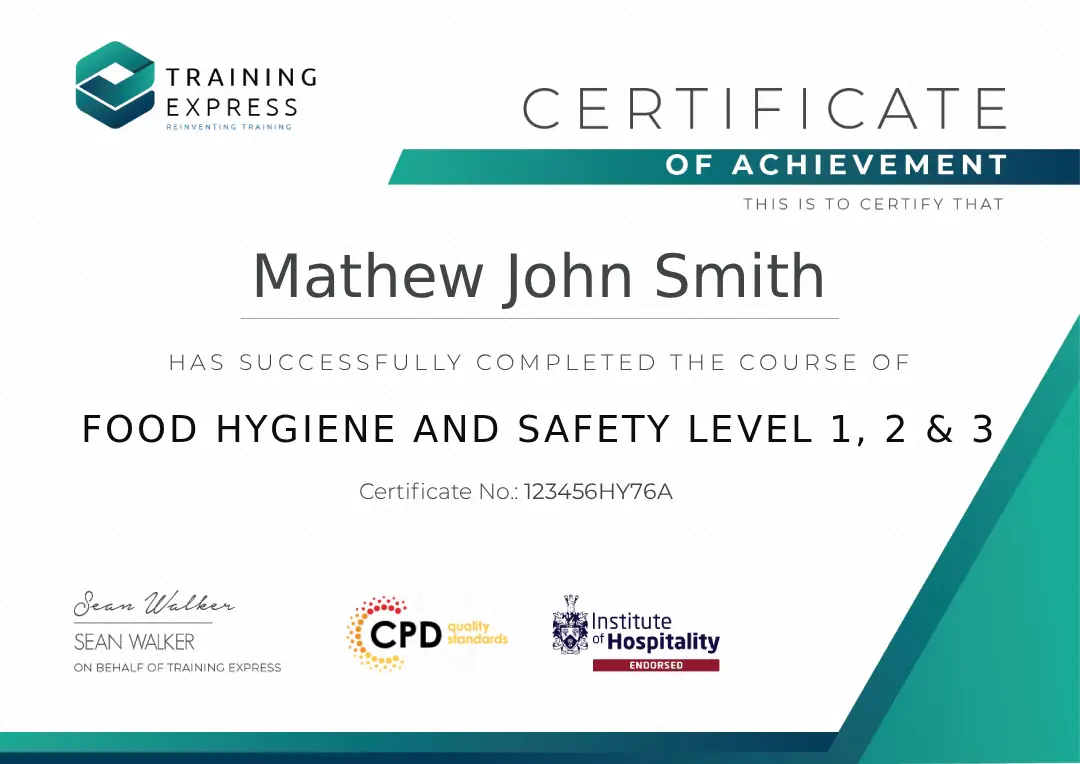
Get Your Certificate
Once you pass, your CPD certificate is available to download immediately, with a printed copy available by post if required.
Didn't pass first time? You can retake the assessment for free as many times as you need. There is no extra charge and no waiting period between attempts.
How Long Does a Food Hygiene Certificate Last?
There's no fixed legal expiry date on a food hygiene certificate. Once you've passed, it remains valid indefinitely as a record of the training you completed.
That said, industry best practice — and the general expectation of Environmental Health Officers — is to refresh your training roughly every three years, or sooner if food safety guidance changes, your role changes, or your employer's policy requires it.
✓
Every Three Years
Around three years is widely used as a practical training refresh period in the food industry.
↻
When Guidance Changes
Refresher training may be appropriate sooner when food safety guidance, procedures or legal requirements change.
↗
When Your Role Changes
Moving into a different role or taking on greater food safety responsibility may mean additional training is needed.
!
Employer Requirements
Some employers set their own renewal schedules, particularly for higher-risk roles. This is an internal business decision rather than a fixed legal expiry rule.
If you're not sure when you need to refresh your training, check your employer's internal policy directly. Their requirements may be more frequent than the general three-year best-practice timeframe.
Which Food Hygiene Level Do You Need?
The right course depends on how much contact you have with food, not on ambition. A higher level isn't automatically better for your situation — it needs to match your responsibilities.
| Your Role |
Recommended Level |
|
Front-of-house, serving wrapped or packaged food only
|
Level 1
|
|
Preparing, cooking, or serving open food — chef, kitchen assistant, café or takeaway staff
|
Level 2
|
|
Working in retail, care, or manufacturing handling food directly
|
Level 2
Sector-specific
|
|
Supervising food handlers or running a kitchen
|
Level 3
|
|
Responsible for a food safety management system (HACCP)
|
Food Safety Management / HACCP
|
|
Handling menus or products with allergen risk
|
Allergen Awareness
Alongside your level
|
01
Level 1 — Basic Awareness
For people with limited or indirect contact with food — think front-of-house staff who mostly handle wrapped products, or anyone new to the industry who needs a grounding before starting hands-on work.
02
Level 2 — Food Handlers
The most widely required level in the UK. If you prepare, cook, serve, or handle open food in any setting — catering, retail, care, or manufacturing — this is the standard training most employers expect.
03
Level 3 — Supervisors & Managers
Built for anyone responsible for other people's food safety, not just their own: kitchen managers, head chefs, and supervisors who need to train staff, maintain a food safety system, and answer for it during an inspection.
04
Food Safety Management & HACCP
For business owners and managers who need to build and maintain a HACCP-based food safety management system — the framework most UK food businesses are expected to have in place.
 Food Hygiene
 Health & Safety
 Safeguarding
 First Aid
 Business Skills
 Personal Development





 Reviews
































Well presented course filled with necessary information..