Food Hygiene
 Health & Safety
 Safeguarding
 First Aid
 Business Skills
 Personal Development
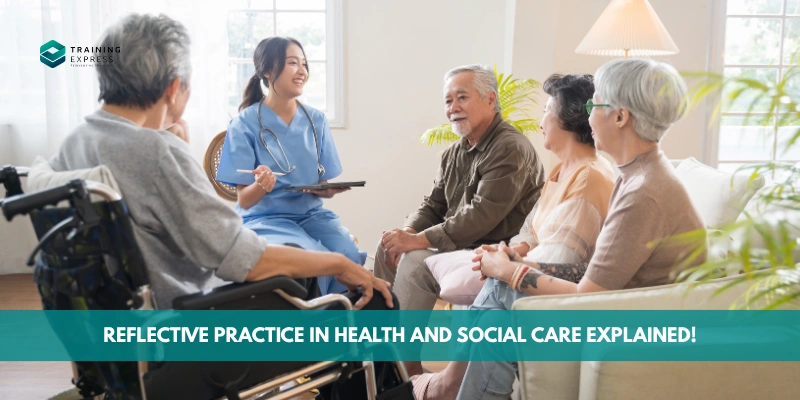

Health and social care professionals work in fast-changing environments where everyday decisions can affect the quality of care people receive. Professionals are expected to keep developing their skills, communication, and workplace practice.
Reflective practice helps workers learn from their experiences, recognise what went well, and identify areas for improvement. It supports safer care, better decision-making, and ongoing professional development.
This guide explores what reflective practice is, why it matters in health and social care, practical examples of reflection in different care settings, and how technology can support reflective learning.
Table of Contents
What is Reflective Practice in Health and Social Care?
Reflective practice in health and social care is the critical analysis of professional experiences, actions, and decisions to improve future care quality, safety, and self-awareness.
Rather than simply completing daily tasks, reflective practitioners learn from their experiences and use them to improve their knowledge, skills, and decision-making abilities.
Reflection can take place through written accounts, supervision meetings, discussions with colleagues, or personal evaluation after situations occur. It supports continuous improvement, accountability, and person-centred care.
Reflective Practice in Health and Social Care – Meaning and Definition
Reflective practice in health and social care refers specifically to the process of reviewing care experiences and professional actions to improve the quality of support provided to individuals.
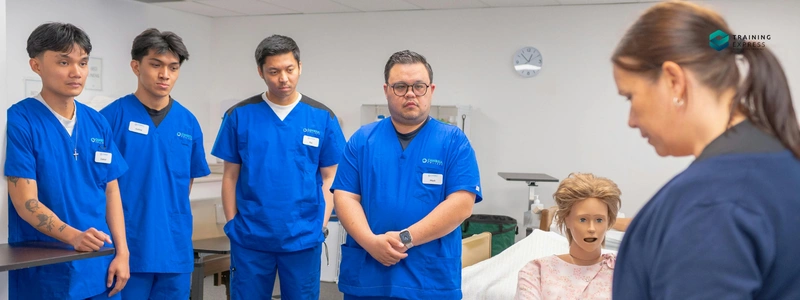
In healthcare and social care settings, professionals regularly encounter complex situations involving communication, safeguarding, emotional wellbeing, clinical care, teamwork, risk management, and ethical decision-making. Reflection helps professionals understand how their actions affect patients, residents, service users, families, and colleagues.
Reflective practice is used by:
- Nurses
- Care workers
- Healthcare assistants
- Support workers
- Social workers
- Occupational therapists
- Mental health professionals
- Managers and team leaders
In the UK, reflective practice is strongly linked to professional standards, continuing professional development (CPD), patient safety, and person-centred care. Organisations such as the Care Quality Commission (CQC), Nursing and Midwifery Council (NMC), and Health and Care Professions Council (HCPC) encourage reflective learning to improve professional competence and care quality.
Why is Reflective Practice Important in Health and Social Care Settings?
Reflective practice is important in health and social care because it supports learning, professional growth, and continuous improvement.

Health and social care professionals work in environments where mistakes, communication issues, safeguarding concerns, or poor decision-making can significantly affect individuals’ wellbeing and safety. Reflection helps professionals identify areas for improvement and develop safer, more effective ways of working.
Improves Patient Care and Service Quality
Reflective practice helps professionals identify ways to improve patient experiences, communication, and overall care quality. By learning from previous situations, staff can make better decisions and adapt their approach to individual needs.
Supports Professional Development and CPD
Reflection encourages continuous learning and helps professionals identify knowledge gaps, training needs, and areas for improvement. It also supports CPD requirements and long-term career development.
Strengthens Safeguarding Practice
Reflective practice helps staff evaluate safeguarding decisions, reporting procedures, and risk management processes. This can improve safeguarding awareness and encourage earlier intervention.
Enhances Communication and Teamwork
By reflecting on workplace interactions, professionals can improve communication with patients, residents, colleagues, and families. Reflection can also strengthen teamwork and multidisciplinary collaboration.
Encourages Person-Centred Care
Reflection helps professionals evaluate whether care was respectful, compassionate, and tailored to individual needs, preferences, and wellbeing.
Improves Emotional Resilience in Care Settings
Health and social care professionals often experience emotionally demanding situations. Reflection can help staff process experiences, manage stress, and build emotional resilience.

The benefits of reflective practice in health and social care include:
- Improving patient and service user care
- Enhancing communication skills
- Supporting person-centred care
- Increasing self-awareness
- Improving teamwork and collaboration
- Strengthening safeguarding practice
- Supporting emotional resilience
- Improving professional confidence
- Reducing the likelihood of repeated mistakes
- Supporting CPD and professional development
Reflective practice also helps professionals process emotionally challenging experiences, such as medical emergencies, safeguarding disclosures, end-of-life care, or difficult interactions with families.
By reflecting regularly, professionals can continuously improve both their individual performance and the overall quality of care within their organisation.
Real Examples of Reflective Practice in Health and Social Care
There are many examples of reflective practice in health and social care settings. Reflection may involve analysing communication, reviewing incidents, evaluating care decisions, or identifying ways to improve professional behaviour.
Reflection After Safeguarding Incidents
Professionals may reflect on safeguarding concerns to evaluate whether risks were identified appropriately and whether reporting procedures were followed correctly.
Reflection Following Communication Challenges
Communication difficulties with patients, service users, families, or colleagues can provide valuable opportunities for reflective learning and improvement.
Reflective Learning After Medical Errors
Reflection following mistakes or incidents can help professionals understand contributing factors and develop safer ways of working.

Reflecting on Teamwork and Professional Practice
Professionals may reflect on teamwork, leadership, collaboration, and workplace relationships to improve professional practice and service quality.
Professionals often reflect after:
- Safeguarding concerns
- Medication errors
- Communication difficulties
- Patient complaints
- Challenging behaviours
- Emergency situations
- Team conflicts
- Clinical incidents
- Training sessions
- Supervision meetings
Reflection can take place individually, during supervision sessions, within team discussions, or through formal reflective writing.
Examples of Reflective Practice in Healthcare Settings
In healthcare environments, reflective practice is commonly used to improve patient safety, communication, and clinical decision-making.
Communication With Patients
A nurse reflects on a situation where a patient became anxious during treatment. After reviewing the interaction, the nurse realises that clearer explanations and more reassurance could have reduced the patient’s stress.
Medication Administration
A healthcare professional reflects on a medication delay caused by poor shift coordination. Reflection helps identify communication problems and encourages improved time management strategies.

Emergency Situations
Following a medical emergency, healthcare staff may reflect on teamwork, communication, and decision-making to improve future emergency responses.
Infection Control
A healthcare assistant reflects on infection prevention procedures after identifying gaps in hand hygiene compliance during a busy shift.
These examples of reflective practice in healthcare help improve patient care, reduce risks, and support professional development.
Examples of Reflective Practice in Social Care Settings
Reflective practice is equally important within social care environments where professionals support vulnerable adults, children, and individuals with complex emotional or social needs.
Safeguarding Concerns
A support worker reflects on a safeguarding concern involving unexplained bruising and evaluates whether reporting procedures were followed quickly and correctly.
Supporting Emotional Wellbeing
A social care worker reflects on how they handled a service user experiencing emotional distress and considers whether more empathetic communication could have improved the situation.

Behaviour Support
A support worker reflects on managing challenging behaviour and identifies alternative de-escalation strategies that may work more effectively in future situations.
Professional Boundaries
A care professional reflects on maintaining appropriate professional boundaries while still building positive relationships with service users.
These examples of reflective practice in social care support safer, more compassionate, and person-centred support.
Examples of Reflective Practice in Care Homes and Residential Care
Care home staff regularly use reflective practice to improve the wellbeing, dignity, and safety of residents.
Dementia Care
A care worker reflects on supporting a resident living with dementia who became distressed during personal care. Reflection helps the worker identify ways to improve communication and reduce anxiety.
Falls Prevention
After a resident experiences a fall, staff reflect on risk assessments, environmental hazards, and monitoring procedures to improve safety.
Nutrition and Hydration Support
A carer reflects on how mealtime support was provided and identifies ways to encourage better nutrition and hydration for residents.
End-of-Life Care
Care home staff may reflect on emotional support, communication with families, and dignity during end-of-life care situations.
Reflective practice in care homes helps improve resident outcomes, teamwork, safeguarding awareness, and overall care standards.
Reflective Practice in Health and Social Care – How Does Reflective Practice Work?

Reflective practice works by encouraging professionals to review experiences in a structured and meaningful way.
The process usually involves:
- Describing the situation or experience
- Considering thoughts and emotions
- Evaluating what went well and what did not
- Analysing why events happened
- Identifying lessons learned
- Planning improvements for future practice
Using Reflective Models in Health and Social Care
Many professionals use reflective models to guide this process.
Common models of reflective practice in health and social care include:
- Gibbs Reflective Cycle
- Kolb’s Reflective Cycle
- Driscoll’s Model of Reflection
- Johns’ Model of Reflection
These models help professionals think critically about their experiences and develop practical strategies for improvement.
Reflective Writing and Professional Discussions
Reflection may take place through written reflective accounts, supervision sessions, team discussions, workplace reviews, or CPD activities.
Continuous Learning Through Reflection
Regular reflection encourages continuous improvement by helping professionals learn from workplace experiences and apply new knowledge in future situations.
Reflective practice may be completed:
- Independently
- During supervision
- In team meetings
- Through reflective journals
- As part of CPD activities
- During training sessions
Regular reflection supports continuous learning and helps professionals maintain high standards of care.
Models of Reflective Practice in Health and Social Care

Reflective practice models help health and social care professionals analyze experiences, improve skills, and enhance patient care in the UK sector. These structured frameworks, often required for CPD by bodies like the HCPC, promote critical thinking and professional development.
Key Models:
Several models are widely used in health and social care for structured reflection.
- Gibbs’ Reflective Cycle (1988): Involves six stages—description, feelings, evaluation, analysis, conclusion, and action plan—to process an event systematically.
- Kolb’s Experiential Learning Cycle (1984): Cycles through concrete experience, reflective observation, abstract conceptualization, and active experimentation to learn from practice.
- Schön’s Reflection (1983): Distinguishes reflection-in-action (thinking during events) and reflection-on-action (reviewing afterward) for real-time adaptation.
- Argyris and Schön’s Learning Loops (1978): Single-loop adjusts actions based on outcomes; double-loop questions underlying assumptions and values.
- Johns’ Model (1994): Uses cue questions on description, reflection, influencing factors, alternatives, and learning across empirics, ethics, personal knowing, and aesthetics.
Comparison Table
| Model | Stages / Steps | Best For in Health & Social Care | Strengths |
|---|---|---|---|
| Gibbs (1988) | 6 (Description → Action) | Beginners; post-event analysis | Structured, actionable approach to reflection |
| Kolb (1984) | 4 (Experience → Experimentation) | Experiential learning cycles | Iterative learning and continuous development |
| Schön (1983) | In-action / On-action | Dynamic, unpredictable situations | Supports real-time decision making and improvisation |
| Argyris & Schön | Single / Double Loop | Challenging assumptions in teams | Encourages deep critical thinking and insight |
| Johns (1994) | 5 cue questions | Ethical / personal reflection | Holistic, values-based reflective practice |
How Technology Can Improve Reflective Practice in Health and Social Care
Technology is increasingly supporting reflective practice in health and social care by making reflection more accessible, organised, and efficient.
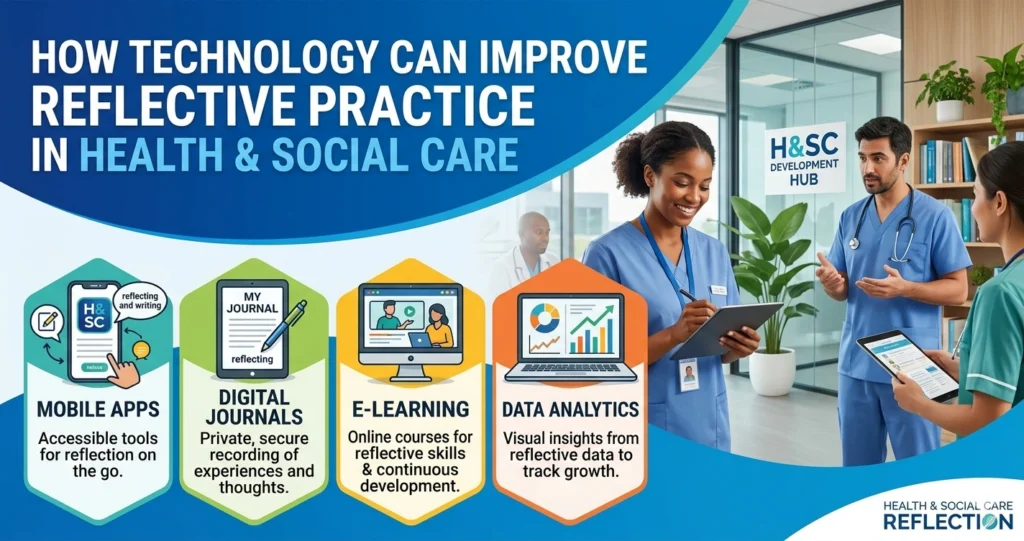
Digital tools can help professionals record experiences, track learning, access training resources, and analyse workplace performance more effectively.
1. Digital Journals
Digital journals allow professionals to record reflections electronically instead of using paper-based systems.
These journals can help staff:
- Track learning over time
- Organise reflective entries
- Access reflections easily
- Monitor professional development
Digital journaling also supports remote and flexible learning environments.
2. Mobile Apps
Mobile apps can support reflective practice by allowing professionals to complete reflections quickly during or after shifts.
Apps may include:
- Reflection prompts
- Learning reminders
- CPD tracking
- Voice notes
- Incident reflection tools
This makes reflective practice more convenient for busy healthcare professionals.
3. Data Analytics in Healthcare and Social Care
Data analytics can help organisations identify trends, risks, and performance patterns that support reflective learning.
For example, organisations may analyse:
- Incident reports
- Medication errors
- Patient feedback
- Safeguarding concerns
- Staff performance data
This information can help teams identify areas requiring improvement and develop targeted training strategies.
4. E-learning platforms
E-learning platforms provide healthcare and social care staff with access to reflective learning resources, CPD courses, and professional development materials.
These platforms can support:
- Reflective exercises
- Scenario-based learning
- Knowledge assessments
- Professional training
- Continuous learning
Online learning systems also allow staff to revisit learning materials whenever needed.
5. Electronic Health Records (EHRs)
Electronic Health Records (EHRs) support reflective practice by improving documentation, communication, and access to patient information.
EHR systems can help professionals review:
- Care decisions
- Treatment plans
- Clinical outcomes
- Communication records
- Risk management processes
This can improve accountability, patient safety, and decision-making.
Frequently Asked Questions (FAQ)
What is reflective practice in health and social care?
Reflective practice in health and social care is the process of reviewing workplace experiences, decisions, communication, and actions to improve future professional practice and patient care. It helps healthcare and social care professionals learn from experiences, identify areas for improvement, and provide safer, more person-centred support.
Why is reflective practice important in health and social care?
Reflective practice is important because it supports continuous professional development, improves patient safety, strengthens safeguarding awareness, and enhances communication skills. It also helps professionals improve decision-making, teamwork, and the overall quality of care provided in healthcare and social care settings.
What are examples of reflective practice in health and social care?
Examples of reflective practice in health and social care include reflecting on safeguarding concerns, medication errors, communication challenges, dementia care situations, emergency responses, teamwork issues, and patient complaints. These reflections help professionals improve future practice and care outcomes.
What are the benefits of reflective practice in health and social care?
The benefits of reflective practice in health and social care include improved patient care, stronger communication, better teamwork, increased self-awareness, enhanced safeguarding practice, improved emotional resilience, and ongoing professional development. Reflection also helps reduce the likelihood of repeated mistakes.
What are the main models of reflective practice in health and social care?
Common models of reflective practice in health and social care include Gibbs Reflective Cycle, Kolb’s Reflective Cycle, Driscoll’s Model of Reflection, and Johns’ Model of Reflection. These reflective models help professionals analyse experiences and identify practical improvements for future care.
How does reflective practice improve patient care?
Reflective practice improves patient care by helping professionals learn from workplace experiences, improve communication, strengthen safeguarding responses, and identify ways to provide safer and more person-centred care. It also supports better decision-making and reduces risks in healthcare environments.
How do you write a reflective account in health and social care?
A reflective account in health and social care should explain a workplace experience, describe thoughts and feelings, identify lessons learned, and outline how future practice can improve. Reflective accounts are commonly used for CPD, supervision, safeguarding reviews, and professional development.
How does reflective practice support safeguarding?
Reflective practice supports safeguarding by helping professionals review safeguarding decisions, improve reporting procedures, identify risks, and strengthen communication. Reflection also helps healthcare and social care staff recognise areas where earlier intervention or improved safeguarding responses may be needed.
Why is reflective practice important for nurses and care workers?
Reflective practice is important for nurses and care workers because it supports professional growth, emotional resilience, patient safety, and person-centred care. It helps professionals improve communication, strengthen clinical decision-making, and continuously develop their skills within healthcare and social care settings.

Robert Lawrence
Author | Specialises in Health & Social Care
Robert Lawrence is an e-learning specialist and tutor at Training Express, with experience creating practical resources and strategies to support learners and enhance their professional development.
Related Blogs