Food Hygiene
 Health & Safety
 Safeguarding
 First Aid
 Business Skills
 Personal Development
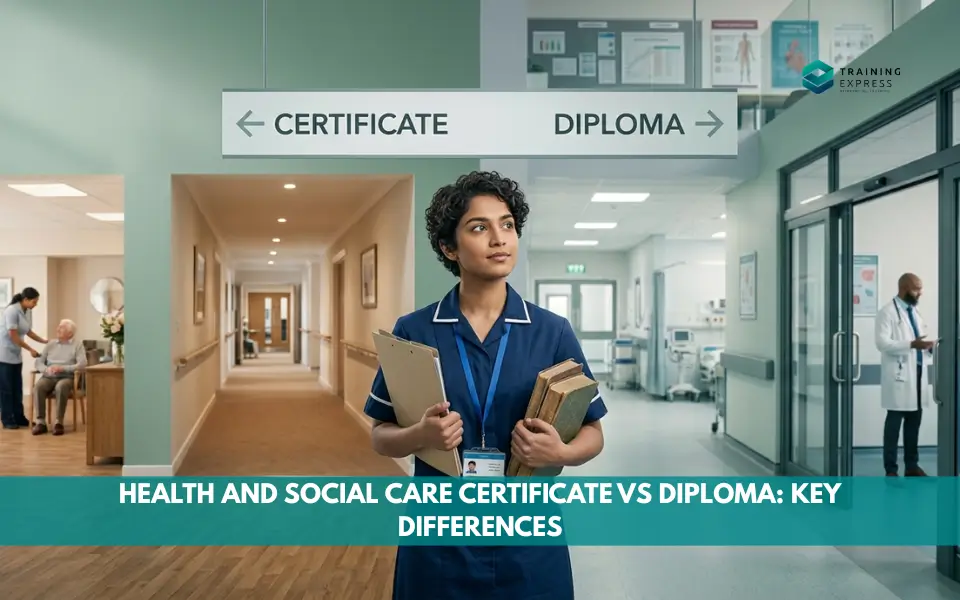

What if the biggest decision in your health and social care journey isn’t whether to study—but what to study first? Many learners enter this field with the same question: should you start with a certificate or go straight into a diploma?
At first glance, both qualifications may seem similar. They both offer entry into the health and social care sector, both provide valuable knowledge, and both can lead to meaningful careers. But the reality is, they serve different purposes and lead to different opportunities.
Choosing between a health and social care certificate vs diploma is not just about level—it is about direction. It shapes how you learn, the roles you qualify for, and how quickly you can progress in your career.
This guide explores the key differences between a certificate and a diploma, helping you understand which option aligns best with your goals and how each pathway supports long-term growth in the health and social care sector.
Table of Contents
Why Understanding the Difference Matters
Many learners assume that all qualifications in health and social care offer the same outcomes. However, the type of qualification you choose can significantly impact your career path.
A certificate is often designed as an introduction to the field, while a diploma provides more comprehensive training and prepares learners for greater responsibility.
Understanding the difference helps you avoid choosing a course that may not align with your goals. It also ensures that the time and effort you invest in learning support your long-term career plans.
In a sector where qualifications matter, making the right choice at the beginning can influence future opportunities.
What Is a Health and Social Care Certificate
A health and social care certificate is typically an entry-level qualification designed for beginners.
These courses introduce the basic principles of caregiving, including communication, safeguarding, and supporting individuals with daily needs.
Certificate programs are usually shorter in duration and focus on foundational knowledge. They are often suitable for individuals who are new to the sector and want to explore whether a career in health and social care is right for them.
Because of their introductory nature, certificates are often used as a starting point rather than a final qualification.
What Is a Health and Social Care Diploma
A health and social care diploma is a more advanced qualification that provides in-depth training.
Diploma programs cover a wider range of topics, including care planning, ethical practice, safeguarding procedures, and professional responsibilities in care environments.
These courses are usually longer and require a greater level of commitment. However, they also provide a stronger foundation for working in professional roles.
Employers often prefer candidates with diploma-level qualifications because they demonstrate a deeper understanding of care practices and responsibilities.
Key Differences Between Certificate and Diploma
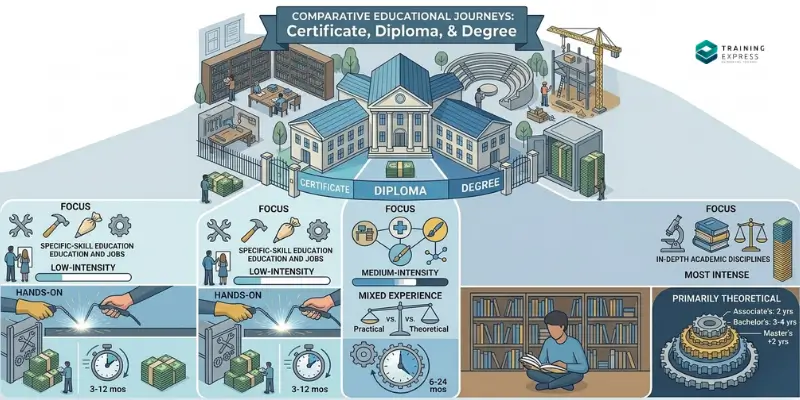
Course Duration
One of the most noticeable differences is the length of the course.
Certificates are generally shorter and can often be completed in a few months. Diplomas, on the other hand, usually take longer due to their more detailed content.
Depth of Learning
Certificates focus on basic knowledge and introductory concepts. Diplomas provide a more detailed understanding of care practices, including advanced topics such as care planning and leadership skills.
Career Opportunities
A certificate may help you enter entry-level roles such as healthcare assistant or support worker.
A diploma can open the door to more advanced roles and provide opportunities for career progression into supervisory positions.
Entry Requirements
Lorem ipsum dolor sit amet, consectetur adipiscing elit. Ut elit tellus, luctus nec ullamcorper mattis, pulvinar dapibus leo.
Progression Pathways
Certificates often act as a stepping stone toward further education.
Diplomas provide a stronger foundation for progressing into higher-level qualifications, such as Level 4 Health and Social Care.
Certificate vs Diploma: Which One Should You Choose
Choosing between a certificate and a diploma depends on your current situation and career goals.
If you are new to the sector and want to explore your options, a certificate may be the best starting point. It allows you to gain basic knowledge and understand the field before committing to further study.
If you are confident about your career path and want to develop professional skills, a diploma may be a better choice. It provides more comprehensive training and improves career prospects.
Some learners choose to start with a certificate and then progress to a diploma as they gain experience and confidence.
How Each Qualification Supports Career Growth
Both certificates and diplomas play an important role in career development.
Certificates help individuals enter the sector and build foundational skills. They provide a starting point for gaining experience and understanding care environments.
Diplomas support career progression by developing advanced skills and preparing individuals for greater responsibility.
With experience and further qualifications, professionals can move into roles such as senior care worker, care coordinator, or care manager.
Understanding how each qualification fits into your career path helps you make informed decisions about your education.
Common Misconceptions About Certificates and Diplomas
Many learners believe that a certificate is enough for long-term career growth. While it can help you enter the field, additional qualifications are often needed for progression.
Another misconception is that diplomas are only for experienced professionals. In reality, many diploma programs are designed for learners who are ready to take the next step after basic training.
Some also assume that online courses are less valuable than classroom learning. However, many health and social care courses online offer recognised qualifications and high-quality training.
Clarifying these misconceptions can help learners choose the right path with confidence
Final Thought
Choosing between a health and social care certificate vs diploma is not about which one is better—it is about which one is right for your current stage and future goals.
Both qualifications play an important role in building a career in care. A certificate can open the door, while a diploma can help you move forward with confidence and greater responsibility.
By understanding the differences and aligning your choice with your ambitions, you can take a clear and structured step toward a meaningful and rewarding career in health and social care.
Frequently Asked Questions (FAQ)
What is the difference between a certificate and a diploma in health and social care?
A certificate is an entry-level qualification, while a diploma provides more advanced and detailed training.
Which is better, a certificate or a diploma?
It depends on your goals. Certificates are suitable for beginners, while diplomas offer better opportunities for career progression.
Can I start with a certificate and then do a diploma?
Yes. Many learners begin with a certificate and progress to a diploma.
Are diplomas more valuable than certificates?
Diplomas are often more valued by employers because they demonstrate a higher level of knowledge and training.
Can both qualifications be studied online?
Yes. Many institutions offer both certificates and diplomas through health and social care courses online.