Food Hygiene
 Health & Safety
 Safeguarding
 First Aid
 Business Skills
 Personal Development


All three level food hygiene certificates do not legally expire, but it is strongly recommended that you renew it every three years to ensure your knowledge stays current with evolving food safety regulations and industry best practices.
Food hygiene is more than just a box-ticking exercise—it’s the foundation of safe food preparation, customer trust, and legal compliance. Whether you run a bustling restaurant, manage a catering business, or supervise a food production team, the way food is handled, stored, and served has direct consequences for public health.
This guide will explore not only how long does a food hygiene certificate is valid for, but also why renewing it matters, what happens if you don’t, and how to ensure you remain compliant and confident in your food safety role.
Table of Contents
How Long Do Food Hygiene Certificates Last at Each Level?
Whether you hold a Level 1, Level 2, or Level 3 food hygiene certificate, the general rule of thumb is the same —renew every three years to keep your knowledge fresh and your compliance up to date. While no UK law states that food hygiene certificates have an official expiry date, industry best practice—and guidance from organisations like the Food Standards Agency (FSA)—recommends renewal every three years.
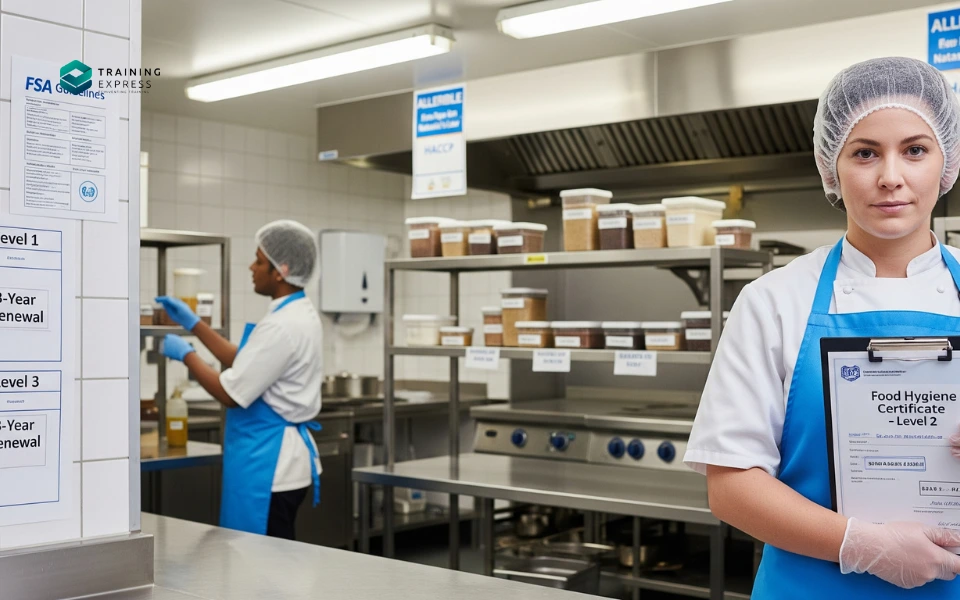
Why? Food safety legislation, such as the Food Safety Act 1990 and HACCP guidelines, is regularly updated to address emerging health risks, technological advancements, and new scientific findings. For example, an update in allergen labelling laws (Natasha’s Law) made it mandatory for pre-packed foods to carry specific allergen information—something older training materials might not cover.
By refreshing your training, you not only ensure compliance but also reduce the risk of foodborne illness outbreaks, which can damage reputations and lead to legal action. In short, even though your certificate might still be “valid” on paper, in practice, outdated knowledge can be just as dangerous as having no training at all.
In short, no matter your role, renewing every three years ensures you’re not only meeting industry standards but also protecting public health, your career, and your business reputation.
What Is a Food Hygiene Certificate?
Before we dive deeper into renewal rules, let’s clarify exactly what a food hygiene certificate represents. It’s not just a piece of paper—it’s proof that you’ve completed formal training in the safe handling, preparation, and storage of food.
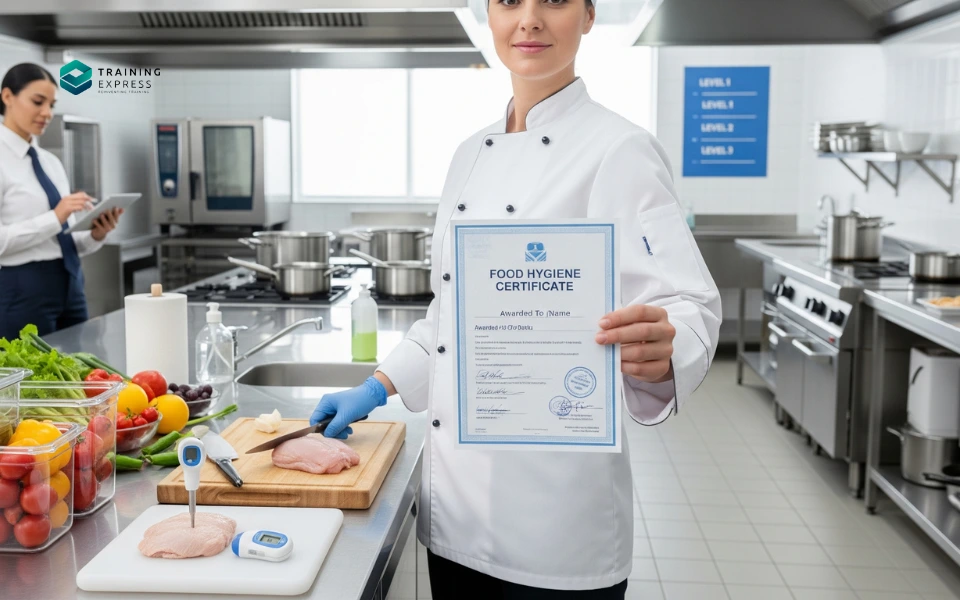
This certificate is often the easiest way to demonstrate compliance with UK food hygiene laws and reassure both customers and inspectors that you take safety seriously.
Definition and Purpose
A food hygiene certificate confirms that an individual understands:
- How to store food safely.
- How to prevent cross-contamination.
- The correct cooking and cooling processes.
- Allergen awareness and labelling requirements.
- Personal hygiene best practices in food handling.
Different Levels Explained
Food hygiene training is structured into levels that match the responsibility of the learner:
- Level 1 – Suitable for staff in non-food preparation roles (e.g., warehouse workers, front-of-house staff in coffee shops).
- Level 2 – Required for anyone directly involved in preparing or cooking food (e.g., chefs, bakers, kitchen assistants).
- Level 3 – Designed for supervisors, managers, and business owners responsible for enforcing and overseeing food safety procedures.
In essence, the higher the level, the deeper the focus on legal compliance, hazard control, and management responsibilities.
Why Is Renewing Food Hygiene Training Important?
Renewing your food hygiene training is about more than satisfying an inspector—it’s about protecting lives. Outdated knowledge can lead to unsafe practices, and in the food industry, small errors can have serious consequences.

Food safety standards evolve due to:
- Changes in legislation (e.g., allergen labelling laws).
- Emerging health risks (e.g., new strains of bacteria like E. coli O157).
- Technological developments (e.g., new cooking or storage equipment).
By staying current, you:
- Reduce the risk of foodborne illnesses.
- Protect your business from costly legal claims.
- Maintain customer trust and brand reputation.
Even if the law doesn’t demand renewal, the Food Standards Agency expects food business operators to keep staff training up to date as part of their due diligence obligations.
Who Needs a Food Hygiene Certificate?

Food hygiene training isn’t just for chefs in Michelin-star restaurants—it applies to anyone who works with food, no matter the scale. If your role involves handling, preparing, serving, or even storing food, you need appropriate training.
This includes:
- Food handlers – anyone involved in preparing or cooking food.
- Kitchen staff – from head chefs to pot washers.
- Caterers – whether event-based or corporate catering.
- Restaurant managers – responsible for overseeing food safety policies.
- Hospitality businesses – hotels, B&Bs, pubs serving food.
- Food truck operators – street food vendors and mobile caterers.
- Bakery and butchery staff – involved in raw and cooked food handling.
Even those who don’t directly prepare food but work in environments where it’s handled—such as warehouse operatives in food storage—can benefit from training, especially when allergen control or temperature management is part of the role.
The key takeaway: if you work around food, you need the training that matches the level of responsibility in your role.
Legal Requirements for Food Hygiene Training in the UK
EU Regulation 852/2004 requires all food businesses to ensure that any staff who handle food are supervised, instructed, and trained in food hygiene to a level appropriate for the work they do.

As a business owner or supervisor, you must comply with:
- Regulation (EC) 852/2004 of the European Parliament on the Hygiene of Foodstuffs.
- The Food Safety Act 1990 – which outlines the general duties for ensuring food is safe to eat.
- The Food Hygiene Regulations 2005 – which set out specific requirements for hygiene in food preparation, storage, and handling.
While the law does not specifically state that you must hold a “food hygiene certificate,” completing accredited training is the most reliable way to demonstrate compliance with these legal obligations. It provides documented proof that you and your staff have been trained to meet the required hygiene standards, which is particularly important during inspections by environmental health officers.
What Food Hygiene Certificate Do I Need?
Choosing the right food hygiene certificate depends on your job role and the level of responsibility you hold in a food business.

Role-Based Recommendations
- Entry-level staff (e.g., waiters, retail assistants in food shops) → Level 1.
- Regular food handlers (e.g., chefs, kitchen assistants, bakers) → Level 2.
- Supervisors, managers, business owners (responsible for compliance, training others, and enforcing procedures) → Level 3.
The higher your role in food safety decision-making, the higher the training level you require.
Sector-Based Requirements
Some industries have stricter requirements due to the vulnerability of the people they serve:
- Care homes – often require Level 2 or Level 3 for catering staff due to elderly residents’ higher risk.
- Schools – typically require Level 2 for kitchen staff, with supervisors holding Level 3.
- Hotels – vary depending on services, but usually Level 2 for cooks and Level 3 for kitchen managers.
- Catering companies – often require Level 3 for team leaders to manage food safety across multiple events.
Matching your training level to your industry standards helps ensure compliance and reduces risks.
How to Get a Food Hygiene Certificate?

Getting your food hygiene certification is a straightforward process, and you can choose between online or in-person training depending on your schedule and learning preferences.
Here are your main options:
- Online training providers – flexible, cost-effective, and ideal if you want to learn at your own pace from home.
- Accredited UK courses – look for providers approved by respected bodies like CPD, RoSPA, or QLS to ensure quality and recognition.
- Local colleges or training centres – great for those who prefer face-to-face learning and hands-on experience.
Once you pass, you’ll receive a digital or printed certificate that you can proudly display in your workplace or present to inspectors as proof of compliance.
If you’re looking for affordable, accredited, and high-quality training, our own courses are an excellent choice:
- Level 1 Food Hygiene and Safety – Duration: 2 hours 20 minutes, Price: £10.
- Level 2 Food Hygiene and Safety – Duration: 4 hours, Price: £15.
- Food Hygiene and Safety Level 3 – Duration: 12 hours, 38 minutes Price: £50.
All our courses come with a free CPD-accredited certificate and are endorsed by RoSPA and QLS, giving you recognised credentials that meet industry standards. Whether you’re just starting out or need advanced supervisor training, we have a course tailored to your needs—complete it online at your convenience and get certified today.
Final Thoughts
A food hygiene certificate—whether Level 1, Level 2, or Level 3 food hygiene certificate—may not have a legal expiry date, but renewing every three years is widely recognised as best practice across the UK food industry. Regular renewal ensures you stay compliant with current food safety laws, keep pace with evolving industry standards, protect public health, and maintain the confidence of your customers and inspectors alike.
Whether you’re a retail assistant, kitchen staff member, chef, catering supervisor, or food business owner, keeping your training up to date isn’t just a box to tick—it’s a core part of your professional and ethical responsibility. If your certificate is more than three years old, now is the perfect time to refresh your skills, strengthen your compliance, and safeguard both your career and your business reputation.
Frequently Asked Questions
Does a Level 3 food hygiene certificate expire?
No, it doesn’t legally expire, but it’s best to renew every three years to stay up to date.
What happens if I don’t renew my certificate?
Your knowledge may become outdated, and employers or inspectors may reject old certificates.
Is refresher training enough, or do I need a new course?
Refresher training is acceptable as long as it meets current legal and industry standards. All you need is an updated certificate that clearly shows the new completion date.
You can order your updated CPD Certificate from here!
Can I renew my food safety certificate online?
Yes, you can! We offer this service — you can order your updated Food Safety CPD Certificate directly from Training Express at any time.
How much does a Level 3 food hygiene certificate cost in the UK?
How Much Does a Level 3 Food Hygiene Certificate Cost in the UK?
The cost of a Level 3 Food Hygiene Certificate in the UK typically ranges from £50 to £150, depending on the course provider, format, and support offered. However, at Training Express, we aim to make food safety training more affordable and accessible.
Our All Three Food Hygiene Course is priced at just £10 – £50, with no extra charges for certification. Once you successfully complete the course, you’ll receive a CPD-accredited digital certificate completely free of charge.
Here’s a quick breakdown of our course prices:
Level 1 Food Hygiene Certificate – £10
Level 2 Food Hygiene Certificate – £15
Level 3 Food Hygiene Certificate – £50
This pricing makes Training Express one of the most cost-effective options for individuals and businesses looking to meet food safety training requirements without compromising on quality.