Food Hygiene
 Health & Safety
 Safeguarding
 First Aid
 Business Skills
 Personal Development

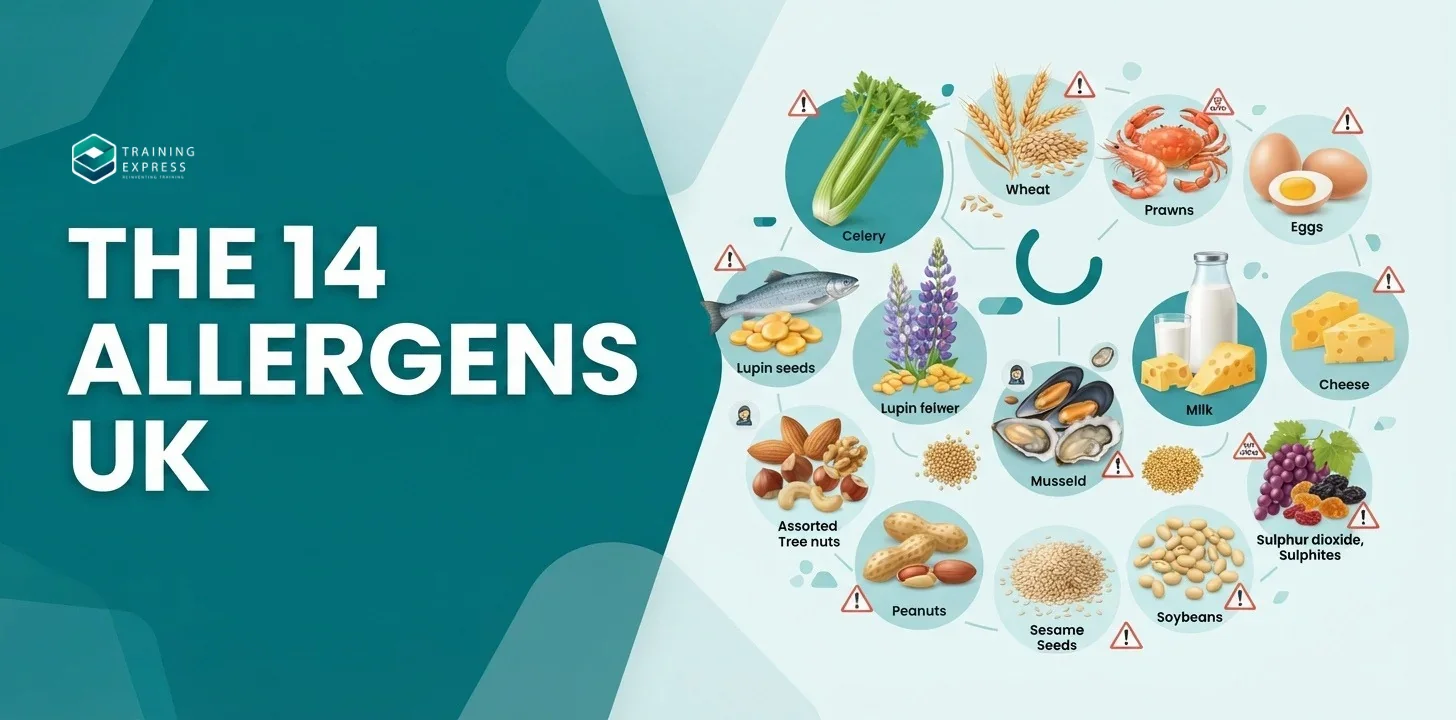

The 14 allergens UK food businesses must declare are:
- celery
- cereals containing gluten – including wheat (such as spelt and Khorasan), rye, barley and oats
- crustaceans – such as prawns, crabs and lobsters
- eggs
- fish
- lupin
- milk
- molluscs – such as mussels and oysters
- mustard
- tree nuts – including almonds, hazelnuts, walnuts, brazil nuts, cashews, pecans, pistachios and macadamia nuts
- peanuts
- sesame seeds
- soybeans
- sulphur dioxide and sulphites (if they are at a concentration of more than ten parts per million)
Key takeaways
- UK food law names 14 allergens that food businesses must tell customers about, whether food is packaged or sold loose.
- Some allergens are groups: tree nuts covers eight named nuts, and cereals containing gluten covers wheat, rye, barley and oats.
- Allergens often hide in sauces, stocks, dressings, breads and bought-in ingredients rather than the obvious foods.
- Foods that aren't on the list, such as corn or garlic, can still cause reactions, but they aren't regulated allergens under the 14-allergen labelling rules.
- The UK and EU list 14 regulated allergens, while the US lists nine major food allergens.
If you handle food at work, knowing the 14 allergens UK law lists is one of the most useful things you can learn. A customer’s safety can depend on you remembering that pesto may contain nuts or that a stock cube contains celery. This guide covers each allergen, where it hides and what your business must do.
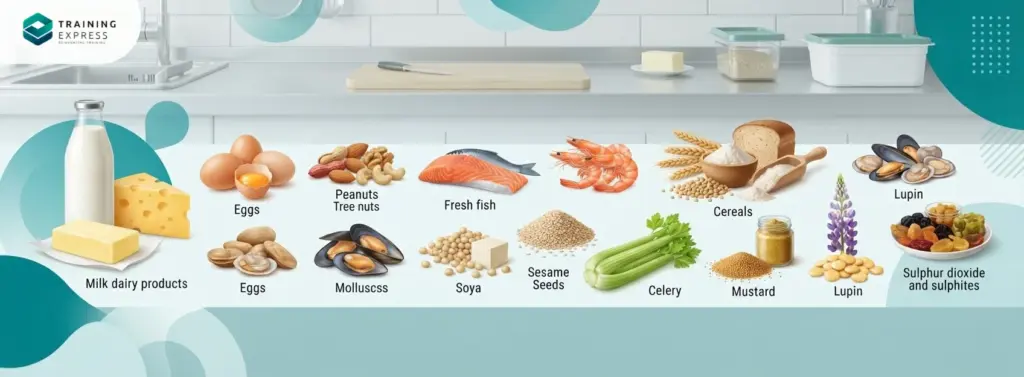
The 14 Allergens at a Glance
Here’s every allergen with what it includes and a few places it often turns up. Recipes and products vary, so always check your own ingredients and supplier labels.
| Allergen | Includes | Often found in |
|---|---|---|
| Celery | Stalks, leaves, seeds and celeriac | Stock cubes, soups, celery salt, salads |
| Cereals containing gluten | Wheat (including spelt and Khorasan), rye, barley, oats | Bread, pasta, pastry, batter, breadcrumbs, sauces thickened with flour |
| Crustaceans | Prawns, crabs, lobsters, crayfish | Shrimp paste, seafood sauces, some curry pastes |
| Eggs | Eggs and egg products | Mayonnaise, cakes, fresh pasta, quiche, glazed pastry |
| Fish | All fish | Fish sauce, Worcestershire sauce, Caesar dressing |
| Lupin | Lupin seeds and flour | Some breads, pastries and pasta |
| Milk | Milk and milk products, including lactose | Butter, cheese, cream, yoghurt, milk powder, sauces |
| Molluscs | Mussels, clams, oysters, scallops, snails, squid | Oyster sauce, seafood dishes |
| Mustard | Seeds, powder, leaves and liquid mustard | Dressings, marinades, mayonnaise, curries |
| Tree nuts | Almonds, hazelnuts, walnuts, brazil nuts, cashews, pecans, pistachios, macadamias | Pesto, marzipan, praline, nut oils, cereal bars |
| Peanuts | Peanuts (also called groundnuts) | Satay, peanut butter, groundnut oil, some curries |
| Sesame seeds | Seeds, oil and paste | Tahini, hummus, sesame oil, bread toppings |
| Soybeans | Soya and soya products | Tofu, edamame, soy sauce, soya flour in bread and sausages |
| Sulphur dioxide and sulphites | Preservatives above the legal threshold | Dried fruit, wine, beer, some sausages and burgers |
The 14 Allergens Explained
Each allergen below has a short explanation, the places it tends to hide and one practical tip. The tips are our suggestions for busy kitchens, not legal requirements.
Celery
Celery covers the stalks, leaves and seeds, plus celeriac. It’s easy to miss because it’s often an ingredient inside another ingredient.
Watch out for: stock cubes, gravy granules, soups, stews and celery salt.
Tip: check the label on every stock and seasoning you buy in.
Cereals Containing Gluten
This covers wheat (including spelt and Khorasan wheat), rye, barley and oats. On a label you name the cereal, for example “wheat”, rather than just writing “gluten”.
Watch out for: breadcrumbs, batter, thickened sauces, malt vinegar, beer and soy sauce.
Tip: “gluten free” and “wheat free” aren’t the same thing, so never swap one for the other when answering a customer.
Crustaceans
Crustaceans are shellfish with hard shells, such as prawns, crabs, lobsters and crayfish.
Watch out for: shrimp paste in Thai and Malaysian dishes, seafood sauces and some curry pastes.
Tip: keep crustaceans apart from molluscs in your records, as they’re two separate allergens.
Eggs
Eggs turn up in far more than omelettes.
Watch out for: mayonnaise, fresh pasta, cakes, mousses, quiche and pastry brushed with egg wash.
Tip: remember glazes, because a “plain” bread roll can still be brushed with egg.
Fish
This covers all fish.
Watch out for: Thai fish sauce, Worcestershire sauce (which usually contains anchovies) and Caesar dressing.
Tip: check sauces and dressings, not just the main dish.
Lupin
Lupin is a legume, and its seeds and flour are used in some breads, pastries and pasta. It’s one of the least known allergens, so staff often don’t think to check for it.
Tip: ask suppliers of speciality breads and gluten-free products whether they use lupin flour.
Milk
Milk includes all milk products, and the FSA’s guidance notes that this includes lactose.
Watch out for: butter, cream, cheese, yoghurt, milk powder in processed foods, creamy sauces and glazes.
Tip: a milk allergy isn’t the same as lactose intolerance, so don’t assume “lactose free” means “milk free”.
Molluscs
Molluscs include mussels, clams, oysters, scallops, snails and squid.
Watch out for: oyster sauce in stir-fries and some marinades.
Tip: calamari is squid, so it counts as a mollusc.
Mustard
This covers mustard seeds, powder, leaves and liquid mustard.
Watch out for: salad dressings, mayonnaise, marinades, sauces and curries.
Tip: check spice blends and rubs, which often include mustard seed.
Tree Nuts
The law names eight tree nuts: almonds, hazelnuts, walnuts, brazil nuts, cashews, pecans, pistachios and macadamia nuts.
Watch out for: pesto, marzipan, praline, nut oils, cereal bars and some curries.
Tip: on labels and in your records, name the specific nut, for example “walnuts” rather than “nuts”.
Peanuts
Peanuts are legumes that grow underground, so they’re a separate allergen from tree nuts.
Watch out for: satay, peanut butter, groundnut oil and some sauces and baked goods.
Tip: “groundnut” means peanut, so look out for it on supplier labels.
Sesame Seeds
Sesame covers the seeds and products made from them, such as oil and paste.
Watch out for: tahini, hummus, sesame oil, breadsticks and seeded bread toppings.
Tip: sesame was the allergen behind Natasha’s Law, which is why Natasha’s Law labelling matters so much for bread and sandwiches.
Soybeans
Soybeans, often called soya, are used widely in processed food.
Watch out for: tofu, edamame, soy sauce, miso and soya flour in bread, cakes and sausages.
Tip: some highly refined soybean oil is exempt from labelling, so check the FSA’s guidance if a supplier’s label confuses you.
Sulphur Dioxide and Sulphites
Sulphites are preservatives. They must be declared at concentrations of more than 10 mg/kg or 10 mg/litre, in terms of the total sulphur dioxide (SO2), according to the FSA’s technical guidance.
Watch out for: dried fruit, wine, beer, cider and some sausages and burgers.
Tip: sulphites can trigger asthma in some people, so take questions about them seriously.
How to Remember the 14 Allergens
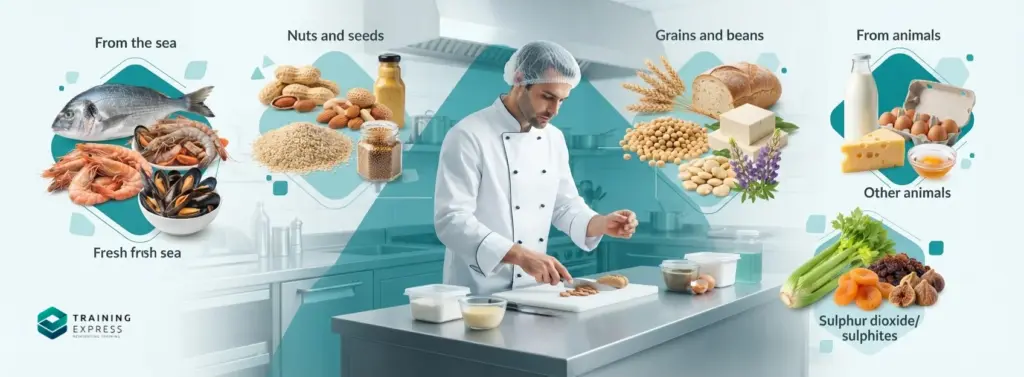
The easiest way to remember the 14 allergens is to group them. We suggest five groups:
- From the sea (3): fish, crustaceans, molluscs
- Nuts and seeds (4): peanuts, tree nuts, sesame seeds, mustard
- Grains and beans (3): cereals containing gluten, soybeans, lupin
- From animals (2): milk, eggs
- The odd ones out (2): celery, sulphur dioxide and sulphites
Count them off on a shift briefing: 3, 4, 3, 2, 2. A poster in the kitchen helps too, and you’ll find one in the download above.
What's Not on the 14 Allergens List?
Lots of foods people react to aren’t on the list. Corn (maize), kiwi, garlic, coconut and pine nuts are common examples. These are not regulated allergens, so the law doesn’t require you to declare them, but they’re not “safe” for everyone.
Some people are seriously allergic to foods outside the 14. If a customer asks about any ingredient, give accurate information or say you don’t know. Never guess. You can also choose to share information about other ingredients voluntarily.
Pine nuts are a common trap. They aren’t one of the eight named tree nuts, but many customers assume they are, so be ready to explain what’s in your pesto.
UK 14 Allergens vs the US Major Allergens
The UK and EU list 14 allergens. The US lists nine “major food allergens”, after sesame was added on 1 January 2023 under the FASTER Act, according to the US Food and Drug Administration (FDA). Before that, the US had eight, which is why you’ll see both “8” and “9” online.
| Allergen | UK (14) | US (9) |
|---|---|---|
| Milk, eggs, fish, peanuts, tree nuts, soybeans, sesame | Yes | Yes |
| Crustaceans | Yes | Yes (crustacean shellfish) |
| Cereals containing gluten | Yes (wheat, rye, barley, oats) | Wheat only |
| Celery, lupin, molluscs, mustard, sulphites | Yes | No |
If your business imports food or uses recipes from the US, check ingredients against the UK list, not the US one.
What Food Businesses Must Do About the 14 Allergens
All food businesses must tell customers if their food contains any of the 14 allergens. How you do it depends on whether the food is prepacked, prepacked for direct sale (PPDS) or sold loose.
- Prepacked food (packed by one business and sold by another) must list allergens in the ingredients list and emphasise them.
- PPDS food (packed on your premises before customers order) must show the name of the food and a full ingredients list with allergens emphasised. Our guide to Natasha’s Law explains this in detail.
- Loose food (restaurant meals, deli counter food) still needs allergen information. The FSA recommends giving it in writing and backing it up with a conversation.
Most businesses keep a record of which dishes contain which allergens. An allergen matrix is the simplest way to do it. If you use the FSA’s food safety pack, its management section also covers allergen information. See our guide to Safer Food Better Business.
Your staff need to know all this too. Our Food Allergen Awareness Training covers the 14 allergens and how to handle customer questions.
Cross-Contact: Keeping Allergens Apart in the Kitchen
Cross-contact is when an allergen gets into food it shouldn’t be in, for example from a shared knife, chopping board, fryer or pair of gloves. A tiny amount can be enough to cause a serious reaction.
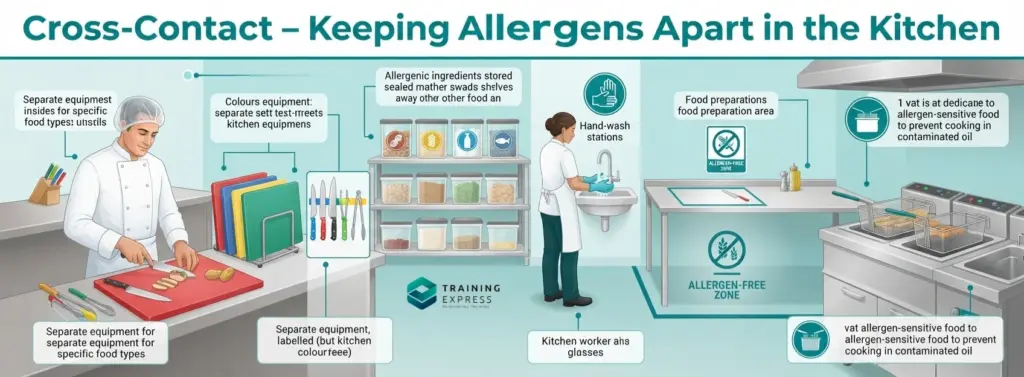
We suggest these habits:
- Store allergenic ingredients in sealed, labelled containers, ideally below other foods.
- Clean surfaces and equipment thoroughly before preparing an allergy order.
- Use separate utensils and boards, or wash them properly between uses.
- Wash your hands and change gloves and aprons before preparing allergy orders.
- Don’t fry allergy orders in oil that’s been used for battered or breaded food.
“May contain” labels, known as precautionary allergen labelling, are voluntary. The FSA says they should only be used after a proper risk assessment, not as a blanket warning.
Cross-contact is also a common cause of kitchen incidents, alongside burns and slips. For the core food safety skills that prevent it, see our Level 2 Food Hygiene and Safety for Catering course.
Free 14 Allergens Poster
Print our free poster and put it where your team preps and serves food. It lists all 14 allergens with common examples, so everyone has a quick reference during service.
Get Your Team Allergen-Ready
Knowing the 14 allergens is the first step. Handling them safely every day is the next. Our Food Allergen Awareness Training helps your team handle allergens with confidence, and it comes with a CPD certificate. For wider food safety training, see our food hygiene certificate courses or our guide to the top UK food hygiene courses. On a tight budget? Read how to get a free food hygiene certificate
Frequently Asked Questions (FAQ)
What are the 14 allergens outlined in UK law?
The 14 are celery, cereals containing gluten, crustaceans, eggs, fish, lupin, milk, molluscs, mustard, tree nuts, peanuts, sesame seeds, soybeans, and sulphur dioxide and sulphites. Food businesses must tell customers when food contains any of them. The FSA’s allergen labelling page gives the full wording, including which cereals and nuts are covered.
What is not on the list of the 14 allergens?
Common foods that are not regulated allergens include corn, kiwi, garlic, coconut and pine nuts. They don’t have to be declared by law, but some people are still allergic to them. If a customer asks about any ingredient, give accurate information or tell them honestly that you don’t know.
How do you remember the 14 allergens?
Group them. From the sea: fish, crustaceans, molluscs. Nuts and seeds: peanuts, tree nuts, sesame, mustard. Grains and beans: cereals containing gluten, soybeans, lupin. From animals: milk, eggs. Odd ones out: celery and sulphites. That’s 3, 4, 3, 2 and 2, which adds up to 14.
Are there 8, 9 or 14 major allergens?
It depends on the country. The UK and EU list 14 allergens. The US lists nine major food allergens, after sesame was added on 1 January 2023. Before that, the US list had eight. If you run a UK food business, the 14-allergen list is the one that applies to you.
Is gluten one of the 14 allergens?
Yes, as “cereals containing gluten”. This covers wheat (including spelt and Khorasan wheat), rye, barley and oats. On ingredients lists, you name the specific cereal, such as wheat or barley. Gluten is a protein found in these cereals, so a gluten-free claim is a separate matter with its own rules.
Do I need to tell customers about allergens that aren't on the list?
The law only requires you to declare the 14 regulated allergens. But if a customer tells you they’re allergic to something else and asks whether a dish contains it, you should give accurate information. Many businesses keep full ingredient lists for every dish so staff can answer any question confidently.

Robert Lawrence
Author | Specialises in E-Learning.
Robert Lawrence is an author at Training Express, with over 5 years of experience creating practical resources and strategies to support learners and enhance their professional & personal development.
Reviewed by: Amelia Frey, Food Hygiene & Safety Specialist at CupStory
Other Blogs