Food Hygiene
 Health & Safety
 Safeguarding
 First Aid
 Business Skills
 Personal Development
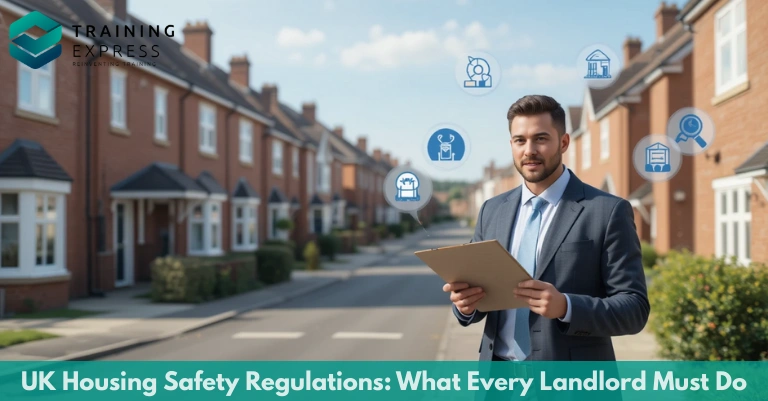
UK housing safety regulations place a wide range of legal responsibilities on landlords, covering everything from fire and gas safety to damp, mould, electrical systems, and structural integrity. Whether you let a single property or manage a large portfolio, these obligations apply to you, and failure to comply can result in severe penalties.
Over the past two decades, the private rented sector has undergone significant reform. Successive governments have introduced new laws in response to unsafe housing conditions, high-profile incidents, and growing evidence of the link between poor housing and ill health. At the same time, enforcement powers have been strengthened, and tenants have been given greater rights to challenge landlords directly.
For today’s landlords, housing safety compliance is no longer a matter of best practice. It is a core legal duty and a defining feature of professional property management.
This in-depth guide explains the UK housing safety regulations every landlord must understand, how enforcement works, and what steps landlords should take to remain compliant.
Table of Contents
Understanding Housing Safety Regulations in the UK
Housing safety regulations exist to protect tenants from preventable harm. Unsafe housing can lead to respiratory disease, heart problems, accidents, mental health issues, and in extreme cases, fatalities. Cold homes, fire risks, faulty electrics, and unsafe gas appliances are recognised by public health bodies as serious hazards.
UK law reflects this reality. Landlords are expected to take responsibility for the condition of their properties because they own and control them. Tenants are not expected to carry out major repairs, replace installations, or mitigate structural risks.
From a commercial perspective, compliance is equally important. A property that fails to meet safety standards is harder to let, more expensive to maintain, and more likely to become the subject of complaints, inspections, or legal claims.
Landlord and Tenant Repair Responsibilities: Understanding the Legal Divide
One of the most common sources of confusion in the private rented sector is the distinction between what a landlord is legally required to repair and what falls within a tenant’s responsibilities. Misunderstanding this divide does not remove liability and often leads to delayed repairs, complaints, or enforcement action.
In law, landlords are responsible for ensuring that the structure, exterior, and essential services of a rented property are kept in proper working order. This includes the fabric of the building and the systems that make it safe and habitable. Tenants, by contrast, are generally responsible for day-to-day use of the property and for reporting problems when they arise.
A tenant is not expected to fix unsafe conditions themselves, even if those conditions worsen over time. Once a landlord is made aware of a potential safety issue, either through a tenant report or inspection, they are expected to act within a reasonable timeframe.
From a housing safety perspective, councils and courts focus less on who caused a problem and more on whether the landlord took appropriate steps to resolve it. Clear reporting procedures, prompt inspections, and written records of action taken are therefore essential.
Failing to respond to repair reports — particularly where health or safety is affected — can quickly escalate into formal enforcement, regardless of whether the issue began as minor disrepair.
Key Housing Safety Legislation Every Landlord Must Know
UK housing safety law is made up of several interlinked statutes and regulations. Together, they define the minimum acceptable standards for rented accommodation.
The most important legislation includes:
- Housing Act 2004, which introduced the Housing Health and Safety Rating System (HHSRS)
- Landlord and Tenant Act 1985, setting out core repairing obligations
- Homes (Fitness for Human Habitation) Act 2018, giving tenants the right to take legal action over unsafe homes
- Gas Safety (Installation and Use) Regulations
- Electrical Safety Standards in the Private Rented Sector (England) Regulations
- Regulatory Reform (Fire Safety) Order 2005
- Building Safety Act 2022, particularly relevant to higher-risk buildings
Landlords must comply with all relevant legislation simultaneously. Meeting one requirement does not excuse failure in another area.

The Housing Health and Safety Rating System (HHSRS)
The Housing Health and Safety Rating System underpins much of housing safety enforcement in England and Wales. Unlike older standards-based approaches, HHSRS focuses on risk to occupants, not simply property conditions.
Local authority officers assess how likely it is that a hazard will cause harm and how serious that harm could be. The assessment assumes a typical occupant but pays particular attention to vulnerable groups, such as children and older people.
The system identifies 29 categories of hazard, covering a wide range of safety and health risks. Some of the most commonly enforced hazards include:
- Damp and mould growth
- Excess cold or excess heat
- Fire risks
- Electrical hazards
- Carbon monoxide and fuel combustion
- Structural collapse
Where a serious risk is identified, known as a Category 1 hazard, the local authority has a legal duty to take action. This may involve serving an improvement notice, prohibiting use of part or all of the property, or carrying out emergency remedial works and charging the landlord.
Crucially, enforcement does not depend on tenant complaints. Councils can and do inspect properties proactively.
How Council HHSRS Inspections Work in Practice
When a local authority carries out a Housing Health and Safety Rating System inspection, the process is far more detailed than many landlords expect. These inspections are usually conducted by environmental health or housing officers trained specifically to identify health and safety risks.
An inspection may take place following a tenant complaint, but councils can also inspect properties as part of wider area-based enforcement or licensing schemes. Landlords are typically given notice, although in urgent situations inspections may occur more quickly.
During the visit, the officer will assess the entire property, including living areas, kitchens, bathrooms, heating systems, windows, ventilation, and any shared spaces. They are not simply looking for visible damage, but for conditions that could reasonably lead to harm over time.
Following the inspection, hazards are assessed based on likelihood and severity of potential harm. If risks are identified, the council will decide what level of action is appropriate. This could range from informal advice to legally binding notices requiring specific work within a set period.
Understanding how inspections operate helps landlords prepare properly, address issues early, and avoid escalation into formal enforcement.
Gas Safety Regulations for Landlords
Gas safety is one of the clearest and most strictly enforced landlord responsibilities. Gas-related incidents are often fatal, which is why the law leaves very little room for error.

Landlords must ensure that all gas appliances, pipework, and flues provided as part of the tenancy are kept in a safe condition at all times. This includes boilers, cookers, and gas fires.
An annual gas safety check must be carried out by a Gas Safe registered engineer, and the landlord must obtain a valid Gas Safety Certificate. This certificate must be provided to existing tenants within 28 days and to new tenants before they move in.
Key gas safety responsibilities include:
- Scheduling annual inspections without fail
- Keeping accurate records of certificates
- Acting immediately on safety defects
- Ensuring access is properly managed where tenants are uncooperative
Failure to comply with gas safety law can result in unlimited fines, imprisonment, invalidated insurance, and restrictions on possession proceedings. Many landlords therefore choose to reinforce their understanding through training such as the Gas Safety Course.
Electrical Safety Standards in Rented Accommodation
Electrical safety has become a major area of regulation in the private rented sector. Electrical fires are a significant cause of injury and property damage, particularly in older housing stock.
Most rented properties in England must now have a valid Electrical Installation Condition Report (EICR), carried out at least once every five years by a qualified and competent person.
The report classifies defects by severity. Where urgent or potentially dangerous issues are identified, landlords must ensure remedial work is completed within the required timeframe and provide evidence of compliance.
Electrical safety duties extend beyond inspections. Landlords must also ensure that electrical installations remain safe throughout the tenancy and that faults reported by tenants are addressed promptly.
Fire Safety Responsibilities for UK Landlords
Fire safety obligations apply to all rented properties, though the level of requirement varies depending on the type of accommodation.
At a minimum, landlords must ensure that smoke alarms are installed on each storey of the property and that carbon monoxide alarms are provided where required. These alarms must be working at the start of each tenancy.
In properties with higher risk, particularly Houses in Multiple Occupation (HMOs), fire safety requirements increase significantly. These may include:
- Fire doors with appropriate ratings
- Emergency lighting in communal areas
- Interlinked fire detection and alarm systems
- Clearly maintained escape routes
Landlords are expected to assess fire risk and implement proportionate control measures. Fire safety failures can result in severe penalties, including prosecution. Training such as the Fire Safety Course helps landlords understand how general fire safety law applies specifically to rented housing.
Damp, Mould, and the Fitness for Human Habitation Standard
Damp and mould have become one of the most high-profile housing safety issues in recent years. Legal interpretation has shifted significantly, and courts now take a much stricter view of landlord responsibility.
Under the Homes (Fitness for Human Habitation) Act, a property must be fit for occupation at the start of the tenancy and remain so throughout. Serious damp and mould are recognised as conditions that can make a home unfit.
Landlords are expected to investigate and resolve underlying causes, such as structural defects, inadequate insulation, or poor ventilation. Cosmetic treatment alone is rarely sufficient.
Even where tenant behaviour contributes to condensation, landlords still have a duty to ensure the property can be adequately heated and ventilated.
Private Renting vs Social Housing: Different Standards, Rising Expectations
While private landlords and social housing providers operate under different regulatory frameworks, the gap between safety expectations is narrowing. Recent changes in social housing regulation have highlighted how quickly landlords are expected to respond when health risks are identified.
In social housing, there are increasingly strict expectations around response times, particularly where damp, mould, or other health hazards are present. These developments have influenced how courts, councils, and tenants view acceptable standards across the wider rented sector.
Although private landlords are not currently subject to identical time-based duties, enforcement bodies often apply similar principles when assessing reasonableness. Delays that might once have been tolerated are now more likely to attract criticism or formal action.
For private landlords, this means that waiting for issues to worsen before acting carries increasing risk. Proactive inspection, early intervention, and documented repair timelines are becoming the expected norm rather than an optional extra.
Energy Efficiency and Excess Cold Hazards
Cold homes are a recognised hazard under HHSRS and a common cause of enforcement action. Energy efficiency standards were introduced to address this issue.
Under Minimum Energy Efficiency Standards (MEES), most privately rented properties must achieve an EPC rating of E or above. Letting a property below this level without a valid exemption is unlawful.
Energy efficiency improvements often reduce long-term maintenance costs, improve tenant satisfaction, and lower the risk of damp and mould.
Structural Safety and Landlord Repair Obligations
Landlords are legally responsible for maintaining the structure and exterior of their properties. This includes roofs, walls, foundations, windows, and doors, as well as installations for heating, hot water, sanitation, and electricity.
These duties exist regardless of tenancy agreement wording. Clauses attempting to transfer responsibility for major repairs to tenants are unlikely to be enforceable.
Failure to address disrepair promptly can allow minor issues to escalate into serious safety hazards, attracting enforcement action and legal claims.
Water Safety and Legionella Control
Landlords also have responsibilities relating to water safety. Legionella bacteria can develop in poorly managed water systems and cause serious illness.
Landlords are expected to assess the risk and implement reasonable control measures. In many domestic properties, the risk is low, but the duty still applies.
Common control measures include:
- Maintaining appropriate water temperatures
- Flushing infrequently used outlets
- Keeping basic risk assessment records
Some landlords choose targeted training such as the Legionella Awareness Training Course to ensure compliance.
Houses in Multiple Occupation (HMOs)
HMOs are subject to additional regulation due to increased safety risks associated with higher occupancy levels.
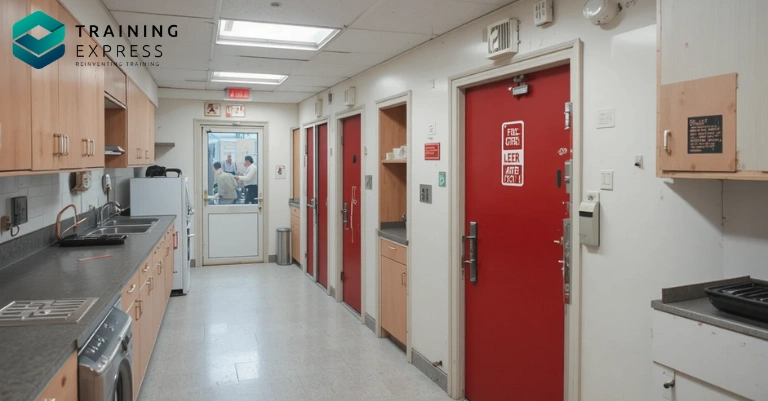
Many HMOs require licensing, and licence conditions often impose strict safety, management, and inspection requirements. Non-compliance can result in significant financial penalties, rent repayment orders, and banning orders.
Landlords operating HMOs must take a particularly proactive and structured approach to safety management.
Additional Safety Duties in Houses in Multiple Occupation (HMOs)
Houses in Multiple Occupation present unique safety challenges due to higher occupancy levels, shared facilities, and increased wear and tear. As a result, landlords of HMOs are subject to stricter safety and management expectations than those letting single-family homes.
In addition to standard housing safety duties, HMO landlords are expected to maintain communal areas to a higher standard. This includes stairwells, corridors, shared kitchens, and outdoor access routes. Poor lighting, trip hazards, or blocked escape routes in shared areas are common triggers for enforcement action.
Fire safety is a particular focus in HMOs. Landlords are expected to ensure that fire precautions are appropriate to the size, layout, and occupancy of the building. Regular checks, maintenance of fire doors and alarm systems, and clear signage are often required.
Because HMO safety standards are closely monitored, landlords must adopt a more structured approach to inspections, record keeping, and ongoing compliance. Informal or reactive management is rarely sufficient.
Record Keeping and Evidence of Compliance
Being compliant is not enough if you cannot demonstrate compliance. Documentation plays a crucial role in inspections, disputes, and legal proceedings.
Landlords should retain key documents such as:
- Gas Safety Certificates
- Electrical Installation Condition Reports
- Energy Performance Certificates
- Fire risk assessments where applicable
- Records of repairs and inspections
Well-maintained records often make the difference between routine compliance checks and formal enforcement action.
Local Authority Enforcement Powers
Local authorities have extensive powers to enforce housing safety law. Depending on the severity of the breach, councils may issue improvement notices, prohibition orders, or civil penalties of up to £30,000 per offence.
In serious cases, landlords may face rent repayment orders, banning orders, or inclusion on the rogue landlord database. The reputational damage caused by enforcement can be long-lasting.
Council Enforcement Notices and Orders Explained
When a local authority identifies unsafe housing conditions, it has several enforcement options available. The action taken depends on the severity of the hazard and the level of risk to occupants.
In less serious cases, a council may issue a hazard awareness notice. This formally notifies the landlord of a problem without requiring immediate action, but it creates a clear record that the issue has been identified.
Where more serious hazards are present, councils may serve improvement notices. These are legally binding and require the landlord to carry out specific works within a defined timeframe. Failure to comply can lead to financial penalties or further enforcement.
In high-risk situations, particularly where there is an immediate danger to health or safety, councils can take emergency action. This may involve arranging repairs themselves or restricting the use of part or all of a property until hazards are resolved.
Importantly, once an enforcement notice is served, a landlord’s ability to regain possession of the property using certain eviction routes may be restricted. This makes early compliance not only a safety issue, but also a practical one for landlords managing tenancies.
Taking a Proactive Approach to Landlord Compliance
The most successful property owners and managers treat housing safety as an ongoing process rather than a one-time exercise. Regulations evolve, guidance changes, and expectations rise over time.

Many choose to strengthen their knowledge through practical training, such as the Health and Safety in a Construction Environment (UK) Course. This course equips property professionals with the skills to safely manage repairs, maintenance, and risk assessments, ensuring compliance with UK housing safety standards.
Conclusion: Why Housing Safety Compliance Matters
UK housing safety regulations place clear, enforceable responsibilities on landlords. While compliance requires investment of time and money, it is essential for protecting tenants, avoiding enforcement action, and safeguarding long-term property value.
Safe, well-maintained homes are not just a legal requirement. They are the foundation of a sustainable, professional rental business in the modern private rented sector.
Frequently Asked Questions (FAQ)
What are a landlord’s legal safety responsibilities in the UK?
Landlords must ensure their rental property is safe, free from serious health hazards, and fit for people to live in throughout the tenancy.
What is the Housing Health and Safety Rating System (HHSRS)?
The HHSRS is the system local councils use to assess risks to occupants’ health and safety in rented homes.
Can tenants ask the council to inspect a rental property?
Yes. If safety issues are not addressed, tenants can contact their local council, which may inspect the property and take enforcement action.
What happens if a council finds serious safety hazards?
The council may issue an improvement notice, require urgent repairs, or take emergency action to reduce risk to occupants.
Are landlords responsible for damp and mould problems?
Yes. If damp or mould affects health or makes the home unfit to live in, the landlord must investigate and carry out repairs.
Do landlords need to carry out regular safety inspections?
Regular inspections are not legally fixed but are strongly recommended to identify hazards early and demonstrate compliance.
What safety checks are legally required for rental properties?
Landlords must ensure annual gas safety checks and periodic electrical safety inspections are completed where applicable.
Do HMOs have extra housing safety requirements?
Yes. HMOs are subject to stricter fire safety, maintenance, and management standards due to shared facilities and higher occupancy.
Can landlords be fined for failing to meet safety standards?
Yes. Local authorities can issue fines, civil penalties, or prosecute landlords for serious or repeated safety breaches.
Can safety enforcement affect eviction rights?
Yes. Certain enforcement notices can restrict a landlord’s ability to use some eviction routes until hazards are resolved.
Related Blogs




- Available Courses
- Animal care10
- Design36
- Training10
- Accounting & Finance Primary51
- Teaching & Academics Primary37
- Teaching23
- Quality Licence Scheme Endorsed181
- Law10
- IT & Software238
- Job Ready Programme52
- Charity & Non-Profit Courses28
- HR & Leadership4
- Administration & Office Skills6
- Mandatory Training36
- Regulated Courses4
- AI & Data Literacy29
- Health and Social Care291
- Personal Development1666
- Food Hygiene119
- Safeguarding81
- Employability288
- First Aid73
- Business Skills301
- Management426
- Child Psychology41
- Health and Safety538
- Hospitality28
- Electronics30
- Construction63
- Career Bundles201
- Marketing39
- Healthcare174