Food Hygiene
 Health & Safety
 Safeguarding
 First Aid
 Business Skills
 Personal Development
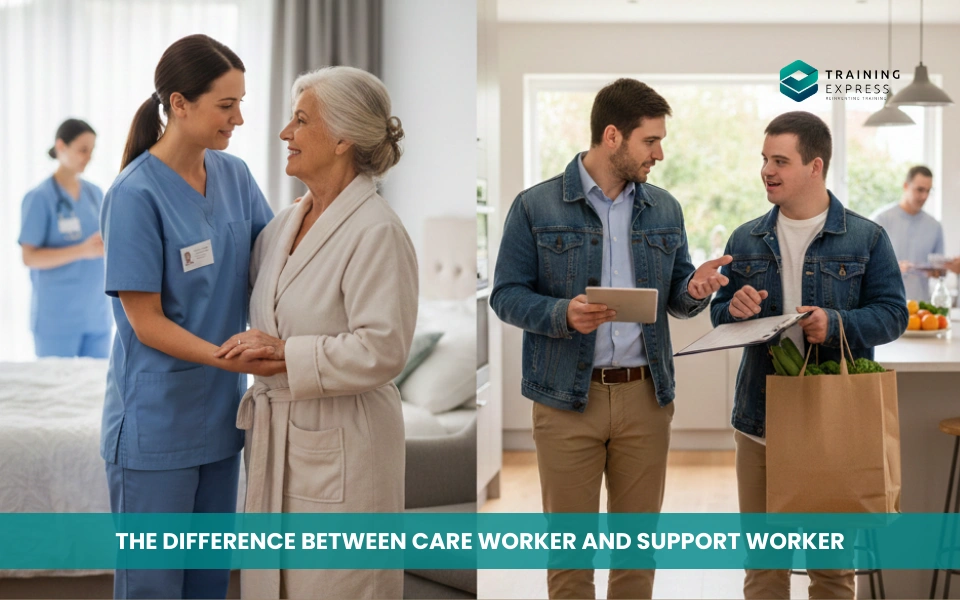

Many people confuse the roles of care workers and support workers, but the distinction is important. Both roles involve helping people in need, yet they differ in responsibilities, settings, and qualifications. Understanding these differences can guide career choices, job applications, and ensure that individuals receive the right level of support.
For job seekers, agencies, families, and service users, knowing the difference matters. It helps match skills to the right role, ensures compliance with care standards, and clarifies expectations. In this guide, we’ll break down responsibilities, work settings, key differences, overlap, and common misconceptions, so you get a clear picture of each role.
Table of Contents
Care Worker vs Support Worker: Key Differences
| Aspect | Care Worker | Support Worker |
|---|---|---|
| Primary Focus | Provides direct personal care such as bathing, feeding, and administering medication | Offers practical and emotional support to help individuals live independently and participate in daily activities |
| Typical Duties | Assisting with hygiene, mobility, meals, medication, and health monitoring | Supporting education, employment, social engagement, and personal goals; helping with appointments and community access |
| Work Settings | Hospitals, nursing homes, residential care, home care | Supported living, day centres, community projects, education settings |
| Qualifications | Often require health & social care qualifications (e.g., Level 2/3 Diploma) and basic training in first aid and safeguarding | May require Level 2/3 qualifications in health & social care or sector-specific training depending on the setting |
| Client Interaction | Hands-on care for vulnerable individuals with significant personal needs | Guidance and assistance for people with varying needs, often focusing on independence |
| Overlap | Both roles require empathy, communication, and safeguarding knowledge | Both roles may assist with daily living tasks and collaborate with families and healthcare teams |
| Career Progression | Can lead to senior care roles, nursing, or specialised healthcare positions | Can progress to social work, community services, or specialist support roles |
What a Care Worker Does

Care workers provide hands-on support to meet the personal and healthcare needs of individuals.
Focus: They ensure the safety, wellbeing, and daily care of vulnerable people, often assisting with tasks the person cannot manage alone.
Typical Tasks: Care workers help with bathing, dressing, feeding, administering medication, supporting mobility, monitoring health, and maintaining hygiene.
Common Settings: Care workers are usually based in hospitals, nursing homes, residential care facilities, or clients’ own homes, supporting older adults, people with disabilities, or those recovering from illness.
Similarities Between Care & Support Work
| Similarity Aspect | Details |
|---|---|
| Empathy | Both roles require a high level of empathy to understand and respond to the needs of individuals. |
| Communication Skills | Clear communication with clients, families, and healthcare teams is essential in both roles. |
| Safeguarding Knowledge | Both care workers and support workers must be aware of safeguarding policies to protect vulnerable individuals. |
| Assisting Daily Activities | Both roles may involve helping with daily living tasks such as hygiene, meals, and mobility. |
| Team Collaboration | Both work closely with colleagues, families, and other professionals to provide holistic care. |
| Professionalism | Maintaining confidentiality, professionalism, and respect is critical in both roles. |
Use Coupon Code:
Use this coupon at Checkout
Related Questions About Care and Support Roles
Understanding the differences and similarities between care workers and support workers is key for job seekers, agencies, and service users. Here, we answer common questions and clarify misconceptions.
Are Support Workers and Care Workers the Same?
While care workers and support workers both assist people in need, their focus and duties differ. Care workers provide direct personal and medical care, while support workers focus on independence, emotional wellbeing, and daily life skills.
However, in small settings or smaller care services, roles can be flexible. A support worker may help with some personal care, or a care worker may provide guidance on life skills, depending on the client’s needs.
What Is the Difference Between Care and Support?
- Care: Addresses immediate physical and medical needs, including feeding, hygiene, mobility, and medication support.
- Support: Focuses on independence, social engagement, emotional wellbeing, skill-building, and daily living management.
Both roles aim to improve quality of life, but care is hands-on and essential, while support promotes choice and autonomy.

What Is Another Name for a Support Worker?
Support workers are also commonly called:
- Support assistant
- Community support worker
- Learning support worker
- Personal support worker
These titles often reflect the setting or specific responsibilities of the role.
Is a Support Worker Classed as a Carer?
In the UK, support workers do provide care in a broad sense, but they may not always be formally called “carers.”
Legal and regulatory definitions distinguish between personal care (carers) and broader support roles. While both contribute to wellbeing, the terminology can affect job descriptions, training requirements, and responsibilities.
Closing Notes
The main distinction is clear: care workers meet immediate physical and medical needs, while support workers empower independence, emotional wellbeing, and life skills.
There is overlap between the roles, especially in smaller settings, so it’s important to review job descriptions carefully.
For anyone considering a career in health and social care, understanding these differences helps you choose the right path, complete the necessary training, and find a setting where your skills will make the biggest impact.
Frequently Asked Questions (FAQ)
Can a care worker also provide support work tasks?
Yes, in some settings care workers may assist with daily life activities, but their primary focus remains personal care.
Do support workers give personal care like bathing or feeding?
Usually not, unless the role is flexible or in a small setting. Support workers primarily help with independence and emotional support.
Which role requires more formal qualifications?
Care workers often need Level 2/3 Health & Social Care qualifications, while support workers may require similar or sector-specific training depending on the setting.
Is one role paid more than the other in the UK?
Salaries vary by region, employer, and experience. Care workers may earn slightly more if delivering regulated personal care, but both roles are generally similar in pay.
Can you switch between being a care worker and a support worker?
Yes, skills are transferable. Additional training may be needed for regulated tasks like medication administration or personal care.
Are these roles regulated differently in the UK?
Yes, care workers providing personal care are often regulated under care standards like CQC. Support workers may be less strictly regulated but must follow safeguarding and health & safety rules.
What skills are essential for a support worker vs a care worker?
Support workers: communication, independence coaching, emotional support, and community engagement.
Care workers: hands-on care skills, health monitoring, hygiene support, and safeguarding.
Do both roles work in hospitals?
Care workers commonly work in hospitals; support workers are more often in community or residential settings but may assist in hospital support services.
Can volunteers perform support worker duties?
Yes, volunteers can assist with non-regulated support tasks, but personal care is usually reserved for trained staff.
Is experience more important than formal training for these roles?
Both matter. Experience builds confidence and practical skills, while formal training ensures compliance with standards and safe practice.

Robert Lawrence
Author | Specialises in Health and Social Care
Robert Lawrence is an e-learning specialist and tutor at Training Express, with experience creating practical resources and strategies to support learners and enhance their professional development.