Food Hygiene
 Health & Safety
 Safeguarding
 First Aid
 Business Skills
 Personal Development
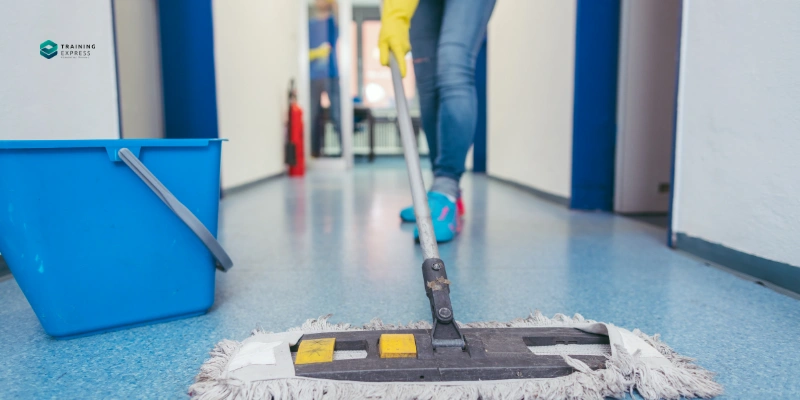

Cleaning is not one skill. What counts as “clean” in your own kitchen is not the same as what counts as clean on a hospital ward, in a food factory, or in a care home. Each setting has its own rules, its own risks, and often its own paperwork.
This guide looks at five online cleaning courses from Training Express and explains what each one actually teaches, who it suits, and how it fits into the wider picture of UK cleaning standards. Two are general-purpose courses. Three are built around a specific working environment: the NHS, food production, and care settings.
The 5 courses at a glance
| Course | Focus | Duration | Price (ex VAT) | Certification |
|---|---|---|---|---|
| Level 5 Certificate in Cleaning | General cleaning + running a cleaning business | 5h 49m | £8 | CPD |
| Diploma in Cleaning at QLS Level 5 | General cleaning (same content as above, extra certificate option) | 5h 49m | £8 | CPD, with optional QLS-endorsed certificate |
| Learn to Clean NHS Way | Healthcare-style disinfection, PPE, waste disposal | 3h | £89 | RSPH-approved |
| Cleaning & Disinfection in Food Safety Environments | Food hygiene, HACCP, disinfection science | 45m | £8 | CPD, QLS-endorsed |
| Cleaning, Decontamination and Waste Management | Care settings, sterilisation, clinical waste | 1h 34m | £8 | CPD |
Prices reflect the current online offer price at the time of writing and may change. Use code TREAT to get the discounted price.
Why specialised cleaning training matters
General cleaning skill isn’t enough once a workplace has its own hygiene rules. Cleaning a hospital corridor, a food prep surface or a care home bathroom to the wrong standard isn’t just untidy — it can affect infection control, food safety compliance, or a site’s own internal audits.
Employers in these sectors usually run their own induction and infection-control training, but that doesn’t mean outside courses are pointless. Sector-specific training gives you the vocabulary and reasoning behind the rules — why a food business separates cleaning from disinfecting, or why a care setting treats waste differently from a domestic bin — before you ever start employer-specific training. On a CV, it also signals that you understand a sector’s risks aren’t the same as a private home’s, which a general cleaning certificate alone doesn’t show.
That’s the reasoning behind splitting this list the way we have: one broad course for general cleaning work, and three built around a specific environment.
How cleaning standards differ by environment
A private home, an NHS ward, a food production line and a care home all follow different cleaning rules, and mixing them up can cause real problems. A method that’s perfectly fine for a living room carpet is not good enough for a hospital corridor or a food prep surface.
In healthcare
NHS England sets out what “clean” means through the National Standards of Healthcare Cleanliness 2021, which apply to hospitals, GP surgeries, dental practices, ambulance trusts and care homes. These standards cover cleaning frequency, technical audits, and infection control. A course like Learn to Clean NHS Way introduces the kind of disinfection and PPE knowledge this sector expects, though it’s worth knowing it’s a separate, RSPH-approved course rather than an NHS-issued qualification (more on that below).
In food businesses
Cleaning is governed by the Food Safety and Hygiene (England) Regulations 2013 and, more broadly, by hazard analysis principles (HACCP) that every food business must apply. The Food Standards Agency draws a clear line between cleaning (removing dirt and food residue) and disinfecting (reducing harmful bacteria to a safe level) — they are two different steps, not one. Cleaning & Disinfection in Food Safety Environments is built around exactly that distinction.
In care settings
Cleaning overlaps with infection prevention and clinical waste rules, since care homes handle bodily fluids, contaminated waste and vulnerable residents with weaker immune systems. Cleaning, Decontamination and Waste Management is aimed at this kind of setting specifically.
In private homes and general commercial cleaning
There’s no single UK-wide qualification you’re legally required to hold. This is where the Level 5 Certificate in Cleaning and its QLS-endorsed counterpart fit in — broad, practical training rather than compliance with a specific regulation.
With that context, here’s what each of the five courses covers.
1. Level 5 Certificate in Cleaning — best all-round starting point
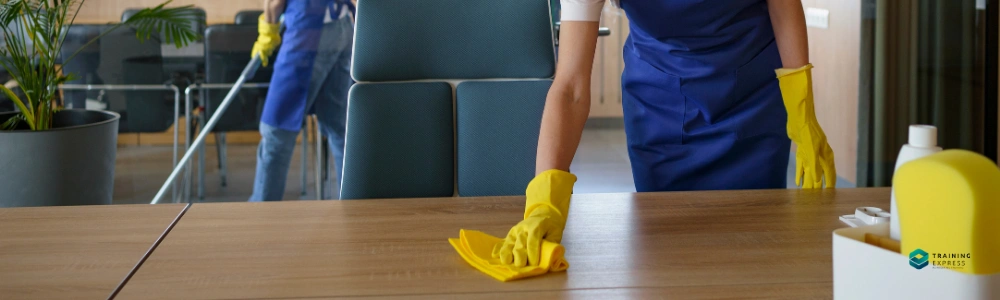
This is the widest-ranging of the five courses. It covers hands-on cleaning technique across several settings, plus the basics of running a cleaning business.
- 17 modules, around 5 hours 49 minutes in total
- Practical cleaning: house, kitchen, bathroom, office and external surfaces
- Safe handling of chemicals, keys and alarm codes
- Business modules: writing a business plan, managing staff, marketing a cleaning service, insurance and tax
- CPD accredited, no entry requirements
That combination makes it a sensible starting point whether you want to work as an employed cleaner or eventually run your own service.
Good for: anyone starting out in domestic or commercial cleaning, or planning to set up a cleaning business later.
2. Diploma in Cleaning at QLS Level 5 — best for an endorsed certificate
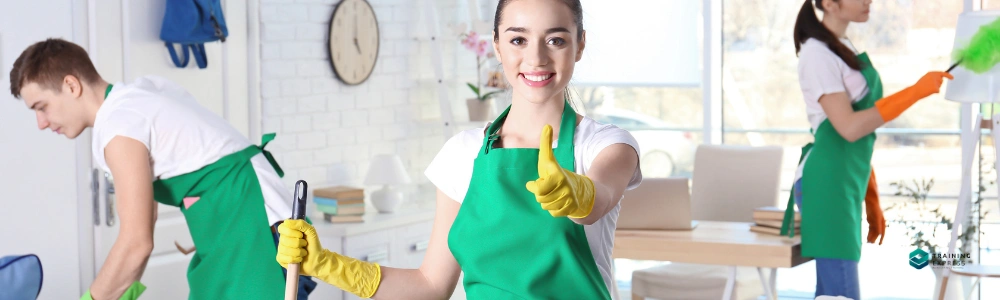
This course teaches the same 17 modules as the Level 5 Certificate in Cleaning above. The difference is the certificate, not the content, so it’s worth being clear about that before you choose between the two.
- Same curriculum as the Level 5 Certificate in Cleaning
- Free CPD digital certificate included, same as course #1
- Option to order a Quality Licence Scheme (QLS)-endorsed certificate for an extra fee
- QLS endorsement
For some employers or clients, that extra layer of endorsement carries more weight on a CV than a CPD certificate alone; for others, it won’t make a difference.
Good for: learners who specifically want a QLS-endorsed certificate to go alongside their CPD certificate, for example when applying to employers who ask for recognised third-party endorsement.
3. Learn to Clean NHS Way — best for healthcare-style cleaning knowledge
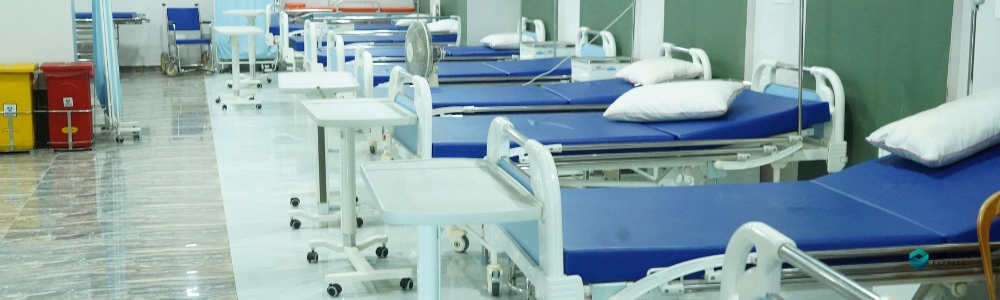
This course is built around the kind of disinfection, PPE and waste-handling knowledge that healthcare cleaning depends on, and it’s approved by the Royal Society for Public Health (RSPH).
- Around 3 hours, across four sections: science of cleaning, cleaning solutions and equipment, health and safety, and cleaning process
- Learning outcomes include building an environmental management plan and using PPE correctly
- Covers space disinfection and COSHH (Control of Substances Hazardous to Health) rules for storing and handling chemicals safely
- RSPH-approved – recognised body
- The real NHS benchmark is the National Standards of Healthcare Cleanliness 2021, set and audited by NHS England
One thing to be clear on: completing this course doesn’t mean you’re trained to the current NHS England cleaning standard on its own. What it offers is RSPH-approved background training in the principles behind healthcare-grade disinfection — useful preparation before or alongside any employer-specific NHS training, rather than a substitute for it.
Good for: cleaners or care staff who want a grounding in infection-control-style cleaning principles before applying for roles in or around healthcare settings.
4. Cleaning & Disinfection in Food Safety Environments — best for food and catering settings
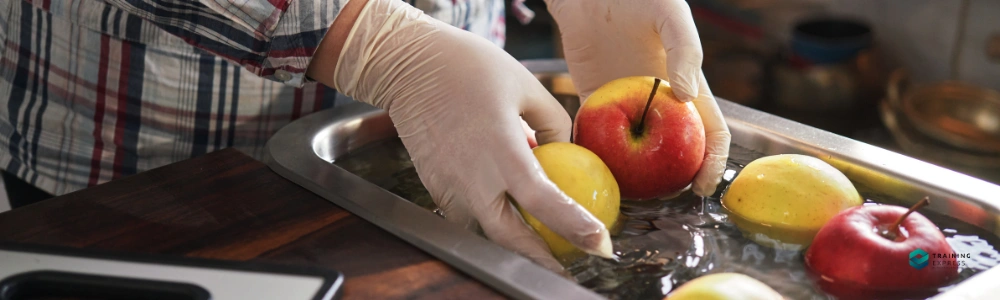
This course is the most technical of the five, and it’s aimed at anyone responsible for hygiene where food is made, prepared or served.
- 6 modules, around 45 minutes
- The chemistry and microbiology behind cleaning — why grease, protein residue and biofilms behave differently
- Manual, mechanical and Clean-in-Place (CIP) cleaning systems
- UK food hygiene regulation: HACCP, the Food Safety and Hygiene Regulations 2013, BRCGS and ISO 22000
- How businesses verify cleaning worked — visual checks, ATP testing and surface swabs
- CPD accredited and QLS-endorsed, no previous food safety experience required
It suits kitchen staff and food handlers just as well as supervisors or quality assurance staff who need the regulatory vocabulary — HACCP, CIP/COP, verification testing — for their role.
Good for: food handlers, catering staff, kitchen porters, and quality or compliance staff in food manufacturing or hospitality.
5. Cleaning, Decontamination and Waste Management — best for care and clinical settings
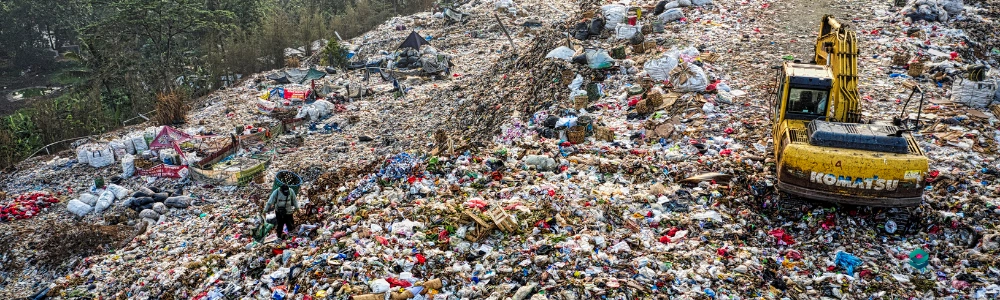
This is the course to look at if your cleaning work touches on care homes, clinical environments, or anywhere handling contaminated or hazardous waste.
- 7 modules, around 1 hour 34 minutes
- Cleaning and hygiene in care services
- Decontamination and disinfection
- Sterilisation techniques
- Understanding waste management
- Health and safety responsibilities
At this length, it’s a focused, fast route into the vocabulary and principles this sector runs on — it introduces the ideas rather than replacing an employer’s own infection-control training.
Good for: cleaning staff or support workers in care homes, and anyone who needs a working knowledge of decontamination and clinical waste handling.
Which course fits your workplace?
Match the course to where you actually work or want to work, not to price or length alone.
- Cleaning private homes or general commercial premises, or planning to start your own cleaning business → Level 5 Certificate in Cleaning
- Same as above, but you specifically want a QLS-endorsed certificate too → Diploma in Cleaning at QLS Level 5
- Working in or applying to a hospital, GP surgery, or other healthcare setting → Learn to Clean NHS Way (as background knowledge alongside employer training)
- Working in a kitchen, food factory, or catering business → Cleaning & Disinfection in Food Safety Environments
- Working in a care home or clinical support role → Cleaning, Decontamination and Waste Management
If you’re not sure which sector you’ll end up in, the Level 5 Certificate in Cleaning is the broadest single option, and you can always add a specialist course later.
CPD, RSPH and QLS: what these labels actually mean
None of these labels are the same as a regulated qualification such as an NVQ or an Ofqual-recognised diploma, and it’s worth knowing the difference before you enrol.
- CPD (Continuing Professional Development) accreditation means a course has been reviewed against CPD standards for structure and content. It’s widely used across UK online training and is a reasonable signal of quality, but CPD certificates aren’t regulated by Ofqual and don’t carry the same formal status as an academic or vocational qualification.
- QLS (Quality Licence Scheme) endorsement works in a similar way — it’s third-party quality assurance for non-regulated courses, not a regulated qualification, and the provider states this clearly on its own course pages.
- RSPH (Royal Society for Public Health) approval means the Royal Society for Public Health has reviewed and approved the course content, which is a recognised professional body in public health training. It’s a genuine mark of quality, but approval of a course is different from the course itself being an NHS-issued credential.
Lorem ipsum dolor sit amet, consectetur adipiscing elit. Ut elit tellus, luctus nec ullamcorper mattis, pulvinar dapibus leo.
Final thought
The right course depends on where you clean, not just how much you want to spend or how quickly you want a certificate. A general course builds a solid foundation; a sector-specific one shows you understand the particular risks and standards of that environment. For many people working across more than one setting, doing both is the more useful route.
Frequently Asked Questions (FAQ)
Do I need a qualification to work as a cleaner in the UK?
No single national qualification is legally required for domestic or general commercial cleaning. Specialist environments — healthcare, food production, care settings — expect staff to understand sector-specific hygiene standards, even where a formal qualification isn’t mandatory, and employers in these settings usually provide their own induction training on top of anything you bring with you.
What's the difference between cleaning, disinfecting and sterilising?
Cleaning removes dirt, grease and visible residue. Disinfecting follows cleaning and reduces harmful microorganisms to a safe level using an approved product or process. Sterilising goes further still, aiming to eliminate microorganisms almost entirely, and is mostly used in clinical and food manufacturing settings rather than general cleaning.
Will completing one of these courses guarantee me a job?
No course can guarantee employment. These are training and certification products, not job placements, and hiring decisions depend on the employer, the role, and your wider experience.
How long do these courses take?
They range from 45 minutes (Cleaning & Disinfection in Food Safety Environments) to around 5 hours 49 minutes (Level 5 Certificate in Cleaning and its QLS counterpart). All five are self-paced, so you can spread study over days or weeks.
Are these courses accredited?
All five carry CPD accreditation, RSPH approval, or QLS endorsement as detailed above.

Robert Lawrence
Author | Specialises in E-Learning.
Robert Lawrence is an author at Training Express, with over 5 years of experience creating practical resources and strategies to support learners and enhance their professional & personal development.
Reviewed by: Amelia Frey, Food Hygiene & Safety Specialist at CupStory
Related Blogs