Food Hygiene
 Health & Safety
 Safeguarding
 First Aid
 Business Skills
 Personal Development

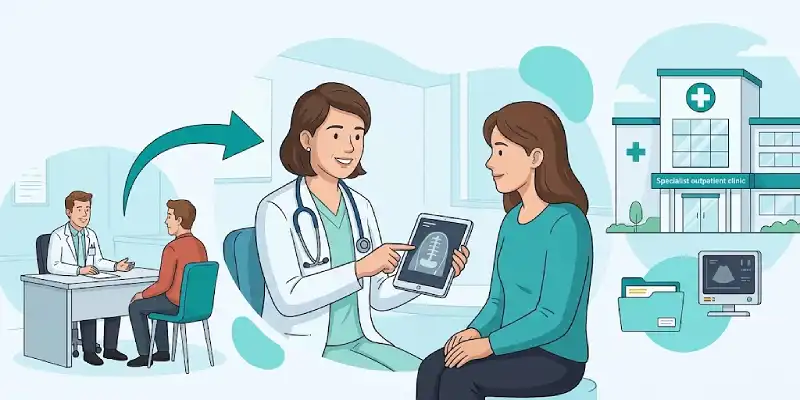

Secondary care plays an important role in the NHS, but what does it actually mean? If your GP refers you to a hospital specialist or you need treatment in an emergency department, you may be accessing secondary care.
Secondary care is specialist healthcare provided when a patient needs assessment, diagnosis or treatment beyond routine primary care. It includes services such as hospital consultations, planned operations, emergency treatment and specialist mental health support.
Understanding how secondary care works can help patients navigate NHS services and give health and social care learners a clearer picture of the UK’s healthcare system.
What Is Secondary Care in the NHS?
Secondary care is the part of the healthcare system that provides specialist medical services, usually following a referral from a GP or another healthcare professional.
While primary care manages many everyday health concerns, secondary care deals with conditions requiring specialist knowledge, equipment or treatment. This might involve seeing a cardiologist for a heart condition, receiving hospital-based treatment or visiting an outpatient clinic.
According to NHS England’s explanation of the healthcare system, secondary care includes planned treatment, urgent and emergency services, and mental healthcare.
It is important to understand that secondary care does not always mean staying in hospital. Some specialist appointments and treatments take place in community clinics or outpatient facilities.
The defining feature is the specialist nature of the care, rather than simply where it is provided.
What Are Examples of Secondary Care?
Secondary care covers a range of healthcare services, from routine specialist appointments to emergency treatment. The type of care someone receives depends on their condition, clinical needs and referral pathway.
Planned Hospital and Specialist Care
Planned, or elective, care involves appointments and treatments arranged in advance. Patients are commonly referred after a GP determines that specialist assessment or treatment may be necessary.
Examples include cardiology appointments, orthopaedic assessments, cataract surgery and consultations with hospital specialists.
Patients may attend an outpatient appointment and return home the same day, while others require admission for treatment.
Urgent and Emergency Care
Secondary care also includes urgent and emergency hospital services.
For example, someone experiencing a serious injury may receive assessment and treatment in an accident and emergency (A&E) department without first visiting their GP.
Emergency services respond to immediate medical needs, whereas planned specialist care usually follows an arranged referral.
Specialist Mental Health and Community-Based Care
Secondary care extends beyond physical health conditions. It can include specialist mental health teams, psychiatric assessments and treatment for people whose needs require more specialised support.
Some specialist services operate in community settings, although not all community healthcare is classified as secondary care.
The following table shows common examples.
| Secondary Care Service | Practical Example |
|---|---|
| Specialist outpatient care | A cardiology consultation |
| Planned hospital treatment | Cataract surgery |
| Emergency care | Treatment in an A&E department |
| Inpatient care | Admission for specialist treatment |
| Specialist mental healthcare | Assessment by a specialist mental health team |
| Community-based specialist care | A specialist clinic providing ongoing assessment |

Regardless of the setting, healthcare staff must follow appropriate safety practices. For a closer look at these responsibilities, read our guide to infection prevention and control in healthcare.
What Is the Difference Between Primary, Secondary and Tertiary Care?
The NHS provides different levels of healthcare to ensure patients can access services appropriate to their needs.
Understanding these levels makes it easier to see why someone might move from a GP appointment to specialist treatment.
Primary Care vs Secondary Care
Primary care is usually the first point of contact when someone needs medical advice or treatment. It includes GP practices, community pharmacies, dental services and optometry.
Secondary care generally begins when a patient needs more specialised investigation or treatment.
For example, a GP may initially assess ongoing chest discomfort. If specialist investigation is appropriate, the patient may be referred to a cardiologist.
Secondary Care vs Tertiary Care
Tertiary care involves highly specialised treatment, often provided by specialist centres with advanced expertise or facilities.
Examples include complex neurosurgery and organ transplantation.
| Level of Care | Main Purpose | Common Examples |
|---|---|---|
| Primary care | First-contact and general healthcare | GP appointments, community pharmacy services |
| Secondary care | Specialist assessment, diagnosis and treatment | Hospital consultants, planned surgery, A&E |
| Tertiary care | Highly specialised treatment | Organ transplantation, complex neurosurgery |

These levels work together rather than functioning as completely separate systems. Not every patient moves through all three levels, and some services overlap.
For people preparing to work in healthcare, understanding these settings forms part of broader Level 3 health and social care learning.
How Do You Access Secondary Care in the NHS?
Many patients access secondary care through a referral, although the route depends on the service and how urgently treatment is needed.
Getting a Referral for Specialist Care
A GP will usually assess your symptoms, review your medical history and decide whether specialist care is clinically appropriate.
They may recommend tests or initial treatment before making a referral. Other authorised healthcare professionals, including dentists and ophthalmologists, can also refer patients to certain specialist services.
The NHS guidance on referrals for specialist care explains that patients can request a specialist referral, but the decision depends on clinical need.
You generally cannot refer yourself directly to an NHS hospital consultant. However, services such as A&E and sexual health clinics have different access arrangements.
What Happens After a Secondary Care Referral?
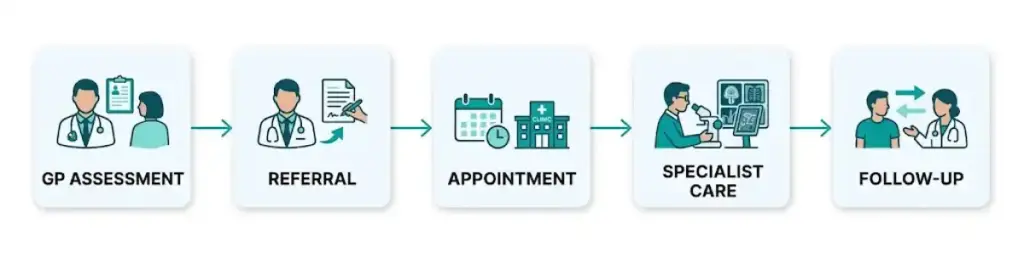
For a typical planned referral, the process may involve:
- Initial assessment: A GP or another appropriate professional identifies the need for specialist care.
- Referral: Relevant medical information is sent to the specialist service.
- Appointment: The patient receives appointment details or books through the NHS e-Referral Service, where applicable.
- Specialist assessment: A clinician reviews the condition and recommends suitable investigations or treatment.
- Follow-up: The patient may receive treatment, continued monitoring or a further referral.
Referrals involve sharing relevant health information. Healthcare workers therefore need to understand confidentiality in health and social care, particularly when handling records and communicating with other professionals.
Following appropriate health and social care policies and procedures also helps staff manage referrals and patient information consistently.
In England, eligible patients generally have a legal right to start non-urgent consultant-led treatment within 18 weeks, subject to exceptions. This does not mean every secondary-care appointment must take place within 18 weeks. The NHS waiting-time guidance explains the applicable rules.
Different arrangements and standards may apply elsewhere in the UK.
What Happens During Secondary Care?
The experience of secondary care varies depending on the condition and treatment required.
Patients may undergo specialist examinations, diagnostic tests, medication reviews, surgery or ongoing monitoring. Some receive treatment during a single outpatient appointment, while others need hospital admission.
Consider someone experiencing persistent knee pain.
Their GP might initially recommend treatment or investigations. If the problem continues and specialist assessment is appropriate, they may be referred to an orthopaedic clinic. Following assessment, the specialist might recommend physiotherapy, medication or further treatment.
Afterwards, the patient may return to their GP for ongoing care or receive support from community services.
Throughout this process, healthcare professionals have a responsibility to provide appropriate care. Understanding duty of care in health and social care helps explain how staff responsibilities apply across different healthcare settings.
Communication is equally important. Staff may need to recognise discomfort, anxiety or communication difficulties, making effective non-verbal communication valuable during specialist appointments and treatment.
Why Does Secondary Care Matter in Health and Social Care?
Secondary care gives patients access to specialist expertise when their needs cannot be fully addressed through routine primary care.
However, successful treatment often depends on coordination between several healthcare and social care professionals.
Doctors, specialist nurses, therapists and healthcare assistants may contribute to different aspects of patient care. Support workers may also help with everyday needs, patient comfort and communication within their professional responsibilities.
For example, an older person leaving hospital after surgery might need follow-up appointments, community nursing or support with daily activities at home.

This highlights the connection between secondary healthcare and social care services. A care home is not automatically a secondary-care facility, although its residents may receive specialist NHS treatment.
Respecting individual preferences and promoting dignity and rights in care environments remain important throughout these transitions.
Healthcare professionals must also understand the legal framework governing their work. Our article on legislation in health and social care provides a broader introduction to this subject.
For readers seeking a more detailed overview of statutory responsibilities, key UK legislation for care workers offers useful additional context.
Together, these principles help healthcare and social care teams deliver coordinated, respectful and person-centred support.
How Can You Develop Your Health and Social Care Knowledge?
Understanding secondary care is useful for anyone studying healthcare or considering work in the care sector. However, it is only one part of the wider knowledge needed to support individuals safely and respectfully.
Training Express offers a Level 3 Diploma in Health and Social Care covering areas such as safeguarding, communication, mental health support, infection prevention and person-centred care.
The self-paced online programme is CPD-accredited and QLS-endorsed, providing an opportunity to develop relevant knowledge. It is a non-regulated training programme, not a professional licence or a guaranteed route into employment.
Conclusion
Secondary care provides specialist healthcare for patients who need more advanced assessment, diagnosis or treatment. It includes planned hospital services, emergency treatment, outpatient appointments and specialist mental healthcare.
By understanding how secondary care differs from primary and tertiary care, patients can navigate services more confidently. For health and social care learners, this knowledge also helps explain how professionals and services work together to provide coordinated, person-centred care.
Together, they help care workers give safe, consistent and person-centred care, and help providers show regulators that good practice is built into everyday work.
Frequently Asked Questions About Secondary Care
Are Hospitals Classed as Secondary Care?
Many hospital services fall under secondary care, including outpatient appointments, planned operations and emergency treatment. However, hospitals can also provide highly specialised tertiary care. The type of service determines the classification, not simply the building.
Is A&E Primary or Secondary Care?
Hospital A&E departments are generally classified as secondary care within NHS England’s healthcare system. Patients can access emergency treatment without a routine GP referral. For life-threatening emergencies, call 999.
Is Mental Health Care Considered Secondary Care?
Some mental healthcare is provided through secondary care, particularly when specialist assessment or treatment is needed. However, mental health support is also available through primary care and other services, so not every mental health appointment is secondary care.
Can Secondary Care Be Provided Outside a Hospital?
Yes. Certain specialist services operate in community clinics and other non-hospital settings. Secondary care is defined by the specialist nature of the service rather than exclusively by its location.
Do You Always Need a GP Referral for Secondary Care?
No. Although GP referrals are common for planned specialist treatment, emergency care and certain other services can be accessed through different routes. Referral arrangements depend on the service and local NHS pathways.

Robert Lawrence
Author | Specialises in Health and Social Care
Robert Lawrence is an author at Training Express, with over 5 years of experience creating practical resources and strategies to support learners and enhance their professional & personal development.