Food Hygiene
 Health & Safety
 Safeguarding
 First Aid
 Business Skills
 Personal Development

Hand hygiene is one of the simplest yet most powerful habits we can adopt to protect ourselves and those around us from illness. Every day, our hands come into contact with countless surfaces—doorknobs, mobile phones, money, keyboards, and more. These surfaces are breeding grounds for germs, and without proper care, our hands can easily become carriers of harmful bacteria and viruses. Something as ordinary as shaking hands, preparing food, or touching your face can be enough to transfer germs into your body and potentially cause infections.
Proper hand hygiene isn’t just about personal protection—it’s a global health necessity. According to the World Health Organization (WHO), handwashing is the most effective method of preventing the spread of infectious diseases such as colds, influenza, and foodborne illnesses. Similarly, the National Health Service (NHS) emphasizes hand hygiene as a critical step in preventing the transmission of pathogens within healthcare environments.
Think about it: a simple 20-second habit could save you days of illness, medical expenses, or even prevent serious outbreaks. In this guide, we’ll break down step-by-step how to maintain good hand hygiene, why it matters, and when it’s most important. We’ll also explore WHO’s recommended 7-step handwashing technique, the right way to use hand sanitizer, and common mistakes people make while washing their hands.
By the end of this article, you’ll not only know how to wash your hands properly but also understand why this basic act should be non-negotiable in your daily routine.
Table of Contents
7 Steps of Washing Hands (WHO Guidelines)
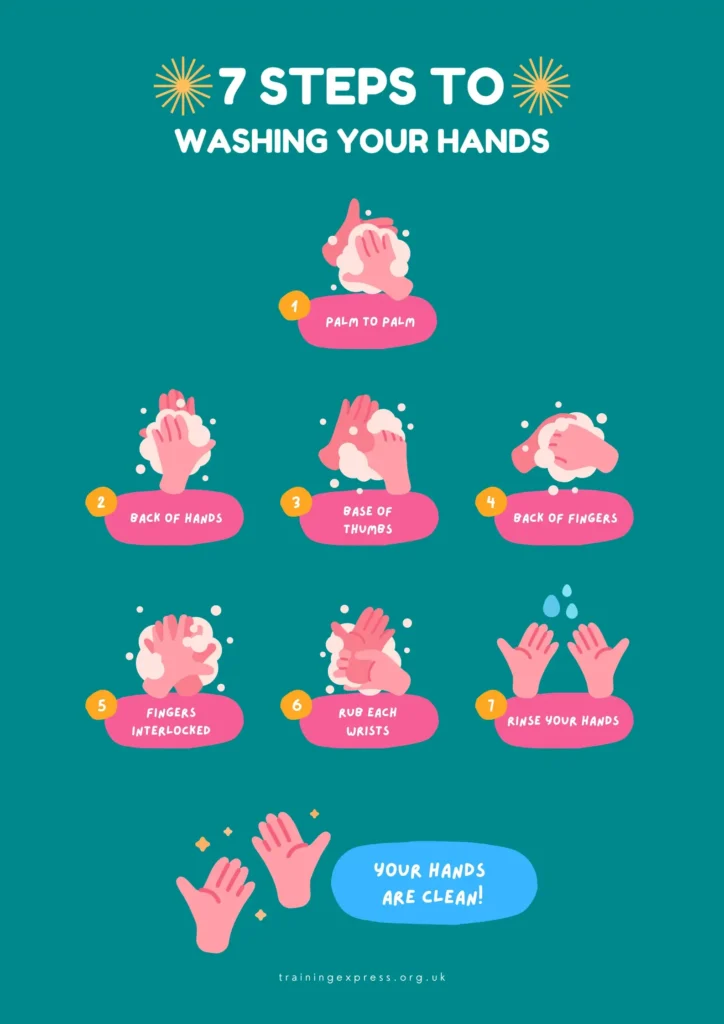
The WHO recommends a 7-step handwashing technique to ensure every part of your hands is properly cleaned. Most people only wash their palms, but this misses crucial areas where germs hide. Here’s the breakdown:
- Palm to palm: Rub both palms together in a circular motion. This removes surface dirt and germs.
- Back of hands: Place one hand over the back of the other and scrub. Repeat on the opposite hand to cover both sides.
- Interlace fingers: Rub your fingers together, interlacing them to clean between the fingers where germs easily accumulate.
- Backs of fingers: Bend your fingers and rub them against the opposite palm. This ensures the backs and joints are scrubbed.
- Thumbs: Rotate each thumb in the opposite palm. Thumbs are often forgotten, yet they touch almost everything your hands do.
- Fingertips and nails: Rub fingertips against the opposite palm in a circular motion. This cleans under the nails where dirt and germs hide.
- Wrists: Finish by scrubbing your wrists, as germs can travel beyond the hands.
This thorough method takes around 40–60 seconds. While it may feel longer than your usual handwash, remember that it’s the difference between a quick rinse and a genuinely effective clean.
Why Is Washing Your Hands Important?
Washing your hands might seem like a small act, but it has an enormous impact on your overall health and the health of those around you. Germs—whether viruses, bacteria, or fungi—spread primarily through touch. Every time you touch a contaminated surface and then touch your face, mouth, or food, you increase the risk of transferring those harmful microbes into your body.
For instance, respiratory illnesses like the flu or COVID-19 can spread when someone touches a surface contaminated with droplets and then rubs their eyes or nose. Similarly, foodborne illnesses like salmonella or E. coli are commonly transmitted when hands are not washed before preparing or eating meals.
Think of handwashing as a personal shield: it protects you, your loved ones, and even strangers from unnecessary illness. In fact, studies show that proper hand hygiene could prevent up to 30% of diarrheal illnesses and 20% of respiratory infections worldwide (As per CDC). That means fewer sick days, reduced healthcare costs, and a healthier community overall.
In short, washing your hands is a simple act of responsibility—with life-saving potential.
When Should You Wash Your Hands?
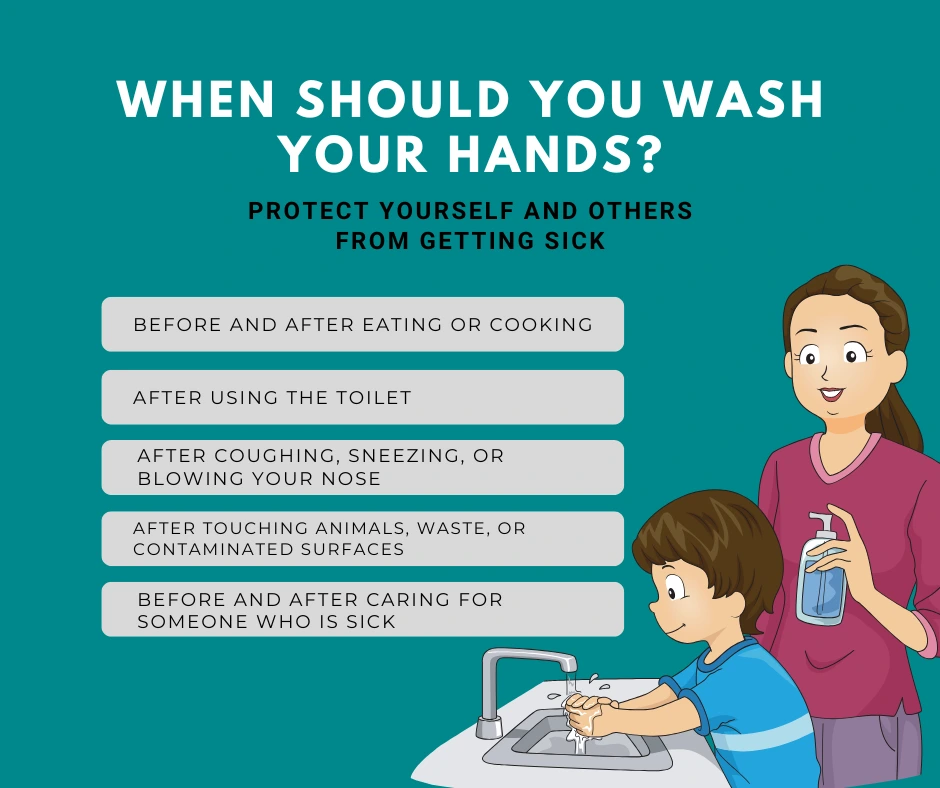
Knowing how to wash your hands is important, but knowing when to do it is equally crucial. Germs are sneaky—they don’t just cling to obvious places like public toilets, but also to everyday objects like phones, wallets, and shopping carts. Here are the most critical times you should practice hand hygiene:
- Before and after eating or cooking: Food preparation involves direct contact with ingredients that can carry harmful bacteria. Washing your hands prevents cross-contamination, especially when handling raw meat, fish, or eggs.
- After using the toilet: Fecal bacteria can easily spread and cause serious gastrointestinal illnesses. This is non-negotiable.
- After coughing, sneezing, or blowing your nose: Even if you use tissues, germs can linger on your hands and spread to others.
- After touching animals, waste, or contaminated surfaces: Pets, garbage, or even shared office supplies can harbor harmful microbes.
- Before and after caring for someone who is sick: Whether at home or in healthcare, clean hands protect both you and the patient from infections.
In essence, wash your hands whenever there’s a chance they’ve come into contact with germs—or before they come into contact with your mouth, food, or another person.
Use Hand Sanitiser When Soap and Water Aren’t Available
Sometimes, soap and water simply aren’t accessible—when you’re traveling, shopping, or in crowded public spaces. That’s where hand sanitiser comes in. However, it’s important to understand when it works and when it doesn’t.
Hand sanitiser is effective against many germs, especially when it contains at least 60% alcohol. It works by breaking down the proteins and outer membranes of viruses and bacteria. But it’s not effective against all types of germs, such as norovirus and certain parasites. It also doesn’t remove dirt, grease, or harmful chemicals.
To use it properly, apply enough product to cover your entire hand surface and rub until your hands feel dry. Don’t wipe it off prematurely, as the alcohol needs time to work.
Remember, sanitiser is a great backup—but whenever possible, soap and water should be your first choice.
Is It Dangerous to Wash Your Hands Too Much?

While handwashing is essential, it’s possible to overdo it. Excessive washing, especially with harsh soaps, can strip your skin of its natural oils. This can lead to dryness, irritation, and even dermatitis, making your skin more vulnerable to cracks that allow germs to enter.
But does this mean you should wash less? Not at all. The key lies in balancing hygiene with skin care:
- Use lukewarm water instead of hot water to avoid excessive drying.
- Choose mild, fragrance-free soaps that are gentle on the skin.
- Moisturise regularly with a hand cream or lotion to restore hydration.
- At night, consider applying a thicker moisturizer and wearing cotton gloves to lock in moisture.
Healthcare workers who wash their hands dozens of times a day often follow this practice to keep their skin healthy. So yes, overwashing can be harsh on your skin—but with the right care, you can maintain both hygiene and comfort.
Medical Handwashing Steps (Healthcare Professionals)
Hand hygiene takes on a whole new level of importance in healthcare settings. For doctors, nurses, and caregivers, clean hands can literally mean the difference between life and death. In hospitals, where patients may already have weakened immune systems, even a small lapse in hygiene can lead to severe infections.
Healthcare professionals follow different levels of handwashing depending on the situation:

Social handwashing
This is similar to everyday washing—using soap and water for about 20 seconds to remove visible dirt and reduce microbial load. It’s done before eating, after using the restroom, or after light contact with patients.
Hygienic handwashing
This is more rigorous and involves antiseptic solutions (such as chlorhexidine or alcohol-based rubs). It’s typically done before and after contact with patients to prevent cross-infection.
Surgical handwashing
This is the strictest level, performed before surgical procedures. It can take several minutes and involves scrubbing hands, wrists, and forearms thoroughly with antiseptic soap. The goal here is to eliminate as many microbes as possible to ensure a sterile environment.
Each of these practices is guided by strict clinical protocols. The WHO’s “Five Moments for Hand Hygiene” are a cornerstone of hospital practices: before touching a patient, before clean/aseptic procedures, after exposure to body fluids, after touching a patient, and after touching patient surroundings.
For healthcare workers, handwashing isn’t just about personal protection—it’s a duty of care to protect vulnerable patients from hospital-acquired infections (HAIs).
Common Mistakes People Make While Washing Hands

Even though most people think they wash their hands correctly, research suggests otherwise. Many common mistakes undermine the effectiveness of hand hygiene. Here are the most frequent errors:
- Not washing long enough: A quick splash under water is not enough. Effective handwashing requires at least 20 seconds of scrubbing.
- Missing key areas: People often neglect fingertips, thumbs, and the backs of hands—prime spots where germs hide.
- Using contaminated towels: Drying your hands on a dirty or shared towel can reintroduce germs immediately. In public places, disposable paper towels are safer.
- Skipping soap: Some believe water alone is sufficient, but soap is necessary to break down oils and deactivate viruses.
- Overusing antibacterial soaps: Many people think these are superior, but in most cases, regular soap is just as effective. Overuse of antibacterial products can even encourage resistance in bacteria.
- Rinsing with dirty water: Washing in a basin or stagnant water risks spreading more germs instead of removing them.
Avoiding these mistakes can make your hand hygiene significantly more effective and reduce your chances of catching or spreading infections.
Final Thoughts
Hand hygiene is one of the most powerful tools we have to protect ourselves and others from illness. Something as simple as washing your hands properly—using soap, scrubbing for 20 seconds, rinsing, and drying—can significantly reduce the spread of infectious diseases.
The WHO and NHS both stress that proper handwashing is essential not just for personal health, but for public safety. From preventing foodborne illnesses at home to reducing hospital-acquired infections in healthcare, clean hands are non-negotiable.
So, make hand hygiene a daily habit. Remember the 7-step WHO method, use sanitiser when necessary, and avoid common mistakes. It’s a small effort with life-changing results. Protect yourself, protect your loved ones, and protect your community—one wash at a time.
Frequently Asked Questions (FAQ)
How long should I wash my hands for proper hygiene?
At least 20 seconds of scrubbing is recommended. Singing “Happy Birthday” twice is a simple way to keep track of time.
Can hand sanitiser replace soap and water?
Not completely. Sanitiser works well when soap and water aren’t available, but it doesn’t remove all germs, chemicals, or dirt.
What’s the best way to dry your hands?
Using a clean paper towel or an air dryer is best. Avoid shared cloth towels in public places.
How can I teach kids proper handwashing habits?
Turn it into a fun activity. Use songs, colorful soaps, or games to make the process engaging.
Does wearing gloves reduce the need to wash hands?
No. Gloves can carry germs too. Always wash your hands before and after wearing gloves.
How can I prevent skin dryness from frequent washing?
Use gentle soaps, lukewarm water, and moisturize regularly with hand cream or lotion.
Are antibacterial soaps better than regular soaps?
For daily use, regular soap is just as effective. Antibacterial soaps don’t provide added benefits in most situations.
Should I wash my hands after using hand sanitiser?
No need to wash right after sanitiser use. However, if your hands are visibly dirty, sanitiser alone won’t be enough.
How often should healthcare workers wash their hands?
Healthcare workers should follow the WHO’s “Five Moments of Hand Hygiene” to ensure maximum patient safety.
Can over-washing damage the skin’s natural barrier?
Yes. Frequent washing with harsh soaps can strip natural oils, leading to dryness and irritation. Moisturising is key.
Related Blogs



- Available Courses
- Animal care10
- Design28
- Training9
- Accounting & Finance Primary50
- Teaching & Academics Primary37
- Teaching23
- Quality Licence Scheme Endorsed181
- Law10
- IT & Software230
- Job Ready Programme52
- Charity & Non-Profit Courses28
- HR & Leadership4
- Administration & Office Skills4
- Mandatory Training36
- Regulated Courses4
- AI & Data Literacy26
- Health and Social Care290
- Personal Development1632
- Food Hygiene119
- Safeguarding80
- Employability288
- First Aid73
- Business Skills296
- Management425
- Child Psychology40
- Health and Safety533
- Hospitality28
- Electronics31
- Construction63
- Career Bundles201
- Marketing39
- Healthcare172