Food Hygiene
 Health & Safety
 Safeguarding
 First Aid
 Business Skills
 Personal Development

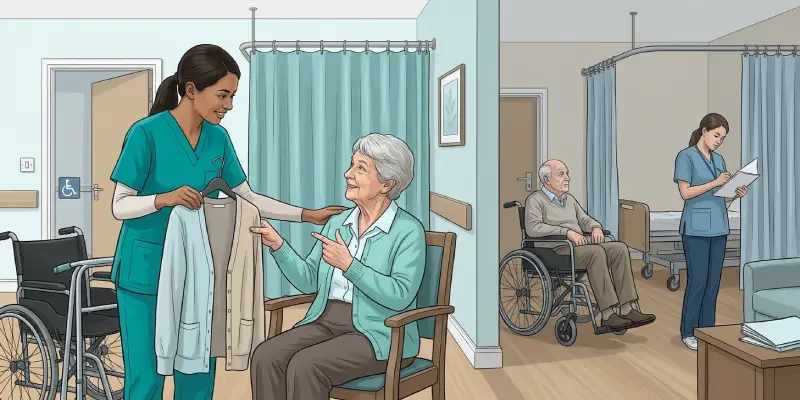

A care home may have excellent facilities, but if residents cannot make simple decisions about their daily lives, their dignity can still suffer. Care environments promote dignity and rights by protecting privacy, supporting independence, encouraging personal choice and treating individuals with respect. They undermine these principles when people experience unnecessary restrictions, inaccessible facilities or disrespectful treatment.
Dignity and rights in care depend on more than how staff speak to patients or residents. The physical surroundings, daily routines and organisational culture all influence whether someone feels valued, comfortable and in control. Even small decisions, such as knocking before entering a bedroom, can make a meaningful difference.
For UK health and social care workers, recognising these influences is essential to providing person-centred support. Whether care takes place in a hospital, residential home or someone’s own home, the environment should protect their individuality and wellbeing. This article explains how care settings can support or compromise dignity, with practical examples and relevant UK care standards.
Table of Contents
What Do Dignity and Rights Mean in Health and Social Care?
Dignity means recognising every person’s inherent worth and treating them with consideration, regardless of their circumstances. Respect involves acknowledging their preferences, beliefs, feelings and decisions.
In health and social care, individual rights include privacy, equality, autonomy, appropriate consent and involvement in decisions about care.
These principles are closely connected to person-centred care, which places individual needs and preferences at the centre of support. For example, allowing a resident to choose when they get dressed helps preserve their independence and sense of control.
A respectful environment therefore supports both physical wellbeing and personal identity. These values are also central to person-centred care principles, which emphasise choice, privacy and individuality.
How Can Care Environments Promote Dignity and Rights?

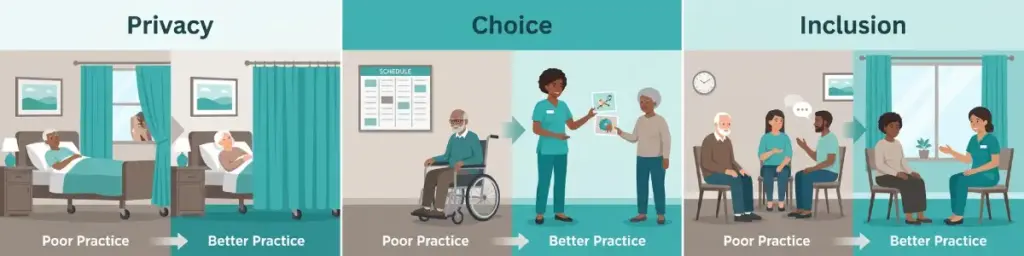
Promoting dignity in care settings requires an environment where people feel safe, respected and able to participate in everyday decisions. Three important factors are privacy, independence and inclusion.
Creating Private, Safe and Comfortable Spaces
Personal space is essential for maintaining dignity. Care workers should provide suitable privacy when helping someone wash, dress, use the toilet or discuss sensitive information.
Practical ways to protect privacy include:
- Knocking before entering bedrooms.
- Closing doors or curtains during personal care.
- Providing private spaces for sensitive conversations.
- Keeping personal belongings safe and accessible.
- Maintaining clean, comfortable and appropriately lit surroundings.
Privacy also extends to personal information. Discussing a patient’s condition where others can overhear may damage trust. Further guidance on protecting sensitive information is available in Training Express’s article on confidentiality in care.
Supporting Independence and Personal Choice
A dignified environment allows individuals to do as much as they reasonably can for themselves. Understanding person-centred care can help care workers respect individual preferences, support independence and encourage meaningful choices.
Accessible bathrooms, suitable mobility equipment and clear walkways can help people move around safely. Flexible routines also allow them to make meaningful choices about meals, activities and personal care.
For example, a resident who can select their clothing and decide when to participate in activities may feel more independent than someone whose entire routine is decided by staff.
In England, CQC Regulation 15 addresses the suitability of premises and equipment, including accessibility and meeting people’s needs.
Encouraging Respectful Communication and Inclusion
The social environment matters just as much as the physical surroundings.
Staff should speak directly to individuals, listen carefully and use communication methods suited to their needs. This may involve visual aids, hearing support or additional time to respond.
Care settings should also accommodate reasonable cultural, religious and personal preferences. Inclusive activities, welcoming communal spaces and opportunities to maintain relationships help individuals feel connected rather than isolated.
How Can Care Environments Undermine People’s Dignity and Rights?
Care environments can undermine dignity when surroundings, routines or staff behaviour leave individuals feeling exposed, excluded or powerless. These problems are not always intentional, but their effects can be significant.
Lack of Privacy and Inappropriate Facilities
Imagine someone receiving assistance with dressing while their bedroom door remains open. Even if the care worker is completing the task correctly, the lack of privacy may cause embarrassment and discomfort.
Other examples include:
- Overcrowded rooms with insufficient personal space.
- Conversations about medical conditions in public areas.
- Inaccessible toilets or bathrooms.
- Poorly maintained facilities that reduce comfort.
- Failure to respect personal belongings.
Such conditions can affect confidence, comfort and willingness to ask for support.
Restrictive Routines and Loss of Independence
Institutional routines may make care easier to organise, but they should not unnecessarily remove personal choice.
Forcing everyone to wake, eat or participate in activities at identical times can overlook individual needs. Similarly, preventing someone from completing a manageable task simply because staff can do it faster may gradually reduce independence.
Safety considerations are important, but restrictions should be proportionate and based on individual circumstances.
A supportive environment balances appropriate risk management with the person’s preferences and abilities.
Disrespectful Behaviour and Exclusion
Speaking over patients, dismissing their concerns or addressing adults in a childish manner can make them feel undervalued. Ignoring communication difficulties or cultural preferences may also contribute to exclusion.
When poor practice occurs, care workers have a responsibility to raise concerns through appropriate procedures. Serious concerns involving abuse or neglect may require safeguarding action.
Further learning in safeguarding vulnerable adults can help care workers recognise abuse, understand reporting responsibilities and respond to concerns appropriately.
Examples of Care Environments That Promote or Undermine Dignity
The following examples show how everyday care arrangements can influence dignity, privacy and independence.
| Care Situation | Promotes Dignity | Undermines Dignity |
|---|---|---|
| Personal Care | Ask permission and close curtains | Unnecessary exposure |
| Daily Routines | Offer meaningful choices | Rigid schedules |
| Communication | Speak privately and respectfully | Sharing private matters publicly |
| Mobility | Provide accessible spaces | Leaving physical barriers |
| Social Activities | Support chosen activities | Unnecessary isolation |
A Practical Care Home Example

Consider an older resident with limited mobility who enjoys spending time in the garden.
A care home with an accessible pathway, suitable seating and appropriate mobility support enables the resident to enjoy this activity. Staff who ask when they would like to go outside also respect their preferences.
Now imagine the garden has steps that the resident cannot manage, and staff routinely dismiss requests for assistance. Although the person may receive adequate basic care, their opportunities for independence and enjoyment are unnecessarily restricted.
The difference is not simply the availability of a garden. It is whether the environment enables the individual to exercise choice and participate in everyday life.
What UK Laws and Care Standards Protect Dignity and Rights?
UK care services operate within legal and professional frameworks designed to protect individuals receiving support. Specific regulatory requirements vary across the four UK nations.
CQC Regulations and Individual Rights
In England, the Care Quality Commission regulates health and social care providers against fundamental standards set out in legislation.
Relevant regulations include:
- CQC Regulation 10: Requires people receiving care to be treated with dignity and respect, including protecting privacy and supporting independence.
- CQC Regulation 9: Requires care and treatment to reflect individual needs and preferences.
- Regulation 15: Addresses suitable, safe and properly maintained premises and equipment.
The Equality Act 2010 also protects individuals against unlawful discrimination and places relevant reasonable-adjustment duties on service providers.
Professional Standards for Care Workers
The Care Certificate standards, updated in March 2025, include Standard 7: Privacy and dignity.
This standard covers protecting personal space, maintaining confidentiality during care and recognising situations where dignity may be compromised.
These standards support workplace induction and assessment, reinforcing the importance of respectful everyday practice.
How Can Care Workers Improve Dignity in Care Settings?
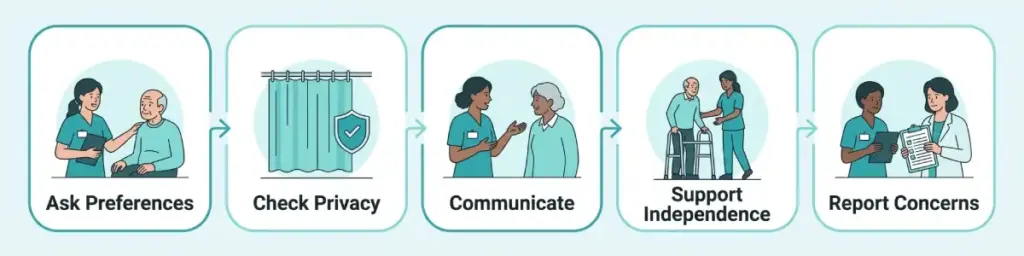
Improving dignity requires consistent attention to individual experiences, not just compliance with written policies.
Care workers can take five practical steps:
- Ask about preferences: Involve people in decisions about their care and routines.
- Check the environment: Identify privacy concerns, accessibility barriers and uncomfortable conditions.
- Communicate respectfully: Listen carefully and adapt communication to individual needs.
- Support independence: Encourage safe participation without imposing unnecessary restrictions.
- Report concerns: Raise undignified practices through appropriate workplace procedures.
Developing professional knowledge can also help staff recognise and respond to dignity-related challenges. Training Express’s Level 3 Diploma in Health and Social Care covers relevant topics including individual rights, communication, equality, person-centred care and how care environments influence dignity.
Conclusion
A care environment promotes dignity when residents can receive personal care privately, move around accessible facilities and make choices about their daily routines. Simple arrangements, such as closing bedroom curtains, providing suitable mobility access and respecting preferred mealtimes, help protect privacy and independence.
Conversely, an open door during personal care, an inaccessible bathroom or an unnecessarily rigid schedule can undermine someone’s dignity. These conditions may restrict individual choice, expose private information or create dependence that could otherwise be avoided. Staff attitudes and everyday routines can make these environmental problems worse.
Care workers should regularly consider whether their surroundings and practices support each person’s rights. Providing private spaces, removing avoidable access barriers and adapting routines to individual preferences are practical improvements. The key is to ensure that care environments support people’s choices and abilities rather than unnecessarily limiting them.
Frequently Asked Questions (FAQ)
What Are the Main Principles of Dignity in Care?
The main principles include privacy, respect, independence, autonomy, equality and individual choice. Together, they support person-centred care by ensuring people remain involved in decisions affecting their lives and receive support that reflects their needs.
How Can Care Homes Maintain Residents' Dignity?
Care homes can maintain dignity through private facilities, accessible spaces, personalised routines and respectful communication. Staff should protect residents’ personal information, encourage independence and involve them in decisions about everyday activities and care.
What Is an Example of Undignified Care?
An example is discussing someone’s medical condition in a communal area where other residents can overhear. This unnecessarily compromises privacy and may cause embarrassment, discomfort or a loss of trust in care staff.
How Can Care Workers Balance Safety and Independence?
Care workers should assess individual risks, discuss preferences and provide proportionate support. The aim is to help people make informed choices and remain as independent as possible without exposing them to avoidable harm.
Arina Jones
Author | eLearning Consultant
Arina Jones is an eLearning Consultant dedicated to developing engaging educational content and effective learning strategies that help individuals gain new skills, achieve their learning goals, and advance their careers.
Reviewed by: Robert Lawrence
Specialises in Health and Social Care