Food Hygiene
 Health & Safety
 Safeguarding
 First Aid
 Business Skills
 Personal Development

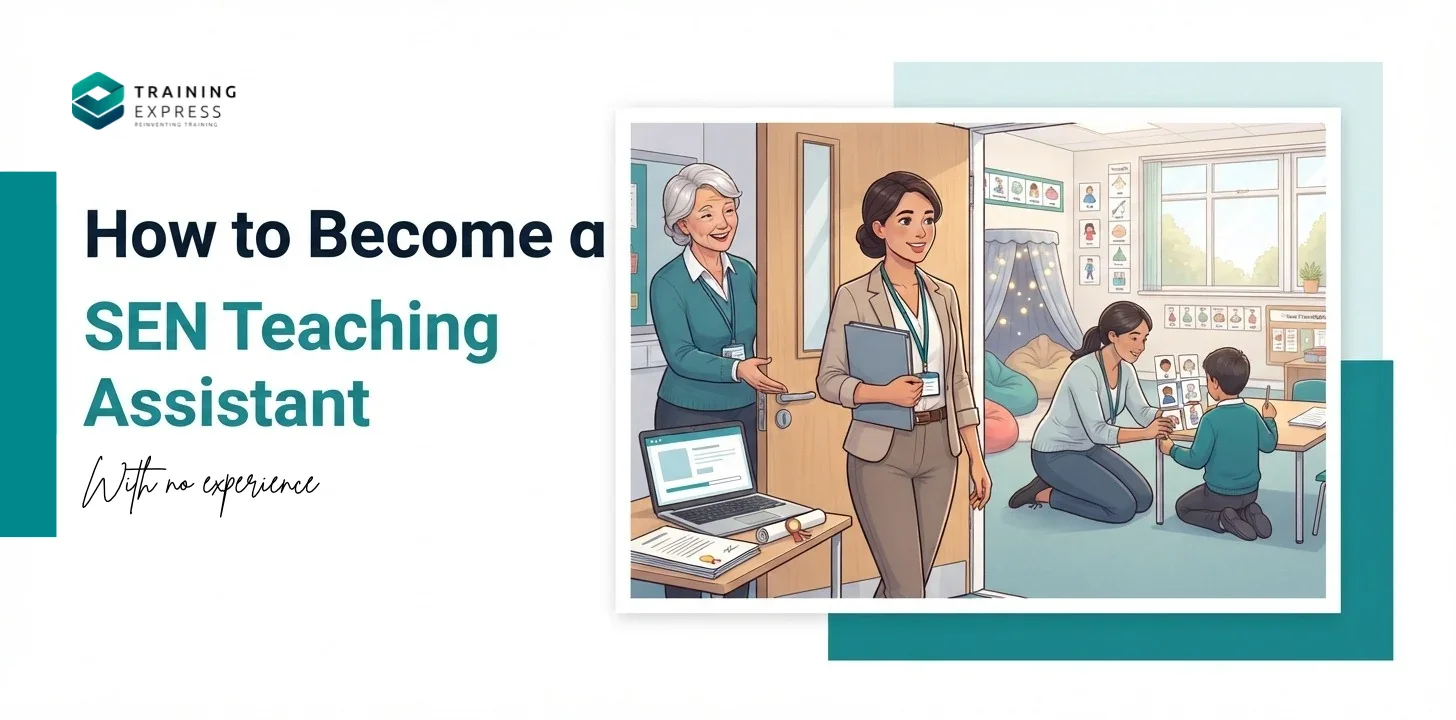

To become a SEN teaching assistant in England, you don’t need a specific qualification. Most schools ask for good English and maths (often GCSE grade 4 or equivalent), some experience with children, paid or voluntary, and an enhanced DBS check. A short SEND course or a teaching assistant qualification can help your application stand out.
This guide explains how to become a SEN teaching assistant step by step, what schools look for, the qualifications and apprenticeships available, and how to get started if you have no experience yet.
Table of Contents
What does a SEN teaching assistant do?
A SEN teaching assistant (TA) supports pupils with special educational needs and disabilities (SEND) to learn and take part in school life. You’ll work one-to-one or with small groups, adapt tasks, support communication and behaviour, and sometimes help with personal care. You can see the full list of duties in our SEN teaching assistant job description.
Do you need qualifications to be a SEN teaching assistant?
No specific qualification is legally required to work as a SEN teaching assistant. Each school sets its own requirements, and many will train the right person on the job.
What schools usually ask for
Most adverts follow a similar pattern. This table shows what schools usually treat as essential and what helps you stand out.
| Area | Usually essential | Helps you stand out |
|---|---|---|
| English and maths | GCSE grade 4 (C) or equivalent, such as Functional Skills Level 2 | Confident reading and number skills |
| Experience | Some experience with children or young people | Experience with children with SEND |
| Checks | Enhanced DBS check with children's barred list check | Already registered with the DBS Update Service |
| Training | Willingness to learn | A TA qualification, SEND training, first aid, Makaton |
SEN teaching assistant qualifications compared
Qualifications aren’t usually required, but they help, especially for higher-graded roles. Course names vary by awarding body and provider.
| Option | Level | Typical time | Who it suits |
|---|---|---|---|
| Short online SEND course | Not a regulated qualification | Hours to weeks | Beginners who want to learn the basics before applying |
| Supporting teaching and learning qualification | Level 2 or Level 3 | Varies by provider | People who want a recognised TA qualification |
| T Level in Education and Early Years | Level 3 | 2 years (full time) | School and college leavers aged 16 to 19 |
| Teaching assistant apprenticeship | Level 3 | Typically 18 months | People who want to earn while they train |
| Specialist teaching assistant apprenticeship | Level 5 | Typically 24 months | Experienced TAs who want to specialise, including in SEND |
Costs vary by provider and funding, so check with the college or training provider.
Is Level 3 required?
No. A Level 3 qualification isn’t a legal requirement, but some schools ask for one for Level 3 TA roles, and it can help you move up a grade. Many people start without it and study once they’re in a school.
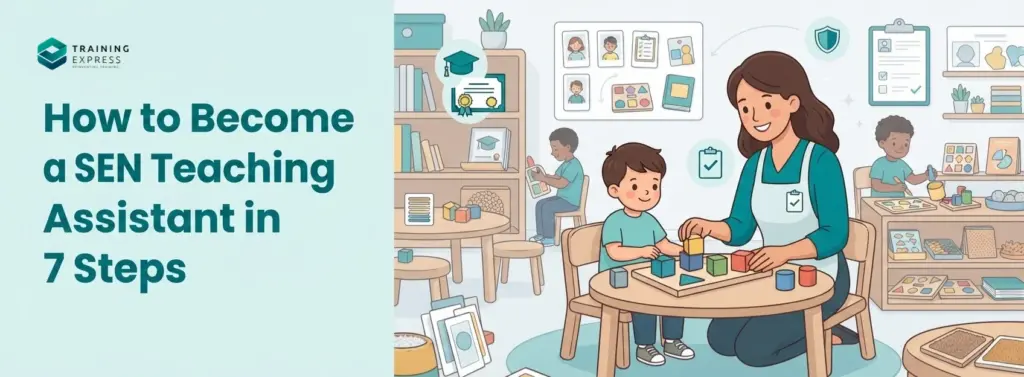
How to become a SEN teaching assistant in 7 steps
The quickest route is to learn the basics of SEND, get some experience with children, sort your DBS check and then apply. These 7 steps take you through it.
Step 1: Check you meet the basics
Check you have good English and maths, or a plan to get them, and the right to work in the UK. If you don’t have GCSE English or maths at grade 4, Functional Skills Level 2 is often accepted as an equivalent. Many colleges run these courses.
Step 2: Learn the basics of SEND
Schools want to know you understand how SEND support works. Start with the types of special educational needs and how support is organised under the SEND Code of Practice. Our online SEN teaching assistant course is a short way to cover the basics, including SEN support and the 4 areas of need, before you apply.
Step 3: Get experience with children
Any regular time with children helps. Good options include volunteering in a school, helping at a youth club, holiday club or Brownies or Scouts group, sports coaching, or supporting a family member with SEND. Keep a note of what you did and what you learned, because you’ll use these examples in your application and interview. Even a few hours a week over a term shows commitment.
Step 4: Get your enhanced DBS check
Working in a school with children is “regulated activity”, so you’ll need an enhanced DBS (Disclosure and Barring Service) check with a children’s barred list check. The school or agency arranges it when they offer you a job or a volunteering place, so ask them whether they’ll cover the cost.
This now matters for volunteers too. The government removed the “supervision exemption” from 1 September 2026. Before then, some volunteers didn’t count as being in regulated activity if staff supervised them. Now, a volunteer doing regulated activity with children is in regulated activity even if they’re supervised, so schools will usually need the same checks as for paid staff. Expect this if you volunteer to build experience.
Step 5: Write your CV and supporting statement
Most school applications ask for a supporting statement, and it’s often what gets you an interview. Match it to the person specification point by point, because the panel usually scores it that way. We suggest you check your statement includes:
- why you want to work with pupils with SEND, in a sentence or two
- a short real example for each essential point: what happened, what you did and what changed
- any SEND or safeguarding training, and what you learned from it
- how you work with others, such as following a lead or sharing what you noticed
- a clear, error-free finish, read through by someone else if possible
Keep your CV to two pages, and list volunteering alongside paid work.
Step 6: Apply
You can apply directly to schools, through the government’s Teaching Vacancies service, through council job sites or through supply agencies. Agencies can be a good way in, because many offer short placements that help you build experience and references.
Step 7: Prepare for the interview
SEN TA interviews often include questions about safeguarding and behaviour, plus a short task with pupils. Practise your answers with our 30 SEN teaching assistant interview questions and answers.
How to become a SEN teaching assistant with no experience
You can become a SEN teaching assistant with no classroom experience. Many schools and agencies advertise entry-level or “unqualified SEN teaching assistant” roles and provide training on the job.
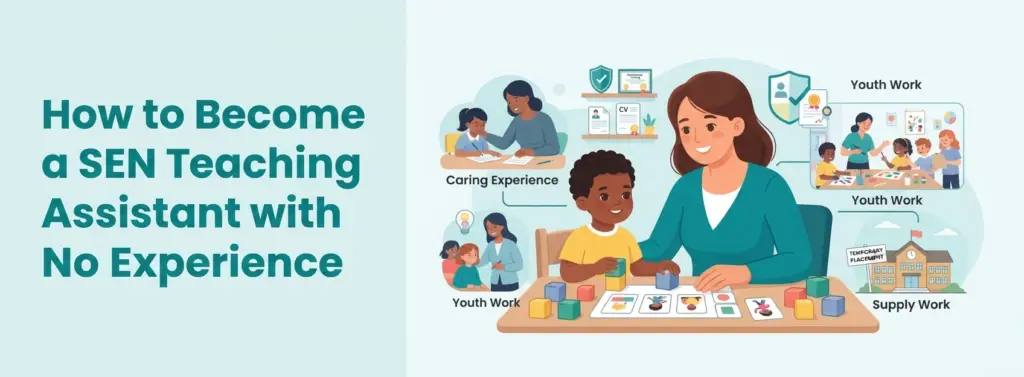
Experience doesn’t have to come from a school. Schools value:
- parenting or caring for a child, especially a child with SEND
- caring for an adult, or work in health or social care
- sports coaching, youth work or holiday clubs
- customer-facing jobs where you stayed calm and patient under pressure
“Unqualified” usually means you don’t have a TA qualification yet, not that you can’t do the job. These roles often start at the lowest TA grade, with training in areas such as safeguarding, behaviour support and personal care once you start.
Supply agencies are another common way in. Many register people without school experience, check their documents and DBS, and offer short placements. A few weeks of supply work can give you the school experience and references that permanent roles ask for. Ask each agency what training they provide and how they decide on pay.
SEN teaching assistant apprenticeships
An apprenticeship lets you work as a TA and earn a wage while you train. Employers set their own entry requirements.
- Teaching assistant (Level 3): typically 18 months. It covers how pupils learn, supporting learning, safeguarding and working with teachers.
- Specialist teaching assistant (Level 5): typically 24 months. It has a SEND specialist option, plus options in social and emotional wellbeing and curriculum provision. It’s aimed at TAs who already work in schools.
Ask your school, a local college or the government’s Find an apprenticeship service about places near you.
Skills that will help you get hired
Schools look for patience, calm under pressure, clear communication, teamwork and a genuine interest in how children learn. Good observation skills matter too, because noticing small changes helps you support a pupil before they become upset. Our guide to the skills and qualities of a SEN TA explains each one with examples.
How long does it take to become a SEN teaching assistant?
You could become a SEN teaching assistant in a few months if you already have good English and maths. A recognised qualification or apprenticeship takes longer.
| Route | Typical time |
|---|---|
| Short SEND course plus volunteering, then apply | A few weeks to a few months |
| Level 2 or Level 3 supporting teaching and learning qualification | Varies by provider and study pattern |
| Teaching assistant apprenticeship (Level 3) | Typically 18 months |
| Specialist teaching assistant apprenticeship (Level 5) | Typically 24 months |
How much do SEN teaching assistants earn?
The National Careers Service gives a range of £19,000 to £27,000 a year, but most jobs are term time only, so actual pay is often lower than the advertised salary. Our SEN teaching assistant salary guide explains the 2026/27 rates and how pro-rata pay works.

Career progression for SEN teaching assistants
SEN teaching assistants can progress to higher grades, specialist roles or teaching. Common next steps include:
- Higher level teaching assistant (HLTA): leading learning for groups and covering some lessons.
- Specialist TA: for example through the Level 5 apprenticeship, focusing on SEND or wellbeing.
- Emotional literacy support assistant (ELSA): a role some schools train TAs for, supporting pupils’ emotional wellbeing.
- Teacher: with a degree and qualified teacher status (QTS), for example through a postgraduate teacher training course. Some go on to train as SENCOs.
If you want a deeper course once you’re in the role, our SEN Teaching Assistant Level 3 career programme goes further into SEN support, including ADHD and autism awareness.
Becoming a SEN TA in Wales, Scotland and Northern Ireland
The steps are similar across the UK, but the terms and checks differ.
- Wales: the system is called additional learning needs (ALN), under the Additional Learning Needs Code for Wales 2021. Checks are through the DBS, as in England.
- Scotland: the system is called additional support needs (ASN). Instead of a DBS check, you’ll usually need membership of the Protecting Vulnerable Groups (PVG) scheme, run by Disclosure Scotland.
- Northern Ireland: checks are through AccessNI.
Start with the basics of SEND
If you’re thinking about becoming a SEN teaching assistant, learning the first step will help you feel more confident in applications and interviews. Our SEN teaching assistant course covers SEN support, the 4 areas of need and working in partnership, and you can study online around your current commitments.
Frequently Asked Questions (FAQs)
Can I become a SEN teaching assistant with no experience?
Yes. Many schools and agencies advertise entry-level SEN TA roles and train new staff on the job. Experience from outside schools counts too, such as parenting, caring, youth work or sports coaching. A short SEND course and some volunteering will strengthen your application and give you real examples to talk about at interview.
What qualifications do I need to be a SEN TA?
There’s no legally required qualification. Most schools ask for good English and maths, often GCSE grade 4 or an equivalent such as Functional Skills Level 2. A Level 2 or Level 3 supporting teaching and learning qualification.
Do I need a DBS check to volunteer in a school?
If your volunteering counts as regulated activity, such as regularly teaching, supervising or caring for children, the school will usually need an enhanced DBS check with a children’s barred list check. Since 1 September 2026, being supervised no longer takes a volunteer out of regulated activity. The school will tell you which check you need.
Can I become a SEN TA without GCSEs?
Often, yes. Many schools accept equivalent qualifications, such as SEN Teaching Assistant Course, Functional Skills Level 2 in English and maths, and some will consider strong experience instead. volunteering is a practical way forward.
How long does it take to become a SEN teaching assistant?
If you already have good English and maths, you could be ready to apply within a few weeks to a few months, after a short SEND course and some volunteering.
Is it hard to get a SEN TA job?
SEN TA jobs are widely advertised, because more pupils need support each year. Competition depends on the area and the hours. You’ll improve your chances with relevant experience, a supporting statement that matches the person specification, and some SEND training. Agency work can be a good first step if direct applications are slow.
Related Blogs