Food Hygiene
 Health & Safety
 Safeguarding
 First Aid
 Business Skills
 Personal Development
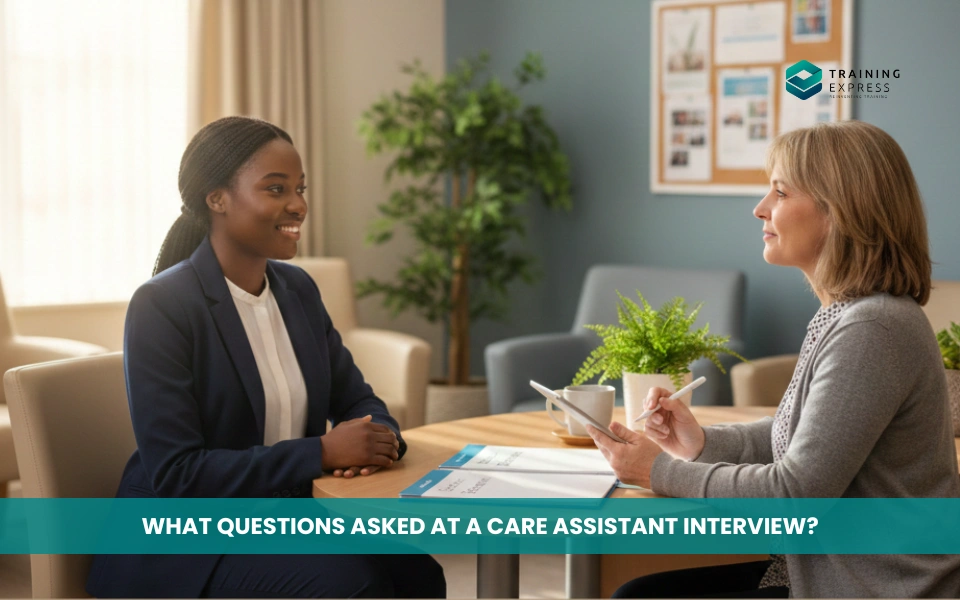

We recognize that a care assistant interview is not simply a conversation but a structured evaluation of compassion, competence, and commitment. Employers seek individuals who can deliver high-quality care while maintaining dignity, safety, and emotional support for vulnerable individuals. Understanding the questions asked at a care assistant interview gives candidates a decisive advantage, allowing them to respond with confidence, clarity, and professionalism.
In this guide, we present a comprehensive and authoritative breakdown of the most common and most important interview questions for care assistants. We address not only what is asked but how interviewers assess responses, ensuring thorough preparation for candidates aiming to succeed in health and social care roles.
Key Takeaways:
- Care assistant roles often do not require formal qualifications; interview questions typically fall into technical, personality-focused, and experience-based categories.
- Frequently asked care assistant interview questions include: “What do you believe a care assistant’s role involves?”, “Why do you want to work as a care assistant?”, along with practical, scenario-based questions that assess real-life decision-making.
- Interviewers also commonly explore understanding of confidentiality requirements, safeguarding procedures, and the ability
Table of Contents
Care assistant interview questions and answers
A care interview may be categorised by technical, experiential and personality-based questions. Here are some examples:
What Do You Understand About the Role of a Care Assistant?
This question allows interviewers to evaluate your understanding of the care assistant role. If you lack direct experience, thorough preparation is essential. Reviewing the job description and exploring the organisation’s website can help you understand expectations and responsibilities.
Example: “I understand that a care assistant supports individuals in maintaining the highest possible quality of life. This includes helping with daily personal care tasks such as washing, dressing, and using the toilet, as well as providing basic health support like administering medication and monitoring vital signs such as temperature and blood pressure.”
Why Do You Want to Be a Care Assistant?
This question focuses on your motivation and suitability for the role. Interviewers want to see genuine interest, empathy, and commitment to care work. Personal experiences can strengthen your response by demonstrating emotional connection and authenticity.
Example: “When I was younger, I helped care for a close family member with a degenerative illness. While it was challenging, the experience taught me patience, empathy, and the value of supporting others. Seeing how much comfort my care provided made me realise I wanted a career dedicated to helping people.”

What Would You Do If a Patient Had a Heart Attack?
Here, interviewers assess your ability to remain calm and respond appropriately in emergencies. A clear, step-by-step answer demonstrates awareness of emergency procedures.
Example: “I would immediately call for emergency medical assistance. If the patient were conscious, I would offer aspirin if no allergy was recorded and administer prescribed nitroglycerin if available. If the patient were unconscious, I would begin CPR and continue until professional help arrived.”
What Do You Know About Safeguarding Policies?
Safeguarding is a fundamental aspect of care work. Interviewers want reassurance that you understand how to protect vulnerable individuals.
Example: “Safeguarding policies exist to protect a person’s health, wellbeing, and human rights, as outlined in the Care Act 2014. As a care assistant, I would remain alert to signs of abuse or neglect and report any concerns promptly to my manager or the appropriate authority.”
What Would You Do If a Patient Refused to Let You Enter Their Room?
This question examines your empathy, professionalism, and respect for autonomy.
Example: “I believe it is essential to respect a client’s dignity and choices. I would acknowledge their feelings, reassure them, and agree to return after some time. I would also inform a nurse or supervisor and seek guidance before approaching the client again.”
How Would You Maintain Confidentiality as a Care Assistant?
Confidentiality is critical in healthcare settings. Interviewers want evidence that you can build trust and handle sensitive information responsibly.
Example: “I treat patient confidentiality as a priority. I would never share personal or medical information without proper consent and would follow data protection policies at all times. Maintaining trust allows patients to feel safe and supported.”

How Would You Care for a Patient With Alzheimer’s Disease?
This question tests your understanding of common medical conditions and your adaptability.
Example: “I understand that Alzheimer’s disease can cause confusion, distress, and behavioural changes. I would respond with patience, reassurance, and consistency, adapting my care as the condition progresses to meet the patient’s changing needs.”
How Do You Manage Situations That Make You Feel Sad or Angry?
Care work can be emotionally demanding. Interviewers want to know that you can manage your emotions without compromising patient care.
Example: “Early in my career, losing a patient affected me deeply. Over time, I learned the importance of acknowledging my emotions and seeking support when needed. By practising self-care and accessing support systems, I am able to remain compassionate and professional while continuing to provide high-quality care.”
What Do You Think a Care Worker Does?
This question tests how well you understand the role and whether you have researched it properly. Interviewers want to see awareness of both practical duties and emotional responsibilities.
Example answer:
“A care worker supports individuals with daily living activities such as personal care, meal preparation, mobility, and medication support. The role also involves providing emotional reassurance, following care plans, maintaining records, and promoting independence and dignity.”

What Qualities Do You Bring to the Role?
Here, interviewers assess your personal suitability for care work. Compassion, patience, and communication skills are just as important as experience.
Example answer:
“I am empathetic, patient, and a good listener. I am also dependable and calm in challenging situations. These qualities help me build trust with clients and work positively with colleagues.”
Can You Provide an Example of Previous Teamwork?
Care work depends heavily on teamwork, especially during busy or stressful shifts.
Example answer:
“In my previous role, I worked closely with colleagues to manage multiple responsibilities during busy periods. We communicated clearly, supported one another, and shared tasks to ensure clients received consistent care.”
Can You Outline How You’ve Dealt With a Stressful Experience?
This question explores how you cope with pressure and learn from difficult situations.
Example answer:
“I once supported someone who became very distressed. I remained calm, listened carefully, and followed procedures to resolve the situation safely. Afterwards, I reflected on the experience and discussed it with my supervisor to improve my approach.”
Have You Cared for Anyone Before, Either Personally or Voluntarily?
Formal experience is not essential, but caring experience of any kind is valuable.
Example answer:
“I have helped care for a family member who needed support with daily tasks. This taught me patience, responsibility, and the importance of treating people with respect and dignity.”

Can You Tell Me About Safeguarding?
Safeguarding knowledge is essential in care roles.
Example answer:
“Safeguarding is about protecting individuals from abuse, neglect, or harm while promoting their wellbeing and rights. As a care worker, I would remain alert to concerns and report them immediately according to safeguarding procedures.”
What Do You Know About Person-Centred Care?
This question checks your understanding of modern care principles.
Example answer:
“Person-centred care means tailoring support to each individual’s needs, preferences, and choices. It focuses on involving clients in decisions and supporting their independence wherever possible.”
How Would You Handle an Upset or Confused Client?
This assesses your communication skills and emotional intelligence.
Example answer:
“I would remain calm, patient, and reassuring. I would listen carefully, explain things clearly, and give the client time. If needed, I would seek guidance from colleagues or family members.”
Have You Ever Handled an Emergency or Situation Requiring Quick Thinking?
Interviewers want to know you can act responsibly under pressure.
Example answer:
“I have managed situations where quick decisions were needed to prevent risk. I stayed calm, followed procedures, and informed the appropriate person to ensure safety.”

What Kind of Support Might an Elderly Client Require?
This question checks your understanding of elderly care needs.
Example answer:
“An elderly client may need support with personal care, mobility, medication, meals, and household tasks. They may also need companionship and emotional reassurance to maintain wellbeing.”
How Would You Care for Someone With a Specific Condition, Such as Alzheimer’s Disease?
This tests your condition-specific knowledge and adaptability.
Example answer:
“I understand that Alzheimer’s can cause confusion and distress. I would provide calm reassurance, maintain routines, communicate clearly, and adapt care as the condition progresses.”
How Would You Carry Out a Client Needs Assessment?
This question focuses on assessment and planning skills.
Example answer:
“I would speak with the client and their family to understand daily routines, abilities, and risks. I would focus on person-centred care, encouraging independence while identifying areas where support is needed.”
How Would You Maintain a Client’s Dignity and Respect?
Maintaining dignity is a core principle of care.
Example answer:
“I would always gain consent before providing care, respect privacy, and encourage clients to do as much as they can independently. I would communicate respectfully at all times.”
Tell Me About Your Previous Job
This allows interviewers to identify transferable skills.
Example answer:
“In my previous role, I developed strong communication, organisation, and teamwork skills. These skills are directly transferable to care work, particularly when supporting clients and working with colleagues.”
What Hours Are You Available to Work?
Care roles often require flexibility.
Example answer:
“I understand that care work involves varied shift patterns. I am flexible and willing to work evenings, weekends, and additional shifts when required.”
Do You Have Any Final Questions?
This is your opportunity to assess the employer.
Example answer:
“Yes, I would like to know more about the training provided, team support, and opportunities for progression within the organisation.”
These questions and sample answers are designed to help you reflect on your own experiences and prepare confident, thoughtful responses. Demonstrating genuine enthusiasm, compassion, and willingness to learn will leave a strong impression and significantly improve your chances of success.
Care Assistant Interview Tips
Preparing for a care assistant interview is an important step toward success. Employers look for candidates who are compassionate, reliable, and well-informed about the responsibilities of the role.

Key Tips to Remember:
- Research the employer and understand their values, services, and care standards.
- Review the job description carefully and be ready to link your skills and experience to the role.
- Prepare clear examples that show empathy, teamwork, and problem-solving in real situations.
- Demonstrate professionalism and compassion through calm communication and respectful language.
- Show understanding of safeguarding and confidentiality, including your duty of care.
- Dress appropriately and arrive on time to reflect reliability and commitment.
- Ask thoughtful questions about training, support, and career development.
By preparing thoroughly and presenting yourself with confidence, you can make a strong impression and show that you are well-suited to a career in care.
Final Words
We understand that success in a care assistant interview depends on preparation, self-awareness, and a genuine commitment to caring for others. By mastering the most common questions asked at a care assistant interview, candidates can confidently demonstrate their skills, values, and readiness to deliver compassionate, professional care. Thorough preparation not only improves interview performance but also reinforces the standards required to excel in the care sector.