Food Hygiene
 Health & Safety
 Safeguarding
 First Aid
 Business Skills
 Personal Development
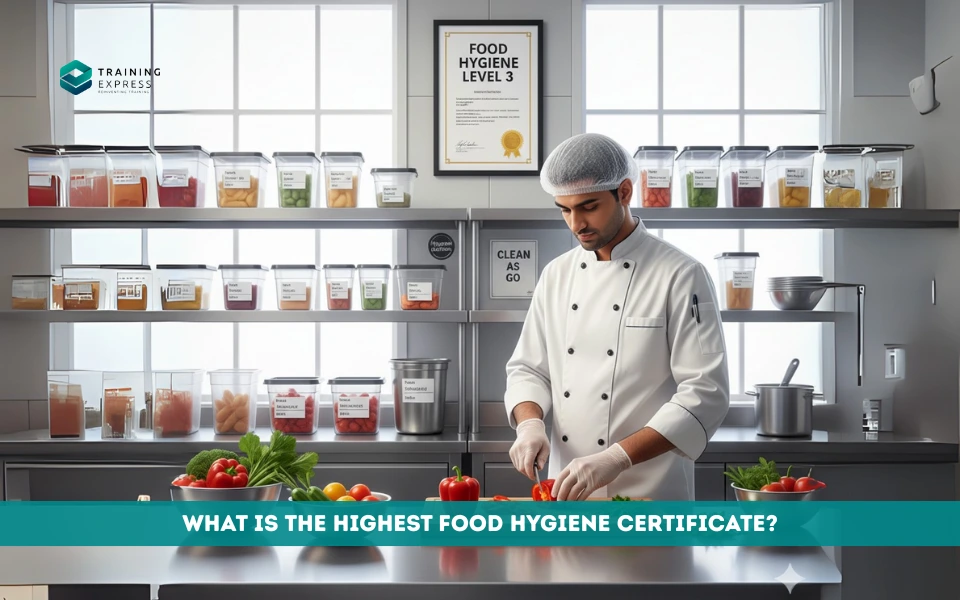

Food hygiene plays a crucial role in protecting public health and ensuring that every meal served is safe to eat. Whether you’re running a restaurant, managing a food production company, or simply cooking at home for friends and family, food hygiene standards apply across all levels. But when it comes to professional certifications, many people wonder: What is the highest food hygiene certificate available?
The answer depends on the training framework used in your country, but in most cases, the Level 4 Food Hygiene Certificate is considered the highest. However, for many businesses, Level 3 Food Hygiene & Safety is often seen as the most important, since it equips managers and supervisors with the knowledge needed to oversee staff and maintain food safety compliance.
Understanding the different certificates is essential, especially if you work in hospitality, catering, or food manufacturing. These certificates not only boost your professional profile but also ensure that your workplace complies with food safety legislation. Throughout this article, we’ll break down what food hygiene is, explore the various certification levels, explain what the highest hygiene rating means, and cover essential rules for keeping food safe.
Table of Contents
What is food hygiene?
Food hygiene refers to the set of practices and conditions that help ensure food is safe for consumption from production to the point it reaches the consumer. It’s all about preventing contamination and minimizing the risk of foodborne illnesses, which can affect thousands of people each year if proper precautions are not taken.

Importance of food hygiene in daily life
Good food hygiene protects consumers from bacteria, viruses, and toxins that can cause food poisoning. For instance, Salmonella and E. coli are common foodborne pathogens that spread quickly when hygiene practices are ignored. In restaurants, poor hygiene could not only harm customers but also destroy a business’s reputation overnight. Even at home, neglecting hygiene basics like handwashing or properly storing leftovers can put family health at risk.
Key principles of food hygiene
The key principles revolve around:
- Cleanliness: Regular handwashing, sanitizing utensils, and keeping cooking areas spotless.
- Cross-contamination prevention: Using separate chopping boards for raw meat and vegetables.
- Proper storage: Refrigerating perishable items and checking expiry dates.
- Cooking food thoroughly: Ensuring meats, especially poultry, are fully cooked.
- Safe sourcing: Choosing quality suppliers and avoiding unsafe raw materials.
Legal requirements for food hygiene
Many countries have strict laws in place to ensure businesses maintain hygiene standards. For example, in the UK, food businesses must register with local authorities and are subject to unannounced inspections. Failing to comply can lead to fines, closures, or even imprisonment in severe cases. Employees working with food are often required to undergo food hygiene training, which demonstrates their competence in handling food safely.

Which certification is best for food safety?
When it comes to food safety certifications, there are different levels designed for different roles. However, the one that stands out as particularly important for the food industry is the Level 3 Food Hygiene Certificate

Overview of food hygiene certification levels
- Level 1: Basic awareness, suitable for those with minimal food handling.
- Level 2: For staff directly handling food in catering, hospitality, or retail.
- Level 3: For supervisors and managers overseeing food operations.
- Level 4: Advanced training for senior managers and business owners.
Why Level 3 is considered the best
Level 3 is often regarded as the best certification for food safety because it bridges the gap between basic food handling and advanced food safety management. It provides in-depth knowledge about HACCP, food safety regulations, and how to train and supervise staff effectively. In simple terms, it equips leaders in the food sector with the tools they need to maintain high standards across their teams.
For example, if a restaurant has ten kitchen staff, one or two supervisors with Level 3 certification can ensure everyone is following safe practices, reducing the likelihood of foodborne illness outbreaks.
Who needs a Level 3 Food Hygiene Certificate
- Restaurant managers and supervisors
- Catering business owners
- Food production supervisors
- Hospitality managers
- School and hospital kitchen supervisors
Having this qualification is not only about ticking a box; it’s about building customer trust, staying compliant with the law, and protecting both employees and the public.
What is the highest hygiene rating?
While certificates measure personal knowledge and competence, hygiene ratings measure how well a business maintains food safety standards during inspections.

How hygiene ratings work
In many countries, including the UK, local authorities inspect food businesses and assign a hygiene rating. This ranges from 0 (urgent improvement needed) to 5 (very good). The inspection considers:
- How food is handled
- How food is stored
- How food is prepared
- Cleanliness of facilities
- Food safety management systems
What a 5-star hygiene rating means
A 5-star rating is the highest possible score, showing that a food business is following excellent hygiene practices. This doesn’t just mean the kitchen looks clean—it means staff are well-trained, food is stored at correct temperatures, and safety protocols are followed every day.
For customers, a 5-star hygiene rating is a reassurance that they can trust the business. For owners, it can be a powerful marketing tool, since many people check ratings before deciding where to eat.
Benefits of having the highest rating
- Builds customer trust and loyalty
- Attracts new business
- Reduces risk of fines or closures
- Improves reputation both locally and online
- Creates a culture of safety within the workplace
In short, while the highest food hygiene certificate shows personal competence, the highest hygiene rating shows business excellence. Together, they form the foundation of food safety success.
How many levels of food safety are there?
Food safety training is typically divided into four levels, each designed for different roles within the food industry.

Level 1 – Basic food safety awareness
This level is aimed at individuals who work in environments where they may come into contact with food but don’t handle it directly. For example, warehouse workers or waitstaff who don’t prepare meals. It teaches the basics of contamination risks and hygiene awareness.
Level 2 – Essential food handlers’ training
This is the most common certification and is often required for chefs, kitchen staff, and food servers. It covers proper cooking, storage, and handling of food. Anyone directly preparing or serving food should at least hold a Level 2 certificate.
Level 3 – Supervisors and managers
As mentioned earlier, this level is for those in charge of staff. It covers legal responsibilities, HACCP principles, and staff training methods. Supervisors use this knowledge to maintain consistent safety standards across the team.
Level 4 – Advanced food safety
This is the highest certificate available, designed for senior managers, food business owners, and trainers. It involves detailed study of food safety legislation, risk management, and advanced HACCP applications. While not always required, it is highly beneficial for those running large-scale operations or training others.
What is HACCP in food safety?
HACCP, short for Hazard Analysis and Critical Control Points, is a globally recognized system for ensuring food safety. It focuses on identifying potential hazards in the food production process and implementing control measures to prevent them.

The meaning of HACCP
The HACCP system was developed to make food production safer, especially in large-scale operations like catering businesses, food factories, and packaging plants. Instead of just reacting to problems after they happen, HACCP encourages businesses to anticipate risks and prevent them in advance.
The 7 principles of HACCP
- Conduct a hazard analysis
- Identify critical control points (CCPs)
- Establish critical limits for each CCP
- Set up monitoring procedures
- Establish corrective actions
- Verify that the system works effectively
- Keep proper records and documentation
How HACCP connects with food hygiene certificates
Food hygiene training, particularly at Level 3 and Level 4, includes HACCP as a central component. This ensures that managers and supervisors not only know the rules but also understand how to apply them practically in their workplace. By mastering HACCP, businesses can prove compliance with legal standards and protect customers from foodborne illnesses.
What are the 5 basic food safety rules?
Food safety isn’t just for professionals in the catering or hospitality industry—it’s something everyone should practice in their daily lives. Whether you’re preparing meals at home or managing a busy restaurant kitchen, following the five golden rules of food safety can drastically reduce the risk of contamination and foodborne illness.

Rule 1 – Keep clean
Cleanliness is the foundation of food hygiene. Washing hands thoroughly before handling food is a must. Bacteria such as Salmonella and E. coli can easily transfer from unwashed hands to food, utensils, and surfaces. In a professional setting, staff should wash hands regularly, especially after touching raw meat, using the restroom, or handling waste. Surfaces, chopping boards, and knives should also be cleaned and sanitized after each use. A spotless kitchen is a safe kitchen.
Rule 2 – Separate raw and cooked food
One of the biggest risks in food preparation is cross-contamination. This happens when harmful bacteria from raw foods, like chicken or seafood, spread to cooked or ready-to-eat foods. The solution? Keep raw and cooked items separate at all times. Use different chopping boards and knives for raw meat and fresh produce. Store raw meats at the bottom of the fridge to prevent juices from dripping onto other items.
Rule 3 – Cook thoroughly
Cooking food at the right temperature kills dangerous bacteria. Poultry, for example, must be cooked all the way through with no pink in the middle. A food thermometer is a helpful tool for checking that internal temperatures reach safe levels. In catering, ensuring food is cooked evenly and reheated properly is not only a safety requirement but also a way to guarantee customer satisfaction.
Rule 4 – Keep food at safe temperatures
Bacteria multiply rapidly at room temperature, especially in the “danger zone” between 5°C and 63°C. That’s why refrigeration and hot holding are crucial. Cold foods should be kept below 5°C, while hot foods should stay above 63°C until served. Leftovers should be cooled quickly and stored in the fridge within two hours. Following this rule prevents spoilage and extends food shelf life.
Rule 5 – Use safe water and raw materials
Food safety starts with sourcing. Unsafe water, contaminated ingredients, or expired products can cause foodborne illnesses even if everything else is done correctly. Always buy from reputable suppliers, check use-by dates, and ensure water used in cooking and cleaning is safe. In professional kitchens, supplier checks and stock rotation (FIFO – First In, First Out) are standard practices to maintain quality and safety.
How long does a Level 3 certificate last?
One common question asked by supervisors and managers in the food industry is: “Once I complete my Level 3 Food Hygiene Certificate, how long will it last?”
A Level 3 Food Hygiene Certificate does not legally expire, but it’s recommended to refresh your training every three years to stay up to date with new food safety laws, HACCP practices, and allergen regulations. While not mandatory, many employers expect supervisors and managers to renew their knowledge regularly, as it helps maintain high standards, boosts customer confidence, supports career growth, and reduces the risk of foodborne illnesses. In short, keeping your training current shows commitment to safety and compliance.
Do you need a food hygiene certificate to serve food to the public?

Yes, you need food hygiene training to serve food to the public, and while the law doesn’t always demand a certificate, most councils and inspectors expect proof like a Level 2 or Level 3 Food Hygiene Certificate; without it, you risk poor hygiene ratings, fines, or even closure, so keeping staff trained is the best way to stay compliant and build customer trust.
Final Words
Food hygiene is more than just a legal requirement—it’s a responsibility that protects public health, builds trust, and sustains successful food businesses. While the highest food hygiene certificate is Level 4, for most businesses, Level 3 is the most practical and essential qualification, especially for supervisors and managers.
Alongside certifications, businesses should aim for the highest hygiene rating possible, practice the five basic food safety rules, and keep training up to date. Whether you’re a home baker, a street vendor, or the manager of a busy restaurant, food hygiene knowledge is the key ingredient to success.
Frequently Asked Questions (FAQ)
Can you fail a food hygiene course?
Yes, but most courses are designed to ensure learners succeed with the right preparation. Retakes are usually available.
How do I get a Level 3 Food Hygiene Certificate?
You can complete it online or in person through accredited training providers. It usually takes 1–2 days of study.
Is Level 4 higher than Level 3?
Yes. Level 4 is the highest certificate, aimed at senior managers and food safety trainers.
Do home bakers need food hygiene training?
Yes. Even if you’re baking from home, you need at least Level 2 Food Hygiene Certification to sell products legally.
How much does a Level 3 food hygiene course cost?
Prices vary, but on average, expect to pay between £50–£200 for an accredited course.

Robert Lawrence
Author | Specialises in E-Learning
Robert Lawrence is an e-learning specialist and tutor at Training Express, with experience creating practical resources and strategies to support learners and enhance their professional development.