Food Hygiene
 Health & Safety
 Safeguarding
 First Aid
 Business Skills
 Personal Development
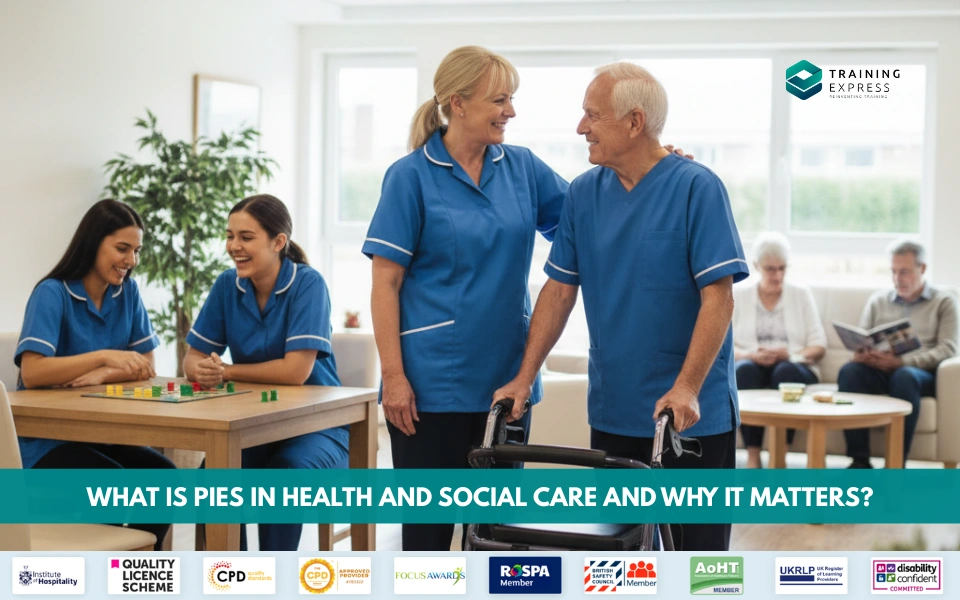

Ask an experienced care worker what’s easiest to miss, and quite a few will say the same thing: someone who looks fine on paper but has quietly gone quiet — stopped chatting, stopped joining in, lost interest in things they used to enjoy. Physically, nothing’s changed. Everything else has.
That gap is exactly what PIES is built to catch. It stands for Physical, Intellectual, Emotional, and Social — four areas care professionals check together, rather than fixating on health alone. This guide walks through what each part covers, why it’s used across UK care settings, and what it actually looks like on a normal shift.
Table of Contents
Get Health and Social Care Courses For Just £8!
You won’t find this deal anywhere else!
Take The CourseUse Coupon Code:
Use this coupon at Checkout
What Does PIES Stand For?
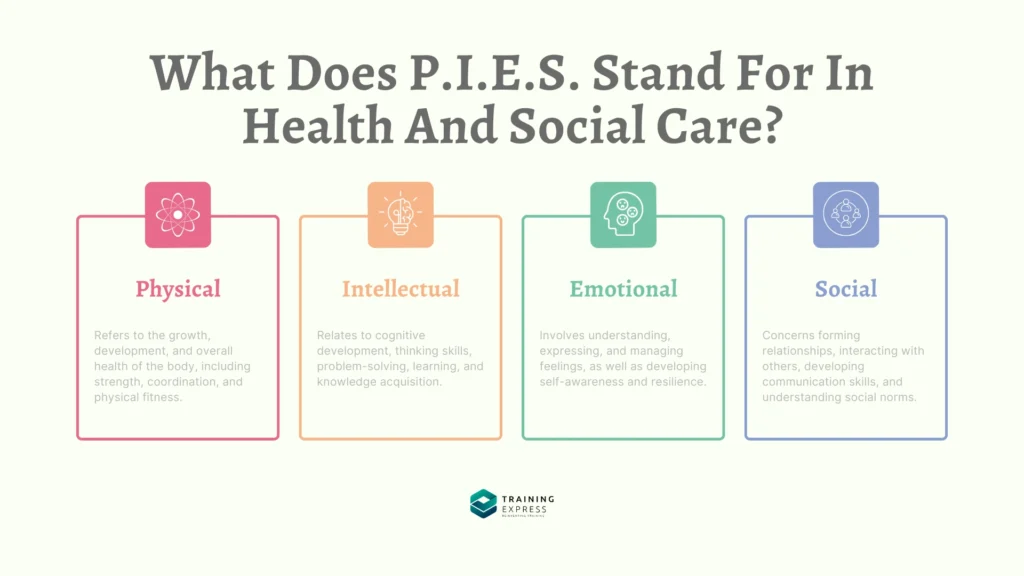
PIES stands for Physical, Intellectual, Emotional, and Social. This model is used in health and social care to understand and support a person as a whole, rather than focusing on just one aspect of their needs. Each element represents a vital area of health and wellbeing, and together they create a holistic picture of an individual.
| Domain | Definition | Example | Sample Assessment Question |
|---|---|---|---|
| Physical | Relates to the body's health, mobility, fitness, and physical functioning. | Managing diabetes, mobility support, exercise programs. | "Do you experience any pain or difficulty completing daily activities?" |
| Intellectual | Involves thinking, learning, memory, problem-solving, and cognitive development. | Memory exercises, educational activities, dementia support. | "Do you find it difficult to remember appointments or information?" |
| Emotional | Concerns feelings, mental well-being, self-esteem, coping skills, and emotional resilience. | Anxiety support, counselling, stress management. | "How have you been feeling emotionally over the past few weeks?" |
| Social | Focuses on relationships, communication, community involvement, and social support networks. | Family visits, social clubs, community engagement programs. | "Do you feel connected to friends, family, or your local community?" |
Each area affects the others. Poor physical health can lead to loneliness. Low confidence can affect how active someone wants to be. PIES helps care workers notice these links early, instead of treating each need in isolation.
According to the Social Care Wales health and wellbeing framework (2025), wellbeing should be understood across these four dimensions together — not by focusing on one issue at a time.
A Quick Example
Take an 80-year-old recovering from a fall. Physically, she needs help with mobility and medication. Intellectually, a simple puzzle or chat keeps her mind active during recovery. Emotionally, she’s anxious about falling again, so reassurance matters. Socially, regular visits from family stop her feeling isolated while she’s less mobile. Looking at just one of these areas would miss most of what she actually needs — that’s PIES in action.
Why PIES Matters In Health And Social Care
PIES makes care more complete. It reminds workers to look beyond physical health, because people have emotional, mental, and social needs too.
Someone can seem physically fine while feeling isolated or anxious. Without PIES, that’s easy to miss — and it’s usually the quiet cases that get missed longest.
Used properly, it leads to more personalised care, catches problems (including neglect or abuse) before they escalate, builds stronger trust between workers and the people they support, and gives teams a consistent way to plan and hand over care. It’s a small shift in thinking that tends to show up in better outcomes over time.
How PIES Applies In Different Care Settings
Different settings lean on different parts of PIES, depending on who’s being supported.
- Elderly care – Physical support often means help with mobility and medication. Intellectually, that’s memory activities. Emotionally, it’s support through grief or loss of independence. Socially, it’s family visits and group events to reduce isolation. This matters even more for people living with dementia — according to ONS (2023), loneliness is one of the biggest risk factors for poor mental and physical health in older adults.
- Mental health services – Workers look at emotional wellbeing alongside physical health, thinking, and social support, since all four are usually connected in conditions like depression.
- Disability support – Care plans often cover physical accessibility, learning opportunities, emotional support, and social inclusion together.
- Children and young people – PIES is used to track physical milestones, learning, emotional regulation, and social skills as a child develops.
- End-of-life care – Physical comfort is balanced with emotional support, mental engagement where possible, and keeping meaningful relationships going.
What PIES Looks Like Day To Day
- In a hospital, a nurse checks pain levels (Physical), explains a treatment plan (Intellectual), offers reassurance before a procedure (Emotional), and keeps family involved (Social).
- In a care home, staff adjust meals for dietary needs, run a memory game, plan a friendship activity, and keep an eye on residents’ moods.
- In a school, teachers balance physical activity, challenging lessons, quick emotional check-ins, and group work.
- At a GP visit, a doctor examines the body, explains results clearly, asks how the patient’s been coping emotionally, and checks what support they have at home.
How Care Workers Use PIES
Workers use PIES throughout assessment, planning, and review. They talk to the person, observe daily life, and build a picture across all four areas — not just physical health.
Changes in one area often point to something in another. Someone withdrawing socially, for example, could signal emotional distress or a physical decline that hasn’t been raised yet.
PIES also gives a shared language across teams — useful in multidisciplinary meetings, safeguarding checks, and care reviews, where different professionals need to compare notes quickly.
How To Apply The PIES Model In A Care Plan
Applying the PIES model involves a structured assessment process that examines each domain individually while recognizing their interconnected nature.
Step 1: Assess Physical Needs
Care professionals begin by evaluating mobility, nutrition, medical conditions, medication use, pain levels, and overall physical functioning. This provides a foundation for understanding health-related challenges.
Sample Questions:
- Do you experience pain during daily activities?
- Are you able to move around safely and independently?
- Do you have any ongoing health conditions?
Step 2: Assess Intellectual Needs
The next stage focuses on cognitive abilities, memory, concentration, learning needs, and decision-making capacity.
Sample Questions:
- Do you have difficulty remembering important information?
- Are there activities that help keep your mind active?
- Do you feel confident making daily decisions?
Step 3: Assess Emotional Well-Being
Professionals explore mood, stress levels, coping mechanisms, self-esteem, and mental health concerns.
Sample Questions:
- How would you describe your emotional well-being?
- Are you experiencing stress, anxiety, or sadness?
- What helps you cope during difficult times?
Step 4: Assess Social Needs
The assessment examines relationships, community involvement, communication skills, and support systems.
Sample Questions:
- Do you regularly interact with family or friends?
- Do you feel isolated or lonely?
- Are you involved in community activities?
Step 5: Create A Person-Centred Care Plan
Information gathered from all four domains is used to develop personalized goals and interventions. This ensures care remains tailored to the individual’s unique circumstances, preferences, and aspirations.
Challenges In Applying PIES Day-To-Day
PIES sounds simple, but using it properly isn’t always easy.
Time is the biggest barrier — a short visit doesn’t leave much room to properly assess all four areas.
Resources matter too. Emotional and social support often needs extra staff or services that aren’t always available.
Other common challenges:
- Training gaps – not every worker has been shown how to apply PIES properly
- Heavy workloads – covering four areas for every person, every shift, adds up
- Personal bias – it’s easy to overlook a need that isn’t obvious
None of this makes PIES less useful. It just works best alongside proper training and realistic staffing.
Common Mistakes When Using PIES
- Treating it as a one-off checklist instead of something to revisit as needs change
- Focusing mainly on physical needs under time pressure, and leaving the other three as an afterthought
- Not updating the plan after a change in mood, health, or circumstances
Is PIES A Legal Requirement In The UK?
PIES itself isn’t named in any UK law. But the kind of care it supports is a legal duty.
The Care Act 2014 (Section 1, the Wellbeing Principle) requires local authorities and care providers to promote a person’s dignity, physical and mental health, safety, independence, relationships, and ability to take part in their community. CQC Regulation 9 also requires care to be personalised and based on individual needs. PIES is a practical tool that helps staff meet both.
You’ll also come across PIES in study and training contexts — it features in BTEC Unit 1: Human Lifespan Development and Level 3 care planning units, where it’s used to track how needs change across a person’s life, rather than as a legal checklist.
One mix-up to watch for: PIES is not the same as PIE (Problem, Intervention, Evaluation), a nursing documentation method used to structure patient records. Similar name, entirely different purpose.
PIES vs The Biopsychosocial Model
Both models take a whole-person view, but they’re used differently.
| PIES | Biopsychosocial | |
|---|---|---|
| Focus | Physical, Intellectual, Emotional, Social | Biological, Psychological, Social |
| Complexity | Simple, practical | More clinical |
| Common use | Care planning, education | Diagnosis, treatment planning |
| Ease of use | High | Moderate |
PIES is usually easier to apply day-to-day because the categories are straightforward. The biopsychosocial model goes deeper but takes more analysis. Both support holistic care.
It does have a limit, though. The four areas overlap more than the neat table suggests, and PIES doesn’t explicitly account for cultural, spiritual, or financial factors. Most professionals treat it as a solid starting point rather than the full picture.
Benefits Of Applying The PIES Model
Using the PIES model in health and social care improves overall wellbeing and supports all areas of development. Individuals gain confidence, independence, and emotional security.

Carers and professionals build stronger relationships through trust and clear communication, helping deliver more personalised care. PIES also helps spot issues early, ensuring small challenges don’t become bigger problems.
Key benefits include:
- Whole-person care – Supports physical, intellectual, emotional, and social needs.
- Greater independence – Encourages self-confidence and personal growth.
- Stronger relationships – Builds trust and improves communication between carers and individuals.
- Early issue detection – Identifies problems before they escalate.
- Tailored support – Ensures care plans meet individual preferences and goals.
Applying the PIES model leads to happier, healthier, and more independent lives for those receiving care.
Final Words
PIES — Physical, Intellectual, Emotional, and Social — remains one of the most practical frameworks in health and social care. Whether it’s elderly care, mental health, disability support, child development, or end-of-life care, it helps professionals see the whole person and plan care that actually fits them.
Frequently Asked Questions (FAQ)
What does PIES stand for in health and social care?
PIES stands for Physical, Intellectual, Emotional, and Social. In health and social care, it is a holistic care model used to understand and support a person’s full range of needs. It helps care workers look beyond physical health and focus on overall wellbeing.
Why is the PIES model important in health and social care?
The PIES model is important because all areas of wellbeing are connected. If one need is ignored, it can affect the others. Using PIES helps professionals deliver person-centred care, improve quality of life, and provide balanced support that meets individual needs.
What is a PIE in nursing?
In nursing, a PIE refers to one area of the PIES model. Nurses use PIES to assess not only physical symptoms but also emotional wellbeing, understanding of care, and social support. This helps improve patient recovery and overall care outcomes.
What are the intellectual needs of a child?
A child’s intellectual needs include learning, thinking, communication, problem-solving, and understanding the world around them. Supporting these needs helps with brain development, confidence, decision-making, and school readiness.
What are the PIES needs for infant development?
For infants, PIES needs include physical growth through feeding and sleep, emotional bonding with carers, early learning through play and senses, and social interaction such as eye contact and communication. Meeting these needs supports healthy development.
How does the PIES model support different life stages?
The PIES model applies to all life stages, but needs change over time. Children need learning and emotional support, adults need independence and social connection, and older adults may need physical support and reassurance. PIES helps care adapt to each stage of life.

Robert Lawrence
Author | Specialises in Health and Social Care
Robert Lawrence is an e-learning specialist and tutor at Training Express, with experience creating practical resources and strategies to support learners and enhance their professional development.
Related Blogs