Food Hygiene
 Health & Safety
 Safeguarding
 First Aid
 Business Skills
 Personal Development
Life as a student isn’t always about memorizing formulas, writing essays, or completing assignments. It’s also about learning how to deal with challenges effectively. From figuring out how to balance study and social life to handling conflicts in group projects, problem-solving is at the core of every student’s journey. Think of it as a skill that acts like a personal toolbox—one that can help you find creative solutions when the usual methods just don’t work.
Problem-solving is not just about finding quick fixes; it’s about thinking critically, analyzing situations, and making decisions that lead to the best possible outcome. For students, this could mean resolving disagreements with classmates, creating a study schedule before exams, or even finding innovative ways to complete projects with limited resources.
In this article, we’ll explore what makes a good example of problem-solving for students, why these skills matter so much, and how different activities can strengthen them. You’ll also discover strategies teachers and parents can use to help students develop this essential life skill, ensuring they’re better prepared for both academic challenges and future careers.
Table of Contents
What is a Good Example of Problem-Solving for Students?
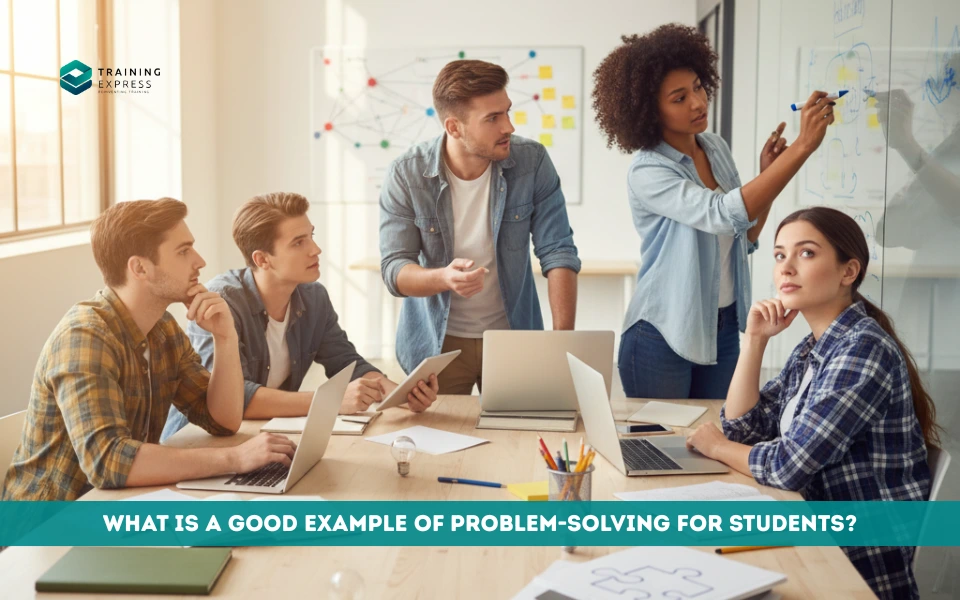
Imagine this: a group of students has been assigned a project to create a presentation. Everyone is excited at first, but soon disagreements begin. One student wants to focus on visuals, another insists on adding more data, and a third complains that tasks aren’t divided fairly. The group is stuck, and deadlines are approaching.

This situation is a classic example of a real-life problem students face. Here’s how effective problem-solving comes into play:
1. Identifying the Problem
The students recognize that their main issue isn’t about the project content but about communication and workload distribution.
2. Brainstorming Solutions
They discuss different approaches—such as assigning roles based on strengths, setting clear deadlines, or even using digital tools like Trello to track progress.
3. Choosing the Best Solution
After evaluating their options, they decide to divide tasks according to individual skills—one handles visuals, another collects data, while another organizes the content.
4. Implementing and Evaluating
They stick to the plan and review progress every few days. In the end, not only do they complete the project on time, but they also learn teamwork, compromise, and communication skills.
This example shows that problem-solving isn’t just about academics; it’s about finding ways to work together effectively, making decisions under pressure, and turning potential conflict into collaboration. It’s the kind of skill that stays useful long after school life.
Why Problem-Solving Skills Matter for Students
Problem-solving skills go far beyond school assignments; they shape how students think, act, and respond to challenges in life. In fact, problem-solving is one of the most transferable skills a student can learn—it’s useful in academics, careers, and personal situations.
Critical Thinking and Decision-Making
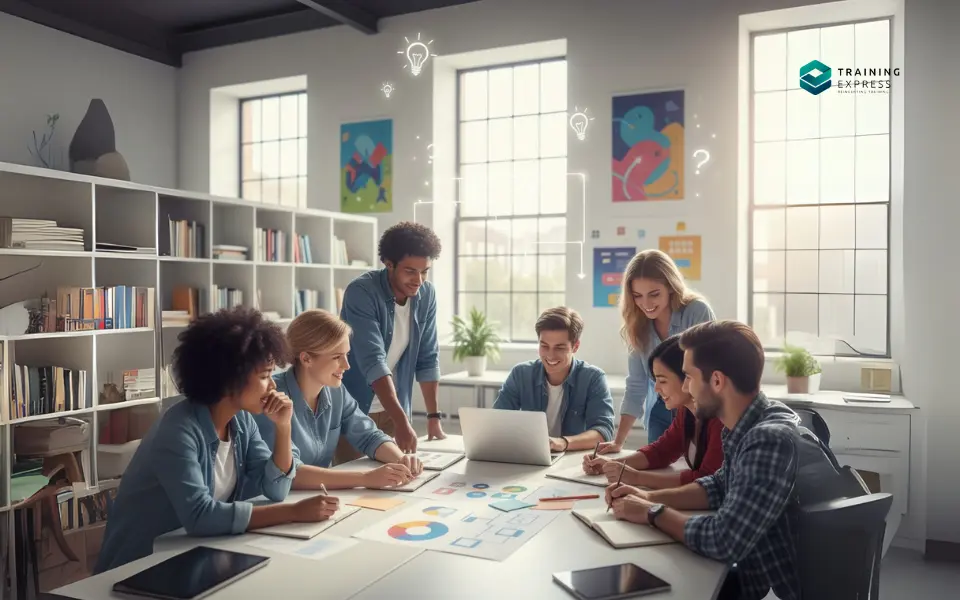
When students practice problem-solving, they sharpen their ability to analyze situations logically instead of reacting emotionally. They learn to weigh pros and cons, assess risks, and make informed decisions. These skills are exactly what employers look for in future professionals.
Preparation for Real-World Situations
In real life, problems rarely come with a step-by-step guide. By practicing problem-solving in school, students gain the confidence to handle uncertainties in college, the workplace, and beyond. Whether it’s managing finances, solving workplace conflicts, or navigating personal issues, they’re better equipped to deal with life’s curveballs.
Benefits in Academics, Teamwork, and Personal Growth
- Academics: Students learn to approach assignments with strategies, breaking down tough tasks into smaller, achievable steps.
- Teamwork: By working on group challenges, they develop empathy, communication, and collaboration skills.
- Personal Growth: Every solved problem boosts self-confidence, resilience, and adaptability.
In short, problem-solving is like a mental muscle—the more students practice, the stronger it gets, helping them not just to survive challenges but to thrive in them.
Problem-Solving Activities in a Classroom
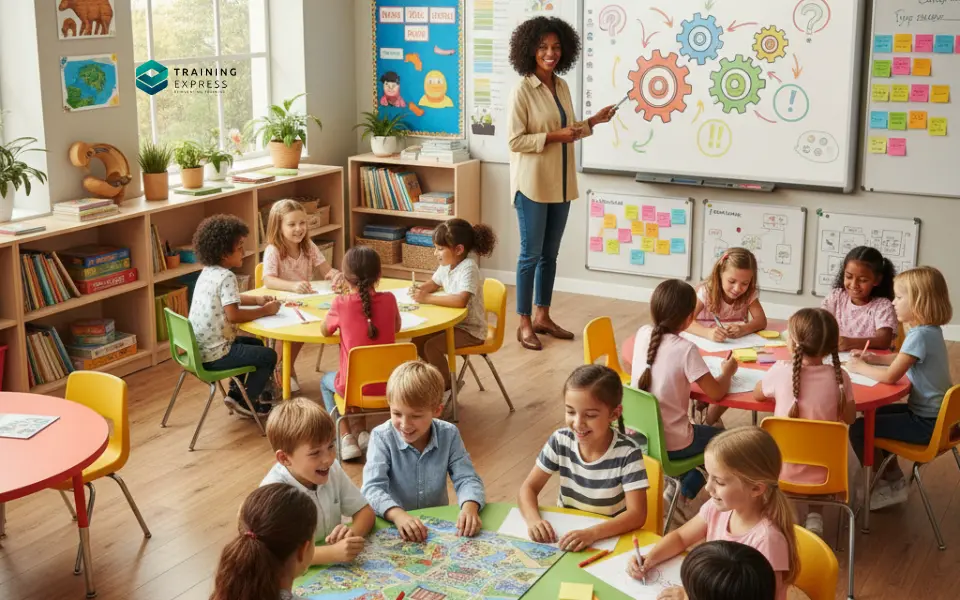
Teachers play a huge role in shaping how students develop problem-solving skills. Classrooms aren’t just places to absorb knowledge; they can also serve as labs where students test ideas, take risks, and explore solutions. The best part? Problem-solving activities don’t always feel like lessons—they can be engaging, fun, and interactive.
Group Discussions & Brainstorming
When students sit together and share ideas, they’re exposed to different perspectives. Group brainstorming sessions encourage creativity, listening skills, and collective decision-making. It’s a powerful way for students to learn that multiple solutions can exist for a single problem.
Case Study Analysis
Case studies bring real-world challenges into the classroom. Students are asked to analyze a scenario—say, a business facing financial trouble or an environmental issue in a community—and propose practical solutions. This bridges the gap between theory and practice.
Role-Playing Scenarios
In role-play activities, students step into someone else’s shoes to solve problems. For example, they might act as mediators in a classroom conflict or pretend to be city planners deciding on environmental policies. This boosts empathy, communication, and negotiation skills.
Puzzle-Based Challenges
Puzzles and logic games aren’t just fun—they sharpen analytical skills. Whether it’s solving riddles, escape-room style tasks, or math-based puzzles, students learn to think systematically and persist until they find an answer.
Examples of Problem-Solving Activities for Students
Learning problem-solving doesn’t have to be dull. There are countless hands-on activities that make the process both exciting and educational. These activities help students test their thinking in real situations while strengthening their creativity and resilience.
Science Experiments
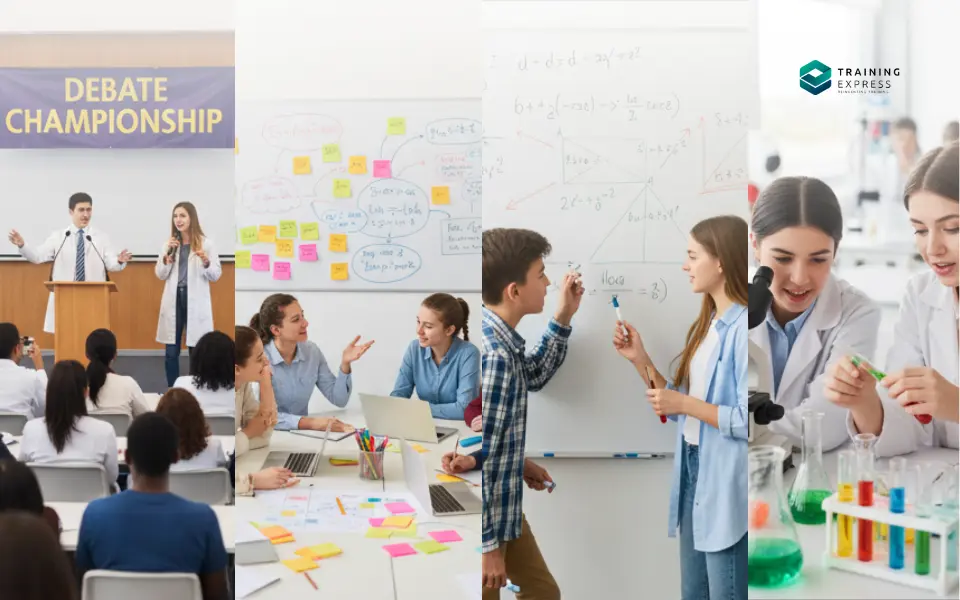
Science classes naturally involve problem-solving. Students begin with a hypothesis, conduct experiments, and troubleshoot when things don’t go as planned. This teaches them patience, adaptability, and critical thinking.
Maths Word Problems
Unlike basic equations, word problems require students to apply formulas to real-life scenarios. They learn how to translate abstract numbers into practical applications, building both logical and practical reasoning.
Project-Based Learning
Projects often come with obstacles—tight deadlines, limited resources, or conflicting ideas. Students must learn how to delegate, prioritize, and adjust their strategies, all while keeping the end goal in mind.
Debate Competitions
Debates challenge students to think quickly, build evidence-based arguments, and defend their positions. They develop logical reasoning and persuasive communication, which are vital for both academic and personal success.
How to Teach Problem-Solving Skills to Students
Problem-solving doesn’t magically appear in a student’s skillset—it must be taught, practiced, and refined. Teachers and parents play a crucial role in helping students develop these abilities. By creating supportive environments and offering structured methods, educators can turn everyday challenges into learning opportunities.
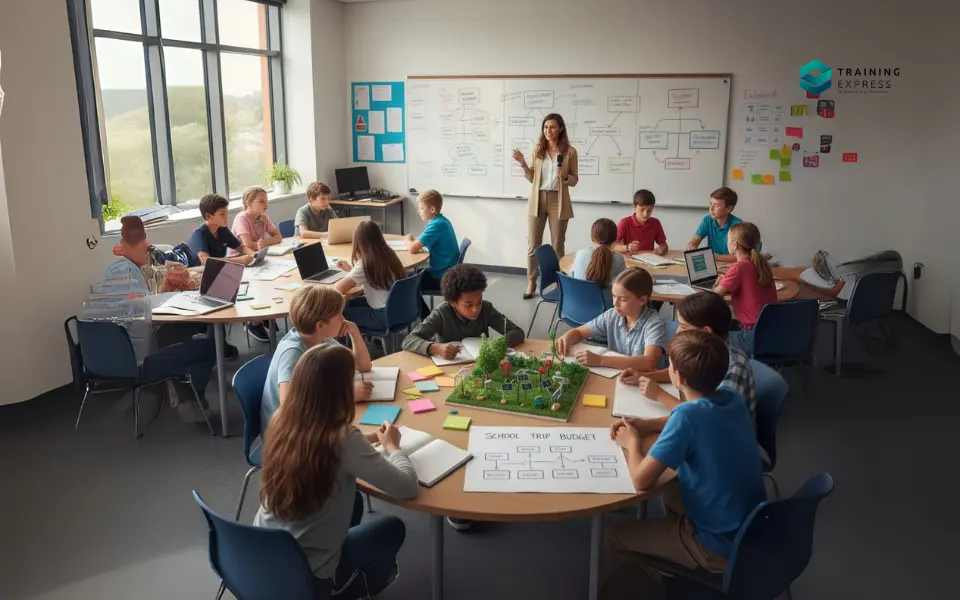
Encourage Open-Ended Questions
Instead of giving students ready-made answers, teachers can ask open-ended questions that push them to think critically. For example, instead of saying, “This is how you solve the math problem,” a teacher might ask, “What happens if you try a different method?” This approach stimulates curiosity, nurtures independent thinking, and shows students that there can be multiple paths to a solution.
Break Problems into Steps
Large, complex problems can overwhelm students. Teaching them to break challenges into smaller steps makes the process manageable. For instance, a history project might be broken down into research, outlining, drafting, and revising. This method not only helps students stay organized but also teaches them systematic problem-solving strategies they can use throughout life.
Promote Collaboration
Collaboration allows students to learn from each other’s strengths and perspectives. Group projects, team discussions, and peer feedback sessions encourage sharing ideas, negotiating solutions, and building consensus. Working in a team also mirrors real-world problem-solving, where solutions often come from collective efforts rather than individual work.
Offer Real-Life Scenarios
Students engage more when problems feel relevant to their lives. Teachers can create classroom scenarios—like budgeting for a school trip, planning a community event, or designing a sustainable garden—that require practical solutions. Real-world connections make learning relatable and prepare students to tackle future challenges outside school.
By blending these approaches, educators can ensure that problem-solving becomes second nature for students, giving them confidence to face both academic and personal challenges head-on.
Critical Thinking Activities for Problem-Solving
Critical thinking is at the heart of problem-solving. Without it, students might jump to conclusions or choose ineffective solutions. To build critical thinking, classrooms should include activities that make students question assumptions, explore alternatives, and reflect on their decisions.
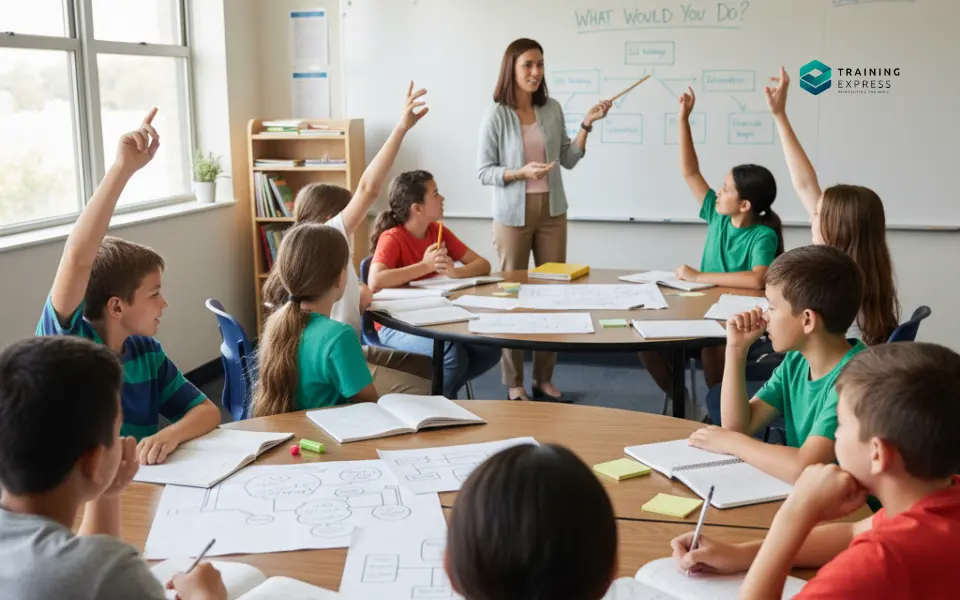
Mind Mapping
Mind maps are visual tools that help students connect ideas and identify relationships between concepts. For example, when planning an essay, students can create a mind map linking main ideas, supporting evidence, and counterarguments. This visual approach sharpens organization and analytical thinking.
“What Would You Do?” Situations
These hypothetical scenarios challenge students to think on their feet. For instance, a teacher might ask, “What would you do if your group couldn’t agree on a project idea?” Students must weigh options, predict outcomes, and defend their choices. This builds decision-making skills in a safe, low-risk environment.
Reflection Exercises
After completing an assignment or project, students can reflect on what worked, what didn’t, and what they’d do differently next time. Reflection helps students analyze past decisions and apply lessons learned to future problems. It’s like keeping a mental playbook of strategies that improve with every challenge.
These activities not only sharpen critical thinking but also make students more self-aware and adaptable—qualities that are vital for lifelong learning.
How to Apply Problem-Solving Skills in the Classroom
Problem-solving shouldn’t be treated as a separate lesson; it should be woven into everyday classroom activities. The goal is to normalize problem-solving so that students naturally apply it in different contexts.
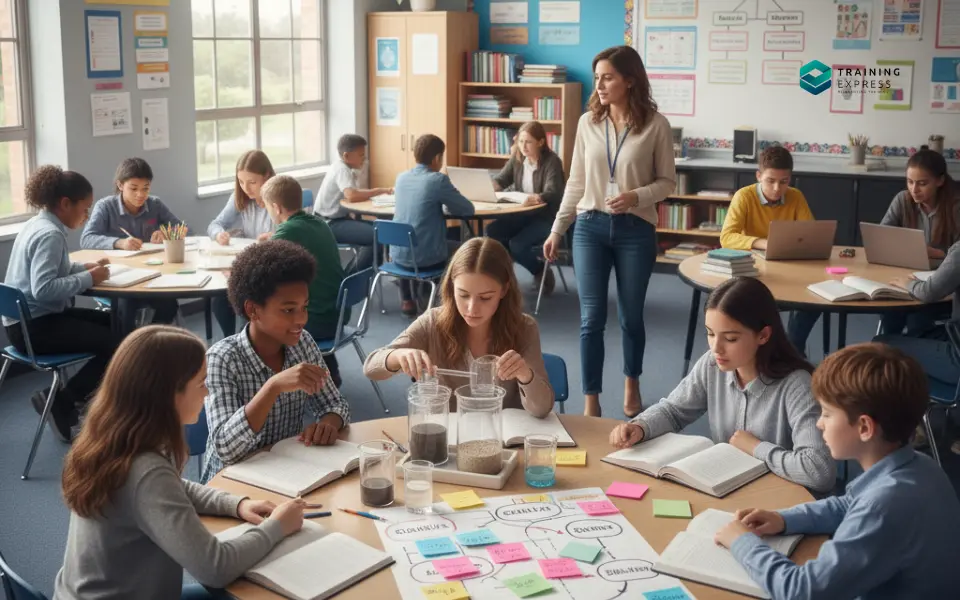
Integrating Problem-Solving into Lessons
Whether it’s math, science, literature, or history, teachers can frame lessons around real problems. For example, in a science class, students might be asked to design a water filter with limited materials. In literature, they could analyze how characters solve conflicts and suggest alternative solutions.
Allowing Students to Make Decisions
Instead of directing every step, teachers can give students choices—what project topics to pursue, how to present their findings, or how to divide tasks. Giving them decision-making power encourages accountability and problem-solving ownership.
Linking Activities with Real-Life Contexts
When students see how problem-solving applies outside the classroom, their motivation increases. Activities like designing a recycling program, creating a study plan before exams, or simulating workplace challenges bridge the gap between school and real life.
By embedding problem-solving into lessons, teachers not only make learning more engaging but also prepare students for practical challenges beyond textbooks.
Problem-Solving Activities for College Students
College life introduces more complex challenges than high school—tight deadlines, competitive environments, and responsibilities beyond academics. That’s why college students benefit from advanced problem-solving activities that mimic professional scenarios.
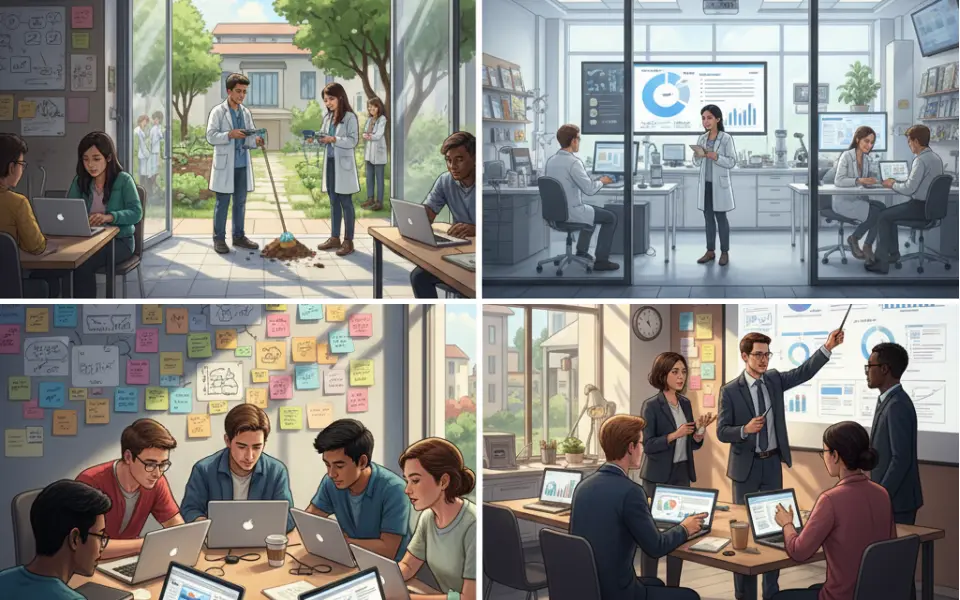
Hackathons & Innovation Challenges
These events push students to create practical solutions to real-world problems under strict time limits. Whether designing an app, solving an engineering issue, or developing a marketing campaign, hackathons encourage teamwork, creativity, and resilience.
Business Case Competitions
Case competitions present students with detailed scenarios of companies facing challenges. Participants must analyze data, develop strategies, and pitch solutions. This hones analytical thinking, public speaking, and business acumen—all essential for professional growth.
Research-Based Problem Solving
College students often engage in research projects where they must identify a problem, gather data, test hypotheses, and present findings. For example, a student in environmental science might study pollution in a local river and propose sustainable solutions. Research fosters persistence, logical reasoning, and evidence-based decision-making.
These activities prepare students not only for academic success but also for careers where problem-solving is a daily necessity.
What Are Problem-Solving Scenarios?
Problem-solving scenarios are structured situations designed to mimic real-life challenges, giving students the opportunity to practice critical thinking in a safe, controlled environment. Unlike traditional textbook exercises, these scenarios don’t always have one “right” answer. Instead, they encourage students to weigh options, consider outcomes, and choose the best path forward.

Definition and Purpose
At its core, a problem-solving scenario is a simulated challenge that allows students to apply theory to practice. The purpose isn’t just to reach a solution—it’s to develop skills like analysis, communication, creativity, and decision-making.
Simulation of Real-Life Issues
These scenarios bring everyday challenges into the classroom. For example, a teacher might present a situation where a school club has a limited budget and must decide how to spend it. Students must collaborate, prioritize, and justify their choices—just like they would in real life.
Examples of Problem-Solving Scenarios
- Conflict Resolution: Two classmates disagree on how to divide project responsibilities. Students discuss strategies to resolve the issue fairly.
- Resource Allocation: A team has limited materials to build a model bridge. They must decide how to use resources efficiently.
- Decision-Making Exercises: Students are given multiple solutions to a social issue—like reducing waste at school—and must choose the most effective one based on evidence.
Problem-solving scenarios give students the chance to make mistakes, learn from them, and refine their decision-making without the high stakes of real-world consequences.
Why Use Problem-Solving Scenarios for Kids?
Introducing problem-solving at an early age builds a strong foundation for lifelong learning. Kids who practice problem-solving grow up more confident, independent, and adaptable. Scenarios tailored for young learners are often fun and playful, yet packed with valuable lessons.
Develops Critical Thinking from an Early Age
Children naturally ask questions like “Why?” and “What if?” Problem-solving scenarios channel that curiosity into structured thinking. For instance, a teacher might ask, “What would you do if your toy broke and you couldn’t buy a new one?” Kids learn to brainstorm creative alternatives, like fixing or repurposing the toy.
Builds Confidence and Independence
When children solve problems on their own, they realize their ideas matter. Even small victories—like figuring out how to share toys fairly—boost self-esteem and independence. This confidence carries into academics and personal life.
Encourages Creativity and Teamwork
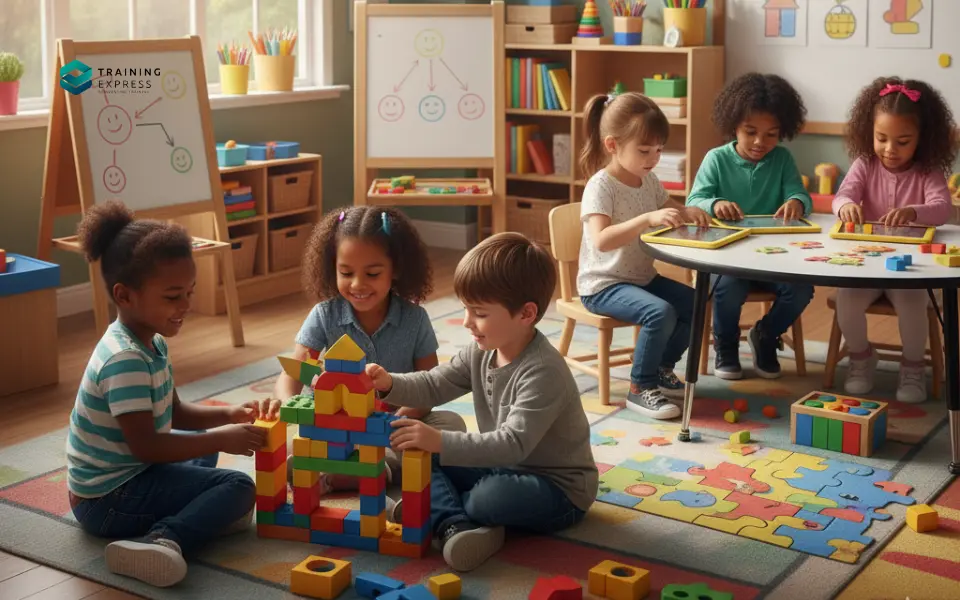
Scenarios often require kids to collaborate, share ideas, and compromise. For example, a group activity might ask them to build a tower from blocks with limited pieces. The exercise encourages teamwork while sparking creativity in design.
By practicing these skills early, kids grow up better equipped to handle bigger challenges in school and beyond.
Real Life Case Study
Arizona High School Students Invent Real-World Solutions Through Creative Thinking
At Arizona College Prep High School in Chandler, science teacher Rachna Nath launched an extraordinary experiential learning program starting in 2018. What began as a small after-school initiative focused on creative invention has blossomed into a full-year course designed to nurture students’ problem-solving and critical thinking abilities before entering college.TIME

Students in Nath’s program are encouraged to explore real-world issues by brainstorming original ideas, researching existing patents, and developing prototypes. Among the innovative projects were a device to boost Wi-Fi reception in dead zones, and a “hydrothermal hat” equipped with sensors to detect heat stress and fainting—alerting users or contacting emergency support via an app.TIME
One standout result: a student invention—the heat-stress detection hat—secured a US$50,000 grant from Arizona State University’s Healthy Urban Environments Initiative to fund further development and real-world testing. The program’s open environment, where students were free to fail and learn, significantly boosted their confidence, preparedness for research, and creative ambition.TIME
According to Nath, most college instructors feel high school graduates aren’t sufficiently prepared in critical thinking, problem-solving, and research skills. Her hands-on program effectively bridges that gap, inspiring students—like the inventor of the heat-stress hat—to pursue STEM fields with renewed confidence and real-world experience.TIME
Why This Case Study Matters
- Authenticity & Impact: Based on a real program with measurable outcomes—like winning a significant grant—it exemplifies genuine problem-solving growth.
- Student-Centered Innovation: Demonstrates how giving students autonomy fosters creativity, resilience, and practical thinking.
- Educational Relevance: Directly addresses gaps in critical thinking and research readiness often observed in high school-to-college transitions.
Let me know if you’d like this refined or supplemented with another real-world case.
Final Words
Problem-solving is more than just an academic skill—it’s a life skill. For students, it’s the bridge between classroom learning and real-world application. Whether it’s resolving group conflicts, tackling math word problems, or participating in debates, every challenge becomes an opportunity to think critically, collaborate, and grow.
By integrating problem-solving into daily lessons, encouraging critical thinking, and using engaging activities, teachers and parents can equip students with tools they’ll use for a lifetime. For kids, it sparks creativity and independence. For college students, it prepares them for professional challenges. And for all learners, it builds resilience—the ability to face obstacles head-on and come out stronger.
So, the next time you face a challenge, remember: every problem is just a puzzle waiting to be solved. And with the right mindset, students can turn those puzzles into stepping stones toward success.
Frequently Asked Questions (FAQ)
What are the four basic steps of problem-solving for students?
The four steps are: identifying the problem, brainstorming possible solutions, choosing the best solution, and evaluating the results. These steps provide a structured way for students to tackle challenges effectively.
Can problem-solving skills improve academic performance?
Yes. Students who practice problem-solving tend to perform better academically because they learn to break down complex tasks, manage time, and approach questions strategically.
What are some fun problem-solving games for kids?
Games like puzzles, scavenger hunts, Lego-building challenges, and board games such as chess or checkers encourage logical thinking and creativity while keeping kids engaged.
How do teachers evaluate students’ problem-solving skills?
Teachers assess problem-solving through observations during group work, reflection essays, project outcomes, and how students explain their reasoning during discussions.
What’s the difference between critical thinking and problem-solving?
Critical thinking is the ability to analyze and evaluate ideas, while problem-solving applies that thinking to overcome challenges and make decisions. They work hand in hand.
How can parents teach problem-solving at home?
Parents can encourage kids to make decisions—like planning a family meal or solving household problems—while guiding them through the steps of identifying, brainstorming, and evaluating.
Are problem-solving skills important for college students?
Absolutely. College students face complex challenges in academics, social life, and career planning. Strong problem-solving skills help them succeed in both short-term and long-term goals.
What are some simple classroom activities to improve problem-solving?
Activities like role-playing, debates, science experiments, and puzzle-solving are simple yet effective ways to help students practice problem-solving in class.
Can problem-solving exercises reduce exam stress?
Yes. When students know how to approach problems systematically, they feel more prepared and less anxious during exams. This reduces stress and boosts performance.
How does problem-solving prepare students for future careers?
In the workplace, employees constantly face challenges—from meeting deadlines to resolving conflicts. Students who master problem-solving are better prepared to adapt, innovate, and succeed in their careers.

Related Blogs

- Available Courses
- Animal care10
- Design36
- Training10
- Accounting & Finance Primary51
- Teaching & Academics Primary37
- Teaching23
- Quality Licence Scheme Endorsed181
- Law10
- IT & Software234
- Job Ready Programme52
- Charity & Non-Profit Courses28
- HR & Leadership4
- Administration & Office Skills6
- Mandatory Training36
- Regulated Courses4
- AI & Data Literacy29
- Health and Social Care291
- Personal Development1651
- Food Hygiene119
- Safeguarding81
- Employability288
- First Aid73
- Business Skills298
- Management425
- Child Psychology41
- Health and Safety537
- Hospitality28
- Electronics30
- Construction63
- Career Bundles201
- Marketing39
- Healthcare174