Food Hygiene
 Health & Safety
 Safeguarding
 First Aid
 Business Skills
 Personal Development
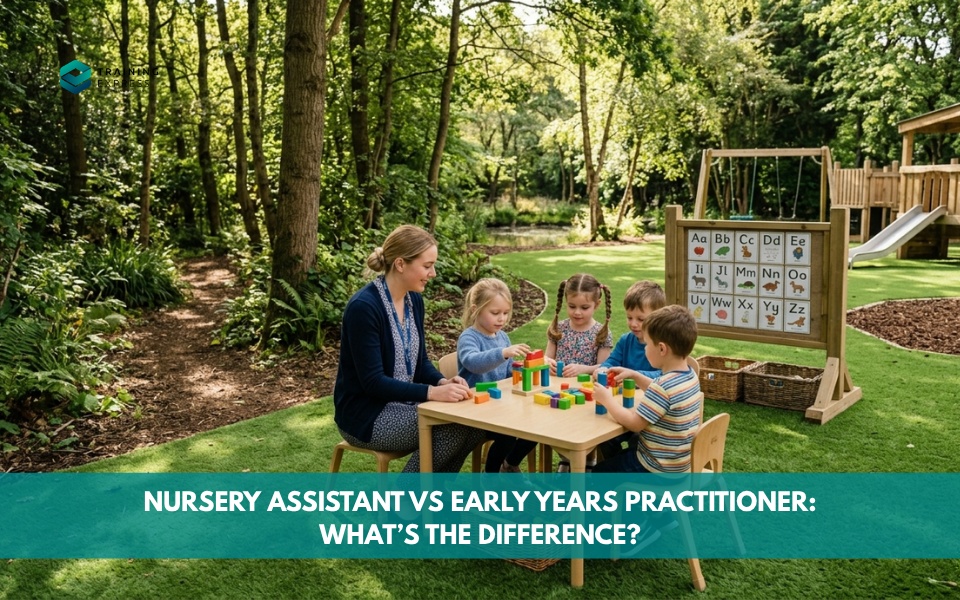

Working in childcare can be incredibly rewarding, especially for individuals who enjoy supporting young children during their early development stages. However, many people exploring careers in early years education often feel confused about the different job roles available in the sector. Two of the most commonly discussed roles are nursery assistant and early years practitioner.
Although these roles may appear similar at first glance, there are important differences in qualifications, responsibilities, and career progression. Understanding these differences can help aspiring childcare professionals choose the right career path and understand what employers expect in UK early years settings.
This article explains the key differences between a nursery assistant and an early years practitioner, including duties, required qualifications, and career opportunities in the UK childcare sector.
Table of Contents
Use Coupon Code:
Use this coupon at Checkout
Nursery Assistant vs Early Years Practitioner: Key Differences
| Feature | Nursery Assistant | Early Years Practitioner |
|---|---|---|
|
Qualification |
Not always required |
Usually Level 3 |
|
Responsibility |
Supports staff |
Plans learning activities |
|
EYFS involvement |
Limited |
High |
|
Career progression |
Entry-level |
Professional role |
|
Child Development Knowledge |
Basic awareness |
In-depth understanding of child development stages |
|
Safeguarding Duties |
Follows instructions |
Actively responsible for safeguarding and reporting |
|
Independence at Work |
Works as part of a team |
Works independently and leads activities |
|
Typical Work Settings |
Nurseries, playgroups |
Nurseries, preschools, schools, early years settings |
|
Salary (UK Avg) |
£16,000 – £20,000 yearly |
£20,000 – £28,000+ yearly |
Although both roles involve supporting young children, there are several important differences between a nursery assistant and an early years practitioner.
1. Level of Responsibility
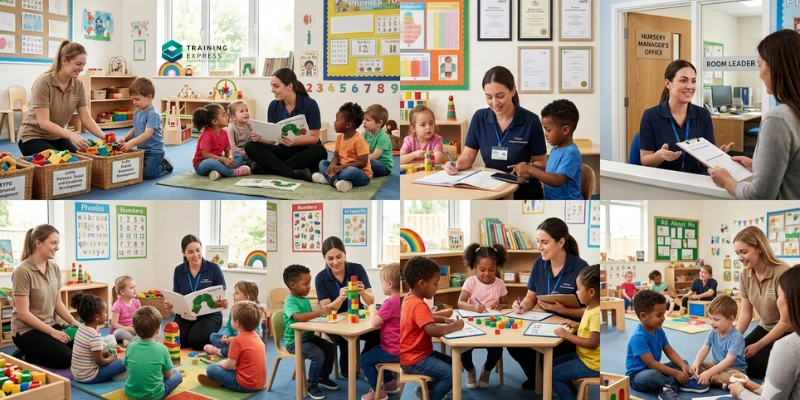
One of the biggest differences between the two roles is the level of responsibility.
- Nursery assistants mainly provide support to other staff members and help with routine activities.
- Early years practitioners take a more active role in planning and delivering learning experiences for children.
Practitioners are also responsible for observing children’s development and ensuring activities support the EYFS learning areas.
2. Qualifications and Training
Another key difference is the level of training required.
Nursery assistants may begin working without formal qualifications in some settings, although training is often encouraged. On the other hand, early years practitioners usually need a Level 3 childcare qualification recognised within the UK early years sector.
Having professional qualifications allows practitioners to take on more responsibility and work more independently.
3. Role in Child Development
Early years practitioners have a stronger role in supporting children’s learning and development.
For example, practitioners may:
- Plan structured learning activities
- Monitor developmental milestones
- Identify additional support needs
- Encourage early literacy and numeracy skills
Nursery assistants support these activities but may not be responsible for planning or assessing learning outcomes.
4. Career Progression Opportunities
Another important difference between these roles is career progression.
Many people begin their childcare careers as nursery assistants before completing further training to become early years practitioners. Once qualified, practitioners may progress into roles such as:
- Room Leader
- Senior Early Years Practitioner
- Nursery Manager
- Early Years Teacher
This progression often requires additional qualifications and experience.
What Is a Nursery Assistant?
A nursery assistant is often considered an entry-level role within the childcare sector. Nursery assistants support the daily activities in early years settings and work closely with more experienced childcare staff.
This role is ideal for individuals who are new to childcare and want to gain practical experience while learning about early childhood development.

Typical Nursery Assistant Duties
Nursery assistants play an important supporting role in early years environments. Their duties often include:
- Assisting with daily nursery routines and activities
- Helping prepare learning materials and play areas
- Supervising children during playtime and activities
- Supporting children during mealtimes and snack breaks
- Helping maintain a safe and clean environment
- Assisting children with basic personal care such as handwashing
- Supporting practitioners with educational activities
Because this role focuses on assisting more qualified staff, nursery assistants typically work under supervision.
Qualifications for Nursery Assistants
In many UK childcare settings, formal qualifications may not always be required to begin working as a nursery assistant. However, employers often prefer candidates who:
- Have completed or are studying a childcare qualification
- Are willing to undertake training such as EYFS Level 2 or Level 3
- Have basic knowledge of child development and safeguarding
Many people start as nursery assistants while completing childcare training to progress into more advanced roles.
What Is an Early Years Practitioner?
An early years practitioner is a qualified childcare professional who plays a more active role in children’s learning and development. These professionals are responsible for planning activities, observing children’s progress, and supporting early learning according to the Early Years Foundation Stage (EYFS) framework.

Early years practitioners often work independently within nursery rooms and may take responsibility for a group of children.
Key Responsibilities of an Early Years Practitioner
Early years practitioners take on more responsibilities compared to nursery assistants. Their role typically includes:
- Planning age-appropriate learning activities
- Supporting children’s physical, emotional, and cognitive development
- Observing children and recording developmental progress
- Following the EYFS framework guidelines
- Supporting inclusive learning environments
- Communicating with parents about children’s progress
- Promoting safeguarding and child protection practices
- Maintaining accurate learning and development records
Because of these responsibilities, early years practitioners are usually required to hold recognised childcare qualifications.
Qualifications for Early Years Practitioners
To work as an early years practitioner in the UK, most employers expect candidates to hold a Level 3 qualification in early years education or childcare.
Common qualifications include:
- Level 3 Diploma in Early Years Education
- EYFS Level 3 qualification
- Early Years Educator qualification
These qualifications help practitioners gain the knowledge and practical skills required to support children’s development effectively.
Understanding Childcare Roles in the UK
The early years sector in the UK focuses on supporting children from birth to five years old during a crucial stage of their development. Childcare professionals working in nurseries, preschools, and early learning settings help children develop important skills such as communication, social interaction, and early learning readiness.
Within these environments, different professionals work together to create a supportive learning environment. Two common roles include:
While both roles involve caring for and supporting young children, the level of responsibility and qualifications required can vary.
Which Role Is Right for You?
Choosing between becoming a nursery assistant or an early years practitioner often depends on your career goals, experience, and qualifications.
Nursery Assistant May Be Suitable If You:
- Are new to the childcare sector
- Want to gain practical experience working with children
- Plan to study childcare qualifications while working
- Prefer a supporting role within a team
Early Years Practitioner May Be Suitable If You:
- Already hold a childcare qualification
- Want to take responsibility for children’s learning activities
- Enjoy planning educational activities for young children
- Want to progress into senior childcare roles
Many childcare professionals start in entry-level roles and gradually build experience and qualifications to advance their careers.
Skills Required for Both Roles

Although the responsibilities differ, both nursery assistants and early years practitioners need similar personal qualities to succeed in childcare environments.
Important skills include:
- Patience and empathy
- Strong communication skills
- Creativity and enthusiasm
- Ability to work in a team
- Understanding of child safeguarding
- Organisational skills
Working with young children requires a caring and supportive approach that helps children feel safe and encouraged to explore their learning environment.
Final Thoughts
Understanding the difference between a nursery assistant and an early years practitioner is important for anyone considering a career in childcare. While nursery assistants support daily nursery activities and gain practical experience, early years practitioners take on greater responsibility for children’s learning and development.
Both roles play an important part in creating safe, engaging environments where young children can grow, explore, and develop essential life skills.
For many professionals, working as a nursery assistant is the first step toward becoming a qualified early years practitioner. With the right training and dedication, it is possible to progress into more advanced roles and make a meaningful impact on children’s early education.
Frequently Asked Questions (FAQ)
Can a nursery assistant become an early years practitioner?
Yes. Many nursery assistants complete Level 3 childcare qualifications to progress into practitioner roles.
Do nursery assistants need qualifications in the UK?
Not always, but many employers prefer candidates with childcare training.
Is an early years practitioner the same as a nursery nurse?
In many settings the roles are similar, although job titles can vary depending on the nursery.
What qualification do early years practitioners need?
Most settings require a Level 3 Early Years qualification recognised under the EYFS framework.

Robert Lawrence
Author | Specialises in Health & Social Care
Robert Lawrence is an e-learning specialist and tutor at Training Express, with experience creating practical resources and strategies to support learners and enhance their professional development.