Food Hygiene
 Health & Safety
 Safeguarding
 First Aid
 Business Skills
 Personal Development

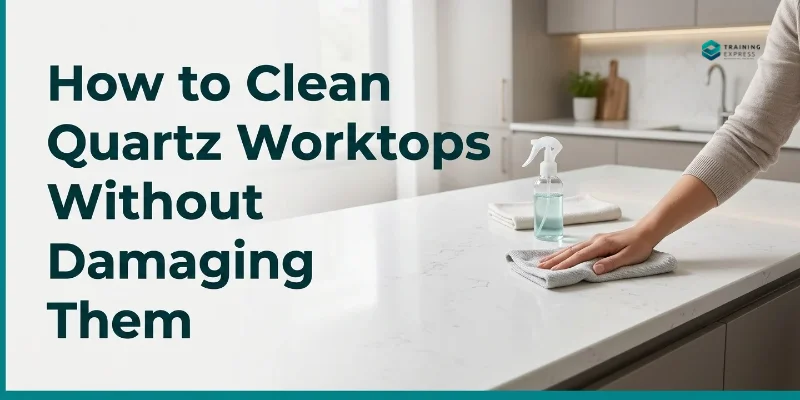

To clean a quartz worktop, wipe it with warm water and a little washing-up liquid on a soft cloth, rinse with clean water, then dry it. That’s all quartz needs day to day. The bigger job is knowing what to keep off it, because harsh chemicals, abrasive scourers and hot pans can damage the surface for good.
This guide covers daily cleaning, disinfecting, stains and limescale, based on the care advice from quartz makers such as Caesarstone and Silestone.
Key Takeaways
- Warm water and a mild detergent on a soft cloth are enough for everyday cleaning.
- Quartz is non-porous, so it never needs sealing.
- Never use oven cleaner, caustic soda, acetone, paint stripper or abrasive scourers on quartz.
- Put hot pans on a trivet. Quartz resists heat, but sudden or direct heat can damage it.
- Brands differ on bleach and disinfectants, so check your maker's care guide.
What Is a Quartz Worktop?
A quartz worktop is engineered stone. It’s made mostly from crushed natural quartz, bound together with resin and coloured with pigments. Well-known brands include Caesarstone, Silestone and CRL Quartz.
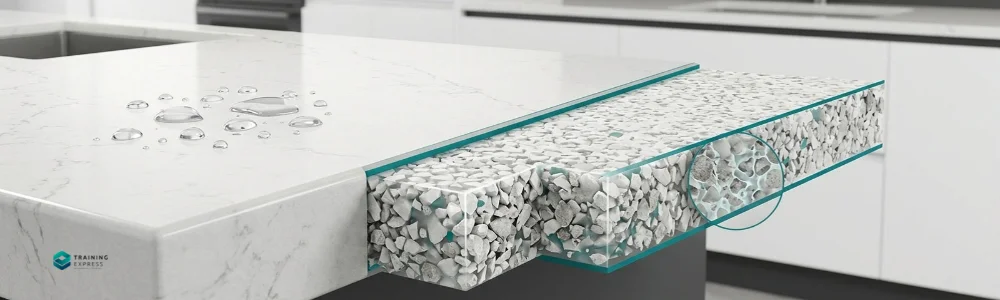
The resin makes quartz non-porous. Spills sit on top instead of soaking in, which is why quartz resists stains and doesn’t need sealing. The resin is also its weak point. Strong chemicals and high heat attack the resin rather than the stone, and that damage usually can’t be polished out.
Quartz is easy to confuse with quartzite, which is a natural stone and needs different care, more like granite. If you’re not sure which you have, check your kitchen paperwork or ask your installer.
How to Clean Quartz Worktops Every Day
You’ll need two soft microfibre cloths, warm water and washing-up liquid.
- Clear the surface. Brush crumbs and loose food into your hand with a dry cloth.
- Make a mild solution. Add a few drops of washing-up liquid to a bowl of warm water.
- Wipe the worktop. Use a soft cloth or a non-scratch sponge and work across the whole surface.
- Rinse. Wipe again with a cloth dampened in clean water to lift any soap film.
- Dry. Buff dry with a second cloth or kitchen roll.
This is the routine Caesarstone’s care guide recommends: water and a mild detergent or a spray-and-wipe cleaner, on a soft cloth or non-abrasive scourer, followed by a rinse and a dry. The drying step matters more than it sounds. In hard-water areas, water left to dry on quartz leaves limescale marks, and they show most on dark colours.
Can You Use Spray Cleaners on Quartz?
Yes. Most everyday spray-and-wipe kitchen cleaners are fine, as long as they aren’t bleach-based or strongly acidic or alkaline. Test any new product on a hidden corner first, and rinse it off rather than leaving it to dry on the surface.
How to Disinfect a Quartz Worktop
Clean first, then disinfect. Disinfectants work on surfaces that are already visibly clean, so wash off grease and food before you spray. This is the same two-stage approach the Food Standards Agency recommends for any food preparation surface.
Quartz makers don’t all say the same thing about disinfectants:
- Silestone (Cosentino) says diluted bleach can be used daily if you rinse the surface well. Bleach left on for two hours or more can cause permanent stains that the warranty doesn’t cover, and undiluted disinfectants shouldn’t stay on for more than five minutes.
- Caesarstone tells you to avoid strong alkalis and oxidisers, and to rinse straight away with plenty of water if a damaging product touches the surface.
The safe approach for any brand is to use a product labelled safe for food-contact surfaces, leave it for the contact time on the label, then rinse with clean water and dry. Our guide on how to deep clean a kitchen explains the two-stage clean in more detail.
How to Remove Stains from Quartz Worktops
Most marks on quartz sit on the surface, so they lift with gentle work. Start with the mildest method and only move up if you need to.
| Stain | What to do |
|---|---|
| Dried food, paint or chewing gum | Lift it gently with a plastic scraper, then wipe with a damp cloth. |
| Coffee, tea, wine or curry | Rub with a quartz-safe cleaner in small circles over an area larger than the stain. Rinse, dry and repeat if needed. |
| Limescale and water marks | Cover with white vinegar for up to 30 minutes, rub gently with a non-scratch scourer, then rinse well. |
| Grey metal marks from pans | Use the stubborn-stain method above, or rub gently with a rubber (latex) eraser. |
| Rust marks | Apply a little Bar Keepers Friend powder on a damp cloth, without a scourer. Rinse thoroughly and dry. |
| Sticky residue from tape or silicone | Wipe with isopropyl alcohol on a cloth, then rinse. |
The scraper, limescale, metal mark and rust methods come from Caesarstone’s care guide, and Silestone’s care manual lists isopropyl alcohol for adhesive and silicone residue. If a stain hasn’t shifted after two attempts, stop. Scrubbing harder is how quartz ends up with dull patches. Contact your installer or the brand’s customer care instead.
Can You Use Bicarbonate of Soda on Quartz?
Bicarbonate of soda is a mild abrasive. A paste dabbed onto a stubborn mark and wiped off gently can help, but don’t scrub with it, especially on polished or dark quartz, where fine scratches show. Quartz makers advise against abrasive cleaners, so keep it for the odd spot treatment and test it on a hidden area first.
Is Vinegar Safe on Quartz?
Diluted white vinegar is fine for limescale on quartz. Caesarstone suggests it for limescale and Silestone suggests cleaning vinegar, so you’re following the makers’ own advice. Rinse it off afterwards and don’t use neat vinegar as a daily spray.
Natural stone is a different story. On granite worktops, vinegar wears away the sealer, and on marble it etches the surface. Check what your worktop is made of before you reach for the vinegar.
What Not to Use on Quartz Worktops
These products and habits cause most permanent damage to quartz. The list comes from Caesarstone’s care guide unless stated otherwise:
- Oven and grill cleaners
- Caustic soda, lye and drain unblockers
- Acetone (nail varnish remover) and paint strippers
- Dishwasher rinse aid or polishing agents
- Bleach left on the surface (Silestone warns of permanent stains after about two hours)
- Abrasive scourers, wire wool and scouring powder
- Cream cleaners for routine cleaning (keep them for stubborn stains, and avoid them on dark quartz)
- Plant-based cleaners, which Caesarstone says can leave a chemical build-up
If any of these get on the worktop, rinse the area with plenty of water straight away and dry it.
How to Protect Quartz from Heat, Scratches and Chips
Heat
Quartz copes with warm plates and mugs, but it isn’t heatproof. Caesarstone warns that sudden, extreme or prolonged heat can damage the surface, especially near the edges, and tells owners to use trivets under hot pans, slow cookers and electric frying pans. The worktop next to your hob takes the most heat, so keep a trivet there. For the hob itself, see our guide on how to clean an induction or ceramic hob.
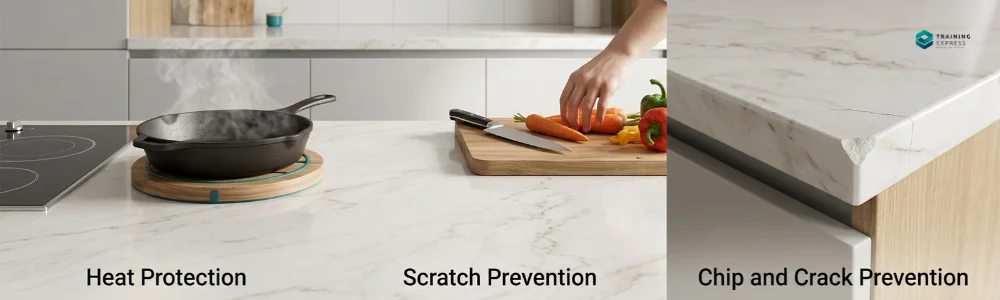
Scratches
Quartz resists scratches, but knives and screwdrivers can still mark it, and your knives will go blunt on stone. Always use a chopping board.
Chips and Cracks
Edges and corners take the most knocks. Small chips can often be repaired by a stone specialist, but Silestone’s care guidance says cracks usually can’t be repaired well because they tend to spread. Contact your installer if you spot either.
Do Quartz Worktops Need Sealing?
No. Quartz is non-porous, so there’s nothing for a sealer to soak into, and a sealer would only sit on top as a sticky film. This is one of the main differences between quartz and natural stone. Granite often does need sealing, and our guide on how to clean granite worktops explains the simple water test that tells you when.
Quartz vs Granite vs Soapstone: Care Compared
If your kitchen mixes materials, or you’re choosing a new worktop, here’s how the care differs:
| Care point | Quartz | Granite | Soapstone |
|---|---|---|---|
| What it is | Engineered: crushed quartz and resin | Natural stone | Natural stone, mainly talc |
| Needs sealing? | No | Often (use the water test) | No |
| Daily cleaner | Mild detergent and water | pH-neutral stone cleaner or mild detergent | Mild washing-up liquid and water |
| Vinegar | Diluted, for limescale only | Avoid | Occasionally |
| Hot pans | Always use a trivet | Trivet recommended | Handles heat well |
For the full routine for each material, read our guides on cleaning granite worktops and how to clean soapstone countertops.
Dark, Matt and Honed Quartz Need More Care
Caesarstone notes that dark colours show fingerprints, limescale and everyday wear more easily, and that finishes other than polished may need more daily maintenance. On dark quartz, always dry the surface after cleaning and avoid cream cleaners. On matt or honed finishes, wipe spills up promptly and stick to soft cloths.
A Simple Quartz Care Routine
| How often | What to do |
|---|---|
| Every day | Clear crumbs, wipe with mild soapy water, rinse and dry. |
| Every week | Disinfect food preparation areas with a quartz-safe product. Check for limescale around the sink and taps. |
| When needed | Treat stains using the table above. Check edges and corners for chips. |
Cleaning Quartz as a Professional Cleaner
If you clean other people’s kitchens, you can’t always tell quartz from granite or a stone-effect laminate at a glance, and the wrong product can mean a damaged worktop and a lost client. Ask the owner what the worktop is made of, carry a mild pH-neutral cleaner that’s safe on most surfaces, and test before you use anything stronger.
If you’re building a cleaning career, Training Express offers a Domestic Cleaner course and the Level 5 Certificate in Cleaning.
Frequently Asked Questions (FAQs)
What is the best cleaner for quartz worktops?
Warm water with a few drops of washing-up liquid is the best everyday cleaner. For a deeper clean, use a quartz-specific cleaner or your maker’s own product, such as Q-Action for Silestone.
Can you use washing-up liquid on quartz?
Yes. A few drops of mild washing-up liquid in warm water is what quartz makers recommend for daily cleaning. Rinse with clean water afterwards so no soap film is left behind.
What should you not use on quartz worktops?
Avoid oven cleaner, caustic soda, acetone, paint stripper, dishwasher rinse aid, abrasive scourers and scouring powder. Don’t leave bleach on the surface, and don’t use cream cleaners for routine cleaning.
Can you use antibacterial wipes on quartz?
Usually, yes. Silestone’s guidance is to test a wipe on a corner first. Afterwards, rinse with a damp cloth and dry, so cleaning residue doesn’t build up.
Can you put hot pans on a quartz worktop?
No. Quartz resists heat, but a hot pan straight from the hob can scorch or discolour the resin. Always use a trivet or heat-resistant mat.
How do you make a quartz worktop shine again?
Dullness is usually soap or cleaner residue. Wipe with clean warm water, then buff dry with a microfibre cloth. If it still looks dull, the finish may be damaged, so contact your installer rather than trying polishes or sealers.

Robert Lawrence
Author | Specialises in e-learning.
Written by Robert Lawrence and Reviewed by a certified stone fabricator with over 12 years of experience installing and restoring natural stone countertops
Other Blogs