Food Hygiene
 Health & Safety
 Safeguarding
 First Aid
 Business Skills
 Personal Development


If you just had soapstone installed, congratulations — you picked one of the lowest-maintenance natural stones you can put in a kitchen or bathroom. The short answer: clean it daily with warm water and mild dish soap, avoid harsh chemicals and abrasive pads, and apply mineral oil occasionally if you want to deepen its color. That’s really it.
But if you’re new to soapstone, you probably have specific worries — can it stain, can it scratch, is vinegar okay, what do you do about that water ring you just noticed? This guide covers all of it, in plain language, so you can stop worrying and start enjoying your counters.
Table of Contents
What Makes Soapstone Different From Other Countertops
Soapstone is a non-porous stone, which means it doesn’t have tiny holes that let liquid soak in. That’s why it resists stains so well compared to materials like marble or limestone.
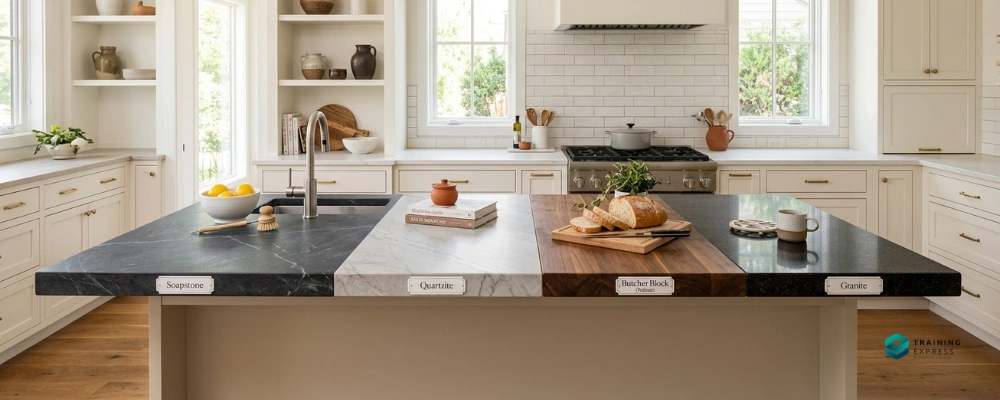
It’s also naturally soft and heat-resistant. You can set a hot pan on it without much worry — something you typically can’t do with quartz. The trade-off is that soapstone can pick up light scratches more easily than granite. The good news: those scratches are usually easy to fix, and we’ll show you how below.
Unlike granite or marble, soapstone doesn’t need to be sealed. There’s no sealant to reapply every year. Its only “upkeep” ritual, and it’s optional, is an occasional coat of mineral oil to even out its color as it ages.
Daily Cleaning: What You'll Need
You don’t need special stone-care products for everyday cleaning. Here’s the full list, and you probably already own most of it:
- Soft microfiber cloth or soft sponge
- Mild dish soap
- Warm water
- A clean, dry towel
- pH-neutral stone cleaner (optional, for a deeper clean)
- Mineral oil or soapstone conditioning oil (optional, for color)
That’s the complete kit. You won’t need it all at once — daily cleaning really only calls for the first four items.
How to Clean Soapstone Countertops Step by Step
- Clear off crumbs and loose debris with a dry cloth first, so you’re not just rubbing grit around.
- Mix a few drops of mild dish soap into warm water. You don’t need much — a small squirt in a cup of water is plenty.
- Wipe the surface with a soft sponge or cloth, using light, circular motions.
- Rinse with a clean, damp cloth to remove any soap residue.
- Dry immediately with a towel. This step matters more than people think — it prevents water spots and keeps the surface looking even.
This whole process takes about five minutes. Do it once a day, ideally after your last meal prep session, and you’ll rarely deal with buildup.
How to Clean Soapstone Countertops
Clear debris
Dry cloth first, so you're not grinding grit into the stone.
Mix soap & water
A few drops of mild dish soap in warm water is plenty.
Wipe gently
Soft sponge or cloth, light circular motions.
Rinse
Clean, damp cloth to lift any soap residue.
Dry immediately
The step that actually prevents water spots and streaks.
Do this once a day — twice if you cook often or have kids.
How Often Should You Clean Soapstone Countertops?
For daily upkeep, a quick wipe-down once a day is enough for most households. If you cook often or have kids, you might do it twice.
Beyond that, plan for:
- Weekly: A slightly more thorough wipe with a pH-neutral stone cleaner to lift anything the daily cleaning missed.
- Monthly (or as needed): Check for dry, dull-looking patches — that’s usually a sign it’s time for a light coat of mineral oil.
You don’t need a rigid schedule. Soapstone is forgiving, so think of these as guidelines, not rules you’ll get in trouble for breaking.
The Best Cleaner for Soapstone Countertops
The best everyday cleaner is warm water with a small amount of mild dish soap — nothing fancier is required. For a deeper clean, a pH-neutral stone cleaner (sold at most hardware stores) is a safe step up.
Cleaners to Avoid
Some common household cleaners can dull or damage soapstone over time. Skip these:
- Bleach
- Ammonia-based cleaners (like many glass cleaners)
- Abrasive powders (like some scouring powders)
- Steel wool or scouring pads
- Strong acidic cleaners
None of these will destroy your countertop overnight, but repeated use can gradually wear down the surface’s finish and make it look dull or uneven.
Can You Use Vinegar to Clean Soapstone Countertops?
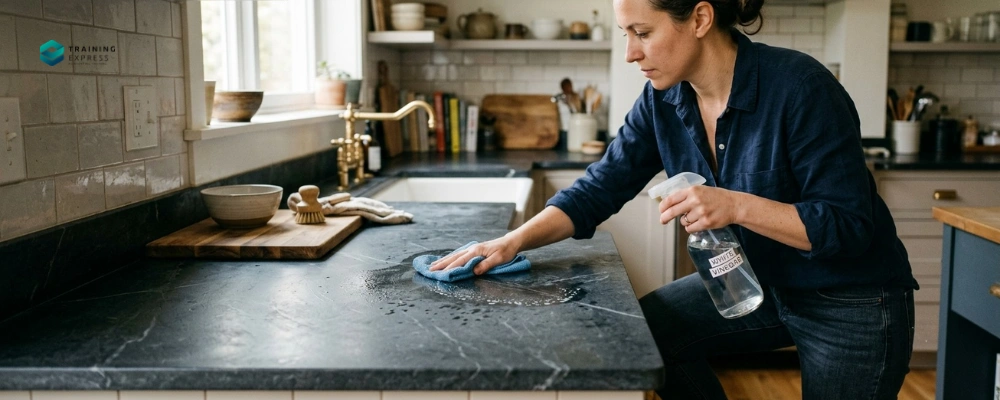
You can use vinegar occasionally on soapstone without major risk, but it’s not recommended as your everyday cleaner. Soapstone handles acidic products better than marble or limestone does, since it’s less reactive to acid. Still, frequent vinegar use can dull the surface’s finish over time.
If you’re out of dish soap and need a quick fix, a diluted vinegar solution is fine in a pinch. For regular cleaning, stick with mild soap and water — it’s simpler and gentler in the long run.
How to Remove Stains From Soapstone Countertops
Soapstone resists stains well, but grease, food, and hard water can still leave marks if they sit too long. The fix depends on what caused the stain.
Grease and Food Stains
- Wipe up the spill as soon as you notice it — the longer it sits, the more it can settle into the surface.
- Clean the area with warm water and a small amount of dish soap.
- Use a soft sponge and gentle pressure — never scrub hard.
- Rinse and dry thoroughly.
- Repeat if the mark is still visible.
Most grease and food marks lift within one or two cleanings. If a spot is stubborn, let a soapy cloth sit over it for a few minutes before wiping again.
Water Marks and Hard Water Deposits
Water marks usually show up when water dries on the surface instead of being wiped away. If you’re in an area with hard water, you might also notice faint mineral deposits.
To handle these: wipe the countertop dry after every use, and clean with warm water and mild soap weekly. This one habit — drying instead of air-drying — prevents most water-related marks before they start.
After the Stain Is Gone
Once a stain lifts, wipe the area with clean water and dry it fully. If the spot looks slightly lighter or duller than the rest of the counter, a small amount of mineral oil can help it blend back in — more on that below.
Repairing Scratches on Soapstone Countertops
This is one of the most common questions new soapstone owners ask, and it’s an easy fix. Soapstone is softer than granite, so light scratches can happen with everyday use — but they’re rarely permanent.
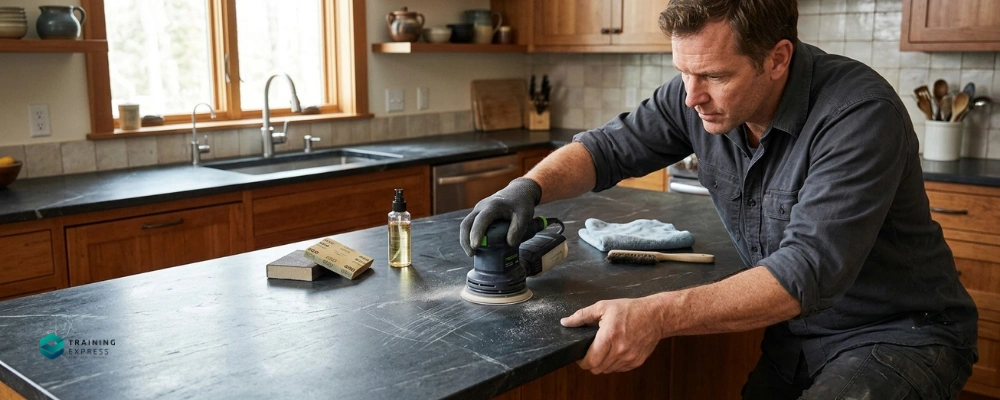
For light surface scratches:
- Rub a small amount of mineral oil directly onto the scratch with a soft cloth.
- Let it sit for a few minutes, then wipe away the excess.
- Many light scratches become far less noticeable, or blend into the surrounding patina completely.
For deeper scratches or scuffs:
- Lightly sand the area with fine-grit sandpaper (start around 220-grit, moving to 400-grit for a smoother finish).
- Sand in the direction of the stone’s natural texture, using light pressure.
- Wipe away the dust with a damp cloth and let the area dry.
- Apply mineral oil to blend the sanded spot with the rest of the counter.
If you’re dealing with a deep gouge, a crack, or a chip, it’s worth calling a stone fabricator instead of DIY-ing it. Structural damage is one of the few things soapstone can’t self-heal with a little oil and elbow grease.
Understanding Patina: Why Soapstone Changes Color Over Time
Patina is the natural darkening soapstone develops as it’s exposed to air, use, and (if you choose to use it) oil over time. It’s not damage — it’s part of the stone’s character, similar to how raw denim or leather changes with wear.
Fresh soapstone usually starts out lighter gray, sometimes with green or blue undertones depending on the quarry. Over months and years, exposed areas darken to a richer charcoal tone. Areas near the sink or stove, which get touched and cleaned most often, tend to darken faster than less-used areas.
If you want an even patina across the whole countertop rather than a patchwork look, applying mineral oil evenly (instead of just spot-treating stains and scratches) helps the color develop more uniformly. This typically takes several applications over the first few months of ownership.
Using Mineral Oil or Soapstone Wax
Applying oil is optional — soapstone doesn’t need it to stay protected, since it’s already non-porous. People use it purely for the look.
To apply mineral oil:
- Make sure the counter is clean and completely dry.
- Pour a small amount of mineral oil onto a soft cloth.
- Rub it into the stone using circular motions, covering the whole surface evenly.
- Let it sit for 10–15 minutes.
- Wipe away any oil that hasn’t absorbed.
Some owners do this weekly during the first few months to speed up the patina process, then taper off to once every month or two, or whenever the surface starts looking dry or dull. Soapstone-specific wax is a longer-lasting alternative some fabricators recommend if you want to oil less often.
Soapstone vs. Granite, Quartz, and Marble: Maintenance Compared
If you’re weighing soapstone against other countertop materials, here’s how the day-to-day care stacks up:
| Material | Needs sealing? | Heat resistance | Scratch resistance | Stain resistance |
|---|---|---|---|---|
| Soapstone | No | Excellent | Fair (scratches buff out easily) | Excellent |
| Granite | Yes, periodically | Very good | Good | Good, if sealed |
| Quartz | No | Fair (can discolor with high heat) | Very good | Very good |
| Marble | Yes, periodically | Good | Fair | Fair (stains easily, especially from acid) |
Soapstone typically comes out ahead on long-term upkeep simplicity, mainly because there’s no sealant schedule to remember. Its main trade-off is a softer surface, which is why the scratch-buffing routine above is worth knowing.
Cleaning a Soapstone Sink
Soapstone sinks get the same gentle treatment as countertops, just with a bit more daily attention since they handle more water and food residue.
Daily routine:
- Rinse the sink after each use.
- Wash with mild dish soap and a soft sponge.
- Rinse thoroughly to remove soap residue.
- Dry with a clean towel.
For hard water stains specifically, drying the sink after every use is the single biggest thing you can do to prevent buildup. If deposits do form, the same warm water and mild soap method used on countertops typically clears them.
Caring for Soapstone in Bathrooms
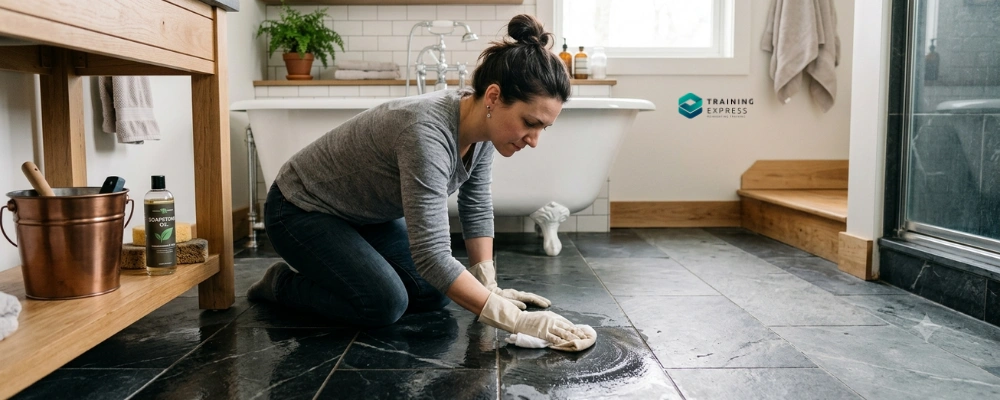
Bathroom soapstone — vanities, tub surrounds, shower shelves — deals with more standing moisture and personal care products (think toothpaste, lotion, hairspray) than kitchen counters do.
A few bathroom-specific habits help:
- Wipe down the vanity after each use, since toothpaste and soap residue can dull the surface if left to dry.
- Squeegee or towel-dry shower shelves after each shower to prevent water spotting.
- Keep perfume, cologne, and nail products off the stone directly — these often contain solvents that can affect the surface finish over time.
- Clean with the same warm water and mild soap approach used in the kitchen; there’s no need for bathroom-specific stone cleaners.
Because bathroom soapstone sees more standing water than kitchen counters typically do, you may find you need to reapply mineral oil slightly more often to keep the color even.
Common Mistakes to Avoid
- Using harsh chemical cleaners. Bleach, ammonia, and strong degreasers can affect the surface finish over time, even if they don’t cause visible damage right away. Stick with mild soap.
- Scrubbing with abrasive pads. Steel wool and rough scouring pads can create fine scratches that dull the surface’s sheen. A soft sponge does the job just as well.
- Letting spills sit. Soapstone resists stains, but grease and food left for hours (or days) are harder to remove than a spill wiped up right away.
- Skipping regular cleaning. Soapstone doesn’t punish you for a missed day, but consistent care is what keeps it looking its best for decades rather than years.
- Expecting it to never scratch or never darken. Some patina and the occasional light scratch are part of owning natural stone — not signs you’re doing something wrong.
When to Call a Professional
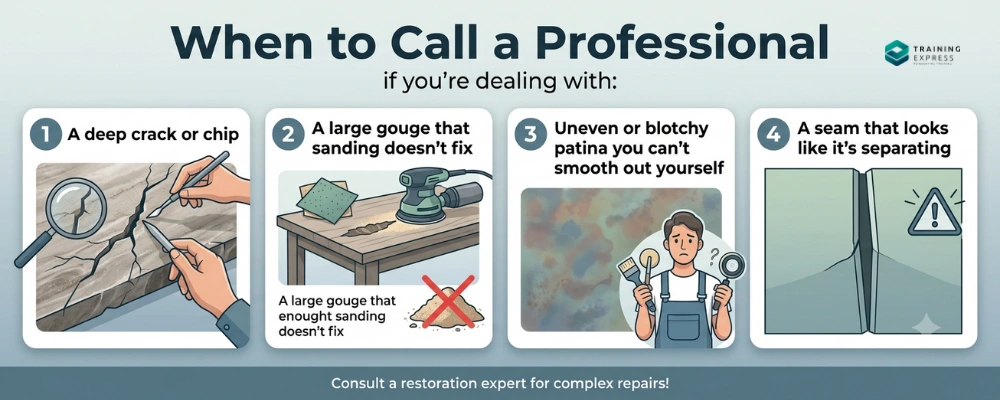
Most soapstone care is a DIY job. But it’s worth calling a stone fabricator or installer if you’re dealing with:
- A deep crack or chip
- A large gouge that sanding doesn’t fix
- Uneven or blotchy patina you can’t smooth out yourself
- A seam that looks like it’s separating
Fabricators can also do a full re-oiling or light resurfacing if your countertop has years of buildup or unevenness you want reset.
The Bottom Line
Soapstone is about as low-maintenance as natural stone gets. Daily cleaning takes a few minutes, stains are rare and usually easy to lift, and most scratches buff out with a little mineral oil. The only real “chore” — and it’s optional — is an occasional oiling if you want that deep, even patina.
If you take one thing from this guide, let it be this: dry the surface after you clean it. That single habit prevents most of the water marks and mineral deposits people worry about, and it takes about ten extra seconds.
Frequently Asked Questions (FAQ)
How do you clean soapstone countertops daily?
Wipe the surface with a soft cloth, warm water, and a small amount of mild dish soap. Dry it with a clean towel right after to prevent streaks and water spots.
What is the best cleaner for soapstone countertops?
Warm water and mild dish soap work for most cleaning. A pH-neutral stone cleaner is a good option for a deeper weekly clean. Avoid bleach, ammonia, and abrasive cleaners.
How do you remove stains from soapstone countertops?
Clean the spot with warm water, mild soap, and a soft sponge, using gentle pressure. Acting quickly makes stains much easier to remove. For grease stains, letting a soapy cloth sit on the spot for a few minutes before wiping again can help.
Can you use vinegar to clean soapstone countertops?
Occasionally, yes — soapstone handles acid better than marble or limestone. But frequent vinegar use can dull the finish, so it’s better as a backup than a daily cleaner.
How do you get scratches out of soapstone?
Light scratches often buff out with a small amount of mineral oil rubbed into the area. Deeper scratches may need light sanding with fine-grit sandpaper, followed by an oil application to blend the spot in.

Robert Lawrence
Author | Specialises in e-learning.
Written by Robert Lawrence and Reviewed by a certified stone fabricator with over 12 years of experience installing and restoring natural stone countertops