Food Hygiene
 Health & Safety
 Safeguarding
 First Aid
 Business Skills
 Personal Development

What if the career you’ve been looking for doesn’t begin with experience—but with the right qualification? Many people feel drawn to health and social care because they want to make a real difference, yet they often feel stuck at the starting point, unsure which path to follow.
The truth is, building a career in care does not begin by knowing everything. It begins by choosing the right health and social care qualification—one that introduces you to the skills, responsibilities, and standards required in professional care environments.
Whether your goal is to support vulnerable individuals, work in healthcare settings, or grow into leadership roles, understanding the steps ahead can make the journey far more manageable.
This guide breaks down the process into clear stages, helping you move from uncertainty to a structured and confident start in a meaningful career.
Table of Contents
What Is a Health and Social Care Qualification
A health and social care qualification is a structured program designed to prepare individuals for roles in healthcare support and social services.
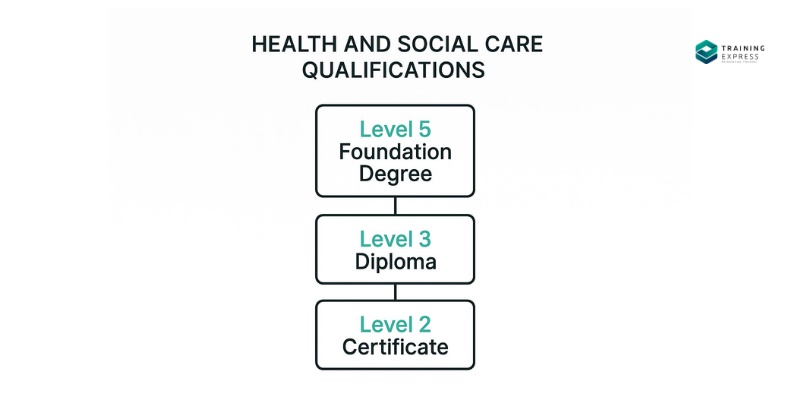
These qualifications teach essential knowledge such as safeguarding, communication, care planning, and ethical practice. They also help learners understand how to support individuals with different needs, including physical, emotional, and social challenges.
Qualifications can range from beginner-level certificates to advanced diplomas and leadership-focused courses. Each level builds on the previous one, allowing learners to progress gradually in their careers.
Having a recognised qualification is often a key requirement for employment in health and social care roles.
Step-by-Step Guide to Getting a Health and Social Care Qualification

Step 1: Understand Your Career Goals
Before choosing a course, it is important to identify what type of role you want in the future. Some individuals prefer direct caregiving roles, while others aim for supervisory or management positions.
Understanding your goals helps you choose the right qualification level.
Step 2: Choose the Right Qualification Level
Health and social care qualifications are available at different levels.
Beginner courses introduce basic caregiving principles, while advanced programs such as Level 3 Health and Social Care focus on leadership and management.
Selecting the correct level ensures that the course matches your experience and career plans.
Step 3: Decide Between Online or Classroom Learning

Modern learners can choose between traditional classroom courses and health and social care courses online.
Online learning offers flexibility, allowing students to study at their own pace. Classroom learning provides direct interaction with instructors.
Both options can be effective, depending on your personal preferences and schedule.
Step 4: Select a Recognised Training Provider
Choosing a reputable provider is essential. Look for courses that are accredited and recognised by relevant organisations.
A well-structured course with strong support and clear learning outcomes can significantly improve your learning experience.
Step 5: Develop Essential Care Skills
During your training, focus on building key skills such as communication, safeguarding awareness, empathy, and care planning.
These skills are fundamental to working effectively in health and social care environments.
Step 6: Gain Practical Experience

Practical experience is an important part of professional development. Some courses include work placements or real-world case studies.
Experience helps learners apply their knowledge in real care settings and build confidence.
Step 7: Progress to Higher Qualifications
After completing an initial qualification, many learners choose to continue their education.
Progressing to higher-level courses allows individuals to move into supervisory or management roles within the sector.
Types of Health and Social Care Courses Available
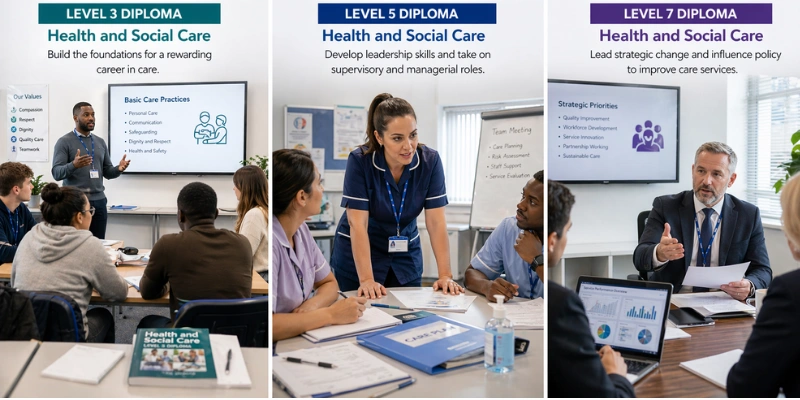
Health and social care courses in the UK are available at different levels, allowing learners to start from the basics and progress into more advanced roles. Each level builds your knowledge, skills, and responsibilities, helping you move forward in your career step by step.
Level 3 Diploma in Health and Social Care
This course is ideal for those starting out or looking to strengthen their core knowledge in care. It focuses on the essential skills needed to work safely and effectively in health and social care settings.
- Covers core topics like communication, safeguarding, and health and safety
- Introduces person-centred care and ethical practice
- Suitable for beginners and those with some care experience
- Helps prepare for entry-level roles such as care assistant or support worker
It provides a solid foundation to start working in health and social care with confidence.
Level 4 Diploma in Health and Social Care
This level is designed for individuals ready to take on more responsibility within care settings. It begins to focus on leadership and supporting others in a professional environment.
- Covers supervision, team support, and care quality improvement
- Explores safeguarding, compliance, and workplace responsibilities
- Suitable for experienced care workers moving into senior roles
It helps you step up into supervisory positions with more confidence and responsibility.
Use Coupon Code:
Use this coupon at Checkout
Level 5 Diploma in Health and Social Care
This course is aimed at those looking to move into management roles within the sector. It develops leadership skills and a deeper understanding of running care services.
- Focuses on leadership, decision-making, and service management
- Covers staff management, care planning, and service delivery
- Suitable for senior carers and aspiring managers
It prepares you for roles where you lead teams and manage care services effectively.
Level 7 Diploma in Health and Social Care
This is an advanced qualification for professionals aiming for senior leadership roles. It focuses on strategic thinking and improving care services at a higher level.
- Covers strategic management and policy development
- Focuses on leadership, innovation, and service improvement
- Suitable for senior professionals and experienced managers
It supports progression into high-level roles where you shape and lead healthcare services.
Why a Qualification Matters in Health and Social Care
Working in health and social care involves supporting individuals who may be vulnerable or in need of assistance. Because of this, employers place strong importance on proper training and qualifications.

A recognised health and social care qualification ensures that professionals understand how to provide safe, ethical, and effective care.
It also demonstrates to employers that the individual has the necessary skills and knowledge to work in a professional environment.
In addition, qualifications help build confidence. Learners feel more prepared to handle real-world situations, communicate effectively, and respond to challenges within care settings.
Career Opportunities After Qualification
Completing a health and social care qualification can open the door to a wide range of career opportunities.
Common roles include:
- healthcare assistant
- support worker
- community care worker
- residential care assistant
- care coordinator
With further experience and qualifications, individuals may progress into leadership roles such as care supervisor or social care manager.
Common Challenges and How to Overcome Them
Starting a new learning journey can come with challenges.
Some learners struggle with time management, especially when balancing work and study. Creating a structured schedule can help maintain consistency.
Others may feel unsure about course content or expectations. Choosing a course with strong support and guidance can make learning easier.
Confidence can also be a challenge for beginners. With practice and experience, confidence naturally improves over time.
Final Thought
Starting your journey with a health and social care qualification is the first step toward a meaningful and impactful career. With the right guidance, structured learning, and commitment, you can build the skills needed to support others and grow professionally within this essential sector.
The path may seem complex at first, but by following a step-by-step approach, it becomes clearer and more achievable. For those ready to begin, the opportunity to make a real difference starts with the decision to learn.
Frequently Asked Questions (FAQ)
Can beginners take health and social care courses?
Yes. Many courses are designed specifically for beginners with no prior experience.
Are online health and social care courses effective?
Yes. Well-designed online courses provide flexible learning and cover essential skills needed in care environments.
What jobs can I get after completing a qualification?
You can work as a healthcare assistant, support worker, or community care worker.
Can I progress to higher qualifications?
Yes. Many learners continue to advanced programs such as Level 4 Health and Social Care to advance their careers.

Robert Lawrence
Author | Specialises in Health and Social Care
Robert Lawrence is an e-learning specialist and tutor at Training Express, with experience creating practical resources and strategies to support learners and enhance their professional development.