Food Hygiene
 Health & Safety
 Safeguarding
 First Aid
 Business Skills
 Personal Development

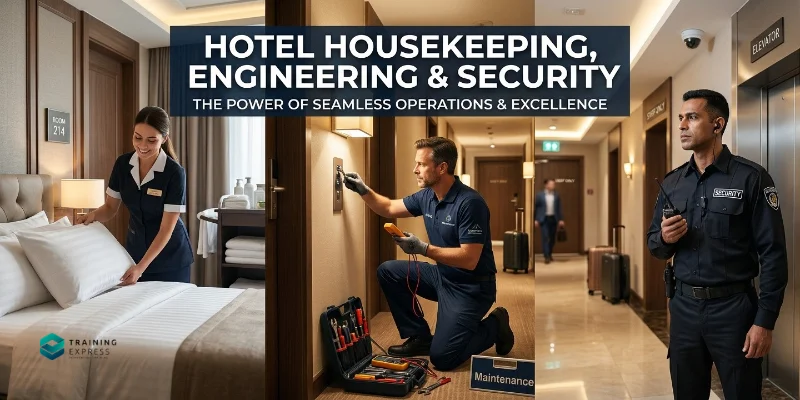

Hotel housekeeping, engineering and security are the three back-of-house teams that keep a hotel clean, working and safe. Guests rarely see them, but they notice straight away when something goes wrong: a dirty room, a broken shower or a key card that opens the wrong door.
This guide is for you if you are new to hotel work, studying hospitality or stepping up to a supervisor role. You will learn how each department is organised, what it does every day and how the three teams work together.
We also cover the UK rules that sit behind the work, including fire safety law, Martyn’s Law and the health and safety duties that protect staff. Where something is a legal requirement, we say so. Where it is good practice or depends on the hotel, we say that too.
Table of Contents
What Are the Back-of-House Departments in a Hotel?
Back-of-house departments are the teams that support the guest experience without much direct guest contact. In most hotels, they include housekeeping, engineering (also called maintenance) and security, along with finance and HR.
Front-of-house teams, such as reception and restaurant staff, earn revenue directly. Back-of-house teams are often called support centres. They don’t sell rooms, but without them there would be no clean, working, safe rooms to sell.
Housekeeping usually sits in the rooms division with the front office, because both look after the guest room. Engineering and security often report separately to the general manager. In a small hotel, one person may cover several of these roles
What Does the Hotel Housekeeping Department Do?
The hotel housekeeping department keeps guest rooms and public areas clean, tidy, stocked and safe. It is usually the largest team in a hotel. It also acts as the hotel’s “eyes and ears”, because room attendants see every room every day and spot problems first.
How the Housekeeping Department Is Organised
Most hotels use a simple three-level structure. Bigger hotels add assistant managers, public area cleaners and laundry staff.
Housekeeping Manager (Executive Housekeeper)
The housekeeping manager runs the department. They plan staffing rotas, set cleaning standards, manage the budget and order supplies. They also work closely with the front office and engineering teams every day.
Floor Supervisor
A floor supervisor looks after a group of floors or rooms. Their main job is inspecting rooms after cleaning so they meet the hotel’s standard before a guest checks in. They also hand out daily room lists, deal with guest requests and train new room attendants.
Room Attendants
Room attendants clean and prepare guest rooms. Typical duties include changing linen, cleaning bathrooms, restocking amenities and reporting faults or lost property.
How many rooms does a room attendant clean per day? There is no fixed number. It depends on the room type, whether the guest is checking out or staying on, and the hotel’s standards. Each hotel sets its own target, so ask during your induction.
Key Functions of the Housekeeping Department
Cleaning is only part of the job. Housekeeping also runs several support services that keep the whole hotel going.
Lost and Found
When staff find a guest’s item, housekeeping logs it, stores it securely and returns it to the owner. A good log records what was found, where, when and by whom. Items are kept for a set period under the hotel’s own policy. Treat guest contact details in the log as personal data and keep them secure.
First Aid
Many housekeepers are trained first aiders because they are spread across the whole building. Employers must provide adequate first aid for their staff under the Health and Safety (First-Aid) Regulations 1981. The Health and Safety Executive (HSE), the UK’s workplace safety regulator, strongly encourages hotels to plan for guests too.
Floral Arrangements
In many hotels, housekeeping arranges or buys in flowers for the lobby, restaurants and VIP rooms. It is a small task, but it shapes a guest’s first impression.
Laundry Services
Housekeeping manages bed linen, towels, staff uniforms and guest laundry. Some hotels run an on-site laundry. Others send linen to an outside laundry company and track it in and out.
Purchasing
Housekeeping buys cleaning products, linen and amenities. Most departments use par stock, the set quantity of each item you should always have on hand. When stock falls below par, you reorder.
Managing Guest Amenities
Guest amenities are the free items and services in a room, such as toiletries, tea and coffee, towels and hairdryers. Hotels usually split them into three groups:
- Standard amenities: in every room, such as soap, shampoo and tea-making facilities
- Premium amenities: in suites or for VIPs, such as bathrobes and branded toiletries
- On-request amenities: given when asked, such as extra pillows, irons or phone chargers
Many UK hotels now use large refillable dispensers instead of miniature bottles. This cuts plastic waste and cost, so check your hotel’s policy before restocking.
Hotel Room Status Codes Explained
Room status codes are short labels that show whether a room is occupied, clean and ready to sell. Housekeeping and the front desk use them to stay in sync, so reception never gives a guest a dirty room. Exact codes vary between hotels and property management systems, but these are the most common.
| Code | Meaning | What It Tells You |
|---|---|---|
| VC | Vacant Clean | Empty and cleaned, ready to be inspected or sold. |
| VD | Vacant Dirty | Guest has left; needs cleaning. Usually the top priority. |
| OC | Occupied Clean | Guest staying; room serviced today. |
| OD | Occupied Dirty | Guest staying; room not yet serviced. |
| VI or INS | Inspected | Checked by a supervisor and ready for check-in. |
| DO | Due Out | Guest expected to check out today. |
| DND | Do Not Disturb | Guest has asked not to be disturbed. |
| OOO | Out of Order | Can't be sold, for example due to a leak or repairs. |
| OOS | Out of Service | Has a minor issue but can still count as available. |
| SL | Sleeper | System shows occupied, but the guest has already left. |
| SK | Skipper | Guest left without paying. |
Out of Order vs Out of Service
This one confuses many new starters. An out of order room is removed from the hotel’s available rooms, usually because of a serious repair. An out of service room has a small problem, like a broken lamp, but stays in the available total. Your hotel’s system decides exactly how each one works.
Managerial Styles in Housekeeping
Housekeeping managers lead large teams, so their style shapes how the department runs. Common styles include:
- Autocratic: the manager decides and staff follow. Useful in an emergency, but can lower morale day to day.
- Democratic: the manager asks the team for ideas before deciding. Good for changing cleaning routines.
- Laissez-faire: the manager gives experienced staff freedom to work their own way. Risky with new starters.
- Situational: the manager adapts their style to the person and task. Most good supervisors work this way.
The Hotel Engineering and Maintenance Department
The engineering department keeps the hotel building and its equipment safe and working. That covers heating, ventilation and air conditioning, plumbing, electrics, lifts, kitchen equipment and life-safety systems such as fire alarms and emergency lighting.
Planned Preventive Maintenance vs Reactive Repairs
Planned preventive maintenance (PPM) means servicing equipment on a schedule before it breaks, such as descaling showerheads every quarter. Reactive repairs fix things after they fail, like a blocked toilet reported by a guest.
Good hotels do as much PPM as possible. It is cheaper, it means fewer rooms go out of order, and guests have fewer bad surprises.
How Housekeeping and Engineering Work Together
Most maintenance jobs start with housekeeping. A typical flow looks like this:
- A room attendant spots a fault, such as a dripping tap, and reports it.
- The fault is logged in the maintenance system or logbook.
- If the room can’t be sold, the front desk marks it out of order.
- An engineer fixes the fault and signs off the job.
- Housekeeping cleans up after the repair, and the room goes back on sale.
Safety Checks Engineering Looks After
Engineering teams usually handle the hotel’s key building safety checks. These include:
- Fire alarms and emergency lighting: regular testing and servicing, often following British Standards recommendations
- Water hygiene: controlling Legionella, the bacteria that cause Legionnaires’ disease, in line with the HSE’s Approved Code of Practice L8. Hotels are a higher-risk setting because they have large water systems and showers that may sit unused in empty rooms
- Gas and electrical safety: gas work must be done by a Gas Safe registered engineer, and electrical systems must be kept safe under the Electricity at Work Regulations 1989
The exact checks and how often they happen depend on the hotel’s risk assessments and equipment.
Hotel Security: Why It Matters and How It Is Organised
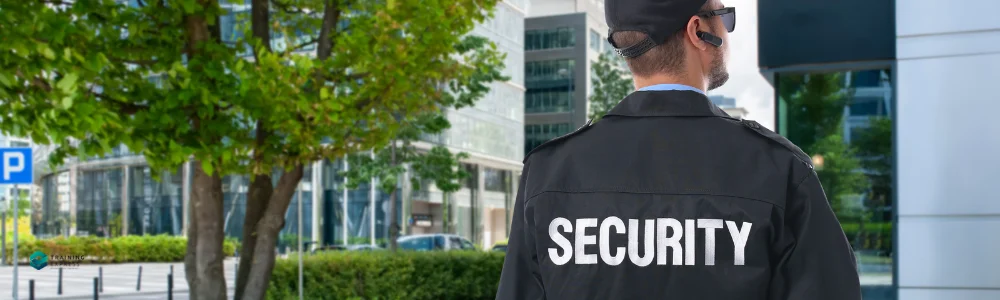
Hotel security protects guests, staff, visitors and property from theft, violence and other threats. A hotel is a public building that is open 24 hours a day, with hundreds of people coming and going. That makes good security essential, not optional.
Why a Hotel Needs a Security Department
Guests expect to feel safe in their room. One security incident can lead to injuries, legal claims and bad reviews. Security staff prevent problems through patrols and CCTV monitoring. They also respond fast when something does happen, from a lost key to a medical emergency.
How a Hotel Security Department Is Organised
Large hotels usually have a security manager who leads a team of security officers working in shifts. Officers patrol the building, watch CCTV, control access to staff-only areas and write incident reports. Smaller hotels often share these duties among night managers, porters and reception staff.
In-House Security vs Contracted Security Services
Hotels either employ their own security staff (in-house) or hire a security company (contracted). Each option has trade-offs.
| Factor | In-house Security | Contracted Security |
|---|---|---|
| Control | Hotel manages staff directly. | Managed by the security company. |
| Hotel Knowledge | Usually higher; staff know the building and regulars. | Can vary if staff rotate between sites. |
| Cost and Flexibility | Fixed staff costs. | Easier to add cover for busy periods or events. |
| SIA Licence | Not usually required by law. | Required for licensable roles. |
The Security Industry Authority (SIA) is the UK regulator for private security. According to GOV.UK, you need an SIA licence when you do licensable work, such as guarding, under a contract for services. In-house staff don’t usually need one. The exception is certain roles like door supervision at licensed premises, which need a licence either way. Many hotels still ask in-house officers to hold a licence as good practice.
Room Key Security
Room keys are one of the biggest security risks in any hotel. Good practice includes:
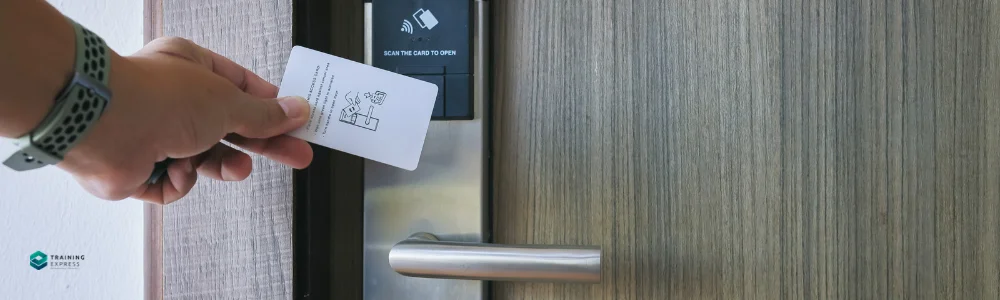
- Checking ID before issuing a replacement key card
- Never saying a guest’s room number out loud at reception
- Recoding key cards at checkout so old cards stop working
- Keeping master keys signed out and tightly controlled
- Treating mobile phone keys with the same care as card keys
Martyn's Law: What UK Hotels Must Prepare For
Martyn’s Law, formally the Terrorism (Protection of Premises) Act 2025, requires larger public venues, including hotels, to prepare for a possible terrorist attack. It became law on 3 April 2025, and enforcement is expected from spring 2027.
The duties depend on capacity:
- Standard tier (200–799 people): put simple public protection procedures in place, such as how to evacuate, lock down or move people to safety, and train staff on them
- Enhanced tier (800+ people): extra public protection measures and documented security planning
The SIA will regulate the new law. Hotels should check the Home Office guidance to confirm which tier applies to them.
Fire Safety in Hotels
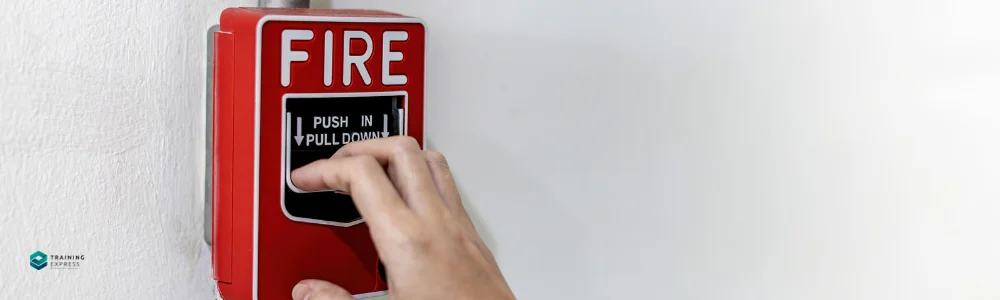
Fire safety in hotels matters more than in most workplaces, because guests are asleep, in an unfamiliar building and may not know the way out. Every member of staff has a part to play, from spotting hazards to helping guests evacuate.
UK Fire Safety Law for Hotels
In England and Wales, hotel fire safety is covered by the Regulatory Reform (Fire Safety) Order 2005. It places legal duties on the Responsible Person, usually the employer, owner or whoever controls the building.
The Responsible Person must carry out a fire risk assessment, put fire safety measures in place and keep them under review. Since 1 October 2023, changes made by the Building Safety Act 2022 mean every Responsible Person must record the full fire risk assessment in writing, whatever the size of the business.
Scotland has its own law, the Fire (Scotland) Act 2005, with separate guidance for premises with sleeping accommodation. Northern Ireland also has its own rules. Always check the law for the nation your hotel is in.
What Guests Expect from Hotel Fire Safety
Guests expect working alarms, clear exit signs, unblocked escape routes and staff who know what to do. They also expect clear instructions in their room. Meeting these expectations protects lives and the hotel’s reputation.
Creating a Hotel Fire Safety Plan
A fire safety plan, or emergency plan, explains exactly what happens if a fire breaks out. It is based on the fire risk assessment and usually covers:
- How the fire alarm warns people, including guests who are deaf or hard of hearing
- Escape routes and fire doors, which must be kept clear and closed
- The assembly point outside the building
- Who calls the fire service and who checks each area
- How the hotel accounts for guests and staff
Fire Safety Training for Hotel Staff
The Fire Safety Order requires employers to give staff suitable fire safety training. In practice, that means fire training at induction, regular refreshers and practice drills. Many hotels also train fire marshals, staff who check their area is empty and guide people out during an evacuation.
Don’t forget the night shift. With fewer staff on duty, each person often has more to do.
Guest Instruction in Fire Safety
Guests need simple, clear fire information. Most hotels place a fire action notice on the back of each bedroom door, showing the nearest exits and what to do when the alarm sounds. Use pictures and multiple languages where you can, as many guests may not read English well.
Personal Emergency Evacuation Plans (PEEPs) for Guests
A PEEP is a personal plan for someone who may need help to get out of a building in an emergency, such as a wheelchair user. GOV.UK guidance says the fire risk assessment must include an evacuation plan for everyone likely to be in the building, including disabled people. That plan must not depend on the fire service to work.
For occasional visitors such as hotel guests, hotels often use standard evacuation plans. Good practice is to ask guests at check-in whether they would need help in an evacuation, then agree a plan with them. Also tell the night team which rooms these guests are in.
Emergency Communication in Hotels
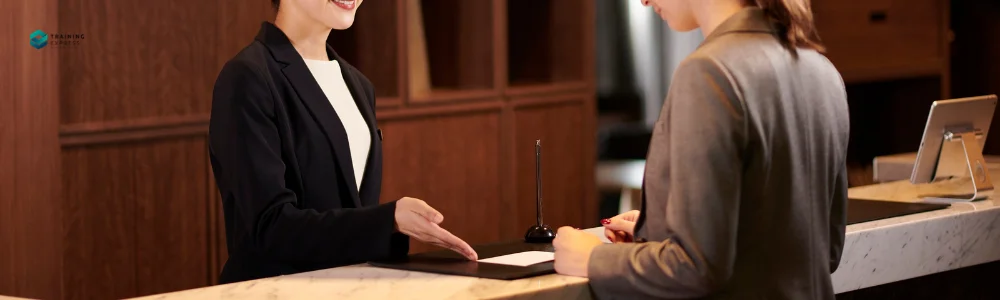
An emergency communication plan sets out who tells whom what, and how, when something goes wrong. In an emergency, confusion costs time. A clear plan makes sure guests, staff and emergency services get the right message fast.
What an Emergency Communication Plan Covers
A good plan covers fire, but also other likely emergencies. These include medical emergencies, bomb threats, power cuts, floods and severe weather. Under Martyn’s Law, many hotels will also need procedures for a possible terrorist attack
How to Develop an Emergency Communication Plan
- Identify the risks your hotel is most likely to face, using your risk assessments.
- Set a chain of command so everyone knows who is in charge during an incident, including at night.
- Build contact lists for emergency services, managers, engineers and key suppliers.
- Decide how you will reach guests, such as alarms, phone calls to rooms, PA announcements or text messages.
- Train staff so they know their role and the words to use.
- Test and review the plan through drills, and update it after any real incident.
Responsibilities of the Front Office in an Emergency
The front office is the hotel’s communication hub, so it plays a central role in any emergency. Typical duties include:
- Calling 999 and giving clear details of the incident and location
- Printing the guest list and staff register for the roll call at the assembly point
- Flagging rooms of guests who need help to evacuate
- Meeting emergency services and giving them building plans and information
- Telling guests what is happening and where to go
Housekeeping supports this by sharing which rooms are occupied and checking their floors if it is safe to do so.
Employee Safety Programmes in Hotels
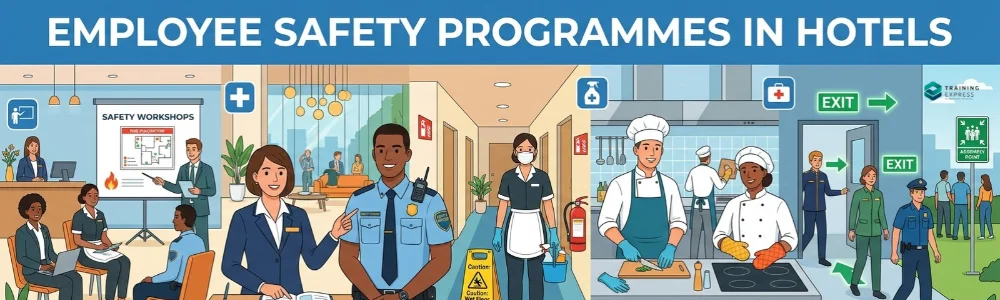
An employee safety programme is the hotel’s organised way of protecting staff from injury and ill health. Back-of-house work involves real risks: chemicals, heavy loads, wet floors, machinery and working alone at night.
Risk Assessments for Each Department
A risk assessment means spotting what could harm people, judging how likely and serious it is, and putting controls in place. Each department faces different risks:
- Housekeeping: cleaning chemicals, lifting mattresses, pushing heavy trolleys, slips and needles left in rooms
- Engineering: electrics, working at height, hot water and machinery
- Security: aggressive people, night patrols and working alone
UK Health and Safety Rules Hotel Staff Should Know
The Health and Safety at Work etc. Act 1974 is the main law. It requires employers to protect, as far as reasonably practicable, the health, safety and welfare of their staff and anyone affected by their work. Several regulations sit under it:
- COSHH (Control of Substances Hazardous to Health Regulations 2002): employers must assess and control risks from hazardous substances, such as cleaning chemicals. The HSE warns that mixing products, like bleach with acidic toilet cleaner, can give off harmful gas.
- Manual Handling Operations Regulations 1992: employers must avoid risky lifting where reasonably practicable, and assess and reduce what can’t be avoided.
- RIDDOR (Reporting of Injuries, Diseases and Dangerous Occurrences Regulations 2013): certain incidents must be reported to the HSE. For example, a work injury that keeps someone off normal duties for more than seven days must be reported within 15 days.
- Lone working: there is no separate lone-working law, but the general duties still apply. That matters for room attendants working alone in rooms and night security patrols.
Building a Safety Culture
Rules on paper only work if people follow them. Strong hotels train staff from day one, provide the right personal protective equipment (PPE), such as gloves and goggles, and keep training records. They also encourage staff to report near misses, incidents where nobody got hurt but could have. Every near miss is a free warning.
Careers in Housekeeping, Engineering and Security
Back-of-house roles are a great way into hospitality. Many people start as room attendants, maintenance assistants or security officers and move up to supervisor, then manager. Employers look for reliability, attention to detail, good communication and a solid grasp of health and safety. Training in how hotel departments work can help you stand out.
Final Words
Housekeeping keeps rooms clean and ready, engineering keeps the building working, and security keeps people safe. The best hotels make these teams work as one, sharing information through room status, maintenance reports and clear emergency plans.
If you want to build a solid foundation in hotel operations, our Hospitality Essentials Level 1 Course covers housekeeping, engineering, security and fire safety in more depth. You can study it online at your own pace.
Sources
- GOV.UK: Fire safety risk assessment: sleeping accommodation
- GOV.UK: Fire safety responsibilities under Section 156 of the Building Safety Act 2022
- GOV.UK: Fire safety risk assessment: means of escape for disabled people
- Scottish Government: Fire safety guidance for existing premises with sleeping accommodation
- GOV.UK: Find out if you need an SIA licence
- ProtectUK: Martyn’s Law statutory guidance
- Foot Anstey: Martyn’s Law tiers after final guidance
- HSE: Preventing manual handling injuries to catering staff (CAIS24)
- HSE: Types of reportable incidents (RIDDOR)
Frequently Asked Questions (FAQ)
What is housekeeping in a hotel?
Housekeeping is the hotel department that cleans and prepares guest rooms and public areas. It also manages linen, amenities and lost property, and reports maintenance problems.
What are room status codes in a hotel?
Room status codes are short labels, such as VC (Vacant Clean) and OD (Occupied Dirty). They show whether each room is occupied and ready to sell, and help housekeeping and the front desk stay in sync.
What does hotel security do?
Hotel security protects guests, staff and property. Officers patrol, monitor CCTV, control access and respond to incidents and emergencies.
Who is responsible for fire safety in a hotel?
In England and Wales, the Responsible Person under the Regulatory Reform (Fire Safety) Order 2005 holds the legal duty. This is usually the employer or owner. All staff still need to follow fire procedures and training.
Do hotel security officers need an SIA licence?
Contracted officers doing licensable work need an SIA licence. In-house officers usually don’t, except in certain roles such as door supervision at licensed premises.

Robert Lawrence
Author | Specialises in E-Learning.
Robert Lawrence is an author at Training Express, with over 5 years of experience creating practical resources and strategies to support learners and enhance their professional & personal development.
Reviewed by: Orion Stewart, Hospitality & Health and Safety Tutor at Training Express