Food Hygiene
 Health & Safety
 Safeguarding
 First Aid
 Business Skills
 Personal Development
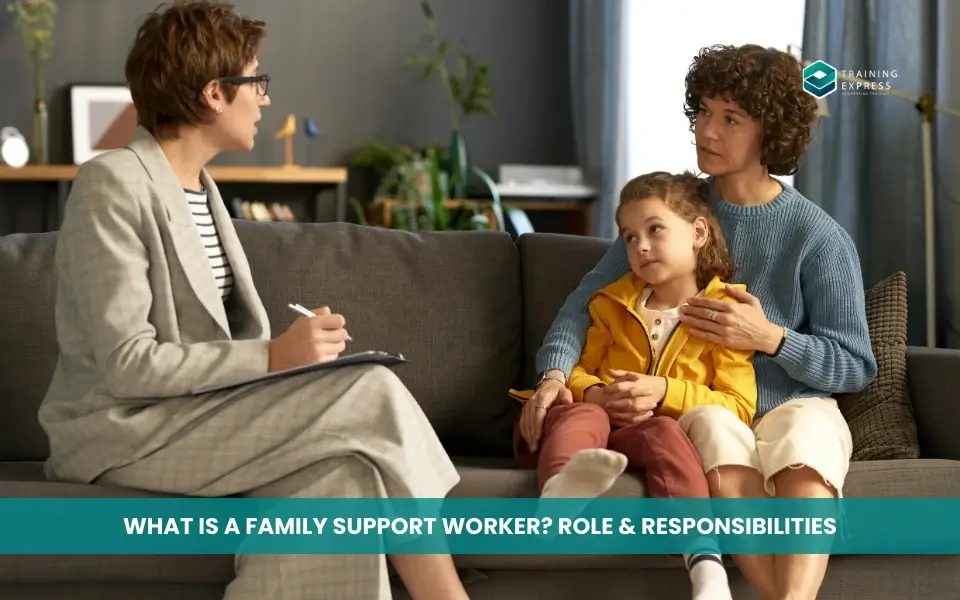

A family support worker is a professional who acts as a guiding force to help the family in coping with various challenges in social, emotional, and practical ways to enable them to live a healthy and stable life. The role played by family support workers is very crucial for healthy and stable family relationships.
The demand is increasing for support workers with a focus on families as the population continues to struggle with pressures that concern mental wellbeing, financial situations, parenting, and educational goals. Social changes, economic conditions, and the growing recognition of the importance of addressing all problems as early as possible have helped to fuel the demand.
The article focuses on discussing what a family support worker is, what they do, how one can become one, the salary level of family support workers, and finally highlights the differences between family support workers and social workers.
Table of Contents
What is a Family Support Worker?
A family support worker is a trained professional who offers guidance, help and advocacy to families in difficulty. The principal aim is to strengthen families so they gain confidence, mend relationships plus reach the right services.
The worker spends time with parents, children and carers who face problems like parenting strain, disruptive behaviour, mental health worries or lack of social contact. Instead of using enforcement or legal steps, the worker stresses early help but also prevention.
The worker meets emotional, social and practical needs – giving clear advice drawing up support plans and linking families with local resources. Through this work families feel assisted, understood as well as better able to handle daily life.
Get Any Health and Social Care Course For Just £8.88!
You won’t find this deal anywhere else!
Enrol NowUse Coupon Code:
Use this coupon at Checkout
What Does a Family Support Worker Do?
Family support workers give direct, practical help that fits the exact situation of each household.
Daily Responsibilities
- Offer clear guidance on parenting methods, daily routines and ways family members talk with one another.
- Help parents grow confident plus adopt constructive ways to run the household.
- Assist children who face challenges with schoolwork, feelings or behaviour.
- Promote regular school attendance, emotional health and helpful habits at home.
- Spend time with children or coach parents so they can respond to their child’s needs.
- Contact schools, social services, health staff but also local groups so that all parties work together.
- Track how the family is doing through home visits, assessments and written notes.

Skills Required
- Clear speech as well as attentive listening to earn trust and grasp what troubles the family.
- Capacity to present facts in plain, considerate language.
- Skill in spotting problems or settling disputes while the family faces hardship.
- Capacity to act as a neutral link between relatives or between the family and outside agencies.
- Steady patience also stamina to stay with vulnerable households under pressure.
- Orderly habits and clear note taking to handle multiple cases and keep exact records.
How to Become a Family Support Worker
To enter the profession you normally need some classroom learning, time spent in the field and regular up skilling after you are hired.
Education plus Qualifications

Many posts ask for passes at GCSE level or an NVQ at level 2 or above, especially in English and mathematics. They supply the basic literacy and numeracy needed for later care training.
Courses or diplomas in social care, combined health but also social care, childcare or child development are welcomed because they teach safeguarding rules, how children grow and the way families function.
A foundation degree or a full honours degree in social work, psychology or a similar subject is optional. Employers do not always demand it but the extra study helps if you plan to move into senior posts later.
Work Experience

Spare-time work or short placements with children’s services, charities or social care agencies give first hand practice. Time on the front line builds usable skills as well as shows you are serious about the work.
Following an experienced family support worker for a few days lets you watch routine tasks, learn where professional limits lie and see which support methods succeed in real homes.
Professional Development
You must keep updating your knowledge in safeguarding, mental health awareness, domestic abuse or first aid – many employers insist on certificates in those areas before your first shift.
Continuing professional development sessions – short courses, workshops or reflective supervision – help family support workers stay competent and ready for change.
What is the Hardest Part of Being a Support Worker?
The hardest part is carrying the emotional weight that comes from working with families who live with serious problems. When a family is in crisis, the worker absorbs some of that pain and the load only leaves when the worker has reliable ways to protect their own mind.

Heavy caseloads and tight schedules limit how much help each household receives. Filling forms travelling to visits plus speaking with multiple agencies at once create pressure that is hard to bear.
A further test is to stay kind but detached – the worker must feel concern for the family without sliding into exhaustion or stepping over the line that separates professional duty from private life.
Family Support Worker Salary
Salaries for family support workers vary according to the country in question and occasionally according to the level of experience. Salaries in the UK range from 22-32 thousand per annum. Salaries in the US range from 35 to 55 thousand dollars annually. Salaries in countries such as Australia, Ireland, and the Netherlands are comparative to the living standards of the countries in question.
Factors that affect salaries include where it is located, qualifications, years of experience, and whether it is in the public sector, charity sector, or private sector organizations. Specialist positions may be well paid also.
There are possibilities of advancement to senior positions in family support work or leadership roles in teams, which can lead to financially rewarding vocations in social work.
Do I Need a Degree to Be a Family Support Worker?
Although a degree is not essential to become a family support worker, many professionals can enter this field through vocational education, qualification in NVQs or diplomas, and experience in a relevant field.

Alternative options such as CPDs and employer-based trainings enable individuals to improve their skills while they are working. Such options can be availed by career changers in great proportions.
However, with higher qualifications, there can be better scope in career advancement, senior positions, and specialisation in family and social care services.
What is the Difference Between a Social Worker and a Family Support Worker?
While both roles support families, their responsibilities and authority differ significantly.
Difference Between Social Worker and Family Support Worker
| Aspect | Social Worker | Family Support Worker |
|---|---|---|
| Primary Role | Focuses on statutory intervention, safeguarding, and legal case management | Focuses on preventative, practical, and emotional support for families |
| Legal Authority | Has legal powers to make statutory decisions affecting families and children | Does not hold statutory or legal authority |
| Type of Support | Investigative and regulatory, often involved in child protection cases | Supportive and proactive, helping families cope and improve daily life |
| Level of Intervention | Works with high-risk or crisis situations requiring formal action | Works with early intervention and lower-risk family needs |
| Responsibilities | Conducts safeguarding assessments, court reports, and legal interventions | Provides parenting support, guidance, advocacy, and emotional assistance |
| Relationship with Families | More formal and authoritative due to legal responsibilities | Relationship-based, collaborative, and trust-focused |
| Qualifications Required | Must hold a recognised degree in social work | Can enter through vocational qualifications, diplomas, or relevant experience |
| Professional Registration | Mandatory registration with a professional regulatory body | Registration usually not required |
| Training Focus | Law, safeguarding legislation, statutory frameworks | Practical family support, communication, and early intervention |
| Career Accessibility | Higher entry requirements and longer training pathway | More accessible entry routes and shorter training pathways |
Final Words
Family Support Workers are an important figure in helping families overcome hardships and build stronger and healthiest lives. They are essential to their emotional, practical, and long-term stability.
Family support work has good entry routes, various kinds of careers available, and a high level of demand, making this a great opportunity for individuals who are interested in helping other families. It is a very satisfying profession that has a good effect on society.
Frequently Asked Questions (FAQ)
How do I become a family support worker?
Gain relevant qualifications, work experience, and complete required training in safeguarding and social care.
What is a family support worker in Australia?
A professional who supports families with parenting, wellbeing, and access to community services.
What does a support worker do?
Provides emotional, practical, and social support to individuals or families in need.
What is the meaning of family worker?
A professional who helps families strengthen relationships and manage challenges.
How much do family support workers get paid in Ireland?
Typically between €30,000 and €45,000 depending on experience and role.
What are the 5 responsibilities of a support worker?
Providing guidance, emotional support, advocacy, monitoring progress, and liaising with services.
What are the skills of a support worker?
Communication, empathy, problem-solving, organisation, and resilience.

Related Blogs