Food Hygiene
 Health & Safety
 Safeguarding
 First Aid
 Business Skills
 Personal Development
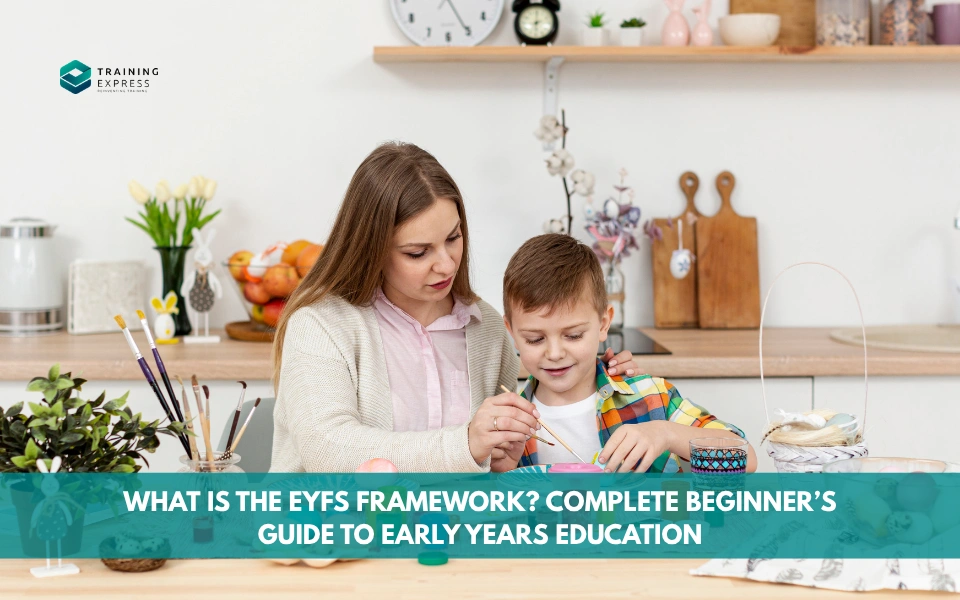

Understand the EYFS framework, its 7 learning areas, principles, and role in early childhood education in this simple guide for beginners.
Early childhood is one of the most important stages of human development. The experiences children have in their first few years strongly influence their learning abilities, emotional well-being, social skills, and overall development. Because of this, early education in the UK follows a structured system designed to support children during these crucial years.
This system is known as the Early Years Foundation Stage (EYFS) framework. It provides guidance for professionals working with children from birth to five years old, helping them create safe, stimulating, and developmentally appropriate learning environments.
If you are new to childcare, studying early childhood education, or considering a career in nurseries or preschools, understanding the EYFS framework is essential. This guide explains what the EYFS framework is, how it works, and why it plays such an important role in early years education.
Table of Contents
What Is the EYFS Framework?
The Early Years Foundation Stage (EYFS) framework is the statutory system that sets standards for learning, development, and care for children aged 0–5 years in England. It guides nurseries, preschools, childminders, and reception classes in supporting children’s early education.
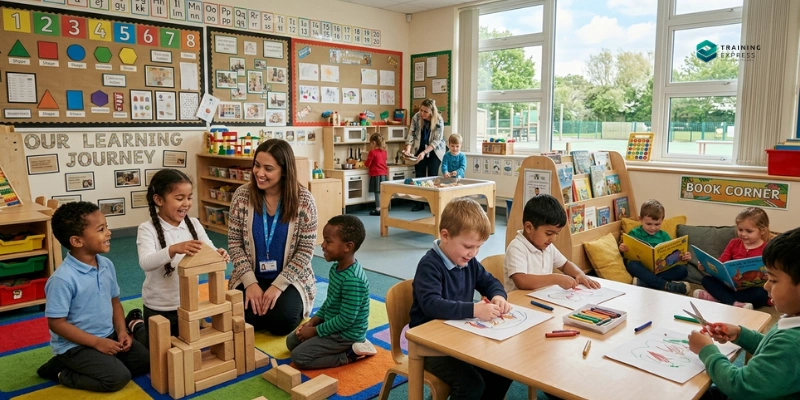
It is followed by early years providers such as:
- Nurseries
- Preschools
- Childminders
- Reception classes in primary schools
The framework ensures that all children receive consistent, high-quality early education and care regardless of where they are learning.
The EYFS framework focuses on supporting children’s:
- Learning and development
- Safety and welfare
- Emotional and social growth
- Early communication and physical skills
By providing a structured approach to early learning, the framework helps educators support children in developing the skills they need before starting formal schooling.
Get Diploma in EYFS Teaching for just £8 Today!
You won’t find this deal anywhere else!
Take The CourseUse Coupon Code:
Use this coupon at Checkout
Why Is the EYFS Framework Important in Early Childhood Education
The Early Years Foundation Stage (EYFS) framework plays a vital role in supporting children during their most formative years. From birth to the age of five, children experience rapid growth in their cognitive, emotional, and physical abilities. The EYFS approach ensures that early years education providers follow a structured approach that supports this development while maintaining high standards of care and learning.
By establishing clear expectations for early childhood education, the framework helps practitioners create environments where children feel safe, supported, and encouraged to explore the world around them.
Key reasons why the EYFS framework is important include:

Supports Brain Development in Early Years
The first five years of a child’s life are crucial for brain development. During this time, neural connections form rapidly as children interact with their environment, develop language skills, and build social relationships. The EYFS framework promotes play-based learning and meaningful interactions that help strengthen cognitive development, problem-solving skills, and early communication abilities.
Provides Consistent National Standards
The EYFS framework sets national standards for early years education in England. This ensures that children receive consistent, high-quality care and learning opportunities regardless of whether they attend a nursery, preschool, childminder setting, or reception class. Consistency helps maintain quality across early years providers and supports fair learning opportunities for all children.
Prepares Children for School
One of the main goals of the EYFS system is to help children develop the skills they need before starting primary school. Through structured learning areas and play-based activities, children begin building essential abilities such as communication, early literacy, problem-solving, and social interaction. These foundational skills help children transition smoothly into formal education.
Ensures Safeguarding and Child Welfare
Safeguarding and welfare are core elements of the EYFS framework. Early years providers must follow strict guidelines related to child protection, health and safety, staff qualifications, and supervision ratios. These requirements ensure that children are cared for in safe environments where their physical and emotional well-being is always prioritised.
Together, these elements make the EYFS framework an essential foundation for early childhood education, ensuring that young children receive the support, protection, and learning opportunities they need to thrive.
Who Must Follow the EYFS Framework?
The EYFS framework is a statutory requirement in England. This means all early years providers caring for children from birth to five years old must follow its standards for learning, development, and welfare.
The following settings and professionals are required to follow the EYFS framework:

Nurseries and preschools must follow the EYFS framework to plan activities, monitor children’s development, and provide safe and stimulating learning environments. These settings use EYFS guidance to support children’s early learning through play and structured experiences.
Nurseries and Preschools
Nurseries and preschools must follow the EYFS framework to plan activities, monitor children’s development, and provide safe and stimulating learning environments. These settings use EYFS guidance to support children’s early learning through play and structured experiences.
Childminders
Registered childminders who care for young children in home-based settings must also follow the EYFS framework. They are responsible for supporting children’s learning and ensuring their safety and well-being while in their care.
Reception Classes in Primary Schools
Reception classes form the final stage of the EYFS. Primary schools must follow the framework to help children develop key skills before transitioning into Year 1 and formal primary education.
Early Years Practitioners and Educators
Professionals working in early years settings, such as nursery staff, teaching assistants, and early childhood educators, apply the EYFS framework in their daily practice to support children’s development and learning.
The Four Principles of the EYFS Framework
The EYFS framework is built around four guiding principles that shape early childhood education practices.

1. Every Child Is Unique
The framework recognises that each child develops at their own pace. Practitioners must observe children’s progress and adapt learning experiences to meet individual needs.
Children should be supported according to their interests, abilities, and developmental stages.
2. Positive Relationships
Young leaders learn best when they feel safe and supported by trusted adults.
Positive relationships between practitioners, parents, and children help create a secure environment where children feel confident to explore and learn.
3. Enabling Environments
Learning environments should encourage exploration, creativity, and independence.
This includes:
- Play-based learning opportunities
- Safe and stimulating spaces
- Access to diverse learning materials
- Outdoor learning activities
The environment plays a major role in encouraging curiosity and discovery during early childhood.
4. Learning and Development
The EYFS framework outlines specific areas of learning that help practitioners support children’s development.
These learning areas guide educators in planning activities that promote cognitive, social, and physical growth.
The 7 Areas of Learning in the EYFS Framework
The EYFS framework identifies seven key areas of learning and development that support children’s overall growth.
These are divided into three prime areas and four specific areas.

Prime Areas of Learning
The framework recognises that each child develops at their own pace. Practitioners must observe children’s progress and adapt learning experiences to meet individual needs.
Children should be supported according to their interests, abilities, and developmental stages.
Communication and Language
This area focuses on developing children’s ability to:
- Listen and understand
- Speak clearly
- Express ideas and feelings
Practitioners encourage communication through storytelling, conversation, songs, and group activities.
Physical Development
Physical development supports children’s movement, coordination, and health.
Activities may include:
- Running and climbing
- Fine motor skills such as drawing or cutting
- Healthy lifestyle habits
Personal, Social and Emotional Development
Children learn how to:
- Build friendships
- Manage emotions
- Develop self-confidence
- Understand social behaviour
This area helps children build emotional resilience and social awareness.
Specific Areas of Learning
Specific areas strengthen knowledge and skills once children are confident in the prime areas.
Literacy
Children begin developing early reading and writing skills through:
- Phonics activities
- Story reading
- Mark-making and writing practice
Mathematics
Children explore numbers, shapes, patterns, and problem-solving through hands-on activities.
Understanding the World
Children learn about their environment, communities, and cultures through exploration and discussion.
Expressive Arts and Design
Creative activities such as painting, music, role-play, and crafting encourage imagination and creativity.
Safeguarding and Welfare in the EYFS Framework
Safeguarding is a critical part of the EYFS framework. Early years providers must ensure children are protected from harm and receive appropriate care.
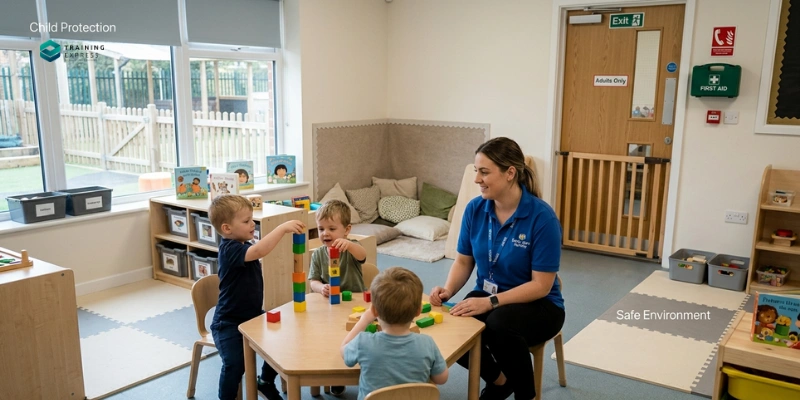
The framework includes welfare requirements related to:
- Child protection policies
- Health and safety procedures
- Staff training and qualifications
- Supervision ratios
- Safe learning environments
Practitioners must always prioritise children’s safety, well-being, and emotional security.
How Children Learn in the EYFS Framework
The EYFS framework explains how children learn, not just what they learn. It identifies three characteristics of effective learning that guide how practitioners support children’s development through everyday activities and play.
These characteristics help children become confident learners and develop problem-solving skills.

Playing and Exploring
This characteristic focuses on learning through exploration and play. Early learners learn by trying new activities, investigating objects, and discovering how things work.
Practitioners support this by:
- Providing hands-on activities
- Encouraging curiosity and exploration
- Allowing children to choose and lead some activities
Through play, children begin to understand their environment and develop confidence in learning.
Active Learning
Active learning happens when children stay focused and motivated while completing an activity. They show persistence and satisfaction when they achieve something.
Practitioners encourage active learning by:
- Offering engaging activities
- Celebrating children’s achievements
- Supporting children when they face challenges
This helps children develop confidence, independence, and resilience.
Creating and Thinking Critically
This characteristic focuses on problem-solving and thinking skills. Children begin to make connections between ideas and explore different ways to complete tasks.
Practitioners support this by:
- Encouraging children to ask questions
- Allowing them to try different solutions
- Supporting creative thinking and decision-making
These experiences help children develop critical thinking skills that support future learning and development.
Common EYFS Teaching Methods Used in Early Years Settings
Early years practitioners use a variety of teaching approaches to support children’s learning and development. The EYFS framework encourages methods that are engaging, practical, and appropriate for young children.
Common teaching methods used in early years settings include:
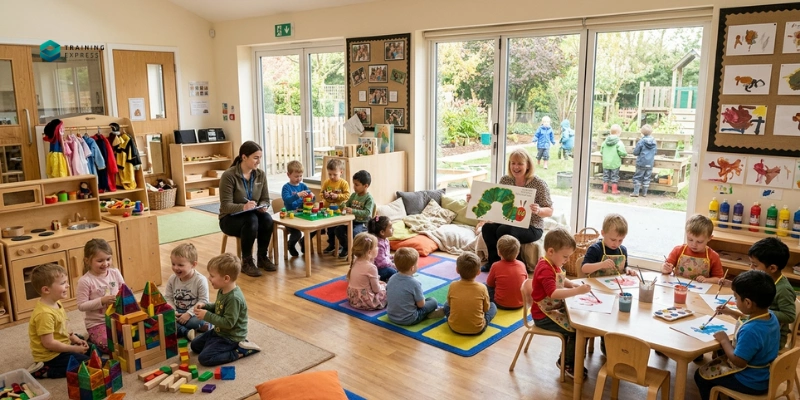
Play-Based Learning
Play is one of the most effective ways for young children to learn. Through play activities such as role-play, building, and games, children develop social skills, creativity, and problem-solving abilities.
Observation and Assessment
Practitioners regularly observe children during activities to understand their development and learning progress. These observations help educators plan suitable activities that support each child’s needs and interests.
Storytelling and Language Development
Storytelling, reading books, and singing songs help children develop communication and language skills. These activities also encourage imagination and help children learn new vocabulary.
Creative Activities
Creative activities such as drawing, painting, music, and crafts allow children to express their ideas and emotions. These activities support creativity, fine motor skills, and self-confidence.
Outdoor Learning
Outdoor play encourages physical development and exploration. Activities such as running, climbing, and nature exploration help children build coordination, confidence, and awareness of the environment.
EYFS vs Montessori: What Is the Difference?
The EYFS framework and the Montessori approach are both used in early childhood education, but they are not the same. They differ in structure, purpose, and how learning is organised.

EYFS (Early Years Foundation Stage) is a national statutory framework used in England. It sets clear standards for children’s learning, development, and welfare from birth to five years old. Nurseries, preschools, and reception classes in England must follow the EYFS framework to ensure consistent education and safeguarding standards.
Montessori, on the other hand, is a teaching philosophy and educational method developed by Dr. Maria Montessori. It focuses on child-led learning, independence, and specially designed learning materials.
While EYFS is widely used across UK nurseries and early years settings, the Montessori method is used internationally in schools that follow the Montessori educational philosophy.
Careers in Early Years Education
Understanding the EYFS framework opens the door to a wide range of career opportunities in childcare and education.
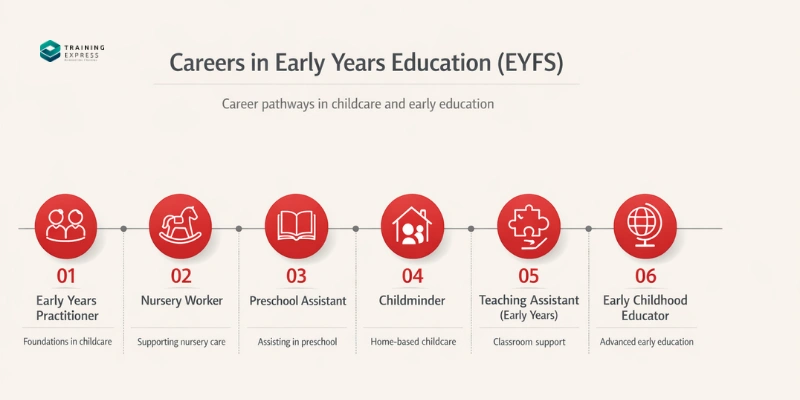
Common career paths include:
- Early Years Practitioner
- Nursery Worker
- Preschool Assistant
- Childminder
- Teaching Assistant (Early Years)
- Early Childhood Educator
Many professionals build their careers by completing recognised training programmes such as the Diploma in Early Years Foundation Stage (EYFS) Level 3, which provides structured knowledge of child development, safeguarding practices, and early learning strategies used in professional childcare settings.
Conclusion
The Early Years Foundation Stage framework provides the foundation for early childhood education in England. By setting clear standards for learning, development, and safeguarding, it ensures that children receive high-quality care and support during the most important stage of their development.
For individuals interested in working with young children, understanding the EYFS framework is an essential first step. It helps practitioners create engaging learning environments, support children’s development, and contribute positively to early education settings.
Developing professional knowledge through structured training, such as the Diploma in Early Years Foundation Stage (EYFS) Level 3, can further strengthen the skills needed to build a rewarding career in early childhood education.
Frequently Asked Questions (FAQ)
What does EYFS stand for?
EYFS stands for Early Years Foundation Stage, a framework that guides early childhood education and care for children aged 0–5 years in England.
What age group does EYFS apply to?
The EYFS framework applies to children from birth to five years old, covering nursery education and reception classes.
Why is the EYFS framework important?
The framework ensures children receive safe, structured, and developmentally appropriate early education, helping them prepare for primary school.
What are the EYFS learning areas?
The EYFS framework includes seven learning areas divided into three prime areas and four specific areas.
Do childcare professionals need EYFS training?
Yes. Anyone working in early years settings should understand the EYFS framework to support children’s development effectively.

Robert Lawrence
Author | Specialises in Health and Social Care
Robert Lawrence is an e-learning specialist and tutor at Training Express, with experience creating practical resources and strategies to support learners and enhance their professional development.