Food Hygiene
 Health & Safety
 Safeguarding
 First Aid
 Business Skills
 Personal Development
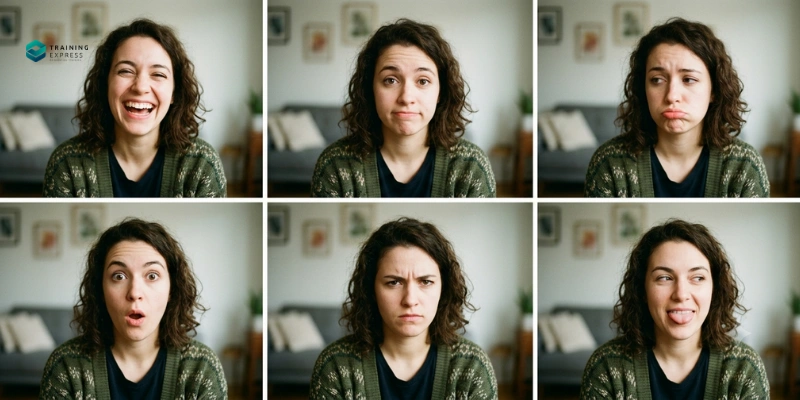

Facial expressions are one of the most powerful forms of non-verbal communication. Long before a person speaks, their face can reveal emotions such as happiness, sadness, anger, fear, or surprise. In fact, research suggests that humans use far more than the commonly recognised six basic emotions.
A study identified 27 distinct human facial expressions used to communicate different emotional states and combinations of emotions. Understanding these expressions can help improve communication, strengthen relationships, and make it easier to interpret the feelings and reactions of others.
In this guide, we’ll explore the 27 human facial expressions, what they mean, and why they play such an important role in communication.
Table of Contents
The 27 Human Facial Expressions Explained
Research suggests that humans use 27 categories of facial expressions to communicate a wide range of emotional experiences. These expressions include both basic emotions and combinations of emotions that create more complex emotional signals.
| No. | Facial Expression | Associated Emotion | Emoji |
|---|---|---|---|
| 1 | Happiness | Joy and pleasure | 😊 |
| 2 | Amusement | Enjoyment and laughter | 😂 |
| 3 | Pride | Achievement and confidence | 😌 |
| 4 | Relief | Release from stress or worry | 😮💨 |
| 5 | Contentment | Satisfaction and comfort | 🙂 |
| 6 | Surprise | Unexpected reaction | 😲 |
| 7 | Astonishment | Intense surprise | 🤯 |
| 8 | Fear | Perceived threat or danger | 😨 |
| 9 | Anxiety | Worry and apprehension | 😟 |
| 10 | Sadness | Loss or disappointment | 😢 |
| 11 | Grief | Deep sadness | 😭 |
| 12 | Anger | Frustration or hostility | 😠 |
| 13 | Contempt | Disrespect or disapproval | 😒 |
| 14 | Disgust | Rejection or aversion | 🤢 |
| 15 | Embarrassment | Self-conscious discomfort | 😳 |
| 16 | Confusion | Uncertainty or lack of understanding | 😕 |
| 17 | Interest | Curiosity and engagement | 🤔 |
| 18 | Determination | Focus and resolve | 💪 |
| 19 | Happily Surprised | Joy combined with surprise | 😄 |
| 20 | Sadly Surprised | Sadness combined with surprise | 😢 |
| 21 | Fearfully Surprised | Fear combined with surprise | 😱 |
| 22 | Angrily Surprised | Anger combined with surprise | 😡 |
| 23 | Happily Disgusted | Positive reaction mixed with disgust | 😅 |
| 24 | Sadly Angry | Sadness mixed with anger | 😞 |
| 25 | Fearfully Angry | Fear mixed with anger | 😨 |
| 26 | Sadly Fearful | Sadness mixed with fear | 😢 |
| 27 | Awed | Wonder, admiration, and surprise | 🤩 |
Happiness-Based Expressions
Expressions linked to happiness are generally characterised by smiling, relaxed facial muscles, and positive eye movements. These expressions communicate emotions such as joy, amusement, pride, relief, and contentment.
People often respond positively to happiness-based expressions because they signal friendliness, confidence, and social connection.
Sadness-Based Expressions
Sadness-related expressions may involve downturned lips, lowered eyelids, and reduced facial movement. They communicate emotions associated with disappointment, loss, grief, or emotional pain.
Recognising these expressions can help individuals respond with empathy and understanding during conversations.
Fear-Based Expressions
Fear-related expressions commonly include widened eyes, raised eyebrows, and tense facial muscles. These signals evolved as part of the body’s response to perceived threats and often indicate caution, concern, or uncertainty.
Anger-Based Expressions
Anger expressions frequently involve narrowed eyes, lowered eyebrows, and tightened lips. These facial cues can signal frustration, disagreement, or conflict and often influence how others respond during communication.
Surprise-Based Expressions
Surprise is typically shown through raised eyebrows, widened eyes, and an open mouth. Depending on the situation, surprise can be positive, negative, or neutral, which is why it often appears in combination with other emotions.
Disgust-Based Expressions
Disgust expressions usually involve wrinkling of the nose, raising the upper lip, or pulling away from something unpleasant. These reactions help communicate rejection or aversion.
Mixed Emotional Expressions
Many of the 27 facial expressions are combinations of emotions rather than single emotional states. For example, a person may feel both surprised and happy after receiving unexpected good news, or fearful and surprised when faced with an unexpected challenge.
These mixed expressions demonstrate the complexity of human emotions and explain why facial communication is often more nuanced than simple emotional labels suggest.
What Are Human Facial Expressions?
Human facial expressions are visible movements of the face that communicate emotions, reactions, and intentions. They occur when facial muscles work together to create expressions that others can interpret, often within a fraction of a second. Whether someone is smiling, frowning, raising their eyebrows, or narrowing their eyes, these movements provide valuable information about how they feel.

Facial expressions are considered one of the most important forms of non-verbal communication. In many situations, people form impressions based on facial cues before a single word is spoken. A warm smile can communicate friendliness, while a furrowed brow may suggest concern, confusion, or concentration.
Researchers have found that facial expressions are recognised across different cultures, making them a powerful way of communicating emotions. Although personal experiences and cultural norms can influence how expressions are displayed, many emotional reactions are understood universally.
Because facial expressions often occur automatically, they can reveal feelings that a person may not verbally express. This is why they play such a significant role in communication, relationships, and everyday social interactions.
Why Facial Expressions Matter in Communication
Facial expressions do much more than display emotions. They help people understand messages, build connections, and respond appropriately during conversations. In fact, facial expressions are a key component of body language and communication because they provide emotional context that words alone cannot always convey.
Expressing Emotions
One of the primary functions of facial expressions is to communicate emotions. Happiness, sadness, anger, fear, surprise, and disgust can often be recognised instantly through facial movements.
For example, a genuine smile can indicate happiness or approval, while widened eyes and raised eyebrows may signal surprise. These emotional signals help others understand how a person is feeling without requiring verbal explanation.
Supporting Verbal Communication
Facial expressions often reinforce spoken messages. Imagine someone saying they are excited about an opportunity while smiling enthusiastically. The expression supports the words and makes the message appear more genuine.
In contrast, when facial expressions and spoken words do not match, communication can become confusing. For instance, someone who says they are happy while displaying a sad expression may cause others to question the sincerity of the message.
Building Trust and Rapport
Positive facial expressions can help build trust and strengthen relationships. Smiling, maintaining appropriate eye contact, and displaying expressions that match the conversation often make people appear more approachable and trustworthy.
This is particularly important in workplaces, customer service roles, healthcare settings, and leadership positions, where effective communication helps establish strong professional relationships.
Improving Social Interactions
People constantly use facial expressions to guide social interactions. They help indicate when someone is interested, confused, amused, concerned, or ready to speak.
Being able to recognise these cues can improve listening skills and reduce misunderstandings. This is one reason why understanding facial expressions is an important part of learning about body language in communication.
The Research Behind the 27 Human Facial Expressions
For many years, researchers believed that humans primarily relied on a small number of basic facial expressions to communicate emotions. While these core emotions remain important, more recent research suggests that human emotional communication is far more complex.

A widely discussed study identified 27 distinct categories of facial expressions used to communicate different emotional states. Rather than expressing only simple emotions such as happiness or sadness, people frequently display combinations of emotions that create more nuanced facial expressions.
The researchers analysed thousands of facial movements and emotional reactions to understand how people communicate feelings through their faces. Their findings showed that emotions often overlap, resulting in expressions that blend reactions such as surprise and happiness, fear and surprise, or sadness and anger.
This research highlights an important point about communication: emotions are rarely experienced in isolation. Facial expressions often reflect a mixture of feelings, helping people convey subtle emotional messages that words alone may not fully express.
Understanding these 27 facial expressions can provide valuable insight into human behaviour and improve the ability to interpret emotions during everyday interactions.
How Facial Expressions Influence Body Language
Facial expressions are only one part of body language. In everyday communication, they work alongside posture, gestures, eye contact, and tone of voice to create a complete message. When these non-verbal signals align, communication becomes clearer and easier to understand.
For example, a genuine smile combined with open body posture and steady eye contact usually communicates friendliness and confidence. On the other hand, a smile paired with crossed arms and limited eye contact may create confusion because the different signals appear to contradict each other.
Facial Expressions and Eye Contact
Eye contact and facial expressions often work together to reveal emotions and intentions. Raised eyebrows and direct eye contact may indicate interest or curiosity, while avoiding eye contact combined with a tense expression may suggest discomfort, nervousness, or uncertainty.
Because the eyes are highly expressive, many people focus on them when trying to understand another person’s emotions.
Facial Expressions and Gestures
Hand gestures can reinforce the emotional messages communicated through facial expressions. For instance, someone expressing excitement may smile while using animated hand movements. Similarly, a person displaying frustration may show an angry facial expression while making sharp or abrupt gestures.
Observing both facial expressions and gestures can provide a more accurate understanding of how a person feels.
Facial Expressions and Posture
Body posture often strengthens the message conveyed by facial expressions. A confident facial expression paired with upright posture may communicate authority and self-assurance, while slumped shoulders combined with a sad expression may signal disappointment or low mood.
This is why facial expressions should always be interpreted as part of a wider system of body language rather than as isolated signals.
Understanding Non-Verbal Communication as a Whole
Facial expressions are among the most noticeable forms of non-verbal communication, but they rarely operate alone. Effective communication depends on how multiple non-verbal signals work together to support or clarify spoken messages.
Learning to recognise these connections can help people develop a deeper understanding of body language in communication and improve their ability to interpret emotions accurately.
Can Facial Expressions Be Misinterpreted?
Although facial expressions provide valuable clues about emotions, they are not always easy to interpret accurately. People often assume they can instantly understand how someone feels based on a facial expression alone, but this can sometimes lead to misunderstandings.

One reason facial expressions can be misinterpreted is that emotions are complex. A person may smile when they are nervous, laugh when they feel uncomfortable, or maintain a neutral expression while experiencing strong emotions internally. As a result, the same facial expression can have different meanings depending on the situation.
Cultural Differences
While many facial expressions are recognised across cultures, cultural norms can influence how emotions are displayed. In some cultures, people may openly express their feelings through facial expressions, while in others, emotional restraint is more common.
This means that a facial expression that appears obvious in one setting may be interpreted differently in another.
Personal Habits and Personality
Every individual has unique communication habits. Some people naturally appear serious even when they are relaxed, while others smile frequently regardless of how they feel.
Understanding a person’s typical behaviour can help prevent incorrect assumptions about their emotional state.
The Importance of Context
Context is one of the most important factors when interpreting facial expressions. A surprised expression at a birthday party is likely to have a different meaning than the same expression during an emergency situation.
For this reason, facial expressions should always be considered alongside the surrounding circumstances and other non-verbal cues.
How to Improve Your Ability to Read Facial Expressions
Learning to recognise facial expressions can improve communication, strengthen relationships, and help you better understand the emotions of others. While no one can interpret emotions perfectly, there are several ways to improve your ability to read facial expressions accurately.

Observe the Whole Face
Many people focus only on the mouth when interpreting emotions, but facial expressions involve multiple areas of the face. The eyes, eyebrows, forehead, and cheeks often provide important emotional signals.
For example, a genuine smile typically involves both the mouth and the muscles around the eyes, whereas a forced smile may involve only the lips.
Consider the Situation
Facial expressions should always be interpreted within their context. Understanding what is happening around a person can provide valuable clues about why they are displaying a particular expression.
The more information you have about the situation, the more accurate your interpretation is likely to be.
Look for Clusters of Signals
Facial expressions are most reliable when viewed alongside other forms of body language. Eye contact, posture, gestures, and tone of voice often work together to communicate emotions.
Instead of focusing on a single signal, try to identify patterns that support a broader understanding of the person’s feelings.
Avoid Jumping to Conclusions
It can be tempting to assume that a particular expression has a fixed meaning, but human behaviour is rarely that simple. Taking time to observe multiple cues before forming an opinion can reduce misunderstandings and improve communication.
Developing patience and awareness is often more effective than trying to analyse every facial movement individually.
Why Understanding Facial Expressions Improves Communication
Understanding facial expressions can make communication more effective because it allows people to recognise emotions that may not be expressed verbally. This increased awareness can improve conversations, strengthen relationships, and help individuals respond more appropriately in different situations.

In professional settings, recognising facial expressions can support teamwork, leadership, customer service, and conflict resolution. Being able to identify confusion, concern, interest, or engagement can help communicators adapt their approach and ensure messages are understood clearly.
Facial expressions are equally important in personal relationships. They help people recognise empathy, happiness, frustration, and other emotions that influence interactions with family members, friends, and colleagues.
By developing a better understanding of facial expressions, individuals can become more effective communicators and active listeners. Combined with other aspects of body language in communication, facial expressions provide valuable insight into how people think, feel, and react during everyday interactions.
Conclusion
Facial expressions are among the most powerful forms of non-verbal communication. While many people are familiar with basic emotions such as happiness, sadness, anger, and surprise, research suggests that humans use 27 distinct facial expressions to communicate a wide range of emotional states and emotional combinations.
These expressions help people convey feelings, intentions, and reactions without relying solely on words. From building trust and strengthening relationships to improving workplace communication and social interactions, facial expressions play a vital role in how people understand one another.
Although facial expressions can provide valuable insight into emotions, they should always be interpreted within context and alongside other body language signals. By learning to recognise and understand facial expressions more accurately, individuals can become better communicators, listeners, and observers of human behaviour.
Frequently Asked Questions (FAQ)
Are there really 27 human facial expressions?
Yes. Research has identified 27 categories of facial expressions that people use to communicate emotions. These include both basic emotions, such as happiness and sadness, and more complex combinations of emotional states.
What are the seven basic facial expressions?
The seven basic facial expressions are generally considered to be happiness, sadness, anger, fear, surprise, disgust, and contempt. These expressions are widely recognised across different cultures and form the foundation of emotional communication.
Why are facial expressions important in communication?
Facial expressions help people understand emotions, intentions, and reactions. They provide emotional context to conversations, support verbal communication, and help individuals interpret how others feel, even when no words are spoken.
Are facial expressions universal?
Many facial expressions are recognised across cultures, particularly those associated with basic emotions such as happiness, fear, sadness, and anger. However, cultural norms can influence how openly emotions are expressed and interpreted.
Can facial expressions be controlled?
People can consciously control some facial expressions, especially in social or professional situations. However, certain emotional reactions occur automatically and may briefly appear before a person becomes aware of them.
What is the difference between facial expressions and body language?
Facial expressions are one aspect of body language. While facial expressions focus on movements of the face, body language also includes posture, gestures, eye contact, movement, and other non-verbal communication signals.
How do facial expressions influence first impressions?
Facial expressions often shape first impressions before a conversation begins. A genuine smile can make a person appear approachable and trustworthy, while a tense or unfriendly expression may create a different perception.
Can facial expressions be misread?
Yes. Facial expressions do not always have a single meaning, and context is important. Personal habits, cultural differences, and situational factors can all influence how an expression is displayed and interpreted.
How can I improve my ability to read facial expressions?
You can improve by observing the whole face, considering the situation, paying attention to other body language signals, and avoiding assumptions based on a single expression. Practice and awareness can help you interpret emotions more accurately.
Why do facial expressions matter in body language?
Facial expressions are often the most noticeable part of body language. They help communicate emotions, reinforce spoken messages, and provide important clues about how a person is feeling during social and professional interactions.

Robert Lawrence
Author | Specialises in e-learning.
Robert Lawrence is an e-learning specialist and author at Training Express, with over 5 years of experience creating practical resources and strategies to support learners and enhance their professional & personal development.