Food Hygiene
 Health & Safety
 Safeguarding
 First Aid
 Business Skills
 Personal Development


Food safety compliance is a critical responsibility for UK businesses operating in catering, hospitality, healthcare, retail, and food manufacturing. Proper training helps employees handle food safely, reduce contamination risks, and comply with legal requirements set by UK authorities.
Employers increasingly need structured corporate compliance training rather than relying on individual courses. Inspections, audits, and Food Standards Agency expectations require organisations to demonstrate consistent staff competence across multiple compliance areas.
The right food safety compliance training package can reduce operational risks, improve workplace safety, simplify onboarding, and help businesses maintain audit-ready records. This guide explains what a complete package should include and how employers can choose the most suitable training solution.
Table of Contents
What Are Food Safety Compliance Training Packages and Why Do UK Employers Need Them?
Food safety compliance training packages combine multiple essential courses into one structured learning pathway, helping businesses meet legal and operational requirements more effectively than standalone training.
Key Differences Between Standalone Courses and Compliance Packages
- Standalone courses focus on a single topic or skill.
- Compliance packages cover multiple regulatory areas in one programme.
- Packages provide a more consistent learning experience across teams.
- Training records are easier to manage and monitor.
- Businesses can ensure all compliance requirements are addressed together.
Why Employers Benefit from Bundled Training
- Reduces compliance gaps caused by fragmented learning.
- Improves workforce consistency and standardised procedures.
- Supports audit readiness and inspection preparation.
- Enhances employee awareness of interconnected safety responsibilities.
- Simplifies staff onboarding and refresher training.
A well-designed compliance package creates a stronger safety culture while helping organisations maintain legal compliance and operational efficiency.
Effective food safety compliance requires more than basic food hygiene training. A complete package should cover key areas such as HACCP, allergen management, workplace safety, fire safety, and supervisory responsibilities to help businesses meet legal requirements and maintain high operational standards.
Level 2 Food Hygiene and Safety for Catering
This comprehensive food hygiene course is CPD Accredited, endorsed by QLS and the Institute of Hospitality, and designed in line with the RSPH and CIEH Level 2 syllabus. It also meets relevant UK and EU food safety requirements, making it suitable for food handlers working in catering, hospitality, healthcare, education, and retail food environments.

Key modules include:
- Introduction to Food Safety and Food Safety Law
- Bacteria and Microbiological Hazards
- Physical, Chemical and Allergenic Hazards
- Food Poisoning and Control Measures
- Food Spoilage and Food Storage
- Personal Hygiene Requirements
- HACCP and Food Premises
- Cleaning and Sanitation Procedures
- Reopening and Adapting Food Businesses During COVID-19
Ideal for:
- Food handlers
- Kitchen assistants
- Catering staff
- Restaurant employees
- Hospitality workers
Level 3 Supervising Food Safety in Catering
This advanced course is designed for supervisors, team leaders, and managers responsible for overseeing food safety practices and ensuring compliance across food operations.

Key modules include:
- Food Safety Introduction
- Supervision of Food Safety
- Food Safety Legislation
- Food Safety Management Systems
- Food Safety Management Tools
- Food Microbiology
- Contamination Hazards and Controls
- Food Poisoning and Food-Borne Illness
- Personal Hygiene Management
- Food and Temperature Control
- Temperature Monitoring and Record Keeping
- Food Spoilage and Preservation
- Food Premises Design and Construction
- Cleaning, Disinfection and Waste Management
- Pest Management
- Staff Food Safety Training
- Reopening and Adapting Food Businesses During COVID-19
Ideal for:
- Catering supervisors
- Kitchen managers
- Head chefs
- Food safety coordinators
- Hospitality managers
Level 2 HACCP Food Safety for Catering
This course provides practical knowledge of Hazard Analysis and Critical Control Point (HACCP) principles, helping businesses establish effective food safety management systems.

Key modules include:
- Principles of HACCP
- HACCP Legislation
- Food Poisoning and Contamination Hazards
- Understanding Food Safety
- Food Allergens
- Chemical and Physical Hazards
- Preparing for a HACCP System
- Preliminary HACCP Studies and Planning
- Seven Principles of HACCP – Part One
- Seven Principles of HACCP – Part Two
Benefits include:
- Better hazard identification
- Improved food safety controls
- Stronger compliance with food regulations
- Enhanced audit preparedness
Food Allergen Awareness Training
This course is CPD Accredited and Institute of Hospitality Endorsed, helping employees understand allergen risks, customer safety responsibilities, and legal obligations.

Key modules include:
- Basics of Food Allergens
- Allergen Guidance for Food Businesses
- Allergen Guidance for Consumers
- Allergic Reactions and Treatment Procedures
Key learning outcomes:
- Understanding the 14 major allergens
- Preventing cross-contamination
- Supporting accurate allergen communication
- Protecting customers with food allergies
Food Safety and Food Hygiene: Food Safety Law, Allergen Awareness and HACCP
This all-in-one compliance course combines essential food safety topics into a single training programme.

Course credentials:
- CPD Accredited
- Institute of Hospitality Endorsed
- Meets UK & EU Legal Requirements
- Designed according to the RSPH and CIEH Level 2 syllabus
Key modules include:
- Introduction to Food Safety and the Law
- Bacteria and Microbiological Hazards
- Physical, Chemical and Allergenic Hazards
- Food Poisoning and Control Measures
- Food Spoilage and Food Storage
- Personal Hygiene
- HACCP and Food Premises
- Cleaning Procedures
- Reopening and Adapting Food Businesses During COVID-19
Suitable for organisations seeking:
- Comprehensive food safety training
- HACCP awareness
- Allergen compliance
- Legal compliance knowledge
Workplace Health and Safety
This course provides essential workplace safety knowledge for employees across multiple industries, including food service and food production environments.

Key modules include:
- Health and Safety at Work and Relevant Laws
- Managing Health and Safety
- Risk Assessment and Common Risks
- Workplace Health, Safety and Welfare
- Accidents and Ill Health at Work
- Electrical, Fire and Gas Safety
- Safety in Different Work Settings
- Work Equipment Hazards and Risk Control
- Other Workplace Health and Safety Hazards
Benefits include:
- Improved safety awareness
- Reduced workplace accidents
- Better compliance with employer responsibilities
- Stronger safety culture
Level 3 Health & Safety in the Workplace Training
Designed for supervisors and managers, this advanced programme provides broader health and safety management knowledge across multiple risk areas.

Key modules include:
- Health and Safety Law
- Managing Health and Safety
- Risk Assessment
- Accident and Incident Management
- Workplace Safety Across Different Settings
- Equipment Hazards and Risk Control
- Fire Safety and Legal Responsibilities
- Fire Safety Measures and Emergency Procedures
- Electrical Safety
- Work at Height Safety
- Conflict Management
- Hazardous Substance Management
- COSHH Risk Assessment
- Manual Handling Risk Control
- Stress Management
- Workplace Health, Safety and Welfare
Ideal for:
- Managers
- Supervisors
- Health and safety coordinators
- Department heads
- Compliance officers
COSHH Training
This course focuses on the Control of Substances Hazardous to Health (COSHH) and supports businesses in managing chemical and hazardous substance risks.

Key modules include:
- COSHH Explained
- COSHH Regulations
- Health Problems Related to Hazardous Substances
- Identifying Hazardous Substances
- COSHH Risk Assessments
- Control Measures and Monitoring
- Implementing Control Measures
Key benefits:
- Improved chemical safety awareness
- Better risk assessment practices
- Reduced employee exposure risks
- Enhanced regulatory compliance
Fire Safety Training
Fire safety remains a critical component of workplace compliance, particularly in food service environments where cooking equipment and electrical appliances are used daily.

Key modules include:
- Fire Safety Basics
- Fire Safety Legislation and Risk Assessments
- Fire Safety Measures
- Evacuation Strategies and Personal Emergency Evacuation Plans (PEEPs)
Key learning outcomes:
- Understanding fire hazards
- Supporting emergency preparedness
- Improving evacuation procedures
- Meeting workplace fire safety obligations
Manual handling injuries remain one of the most common workplace incidents. This course helps employees perform lifting and carrying tasks safely.

Key modules include:
- Introduction, Legislation and Guidance
- Manual Handling Hazards and Injuries
- Manual Handling Risk Assessments
- Controlling and Reducing Risks
- Safe Lifting Techniques
Benefits include:
- Reduced injury rates
- Better lifting practices
- Improved employee wellbeing
- Compliance with workplace safety requirements
Why Integrated Food Safety and Health & Safety Training Improves Compliance Outcomes
Many workplace risks are interconnected, which is why food safety and health & safety training should not be treated separately. An integrated approach helps employees make safer decisions, reduces compliance gaps, and supports stronger performance during audits and inspections.

Reducing Workplace Incidents and Contamination Risks
Integrated training ensures employees understand how food safety and workplace safety work together.
Benefits include:
- Lower contamination risks
- Fewer workplace accidents
- Improved hazard awareness
- Better reporting practices
Employees gain a broader understanding of risks, helping create safer working environments.
Meeting UK Regulatory and Inspection Standards with Confidence
Regulators expect businesses to demonstrate comprehensive compliance procedures.
Benefits include:
- Stronger audit preparation
- Better inspection outcomes
- Improved documentation
- Demonstrable staff competence
Integrated training helps organisations maintain consistent compliance standards.
Ensuring Consistent Training Across All Employees and Departments
Consistency is essential for maintaining food safety standards.
Benefits include:
- Standardised learning outcomes
- Unified workplace procedures
- Reduced training gaps
- Better team accountability
Consistent training supports operational reliability across departments.
Supporting Onboarding and Workforce Scalability
Growing businesses need efficient training systems.
Benefits include:
- Faster employee onboarding
- Simplified compliance management
- Easier expansion across locations
- Consistent workforce standards
Structured programmes make workforce development more manageable and scalable.
How to Choose the Right Food Safety Compliance Training Package in the UK
Selecting the right compliance package requires careful evaluation of business needs, workforce roles, and regulatory requirements.
Important Factors to Consider
- Check for recognised accreditation and industry credibility.
- Ensure coverage of food hygiene, HACCP, allergens, and workplace safety.
- Look for flexible online learning options suitable for teams.
- Assess suitability for employees, supervisors, and managers.
- Consider scalability for business growth and multi-site operations.
- Verify certification and reporting capabilities.
- Review course content against current UK compliance requirements.
The best compliance package should support both immediate compliance needs and long-term workforce development objectives.
Who Should Use Food Safety Compliance Training Packages?
Any organisation responsible for handling, preparing, serving, or manufacturing food can benefit from a structured compliance training package. These programmes are particularly valuable for businesses that need consistent training across teams, multiple locations, or different levels of responsibility.

Catering and Hospitality Businesses
Restaurants, cafés, hotels, pubs, and catering services rely on trained staff to maintain food safety standards, protect customers, and comply with regulatory requirements.
Care Homes and Healthcare Providers
Healthcare environments require strict food safety controls to protect vulnerable individuals and reduce risks associated with foodborne illness.
Schools, Colleges, and Public Sector Kitchens
Educational and public sector organisations must ensure food handlers understand hygiene standards, allergen management, and safe food preparation practices.
Food Manufacturing and Processing Companies
Manufacturers require comprehensive training to support HACCP systems, quality assurance procedures, and regulatory compliance.
Retail and Supermarket Food Handlers
Retail food environments benefit from structured training that supports safe food handling, storage, display, and customer protection.
Benefits of Choosing a Structured Corporate Compliance Training Approach
A structured compliance programme helps businesses manage workforce training more efficiently while improving regulatory compliance outcomes.
Key Benefits
- Centralised workforce training system for easier management.
- Reduced compliance risk and legal exposure through standardised learning.
- Easier audit preparation and documentation with organised records.
- Improved staff confidence and competence in daily operations.
- Cost-effective long-term training strategy compared to individual courses.
- CPD-certified learning pathways that support professional development.
- Meets EU & UK standards relevant to food safety and workplace compliance.
- Improved consistency across multiple departments and locations.
Structured training packages provide organisations with a practical framework for maintaining compliance while supporting workforce performance.
Why Training Express Compliance Courses Are Built for UK Food Safety Standards
Training Express offers fully CPD-accredited training courses designed to help organisations meet UK food safety and workplace compliance requirements. The courses cover essential areas including food hygiene, HACCP, allergen awareness, health and safety, fire safety, and COSHH.
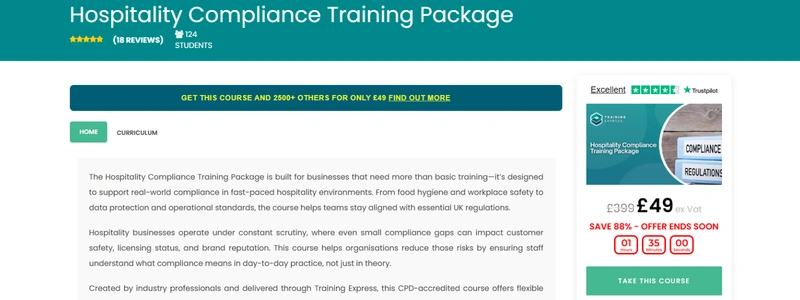
The training pathway supports both frontline employees and supervisory staff, providing flexible online learning that can be completed around operational schedules. This makes it suitable for organisations of all sizes, including growing and multi-site businesses.
Courses are developed by qualified professionals, include recognised certifications suitable for audits and inspections, and are designed around real-world workplace compliance needs while meeting both EU and UK standards.
Conclusion
Food safety compliance training packages provide UK employers with a structured approach to managing workforce competence, regulatory obligations, and operational risk. Rather than relying on isolated courses, organisations benefit from integrated learning pathways that cover food hygiene, HACCP, allergen awareness, and workplace safety requirements.
A comprehensive compliance package helps reduce legal exposure, improve audit readiness, strengthen employee confidence, and support consistent standards across all departments. It also simplifies onboarding and creates a scalable framework for growing organisations.
Businesses seeking long-term compliance success should invest in structured, CPD-accredited training solutions that combine food safety and workplace safety education into one cohesive programme, ensuring safer operations and stronger regulatory compliance outcomes.
Frequently Asked Questions (FAQ)
What is included in a food safety compliance training package?
A typical package includes food hygiene, HACCP, allergen awareness, workplace health and safety, fire safety, COSHH, and manual handling training.
Is food safety training mandatory in the UK?
Food handlers must receive appropriate training relevant to their job responsibilities under UK food safety legislation.
What is HACCP and why is it important for businesses
HACCP is a systematic food safety management approach that identifies, monitors, and controls food safety hazards.
Who needs Level 2 food hygiene training?
Food handlers involved in preparing, serving, storing, or handling food typically require Level 2 Food Hygiene training.
Why is allergen awareness training important in food businesses?
It helps employees prevent allergen-related incidents, comply with regulations, and protect customers with food allergies.
What makes a good corporate compliance training package?
A strong package should be accredited, comprehensive, role-specific, scalable, flexible, and aligned with current UK compliance requirements.

Robert Lawrence
Author | Specialises in Food Hygiene
Robert Lawrence is an e-learning specialist and tutor at Training Express, with experience creating practical resources and strategies to support learners and enhance their professional development.