Functional Skills Maths and English Level 2

4.8 (710 REVIEWS)
1528 STUDENTS
Highly RatedTrending

GET THIS COURSE AND 2500+ OTHERS FOR ONLY £49 FIND OUT MORE

Functional Skills Maths and English Level 2 is a nationally recognised qualification in the UK that helps you build essential numeracy and literacy skills needed for work, education, and everyday life. This Functional Skills Level 2 course is widely recognised by employers, colleges, and apprenticeship providers across the UK.

This course is designed for learners who want practical, real-world skills rather than purely academic theory. Whether you are managing money, writing emails, or solving workplace problems, this qualification gives you the confidence to apply maths and English in real situations.

This Functional Skills Maths and English Level 2 course is designed to give you practical, job-ready skills that are recognised across the UK. Fully online, flexible, and self-paced, it is ideal for busy adults, jobseekers, apprentices, and anyone looking to progress in their career or education while building confidence in everyday maths and English.

Key Features

Sneak Peek

Learning Outcomes

By the end of this functional skills level 2 course, learners will be able to:

Enrol Now and Get These Courses Absolutely Free! 🔥

English Spelling, Pronunciation and Grammar
120 Hours TEFL (TESOL)

Functional Skills Maths Level 2

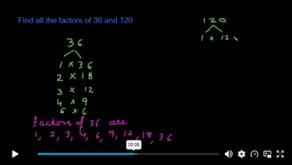
Our functional skills maths level 2 module covers everything from basic integers to complex percentage calculations. We demystify fractions, decimals, and ratios, making even the most daunting mathematical concepts accessible. Learn to apply the unitary method in practical scenarios and master the art of estimation and approximation. This module is designed to build your confidence and competence in level 2 functional skills maths.

Functional Skills English Level 2

The functional skills english level 2 module delves into the intricacies of language, from grammar and punctuation to effective writing and speaking. We explore linguistics, sentence structure, and spelling, providing a comprehensive understanding of the English language. Improve your reading and listening skills, and learn to communicate effectively in both written and spoken form. This module is perfect for those seeking to enhance their language proficiency.

Who is This Functional Skills Level 2 Maths and English Course For

This course is designed for learners who need practical maths and English skills for real-life use and career progression.

It is ideal for:

If you want a faster, more practical alternative to traditional course, this functional skills level 2 maths and english course is designed for you.

Why Take This Functional Skills Level 2 Maths and English Course

Level 2 Math and English functional skills is one of the most important qualifications for career progression in the UK. Many employers and training providers require it as a minimum entry standard.

This course helps you gain confidence in everyday maths and English, from budgeting and problem-solving to writing professional communication and understanding workplace instructions. It focuses on real-world application rather than abstract theory.

Unlike traditional classroom-based study, this course is flexible, beginner-friendly, and designed to fit around your lifestyle. You can study at your own pace, on any device, and get instant feedback through online assessments, helping you progress faster and more efficiently.

Job Opportunities & Salary Expectations (UK)

Completing this level 2 maths and english functional skills can support entry into a wide range of career paths, especially in sectors where communication and numeracy are essential.

Here are some common job roles and average UK salaries:

Entry Requirements

To enrol in this Functional Skills Maths and English Level 2 course, you should:

Accreditation

All of our courses, including this functional skills level 2 maths and english course is fully accredited, providing you with up-to-date skills and knowledge and helping you to become more competent and effective in your chosen field.

CPD Accredited

All of our courses are accredited by the CPD Certification Service as conforming to universally accepted Continuing Professional Development (CPD) guidelines.

QLS Endorsed

The Quality Licence Scheme (QLS) is a trusted endorsement framework that certifies high-quality, non-regulated training programmes across various sectors.

Association of Healthcare Trainers

The Association of Healthcare Trainers (AoHT) promotes high-quality healthcare training, supporting providers to deliver relevant, industry-aligned education and improve professional standards.

RoSPA Membership

RoSPA Membership recognises commitment to health and safety excellence, offering guidance, resources, and credibility to organisations aiming to reduce risks and improve workplace safety standards.

British Safety Council Member

A British Safety Council Member demonstrates commitment to high health, safety, and wellbeing standards, promoting best practices and safer workplaces across industries.

Certification of Level 2 Maths and English Functional Skills

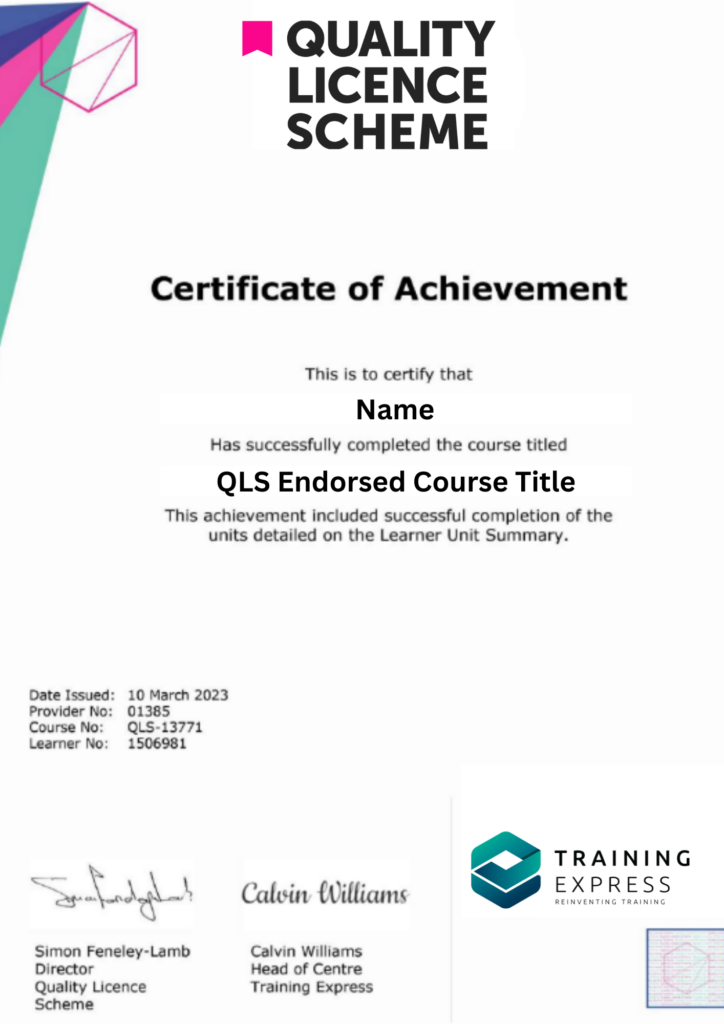
After completing this QLS course, learners can order an endorsed certificate to prove their achievement. The Quality Licence Scheme approves this certificate of achievement. You can have endorsed certificates delivered to your home via post for just £59.

Also, once you’ve completed your course, you will immediately be sent a CPD Accredited FREE Digital Certificate. You can have your FREE printed CPD Accredited Certificate delivered by post (shipping costs £5.99). 

Recommended renewal: 3 years.
Our certifications have no expiry dates, but we recommend renewing them to stay up to date with industry best practices.
Quality Licence Scheme

Course Curriculum

The detailed curriculum outline of our Functional Skills Maths and English Level 2 is as follows:

Diploma in Functional Skills Maths Level 2

  • Lecture 01: Introduction
  • Lecture 02: Multiplying any digit number by 11, 22, and 33
  • Lecture 03: Integers and ordering of integers
  • Lecture 04: Addition and Subtractions of Integers
  • Lecture 05: Operations on Integers
  • Lecture 06: Multiplication and Division of Integers
  • Lecture 07: Powers of Integers (Exponents)
  • Lecture 08: Complete knowledge about factors and multiples
  • Lecture 09: Divisibility tests for 2,3,4,5,6
  • Lecture 10: Divisibility rules 7,8,9,10,11
  • Lecture 11: Prime Factorization
  • Lecture 12: Highest Common Factor HCF
  • Lecture 13: Least Common Multiple LCM
  • Lecture 14: Relation between LCM and HCF
  • Lecture 15: Classification of Fractions
  • Lecture 16: Convert mixed to improper and improper to mixed fractions
  • Lecture 17: Equivalent Fractions
  • Lecture 18: Comparing Fractions after converting to like fractions
  • Lecture 19: Reducing a fraction to lowest term
  • Lecture 20: Addition and subtraction OF fractions
  • Lecture 21: Multiplication and division of fractions
  • Lecture 22: Word problems on fractions
  • Lecture 23: BODMAS and rules to remove brackets
  • Lecture 24: Simplify expressions using BODMAS rules
  • Lecture 25: Simplify expressions involving fractions using BODMAS
  • Lecture 26: Decimal numbers in relation to fractions
  • Lecture 27: Like and unlike Decimals
  • Lecture 28: Ordering of Decimal numbers
  • Lecture 29: Addition and subtraction of Decimal
  • Lecture 30: Multiplication of Decimal
  • Lecture 31: Division of Decimal
  • Lecture 32: Rational number
  • Lecture 33: Representation of Rational Numbers on Number line
  • Lecture 34: Determining which fraction is terminating or non terminating
  • Lecture 35: shortcut method of writing decimal expansion of fraction to decimal
  • Lecture 36: Rounding to whole number
  • Lecture 37: Rounding to required number of decimals (1 d.p. )
  • Lecture 38: rounding to significant digits
  • Lecture 39: Practice question on three methods of approximation
  • Lecture 40: Estimation
  • Lecture 41: Scientific Notation
  • Lecture 42: Operation on numbers when they are in scientific notation
  • Lecture 43: Percentage to fraction and fraction to percentage
  • Lecture 44: Percentage of a quantity and conversation to decimal
  • Lecture 45 Expressing one quantity as percentage of another quantity
  • Lecture 46: Finding increase decrease percent
  • Lecture 47: Uses of percentages-Word Problems
  • Lecture 48: Ratio- How to express as simple ratio
  • Lecture 49: How to compare Ratios
  • Lecture 50: Word problems on finding ratios
  • Lecture 51: To divide a given quantity into a given Ratio
  • Lecture 52: Proportion
  • Lecture 53: Practice problems on Proportion
  • Lecture 54: Continued proportion
  • Lecture 55: Direct Variation ( or proportion)
  • Lecture 56: Problems based on Direct proportion
  • Lecture 57: Inverse Variation ( or proportion)
  • Lecture 58: Multiple Ratios
  • Lecture 59: Basics – Profit and Loss
  • Lecture 60: More practice problems on Profit & Loss
  • Lecture 61: Selling price formula and Problems
  • Lecture 62: Cost price formula and Problems
  • Lecture 63: Higher problems on Profit and Loss
  • Lecture 64: Basics – Discount
  • Lecture 65: Practice problems on Discount
  • Lecture 66: Tax

Diploma in Functional Skills English Level 2

This module introduces the fundamentals of linguistics, helping you understand how the English language works. You will explore key concepts such as phonology, morphology, and syntax, giving you a strong foundation to improve both your understanding and use of English in real-life situations.

In this module, you will develop a clear understanding of English grammar rules and expand your vocabulary. You will learn how words function in sentences, how to use correct tenses, and how to build a richer vocabulary for both everyday communication and professional use.

This module focuses on the core building blocks of sentences. You will learn how sentences are formed, including subjects, verbs, and objects, enabling you to construct clear and meaningful sentences with confidence.

Here, you will explore different sentence structures, including simple, compound, and complex sentences. This will help you improve both your writing and reading skills, making your communication more effective and professional.

This module teaches you how to form and understand different types of questions in English. You will learn how to use question words, auxiliary verbs, and correct sentence structure to ask and respond to questions accurately.

In this module, you will master essential punctuation marks such as commas, full stops, apostrophes, and question marks. You will also learn the rules of capitalisation to ensure your writing is clear, accurate, and professional.

This module helps you improve your spelling accuracy by covering common spelling rules and patterns. You will also learn techniques to avoid frequent mistakes and build confidence in written communication.

In this module, you will focus on correct pronunciation and spoken clarity. You will learn how sounds are formed, how to pronounce words correctly, and how to improve your spoken English for everyday and workplace communication.

This module develops your reading skills by teaching you how to understand, interpret, and analyse different types of texts. You will learn techniques to improve comprehension, identify key information, and read with purpose.

Here, you will enhance your writing skills by learning how to structure different types of written content. From emails to reports, you will develop the ability to write clearly, professionally, and effectively.

This module focuses on improving your listening skills in real-life contexts. You will learn how to understand spoken English, follow instructions, and extract key information from conversations and audio materials.

In this final module, you will build confidence in speaking English. You will learn how to communicate clearly, express ideas effectively, and engage in conversations in both social and professional settings.

Functional Skills Level 2 Maths and English Course Reviews

Excellent

4.8 Average 710 Reviews

  Reviews

Catherine Fearnley
📍GB
Have just completed Functional Skills in English Level 2. The course format was excellent. The information on the power point slides covered everything you needed to know.
Sharon
📍GB
Easy to understand and review with questions on each module to help learning. Useful that you can pause through if you need to re-read sections ( or if you are interrupted during the module ).
Nc
📍GB
Using Training Express has been a fantastic way for me to enhance my learning and gain the knowledge I need to support my career path. The assignments are accessible and manageable, making it easy to stay on track and complete them.
J. Sharples
📍GB
Great course, really recommend Training Express, they have a wealth of courses for all levels and really focus on the candidates requirements, i would highly recommend this training provider.

FAQs about Functional Skills Maths and English Level 2

What Are Functional Skills?

Functional Skills are practical qualifications in maths and English that focus on real-life application rather than academic theory. They are designed to help you develop essential skills you use every day, such as budgeting, problem-solving, reading instructions, and communicating effectively in the workplace.

Is This Math and English Functional Skills Course Fully Online?

Yes, this Functional Skills Maths and English Level 2 course is 100% online. You can study anytime, anywhere, using your phone, tablet, or computer. The course is self-paced, which means you can fit learning around your work, family, or other commitments. There are no fixed schedules, making it ideal for busy adults and professionals.

Do I Get a Certificate After Completing The Course?

Yes, once you successfully complete the course and pass the assessment, you will receive a CPD-accredited certificate. This demonstrates your achievement and can be used to enhance your CV. You also have the option to request a QLS-endorsed certificate for additional recognition.

What Are The Key Features of Functional Skills Maths and English?

Functional Skills courses are designed to be practical, flexible, and career-focused. Key features include real-world learning (such as managing money or writing professional emails), flexible online study, and fast-track completion compared to GCSEs. They also focus on building confidence, improving employability, and preparing you for further education or workplace tasks.

Is Functional Skills Level 2 Easier Than GCSE?

Many learners find Functional Skills Level 2 more accessible than GCSE because it focuses on real-life scenarios rather than complex theory. Instead of memorising formulas or analysing literature in depth, you will learn how to apply maths and English in everyday situations. However, it still requires commitment and practice to pass, as it meets a recognised national standard.

What are maths and English Functional Skills?

Maths and English Functional Skills are qualifications that develop your ability to use numbers and language effectively in daily life and work. Maths covers topics like percentages, ratios, and problem-solving, while English focuses on reading, writing, speaking, and listening skills. Together, they build a strong foundation for both personal and professional success.

Can I Do Maths and English Functional Skills Online?

Yes, you can complete Functional Skills Maths and English entirely online through Training Express, a flexible learning platforms. Online courses allow you to study at your own pace, access interactive materials, and take assessments remotely. This makes it easier for learners who cannot attend traditional classroom sessions.

What is The Difference Between Functional Skills Maths and GCSE Maths?

The main difference is the approach to learning. Functional Skills maths focuses on practical, real-world applications such as budgeting, measurements, and data interpretation. GCSE maths includes more theoretical concepts and a broader academic syllabus. Functional Skills is often preferred by adult learners who want relevant, everyday skills, while GCSE is more academic and school-based.

What Are The 7 Functional Skills?

The term “functional skills” often refers to a set of essential life and workplace abilities. These typically include communication, problem-solving, teamwork, organisation, numeracy, literacy, and digital skills. Functional Skills qualifications mainly focus on numeracy (maths) and literacy (English), but they also help develop these wider transferable skills.

Is Functional Skills Better Than GCSE?

Functional Skills is not necessarily “better” than GCSE—it depends on your goals. If you prefer practical learning and need a quick, flexible route to gain a recognised qualification, Functional Skills is an excellent option. However, GCSEs may be required for certain academic pathways. For many adults and jobseekers, Functional Skills is a more accessible and relevant choice.

Course Curriculum

Diploma in Functional Skills Maths Level 2
Integers ( Directed Numbers)
Lecture 01: Introduction 00:02:00
Lecture 02: Multiplying any digit number by 11, 22, and 33 00:09:00
Lecture 03: Integers and ordering of integers 00:06:00
Lecture 04: Addition and Subtractions of Integers 00:07:00
Lecture 05: Operations on Integers 00:04:00
Lecture 06: Multiplication and Division of Integers 00:04:00
Lecture 07: Powers of Integers (Exponents) 00:04:00
Factors and Multiples
Lecture 08: Complete knowledge about factors and multiples 00:06:00
Lecture 09: Divisibility tests for 2,3,4,5,6 00:07:00
Lecture 10: Divisibility rules 7,8,9,10,11 00:06:00
Lecture 11: Prime Factorization 00:06:00
Lecture 12: Highest Common Factor HCF 00:10:00
Lecture 13: Least Common Multiple LCM 00:16:00
Lecture 14: Relation between LCM and HCF 00:04:00
Fractions
Lecture 15: Classification of Fractions 00:04:00
Lecture 16: Convert mixed to improper and improper to mixed fractions 00:03:00
Lecture 17: Equivalent Fractions 00:04:00
Lecture 18: Comparing Fractions after converting to like fractions 00:09:00
Lecture 19: Reducing a fraction to lowest term 00:04:00
Lecture 20: Addition and subtraction OF fractions 00:08:00
Lecture 21: Multiplication and division of fractions 00:11:00
Lecture 22: Word problems on fractions 00:16:00
Simplification Rule : BODMAS
Lecture 23: BODMAS and rules to remove brackets 00:03:00
Lecture 24: Simplify expressions using BODMAS rules 00:05:00
Lecture 25: Simplify expressions involving fractions using BODMAS 00:07:00
Decimal numbers
Lecture 26: Decimal numbers in relation to fractions 00:08:00
Lecture 27: Like and unlike Decimals 00:03:00
Lecture 28: Ordering of Decimal numbers 00:10:00
Lecture 29: Addition and subtraction of Decimal 00:07:00
Lecture 30: Multiplication of Decimal 00:03:00
Lecture 31: Division of Decimal 00:05:00
Rational Numbers
Lecture 32: Rational number 00:02:00
Lecture 33: Representation of Rational Numbers on Number line 00:04:00
Lecture 34: Determining which fraction is terminating or non terminating 00:05:00
Lecture 35: shortcut method of writing decimal expansion of fraction to decimal 00:08:00
Approximation
Lecture 36: Rounding to whole number 00:06:00
Lecture 37: Rounding to required number of decimals (1 d.p. ) 00:05:00
Lecture 38: rounding to significant digits 00:07:00
Lecture 39: Practice question on three methods of approximation 00:05:00
Estimation and Scientific Notation or Standard form
Lecture 40: Estimation 00:05:00
Lecture 41: Scientific Notation 00:07:00
Lecture 42: Operation on numbers when they are in scientific notation 00:06:00
Percentage
Lecture 43: Percentage to fraction and fraction to percentage 00:06:00
Lecture 44: Percentage of a quantity and conversation to decimal 00:06:00
Lecture 45 Expressing one quantity as percentage of another quantity 00:06:00
Lecture 46: Finding increase decrease percent 00:05:00
Lecture 47: Uses of percentages-Word Problems 00:09:00
Ratio and Proportion
Lecture 48: Ratio- How to express as simple ratio 00:09:00
Lecture 49: How to compare Ratios 00:04:00
Lecture 50: Word problems on finding ratios 00:07:00
Lecture 51: To divide a given quantity into a given Ratio 00:11:00
Lecture 52: Proportion 00:04:00
Lecture 53: Practice problems on Proportion 00:06:00
Lecture 54: Continued proportion 00:06:00
Unitary Method and its Applications
Lecture 55: Direct Variation ( or proportion) 00:04:00
Lecture 56: Problems based on Direct proportion 00:10:00
Lecture 57: Inverse Variation ( or proportion) 00:10:00
Lecture 58: Multiple Ratios 00:10:00
Profit , Loss, discount and Tax
Lecture 59: Basics – Profit and Loss 00:04:00
Lecture 60: More practice problems on Profit & Loss 00:06:00
Lecture 61: Selling price formula and Problems 00:04:00
Lecture 62: Cost price formula and Problems 00:03:00
Lecture 63: Higher problems on Profit and Loss 00:08:00
Lecture 64: Basics – Discount 00:05:00
Lecture 65: Practice problems on Discount 00:04:00
Lecture 66: Tax 00:06:00
Assignment
Assignment – Diploma in Functional Skills Maths at QLS Level 2 2 weeks, 1 day
Diploma in Functional Skills English Level 2
Module 01: Linguistics 00:42:00
Module 02: Teaching Grammar and Vocabulary 00:34:00
Module 03: The Basics of Sentence 00:08:00
Module 04: Structure of Sentence 00:16:00
Module 05: Question 00:11:00
Module 06: Punctuation & Capitalisation 00:21:00
Module 07: Spelling 00:24:00
Module 08: English Pronunciation 00:29:00
Module 09: Teaching Receptive Skills: Reading 00:17:00
Module 10: Teaching Productive Skills: Writing 00:15:00
Module 11: Teaching Receptive Skills: Listening 00:16:00
Module 12: Teaching Productive Skills: Speaking 00:14:00
Assignment
Assignment – Diploma in Functional Skills English at QLS Level 2 2 weeks, 1 day
Get Your QLS Endorsed Certificate
Get Your QLS Endorsed Certificate 00:00:00
Trust Pilot Review
Share Your Feedback 00:00:00
Functional Skills Maths and English Level 2
ex Vat

SAVE 84% - OFFER ENDS SOON

TAKE THIS COURSE

OR

🔥 83 units sold in last 24 hours
  • Original price was: £125.00.Current price is: £20.00. ex Vat
  • 1 year
  • Course Certificate
  • 1 month
  • Gift this course
£20 /Unit Price
Total:
£100.00
Quantity:

Buying more than one of the same courses?

  • 50% discount for orders of 10+ courses
  • 60% discount for orders of 50+ courses
  • 70% discount for orders of 100+ courses

Looking for a more personalised package?

contact us now

Instructors

1528 STUDENTS ENROLLED