Food Hygiene
 Health & Safety
 Safeguarding
 First Aid
 Business Skills
 Personal Development

Manual handling injuries are very common in many professions. Employers lose thousands of working hours and incur a heavy loss due to workplace injuries and illnesses. Do you know that you have responsibilities as an employer or employee regarding manual handling safety at your workplace? Yes, we covered manual handling safety basics in this blog and added downloadable resources.
In this article, we’ll explore basic guidelines that will help you to ensure better workplace safety for manual handling operations. You’ll also learn how drastic the impact of musculoskeletal disorders can be for our economy and personal lives.
In this blog
Definition of manual handling
Manual handling means transporting or supporting a load either by lifting, pushing, carrying, lowering or any other means of bodily force. The ‘load’, in legal terms, can be a moveable object, a person or an animal or something like a roll cage or pallet lorry that can be pushed or pulled.
If you are moving and handling any load wrongly, you’ll run the risk of long-term and short-term injuries and illnesses. Out of all workplace injuries, work-oriented musculoskeletal disorders (MSDs) account for over 33.3%. MSDs include limb and joint pain, back pain, repetitive strain injury.
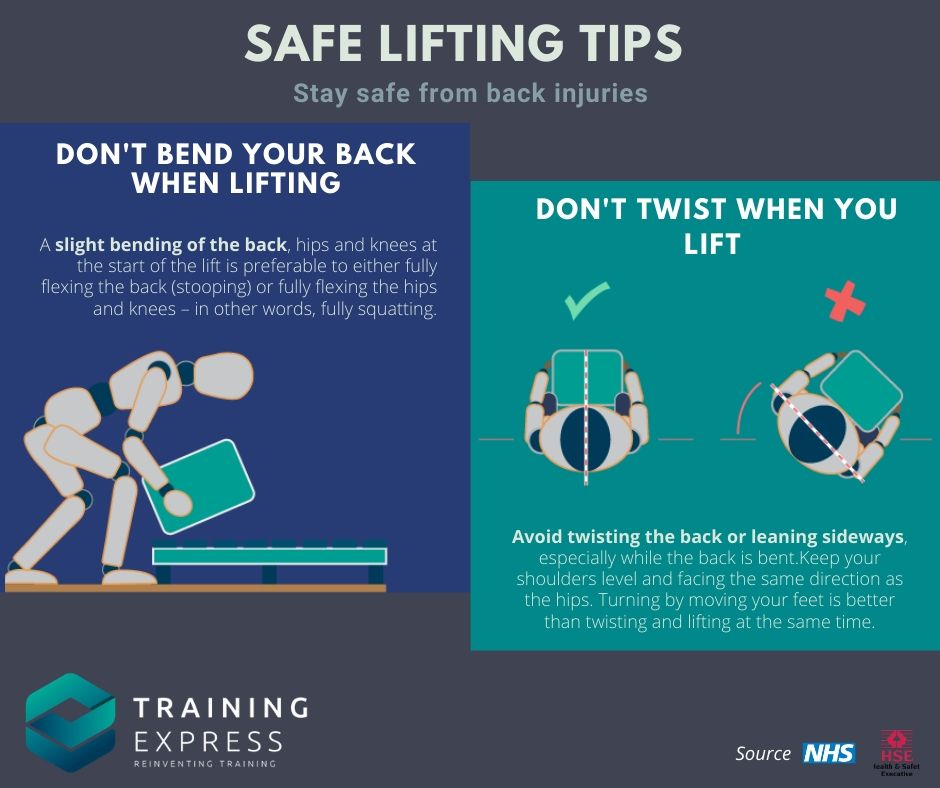
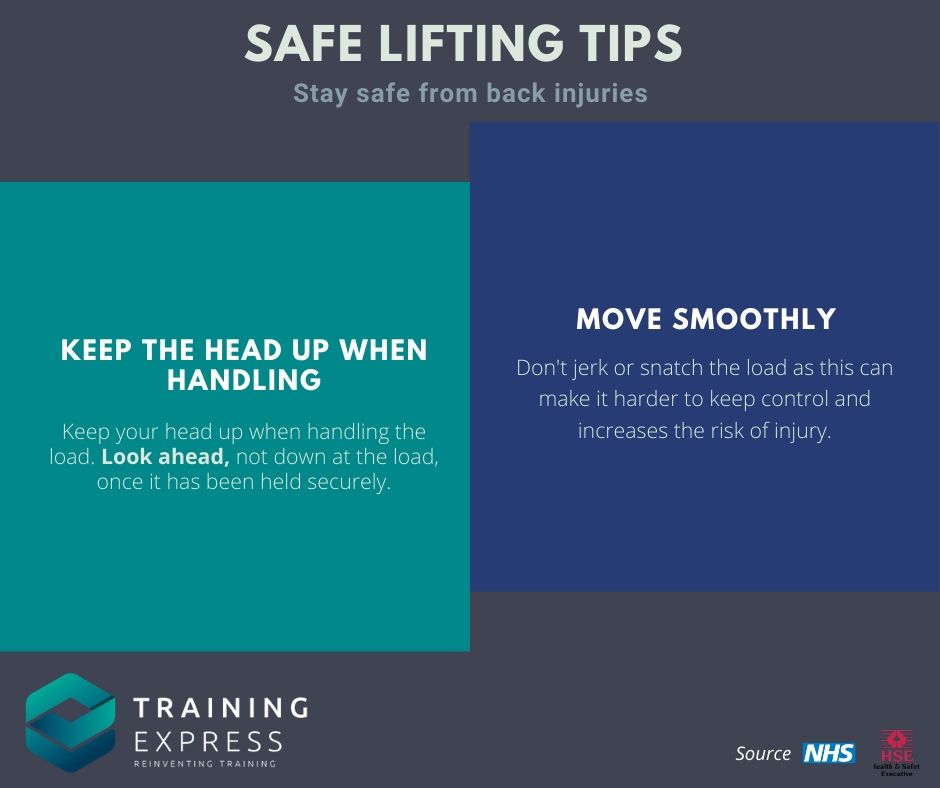
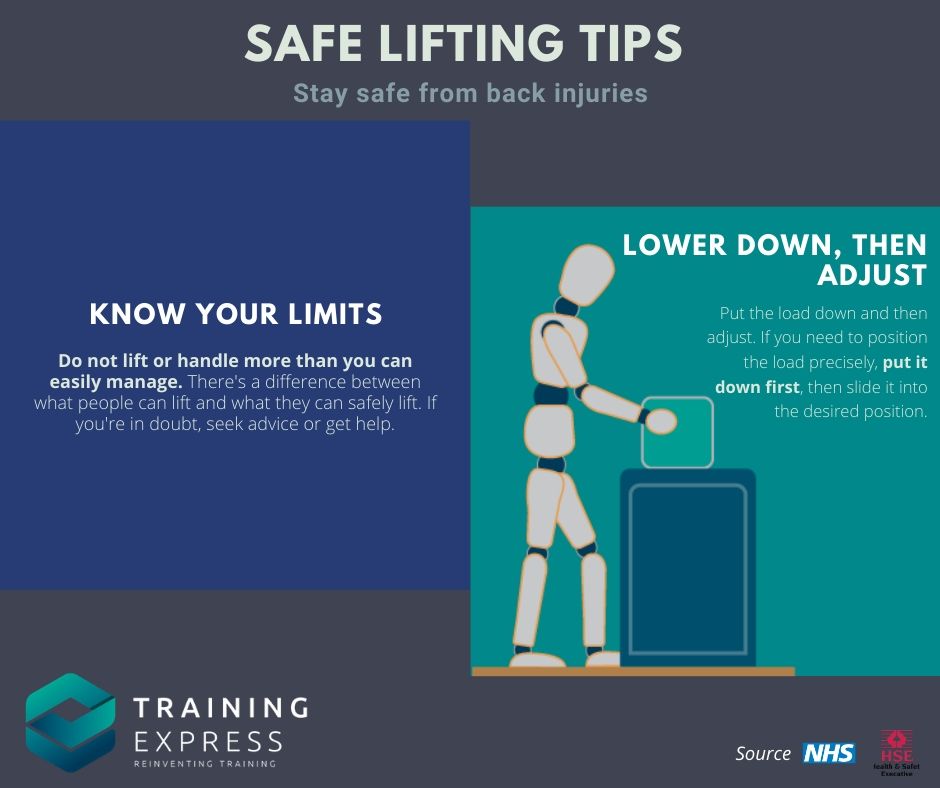
Manual handling: Injuries and illnesses
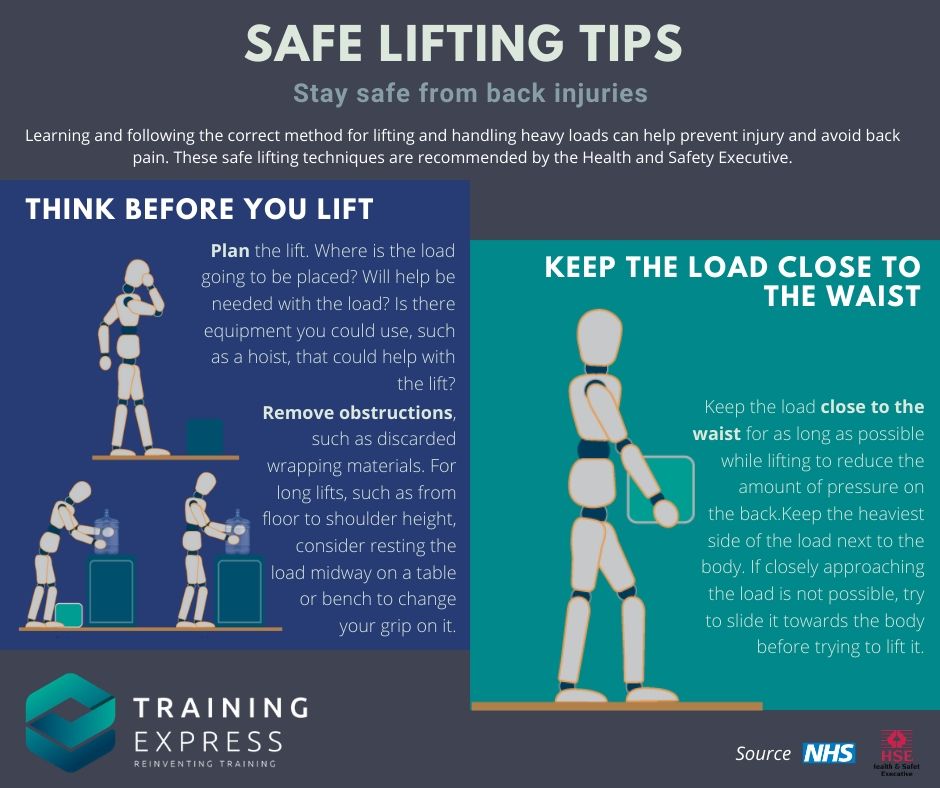
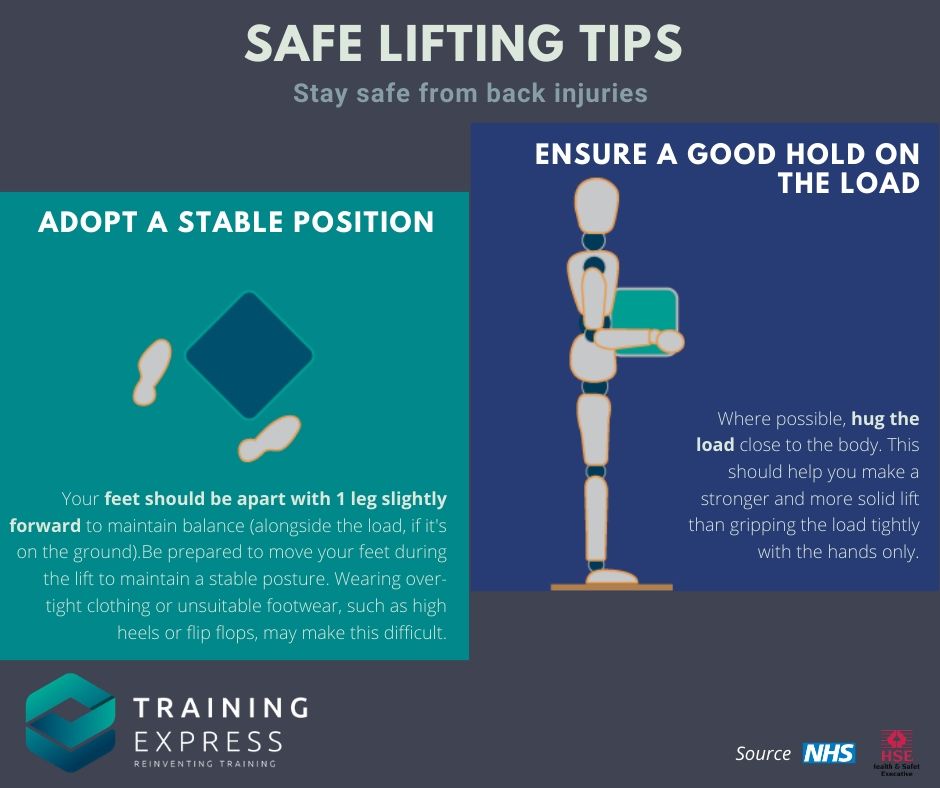
The risks of manual handling do not derive only from the lifting and pulling of heavy loads. Injuries resulting from the repetition of a particular task, the distance a load is carried, picking a load from the floor or putting in on a shelf which is above the shoulder level, twisting, stretching, bending and other risky postures may raise health and safety concerns.
Manual handling injuries are perfectly normal under any working conditions. As a result of heavy manual labour, unacceptable postures and pre-existing injuries, the risk of MSDs increases.
From the statistics provided by the Labour Force Survey (LFS), we know how detrimental MSDs are. MSD-related illnesses cause substantial financial loss and impact production to a great extent.

During 2018 – 19, the total number of musculoskeletal disorders (MSDs) were approximately 498,000 out of 1,354,000 self-reported illnesses in Great Britain. Only, stress, depression or anxiety-related problems were higher than MSDs.
From 2016-17 to 2018-18, about 7,465,000 working days were lost due to MSDs at an average of 15.2 days per self-reported case of MSD.
Manual handling safety basics: Filters for moving and handling objects
- Lifting and lowering objects;
- Carrying things for up to 10 metres;
- Pushing and pulling loads for up to 10 metres;
- Handling stuff while seated.
Lifting and lowering risk filter
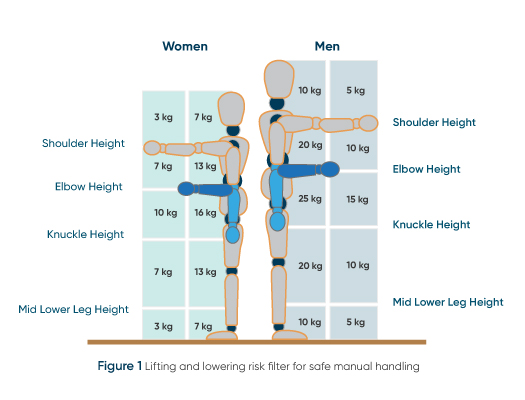
The filter for lifting and lowering stuff is applicable provided that:
- The lifter can grasp the load with both hands;
- The working conditions are acceptable for the operations;
- The handler's body position is stable.
Carrying risk filter
- You hold the load against your body;
- You carry the load no further than about 10 metres without a pause;
- The load doesn’t prevent you from walking normally;
- You view isn’t blocked by the load;
- You don’t need to hold the load lower than knuckle height or higher than elbow height. It means that the load stays mostly static on your arm muscles.
The filter values are applicable up to 20 metres if the lifter can carry a load on the shoulder without lifting it to the shoulder from a lower position. For example, the lifters who unload sacks from a lorry might not need to lift the load initially.
Pushing and pulling risk filter
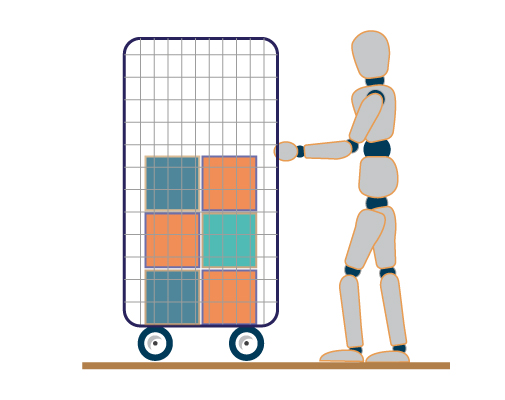
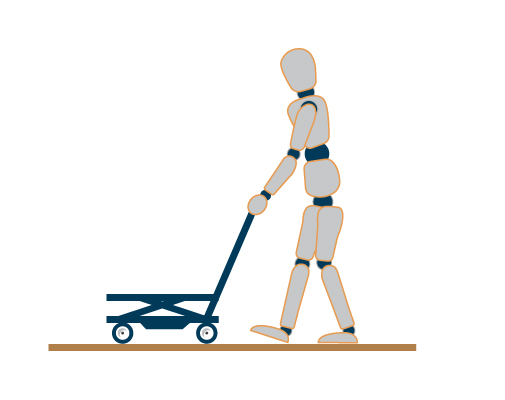
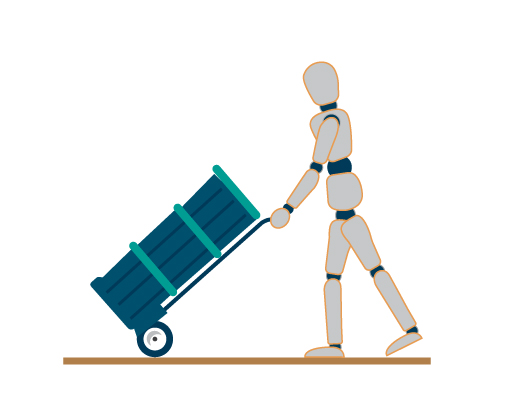
Figure 2: Sustainable push and pull postures
- You apply the force with your hands; and
- Your torso is mostly upright (and not twisted in any way); and
- Your hands are between hip and shoulder level; and
- The distance covered during the task is about 20 metres or less.
| Men | Women | |
|---|---|---|
|
Stopping or starting a load |
20 kg (about 200N) |
15 kg (about 150N) |
|
Keeping the load in motion |
10 kg (about 100N) |
7 kg (about 70N) |
Table 1: Guideline figures for safe pushing and pulling
Handling while seated risk filter
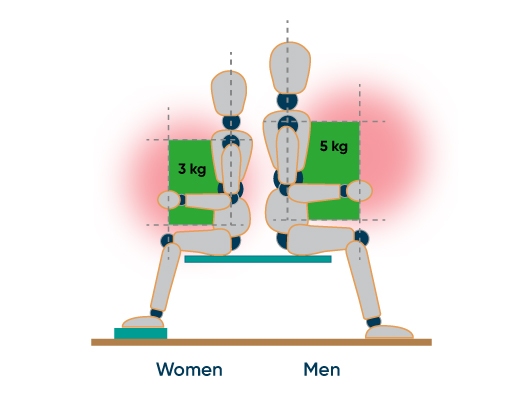
Figure 3: Handling while seated (filters)
Training for Safe Manual Handling : From safety basics to advanced
For safe manual handling, you need proper training and access to necessary information. However, the primary objective should be designing ‘reasonably practicable’ handling operations. The training for manual handling cannot possibly overcome:
- The scarcity of mechanical aids;
- Inappropriate designed tasks;
- Incompatible loads;
- A problematic working environment.
- The risk factors for different aspects of manual handling, and how you are susceptible to injuries;
- The appropriate ways of carrying out operations in a specific environment;
- Good handling techniques that prevent injuries in manual handling;
- The usage of mechanical aids for different purposes;
- Practical suggestions for specific situations so that trained people can help out the inexperienced ones;
- Suitable ways of recording and reporting symptoms and injuries.
Legal obligations: Manual handling risk assessment
As per the Management of Health and Safety at Work Regulations 1999, all employers need to carry out risk assessments to ensure the health and safety of the employees in any workplace.
In the Manual Handling Operations Regulations 1992, the requirement for a general risk assessment for safer manual handling operations is mentioned. The main areas of the risk assessment include the task, load, working environment and individual capability.
Compliance with the regulations: Your duties for manual handling safety basics
As an employer, you need to:
- Refrain from hazardous manual handling operations.
- Conduct an adequate and organized risk assessment.
- Minimize risk to the lowest reasonable level.
- Provide essential training to the employees.
- Arrange suitable equipment for safer operations.
- Dispense the relevant information on the weight and distribution of any load for safety reasons.
On the other hand, the employees have certain responsibilities too. They have to:
- Take decent care of their health and safety along with that of clients and colleagues.
- Follow the specified procedures designed for workplace safety.
- Utilize any equipment as per the training and instruction provided by the authorities.
- Report the accidents and possible hazards to the management in a systematic way.
Closing remarks
Finally, we tried to give some basic safety tips for manual handling here. Nonetheless, it’s not enough, especially in terms of detailed risk assessment, the MAC and RAPP tools. Learn more from our extensive manual handling training for compliance certification. We have relevant blogs for you too.

Ryan Bisset
Author | Specialises in Compliance
Ryan Bisset is an e-learning specialist and tutor at Training Express, with experience creating practical resources and strategies to support learners and enhance their professional development.