BLOG 9 minutes read

Comprehensive Fire Safety Guidelines for Everyone

Have you ever wondered why fire drills take place in your office or school? It’s because of the fire safety regulations in the UK. The employers need to ensure the safety of the employees in the business premises. However, fire safety precautions are mandatory for all. In this article, we tried to compile comprehensive fire safety guidelines for everyone. If …

0Aabcx March 24, 2025
Comprehensive Fire Safety Guidelines Training Express
Have you ever wondered why fire drills take place in your office or school? It’s because of the fire safety regulations in the UK. The employers need to ensure the safety of the employees in the business premises. However, fire safety precautions are mandatory for all. In this article, we tried to compile comprehensive fire safety guidelines for everyone.

If you are interested in fire safety for your workplace, you can explore our blog that covers all aspects of workplace safety. Here, you’ll get necessary information on carrying out risk assessment for fire protection.

Learn more about the classes of fire, fire safety equipment, usage of fire extinguishers, fire evacuation plans and fire safety laws in the UK. Finally, download a fire safety maintenance checklist that you can use for your organization.

In this article ...

Fire risk assessment: Why and how?

A fire risk assessment refers to a careful investigation of your premises and the people who use the premises for preventing any risk from fire. It helps you to understand the potential risks involved and the required fire safety precautions for the safety of people.

Is a fire risk assessment mandatory?

Yes, it is a legal requirement. Except for people who are living in a single private home, all of us need to carry out a fire risk assessment for a building we are responsible for.

You have to hire a competent person for the job if you don’t have the expertise. In short, it is your duty to identify the risks and hazards in your premises. Finally, you have to take action for fire safety. Learn more about your legal requirements here.

How to carry out a fire risk assessment?

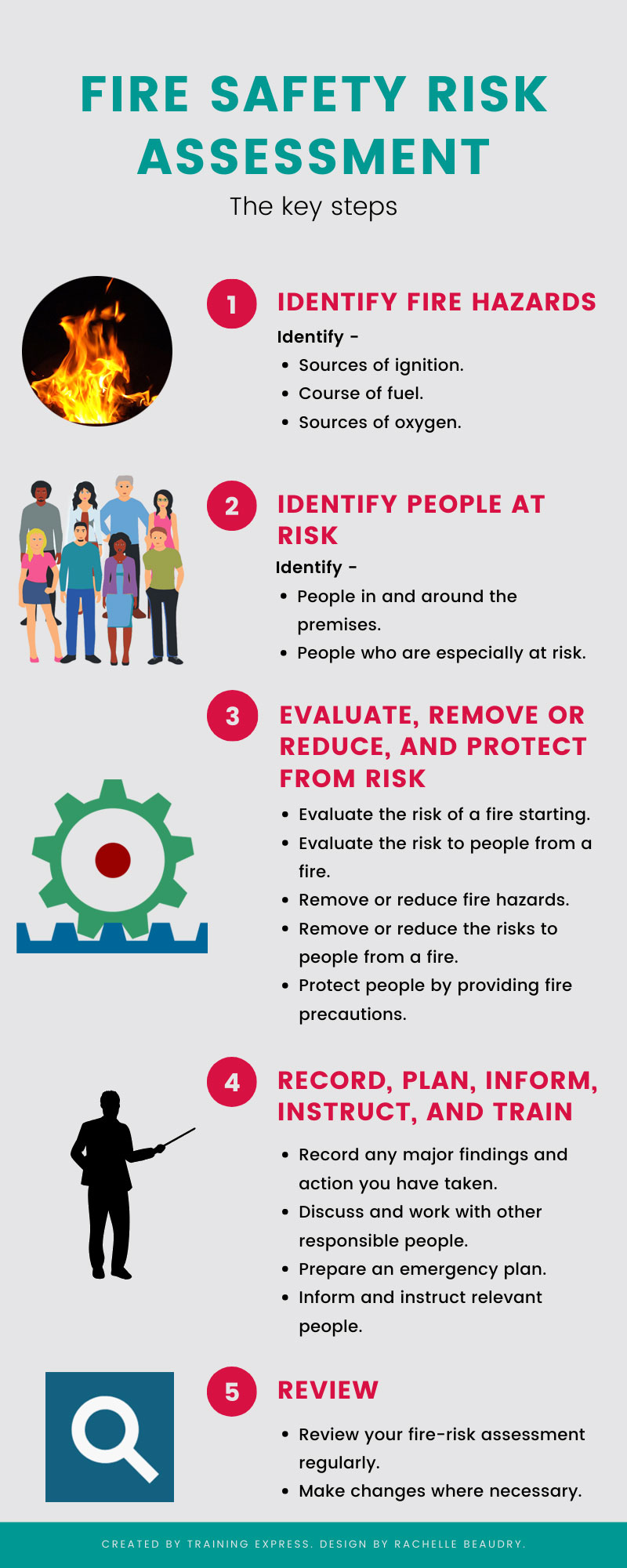
In general, we follow the five key steps for fire risk assessment:

  1. Identifying the potential fire hazards
  2. Identifying the people who are at risk
  3. Evaluating, removing or reducing the identified risks
  4. Recording the finding, preparing an emergency plan and providing required training
  5. Reviewing and updating the risk assessment regularly
Key Steps for Fire Safety Risk Assessment

Fire safety and evacuation plans

In your evacuation plan for fire safety, you need to exhibit that:

Fire fighting resources

You must arrange for all types of equipment required for fighting a fire on your premises – home or business. In addition, make sure that all resources are properly installed, tested and preserved. Finally, your staff has to receive training on the usage of safety equipment.
The maintenance and testing of fire safety equipment will include regular checking of:

Different classes of fire and fire extinguishers

For a specific class of fire, you have to use a specific type of fire extinguisher. In the United Kingdom, fires can be of any of the following types:
Type of fire in the UK Fires involve ... Flammable things include ...

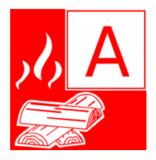
Class A Fire
Class A

Involve flammable solids.

Wood, textiles, rubber, paper, several types of plastics, some organic carbon-based compounds.


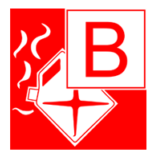
Class B

Flammable liquids or liquefiable solids.

Petrol, oil, paint, some waxes, and plastics. Not cooking fats or oils.

Class C Fire
Class C

Combustible gases.
Natural gas, hydrogen, propane, butane.

Class D Fire
Class D1

Combustible metals.
Sodium, magnesium, potassium.


Electrical2

Materials found in class A and B fires. The electrical risk provided that a conductive agent is used to control this type of fire.

Electrical appliances, wiring, other electrical objects in the zone of the fire.


Class F

Cooking fats and oils.

Cooking fats and oils at high temperatures. On fire, the temperature exceeds the temperature of other flammable liquids.

For more information on the fire classification, please visit Euro Fire Protection website.

Types of portable extinguishers

Different types of portable extinguishers are used for different types of fires. Additionally, the colour codes of the fire extinguishers are helpful to differentiate the specific type of fire extinguishers.
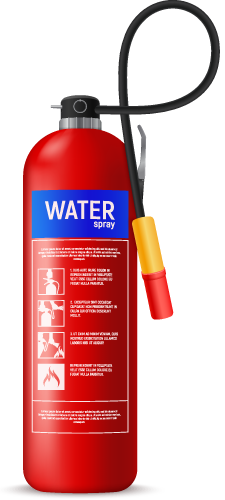
Water
For wood, paper, textile and solid material fires

Water Fire Extinguisher

Don’t use it on liquid, electrical or metal fires.

Used for class A fire.

Dangerous for liquid and electric fires.
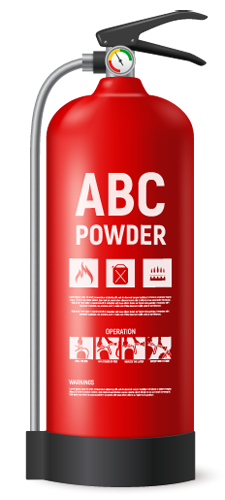
Powder
For liquid and electrical fires

Don’t use it on metal fires.

Used for class A, B, C, electrical fires.

Safe up to 1000V.
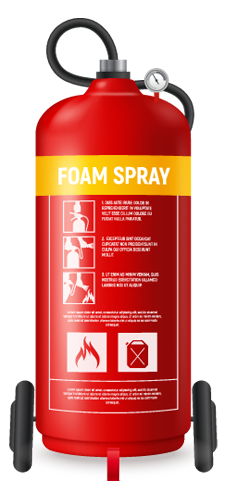
Foam
For use on liquid fires

Don’t use it on electrical or metal fires.

Used for class A and B fires.

Not suitable for domestic use.
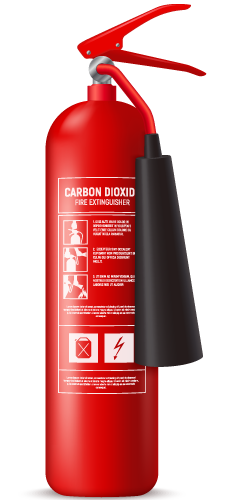
Carbon dioxide (CO2)
For liquid and electrical fires

Carbon dioxide Fire Extinguisher

Do not use it on metal fires.

Used on class B and electrical fires.

Safe on high and low voltages.
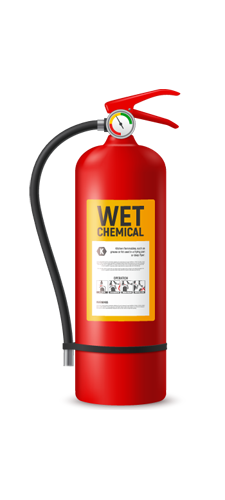
Wet chemical
For fires that involve cooking oils and fats
Wet Chemical Fire Extinguisher
Don’t use it on liquid, electrical or metal fires.

Used for class A and F fires

Used at extremely high temperatures.
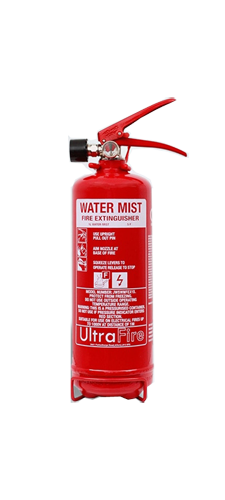
Water mist

Suitable for almost all types of fires

Water Mist Fire Extinguisher

Don’t use on metal or electrical fires*.

Used for class A, B, CF, and electrical fires.

*Applicable to live electrical equipment up to 1000V.

1 For class D fires, we can only use a specialised dry powder extinguisher with a low-velocity applicator.
2 Defined as class E fire in Australia, goes under class C in the US

It’s important to know how to use a fire extinguisher. Just make sure that you are using the right one though. If you are an employer, show your staff where the fire extinguishers are. Furthermore, the detailed instructions for using a fire extinguisher are available on its body.

Fire safety equipment

Fire detection and warning facility

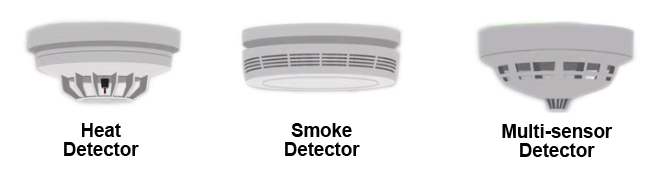
You need to have a fire detection and warning system in place for your premises. There are mainly four types of detectors based on the type of building and the activities within the establishment.
Types of heat and smoke detector
Type Where do you find them? How do they work? Advantages
Heat detector
Storage facilities, warehouses, machine rooms or places with minimum dwelling.
Goes off when there is significant heat in the premises.
Fewer false alarms as it doesn’t react to steam, dust, humidity, precipitation.
Ionisation smoke detector
Mainly in commercial kitchens and restaurants, homes.
Activates with the presence of smoke in the air.
Excellent for detecting fast burning fires.
Photoelectric smoke detector
Homes, commercial facilities. Operates when a beam of light detects smoke.
Operates when a beam of light detects smoke.
Identifies small smouldering fires quicker than ionisation smoke detectors.
Combined ionisation and photoelectric smoke detector
Homes, industrial facilities.
Raises alarm in the presence of smoke.
Best smoke detector as it works as a 2-in-1 system, and the smoke disrupts both electric current and the beam of light.

Fire drills and fire safety training

In commercial settings, every employer needs to train and inform all the employees regarding fire risks and safety procedures.

On top of providing training facilities to the staff, you must carry out at least one fire drill per year and record the findings. The records must include the fire safety and evaluation plan of your premises.

Fire safety laws

Fire safety law in the United Kingdom3 is applicable to all types of places, especially commercial establishments. The employers and property owners are responsible for the safety of the people residing and working in any industrial space.

If you occupy, operate or have control over a specific premise, you possibly have responsibilities of taking fire safety measures. The contractors and tenants also have certain duties regarding the maintenance and repairing of a certain establishment.

Employers are always responsible for the safety of the employees who work for them. As an employer, you need to comply with the fire safety laws and carry out the following tasks on a regular basis:

3 In England and Wales, the Regulatory Reform (Fire Safety) Order 2005; in Scotland, the Fire (Scotland) Act 2005 and the Fire Safety (Scotland) Regulations 2006; in Northern Ireland, the Fire and Rescue Services (Northern Ireland) Order 2006 and the Fire Safety Regulations (Northern Ireland) 2010.
As a responsible business owner or a concerned citizen, fire safety training course is a potential lifesaver in case of any potential incident. Save valuable lives and properties with a basic fire safety training. At the end of the day, you can protect invaluable human lives if you know what to do during a fire emergency.
★ Rated Excellent on Trustpilot

Trusted By Thousands Of Learners

Accredited online training helping learners across the UK build skills and grow their careers.

“Training express is a good training site, good value for money, clear instructions and easy to use ”

DH
Mrs Debra Hawkins
Verified Learner

“I have recently completed my Level 3 Diploma in Health and Social Care. I would like to provide feedback on the course and assessments. Overall, I found the course informative and relevant to my studies and future career in health and social care. ”

TK
Tarannum Khan
Verified Learner

“It was ever so helpful to inform me of my errors and consequently allowed me to know which topics and subjects i need to focus more on”

EO
Eseovwe Osaro
Verified Learner

“It Gave me the opportunity to get a sports director position with the sports medicine course I achieved and passed. ”

DJR
Dylan Jordan Rensburg
Verified Learner

“The course is good and it gives you an insight in to responsibilities for both employers and employees. I have booked two more courses with the training company. Thank You ”

HNA
Hummera Nazir Ahmed
Verified Learner

“I had a very positive experience completing my level 7 diploma in Health and Social care with Training Express.The content was well structured and informative. The learning materials were easy to follow and flexibility to study at my own pace. ”

GOJ
Gopil O J
Verified Learner

“At training express I found a customer service team ready to listen and help me through the various stages of my learning. I enjoyed the course, to such the degree that I have subsequently decided to purchase the Lifetime Learning membership. It made more sense to me to spend a tiny bit more now to grant myself access forever to certificates that I may need in future in my work life ”

A
Andrea
Verified Learner

“The training course offered great value for money and was straightforward to order, with easy access provided for remote learners. We did encounter a minor issue when trying to print a certificate, but this was resolved quickly by the support team, who were both efficient and polite throughout. ”

DP
Denise Pallett
Verified Learner

“The training course offered great value for money and was straightforward to order, with easy access provided for remote learners. We did encounter a minor issue when trying to print a certificate, but this was resolved quickly by the support team, who were both efficient and polite throughout. ”

DP
Denise Pallett
Verified Learner

“I use Training express for Myself and staff training. It is well worth the money and courses are very good and in depth. They response time is quick to any queries i have. Will definitely keep using them for future training. ”

GB
GemmA Bamber
Verified Learner

“Training Express is the best experience that have happened recently to me. Their training on how to understand and take care with safety measures, fire safety, medication administration, mental health awareness and how to manage them, Conflicts Resolution, Whistle blowing, and over 2500+ more courses that I am still enjoying and I am grateful to Yvonne Lewis for directing me. ”

MI
MERCY INUSA
Verified Learner