Food Hygiene
 Health & Safety
 Safeguarding
 First Aid
 Business Skills
 Personal Development


Every employer in Great Britain has a legal duty to keep their workplace safe, so far as is reasonably practicable. But knowing that you have a duty is not the same as knowing how to meet it. This is where the Management of Health and Safety at Work Regulations 1999 come in.
The Management of Health and Safety at Work Regulations 1999, often shortened to the Management Regulations or MHSWR, explain how employers should organise and manage health and safety in practice. They are best known for making risk assessments a legal requirement, but they also cover training, emergency procedures, competent help and the protection of vulnerable workers.
In this article, we explain what the Management of Health and Safety at Work Regulations 1999 are, who they apply to, what each of the main regulations requires, and how they link to the wider law on workplace safety.
Table of Contents
What Are the Management of Health and Safety at Work Regulations 1999?
The Management of Health and Safety at Work Regulations 1999 are a set of regulations made under the Health and Safety at Work Act 1974. While the Act sets out general duties to keep people safe, the Management Regulations explain more specifically what employers must do to manage health and safety properly.
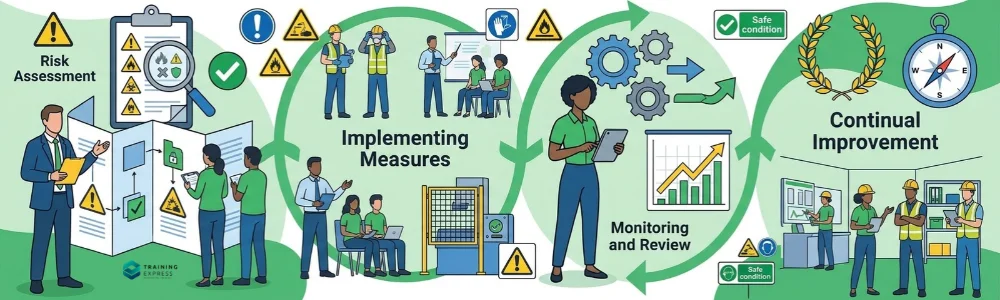
The regulations apply to almost every workplace in Great Britain, whatever its size or sector. They require employers to think about the risks in their business, decide what needs to be done to control them, and put the right people, procedures and training in place.
The following are the key points of the Management of Health and Safety at Work Regulations 1999:
- Employers must carry out a suitable and sufficient risk assessment
- Employers with five or more employees must record the significant findings of their risk assessment
- Employers must follow a set of general principles when deciding how to prevent harm
- Employers must plan, organise, control, monitor and review their health and safety measures
- Employers must appoint one or more competent people to help them meet their duties
- Employers must have procedures for serious and imminent danger, such as fire or a chemical leak
- Employees must be given clear information and adequate training
- Employers who share a workplace must cooperate and coordinate with each other
- Extra protection is required for new and expectant mothers and young workers
- Employees have their own duties, including reporting dangers
Why Were the Management Regulations Introduced?
The first version of the Management Regulations was introduced in 1992 to put a European directive on health and safety at work into UK law. This directive, known as the Framework Directive, set out general principles for managing workplace risks, including the need for risk assessment.
The 1992 regulations were later replaced by the Management of Health and Safety at Work Regulations 1999, which brought the earlier rules and several amendments together into one updated set. The 1999 regulations have been amended a number of times since, but they remain in force today.
Who Do the Management Regulations Apply To?
The Management of Health and Safety at Work Regulations 1999 apply to employers in almost every type of business, including offices, shops, factories, warehouses, schools, care homes and construction sites. Many of the duties also apply to self-employed people whose work could put others at risk.
The regulations also give duties to employees, who must follow their training and report dangers. Some duties only apply in certain situations. For example, the requirement to record risk assessments and health and safety arrangements only applies to employers with five or more employees, and the rules on new and expectant mothers only apply where women of childbearing age are employed.
A few parts of the regulations do not apply to occasional or short-term domestic work in a private household, and the regulations do not apply to the master or crew of a ship in relation to normal shipboard activities.
What Are the Key Requirements of the Management Regulations?
The Management of Health and Safety at Work Regulations 1999 contain 30 regulations, but most employers only need to understand a handful of them in detail. The main requirements are explained below.
Regulation 3: Risk Assessment
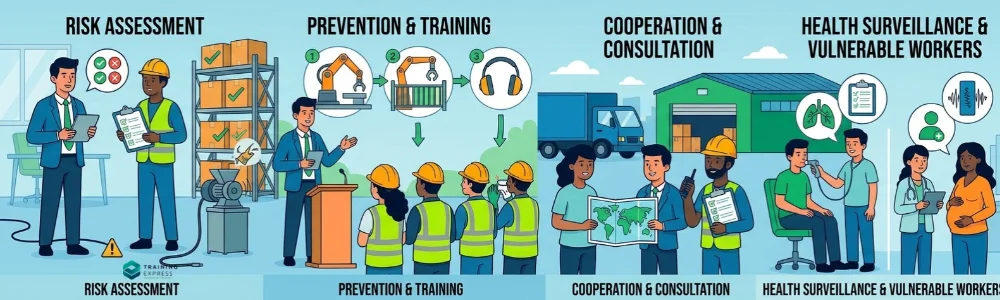
Regulation 3 is the most important part of the Management Regulations. It requires every employer to make a suitable and sufficient assessment of the risks to the health and safety of their employees, and of anyone else who could be affected by their work, such as visitors, contractors and members of the public.
The purpose of the risk assessment is to identify what needs to be done to comply with health and safety law. Employers must review their risk assessment if there is reason to believe it is no longer valid, or if there has been a significant change, such as new equipment, new processes or an accident.
Employers with five or more employees must record the significant findings of the risk assessment, along with any group of employees identified as being especially at risk. Smaller employers still need to carry out a risk assessment, but they do not have to write it down. Many choose to do so anyway, as it makes it easier to show what they have done.
Regulation 4: Principles of Prevention
When putting safety measures in place, employers must follow the general principles of prevention set out in Schedule 1 of the regulations. These principles are:
- Avoiding risks altogether where possible
- Evaluating the risks that cannot be avoided
- Tackling risks at their source
- Adapting the work to the individual, such as the design of workplaces, equipment and working methods
- Adapting to technical progress
- Replacing dangerous things with safer alternatives
- Developing a coherent overall prevention policy
- Giving collective protective measures priority over individual measures such as personal protective equipment (PPE)
- Giving appropriate instructions to employees
In practice, this means PPE should be seen as a last resort. For example, putting a guard on a noisy machine or moving it away from workers is better than simply handing out ear defenders.
Regulation 5: Health and Safety Arrangements
Regulation 5 requires employers to have arrangements to plan, organise, control, monitor and review their preventive and protective measures. In other words, health and safety should be managed in the same organised way as any other part of the business.
Employers with five or more employees must record these arrangements. In many businesses, this forms part of the written health and safety policy required under the Health and Safety at Work Act.
Regulation 6: Health Surveillance
Where the risk assessment shows that it is appropriate, employers must provide health surveillance for their employees. Health surveillance means regular checks to spot early signs of work-related ill health, such as hearing tests for people who work in noisy environments or skin checks for people who handle certain chemicals.
Regulation 7: Competent Persons
Every employer must appoint one or more competent persons to help them meet their health and safety duties. A competent person is someone with enough training, experience and knowledge to give sound advice and help the business manage its risks.
Where possible, the competent person should be someone from within the business. If no one in the business has the right knowledge, the employer can use an external adviser. Employers must make sure the competent person has enough time and resources to do the job properly.
Regulations 8 and 9: Emergency Procedures and External Services
Employers must set up procedures to follow in the event of serious and imminent danger, such as a fire, explosion or gas leak. They must also nominate enough competent people to put those procedures into practice, for example by leading an evacuation.
Employers must also make sure that any necessary contacts with external services are arranged, particularly for first aid, emergency medical care and rescue work.
Regulation 10: Information for Employees
Employers must give their employees information that is clear and easy to understand about the risks they face, the measures in place to protect them, the emergency procedures, and the people responsible for putting those procedures into action.
Regulations 11 and 12: Cooperation Between Employers
Where two or more employers share a workplace, such as businesses in the same building or contractors on the same site, they must cooperate with each other and coordinate their safety measures. They must also share information about any risks their work could create for each other’s employees.
Regulation 13: Capabilities and Training
When giving employees tasks, employers must take their capabilities into account. They must also provide adequate health and safety training when someone starts work, and again when they are exposed to new or increased risks, such as a change of role, new equipment or new technology.
Training must be repeated where appropriate and should take place during working hours. Online courses such as our Health and Safety Level 2 course are a simple way to provide this.
What Are Employees' Duties Under the Management Regulations?
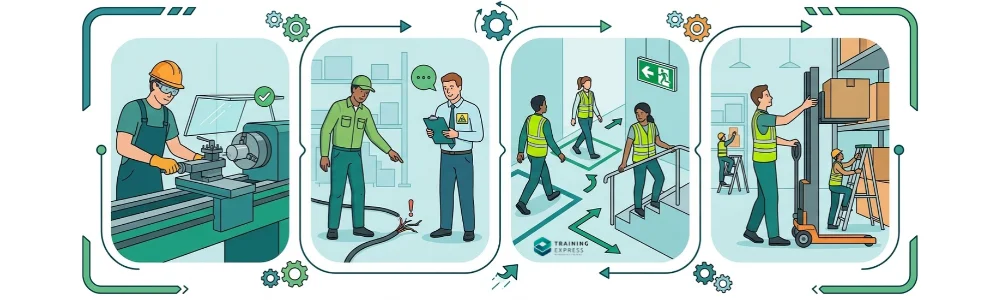
The Management of Health and Safety at Work Regulations 1999 do not only place duties on employers. Under Regulation 14, employees must:
- Use machinery, equipment, dangerous substances and safety devices in line with the training and instructions they have been given
- Tell their employer, or the person responsible for health and safety, about any work situation they believe represents a serious and immediate danger
- Report any shortcomings they notice in the employer’s health and safety arrangements
These duties sit alongside the general duty under Section 7 of the Health and Safety at Work Act for employees to take reasonable care of themselves and others.
How Do the Regulations Protect New and Expectant Mothers?
Where an employer has women of childbearing age in their workforce, and the work could pose a risk to a new or expectant mother or her baby, the risk assessment must take this into account. Risks can come from things such as heavy lifting, long periods of standing, exposure to certain chemicals or infections, and long working hours.
Once an employee has told her employer in writing that she is pregnant, has given birth in the last six months or is breastfeeding, the employer must take action if a risk cannot be avoided. This could mean changing her working conditions or hours. If that is not possible, the employer must offer suitable alternative work or, if there is none, suspend her on full pay for as long as necessary.
How Do the Regulations Protect Young Workers?
Young people under the age of 18 may be less aware of risks because of their lack of experience. Under Regulation 19, employers must protect young workers from risks that arise from their inexperience or immaturity.
Employers must not employ young people for work that is beyond their physical or mental capacity, involves harmful exposure to dangerous substances or radiation, or carries risks they are unlikely to recognise or avoid. There are exceptions where the work is needed for training and is properly supervised. Before employing a child below the minimum school leaving age, employers must also give the child’s parents information about the risks and the measures in place.
What Is a "Suitable and Sufficient" Risk Assessment?
The Management Regulations require a risk assessment to be “suitable and sufficient”, but they do not say exactly what this looks like. In general, a suitable and sufficient risk assessment should identify the significant risks, show who could be harmed, and set out sensible measures to control those risks. It should be in proportion to the level of risk, so a small office will need a much simpler assessment than a chemical plant.
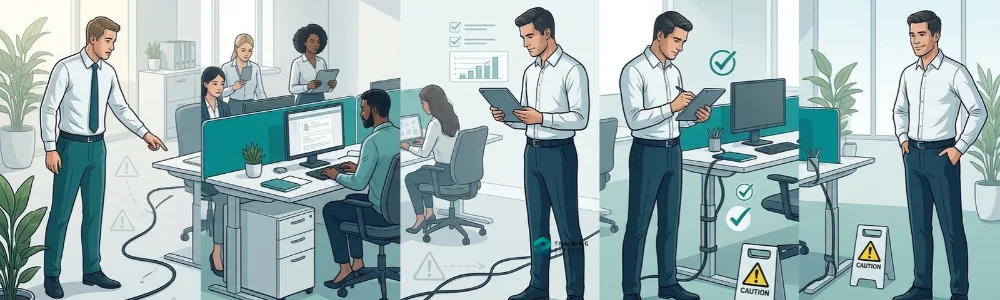
Many employers use the five steps recommended by HSE:
- Identify the hazards
- Decide who might be harmed and how
- Evaluate the risks and decide on precautions
- Record your significant findings and put them into practice
- Review your assessment and update it if necessary
Specific regulations also require their own risk assessments, such as manual handling risk assessments, COSHH assessments for hazardous substances and working at height risk assessments. Our Introduction to Risk Assessment course explains how to carry out an assessment step by step.
How Are the Management Regulations Enforced?
The Management of Health and Safety at Work Regulations 1999 are enforced by the Health and Safety Executive (HSE) and local authorities, in the same way as the Health and Safety at Work Act. Inspectors can visit workplaces, ask to see risk assessments and other records, and take action if they find that the law is being broken.
Depending on how serious the problem is, an inspector may give advice, send a letter setting out what needs to be done, or serve an improvement notice or a prohibition notice. In the most serious cases, the employer or individuals within the business can be prosecuted. Breaking the regulations is a criminal offence, and the courts can impose unlimited fines.
Where HSE finds a material breach of the law, it can also charge a Fee for Intervention to recover the cost of its time. The current rate is £188 an hour.
Summary
The Management of Health and Safety at Work Regulations 1999 turn the general duties in the Health and Safety at Work Act into practical steps. Employers must assess the risks in their business, follow the principles of prevention, appoint competent help, plan for emergencies and give employees the information and training they need. Employees, in turn, must follow their training and report dangers.
We offer a range of courses that help employers and employees meet the requirements of the Management Regulations, including our Introduction to Risk Assessment, Health and Safety Level 2 and Health and Safety Officer courses. You can also browse all of our health and safety courses to find the right training for you and your team.
Frequently Asked Questions (FAQ)
Are the Management of Health and Safety at Work Regulations 1999 still in force?
Yes. The Management of Health and Safety at Work Regulations 1999 are still in force in Great Britain. They have been amended since 1999, but the main duties, including the duty to carry out a risk assessment, remain the same.
Do I need to write down my risk assessment?
If you employ five or more people, you must record the significant findings of your risk assessment. If you employ fewer than five people, you still need to carry out a risk assessment, but you do not have to write it down. Recording it is still good practice.
How often should a risk assessment be reviewed?
The regulations do not set a fixed time period. A risk assessment must be reviewed if there is reason to think it is no longer valid or if there has been a significant change in the work. Many employers also review their assessments once a year as good practice.
What is a competent person under the Management Regulations?
A competent person is someone with enough training, knowledge and experience to help an employer meet their health and safety duties. This can be the employer, an employee or an external adviser, depending on the size of the business and the level of risk.
Article Reviewed By: Jane Smith, CMIOSH.
Article Written By: Robert Lawrence, Specialices in Health and Safety.