Food Hygiene
 Health & Safety
 Safeguarding
 First Aid
 Business Skills
 Personal Development

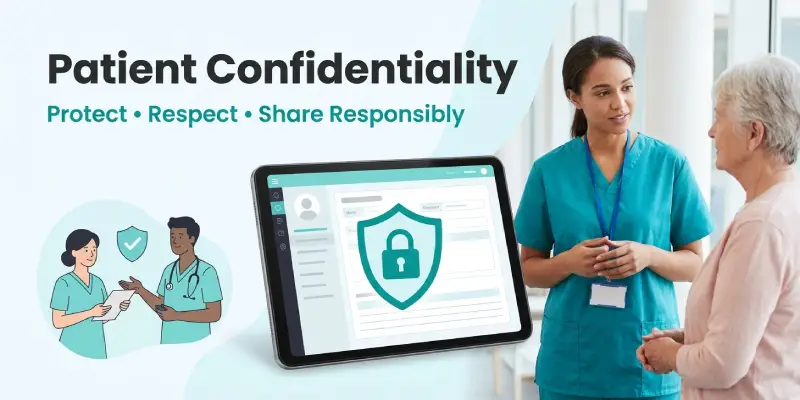

Confidentiality in health and social care means keeping personal information secure and sharing it only when there is a valid reason. It protects people’s privacy, preserves their dignity and helps build trust between individuals and care professionals.
However, confidentiality is not simply about keeping information private. Care workers must also recognise when sharing information is necessary. This article explains why confidentiality matters, the UK rules that apply and how to maintain it in everyday care settings.
Table of Contents
What Is Confidentiality in Health and Social Care?
Confidentiality in health and social care is the responsibility to protect personal and sensitive information about patients and service users. It means keeping information secure, respecting privacy and only sharing details with authorised people when there is a valid reason.
The HCPC guidance on confidentiality reinforces the importance of protecting information obtained through professional care.
What Information Is Considered Confidential?
Confidential information includes:
- Medical histories, diagnoses and treatment records.
- Personal details, including addresses and contact information.
- Care plans, assessments and support needs.
- Family circumstances and sensitive personal information.
Confidentiality applies to conversations, written records and digital information, including electronic care plans.
Why Is Confidentiality Important in Health and Social Care?
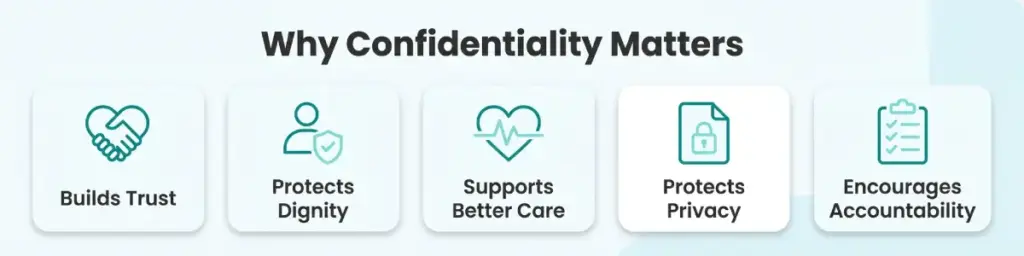
Confidentiality helps people feel respected, protected and comfortable sharing information about their needs. Without that confidence, individuals may hesitate to disclose details that could influence their care.
Its importance extends beyond keeping records private.
- Builds trust: Patients feel more comfortable discussing personal concerns.
- Protects dignity: Sensitive information remains private and is handled respectfully.
- Supports better care: Honest communication helps professionals understand individual needs.
- Reduces unnecessary disclosure: Personal information is less likely to reach unauthorised people.
- Encourages accountability: Staff understand their responsibilities when handling information.
For example, someone receiving mental health support may discuss personal difficulties more openly when they trust the professional to handle their information appropriately.
Confidentiality also supports person-centred care by respecting individual preferences and choices. Respectful non-verbal communication can further support dignity and trust during sensitive conversations.
What Are the Rules of Confidentiality in Health and Social Care?
UK care professionals must follow applicable legal duties, professional standards and workplace policies when handling confidential information.
The Five Rules of Confidentiality
The NHS confidentiality rules provide five important principles:
- Respect confidentiality: Treat patient and service-user information privately and respectfully.
- Share information for safe care: Relevant care-team members should receive information needed to provide effective support.
- Anonymise wider information: Information shared for the benefit of the community should be anonymised.
- Respect objections: Consider and respect an individual’s right to object to information sharing.
- Maintain proper systems: Organisations should establish policies and procedures that protect confidentiality.
These rules recognise that protecting information and sharing it appropriately are both important.
UK Confidentiality Laws and Caldicott Principles
Several legal frameworks support confidentiality, including the UK GDPR, Data Protection Act 2018, Human Rights Act 1998 and common law duty of confidentiality.
Understanding health and social care legislation helps professionals recognise their legal responsibilities when protecting personal information.
The National Data Guardian’s eight Caldicott Principles provide additional guidance for handling confidential health and care information in England.
They emphasise justified access, minimum necessary information and responsible sharing.
The principles are guidance rather than standalone legislation. Specific health and social care arrangements also differ across the four UK nations.
How to Maintain Confidentiality in Health and Social Care
Maintaining confidentiality requires consistent habits, especially when professionals handle sensitive information throughout the working day.
Care workers should:
- Access personal information only when necessary for their duties.
- Store paper records securely and protect electronic files.
- Discuss confidential matters privately, away from public areas.
- Use approved communication systems when sharing information.
- Check recipients before sending confidential documents.
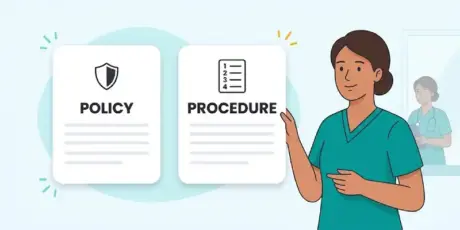
- Understand policy vs procedure, follow workplace confidentiality requirements and report concerns promptly.
- Avoid sharing identifiable service-user information through personal social media

The Communication & Information Handling in Care course explores confidentiality, secure record keeping and responsible information sharing in care settings.
Confidentiality in Digital Care Records
Digital systems make records easier to access, but they also require careful handling.
For example, leaving a care-record system open on an unattended computer could expose private information.
In England, CQC Regulation 17 requires regulated providers to maintain secure, accurate and complete care records.
Examples of Confidentiality in Health and Social Care
| Care Situation | Appropriate Practice | Inappropriate Practice |
|---|---|---|
| Care Home Handover | Sharing relevant resident information privately with authorised colleagues | Discussing a resident in a public corridor |
| Hospital Records | Accessing records required for assigned duties | Viewing a patient's records out of curiosity |
| Family Enquiry | Checking whether information can appropriately be disclosed | Automatically sharing medical details with a relative |
| Home Care | Keeping service-user documents secure during visits | Leaving confidential paperwork unattended |
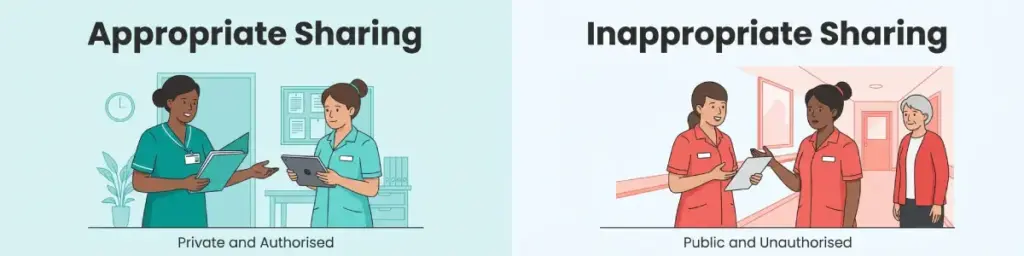
For example, a care worker may need to inform a colleague about a resident’s changing medication needs. Sharing those details with the appropriate professional supports safe care.
However, discussing the same resident’s medical information with an unrelated visitor would be inappropriate.
The key distinction is whether sharing serves a legitimate purpose and follows appropriate safeguards.
When Can Confidential Information Be Shared?
Confidentiality does not mean information must always remain undisclosed. Certain situations require appropriate sharing to protect individuals or provide effective care.
Consent, Safeguarding and Necessary Information Sharing
Information may be shared with appropriate permission, for direct care where justified, or when another lawful reason applies.
For instance, safeguarding concerns may justify disclosure to an appropriate authority when necessary to protect someone from harm.
Health information receives additional protection under UK GDPR. The ICO guidance on special category data explains that organisations need an appropriate lawful basis and an additional condition for processing this information.
Consent under confidentiality rules and consent as a UK GDPR lawful basis are not necessarily the same. The Safeguarding Vulnerable Adults course helps learners understand safeguarding responsibilities, reporting concerns and appropriate information sharing.
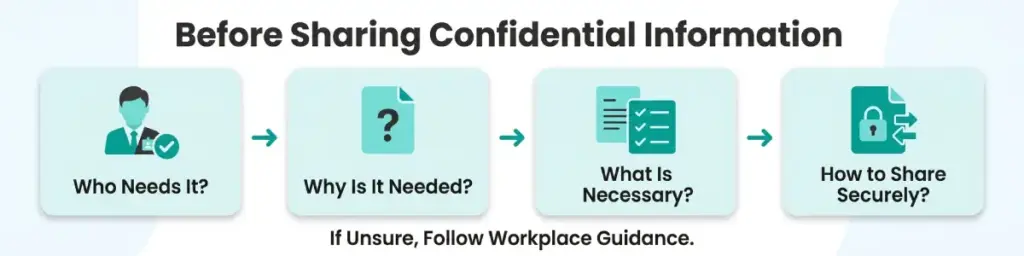
What Should You Check Before Sharing Information?
Before disclosing confidential details, consider:
- Who needs the information?
- Why is it necessary to share?
- What is the minimum information required?
- How can it be shared securely?
When uncertain, staff should seek advice through their organisation’s established procedures.
What Happens If Confidentiality Is Breached?
A confidentiality breach occurs when private information is disclosed or accessed without proper authority or justification.
For example, accidentally emailing a patient’s care plan to an unintended recipient could constitute a breach.
Such incidents may have several consequences:
- Damage to trust: Such incidents may damage trust.
- Distress: Such incidents may cause distress.
- Legal or professional concerns: Such incidents may create legal or professional concerns.
If a breach occurs, staff should take the following steps:
- Report promptly: Staff should promptly report it to the appropriate manager or information-governance team.
- Follow workplace procedures: Staff should follow workplace procedures.
- Provide an accurate account: Staff should provide an accurate account of what happened.
Not every confidentiality breach requires notification to the ICO, but organisations must assess applicable reporting obligations.
Developing Confidentiality Skills for a Career in Care
Confidentiality is one of several essential responsibilities for people working in health and social care. Effective communication, safeguarding awareness, dignity and person-centred support are equally important. The Health & Social Care course offers broader learning in communication, safeguarding and person-centred care responsibilities.
Whether working towards a care-related role or strengthening existing knowledge, structured learning can help connect these responsibilities to everyday practice.
Training Express offers a Level 3 Diploma in Health and Social Care, an online, self-paced course covering communication, safeguarding, consent and wider care responsibilities.
It provides a flexible opportunity to develop knowledge relevant to health and social care settings.
Conclusion
Confidentiality in health and social care protects personal information, supports professional trust and helps people receive respectful care.
Maintaining confidentiality involves secure record handling, responsible communication and recognising when information should be shared for legitimate reasons.
By following professional guidance and developing good information-handling habits, care workers can protect privacy while supporting safe, effective and person-centred care
Frequently Asked Questions (FAQ)
What Is the Difference Between Confidentiality and Privacy in Health and Social Care?
Privacy concerns an individual’s personal space, information and choices. Confidentiality is the responsibility to protect information entrusted to professionals and prevent inappropriate disclosure.
What Are Three Examples of Confidential Information in Healthcare?
Three common examples are medical histories, individual care plans and sensitive family information. These details should only be accessed or shared when appropriate and justified.
Can Care Workers Share Confidential Information With Family Members?
Yes, when appropriate permission or another valid justification exists. Being a relative does not automatically provide access to someone’s private health information.
Why Is Confidentiality Important When Safeguarding Adults?
Confidentiality helps protect dignity and trust. However, necessary information may be shared with appropriate professionals or authorities when justified to address safeguarding concerns.
Who Is Responsible for Maintaining Confidentiality in a Care Setting?
Everyone handling confidential information has responsibilities. This includes care workers, healthcare professionals, managers and organisations responsible for providing secure systems and suitable procedures.
What Should You Do If You Accidentally Share Confidential Information?
Report the incident promptly through your workplace’s established procedure. Provide accurate details, follow instructions to limit further disclosure and avoid attempting to conceal the mistake.
Arina Jones
Author | eLearning Consultant
Arina Jones is an eLearning Consultant dedicated to developing engaging educational content and effective learning strategies that help individuals gain new skills, achieve their learning goals, and advance their careers.
Reviewed by: Robert Lawrence
Specialises in Health and Social Care
Related Blogs