Food Hygiene
 Health & Safety
 Safeguarding
 First Aid
 Business Skills
 Personal Development
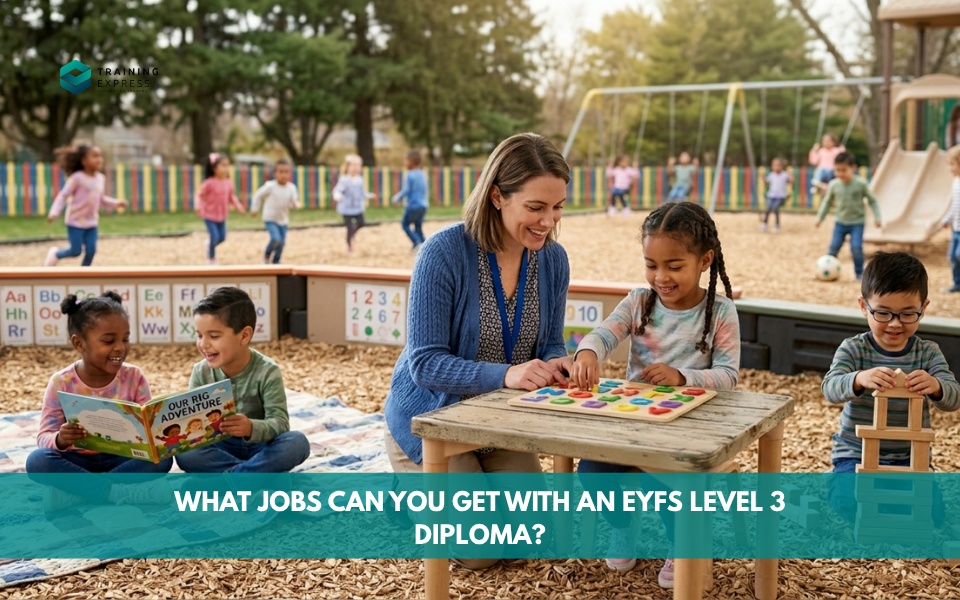

Many aspiring childcare professionals ask an important question: what jobs can you get with an EYFS Level 3 Diploma?
For individuals interested in working in childcare, completing an EYFS Level 3 Diploma can open the door to a wide range of career opportunities. This qualification provides the knowledge and practical understanding required to work confidently in early years settings such as nurseries, preschools, and primary schools.
This article explores the different career opportunities available after completing an EYFS Level 3 qualification, along with the skills employers look for and potential career progression pathways in the early years sector.
Table of Contents
Use Coupon Code:
Use this coupon at Checkout
Career Opportunities After EYFS Level 3
Completing an EYFS Level 3 diploma can lead to several career opportunities in early years education and childcare. Many of these roles involve supporting children’s learning, creating engaging environments, and ensuring children feel safe and supported.
Below are some of the most common jobs you can pursue after completing an EYFS Level 3.
| Job Role | Work Environment | Main Responsibilities |
|---|---|---|
|
Early Years Practitioner |
Nurseries, preschools |
Support learning and development |
|
Nursery Practitioner |
Childcare centres |
Manage daily childcare routines |
|
Teaching Assistant |
Primary schools |
Assist teachers and support children |
|
Nursery Room Leader |
Nursery settings |
Lead staff and oversee activities |
|
Childminder |
Home-based childcare |
Provide childcare independently |
1. Early Years Practitioner
Early years practitioners support children’s learning and development through structured activities and play-based learning experiences.

Their responsibilities often include:
- Planning learning activities based on the EYFS framework
- Supporting children’s communication and language development
- Observing and recording children’s progress
- Encouraging social and emotional development
- Communicating with parents about children’s progress
This role plays a key part in helping children develop the skills needed for school readiness.
2. Nursery Practitioner
A nursery practitioner works in childcare environments such as nurseries or early learning centres.
Daily Responsibilities
Nursery practitioners help create engaging learning environments for young children.
Typical responsibilities may include:
- Supervising children during activities and playtime
- Supporting early learning through games and creative activities
- Ensuring children’s safety and well-being
- Following safeguarding procedures
- Maintaining a positive and supportive environment
This role often involves working closely with other childcare professionals to support children’s daily routines.
3. Nursery Room Leader
With experience, early years practitioners may progress into the role of nursery room leader.
Role Overview
Room leaders are responsible for managing a group of children within a specific nursery room, such as the baby room or toddler room.
Responsibilities of a Room Leader
Key responsibilities include:
- Supervising childcare staff within the room
- Planning daily learning activities
- Monitoring children’s development
- Ensuring EYFS guidelines are followed
- Maintaining communication with parents
This role requires leadership skills and strong knowledge of early years practice.
4. Teaching Assistant
Another career option after completing an EYFS Level 3 diploma is becoming a teaching assistant, particularly in reception classes or primary schools.
What Teaching Assistants Do
Teaching assistants support teachers in classrooms by helping young children with learning activities and classroom routines.
Responsibilities often include:
- Assisting with classroom activities
- Supporting children with reading and early literacy skills
- Helping manage classroom behaviour
- Supporting children with additional learning needs
This role allows professionals to work within school environments while supporting early education.
5. Child Minders
Some individuals choose to become childminders after completing childcare qualifications.
What Childminders Do
Childminders provide childcare services in home-based environments.
Their responsibilities typically include:
- Supervising children during the day
- Organising educational activities
- Supporting early development through play
- Ensuring a safe and nurturing environment
Childminding can provide flexible career opportunities for individuals who want to work independently.
Salary Expectations After EYFS Level 3
Salaries in the early years sector can vary depending on experience, location, and job role. However, completing an EYFS Level 3 qualification can increase earning potential compared to entry-level childcare roles.
Typical salary ranges may include:
| Job Role | Estimated Salary (UK) |
|---|---|
|
Early Years Practitioner |
£18,000 – £24,000 |
|
Nursery Practitioner |
£18,000 – £23,000 |
|
Nursery Room Leader |
£22,000 – £28,000 |
|
Teaching Assistant |
£17,000 – £22,000 |
What Is an EYFS Level 3 Diploma?
An EYFS Level 3 Diploma is designed for individuals who want to work with children from birth to five years old. The course focuses on child development, safeguarding, learning through play, and supporting children’s social and emotional growth.
Early years settings across the UK follow the Early Years Foundation Stage (EYFS) framework, which outlines how children should be supported during their early learning journey. The Level 3 diploma helps learners understand how to apply these principles in real childcare environments.
What the Course Typically Covers
An EYFS Level 3 diploma usually includes topics such as:
- Child development from birth to five years
- Safeguarding and child protection
- Supporting learning through play
- Promoting children’s health and safety
- Inclusive early years practice
- Observation and assessment of children’s progress
Completing this qualification helps learners gain the knowledge needed to support children’s development effectively in early years settings.
Why This Course Is Valuable in Childcare

The demand for qualified childcare professionals continues to grow as early childhood education receives increasing attention in the UK. Nurseries and early learning centres often require staff members who understand the EYFS framework and can support children’s development through structured learning experiences.
An EYFS Level 3 Course is widely recognised in the childcare sector and can help professionals move beyond entry-level roles.
Benefits of an EYFS Level 3 Diploma
Some of the key advantages of completing this qualification include:
- Increased employment opportunities in childcare
- The ability to take on greater responsibilities in early years settings
- Strong understanding of child development and safeguarding
- Opportunities to progress into leadership roles in nurseries
- Improved confidence when working with young children
Because of these benefits, many childcare professionals pursue this qualification to build long-term careers in early childhood education.
Career Progression After EYFS Level 3
Completing an EYFS Level 3 course can also be the first step toward more advanced roles in childcare and early education.
Advanced Career Paths
With experience and further training, professionals may progress into roles such as:
- Nursery manager
- Early years teacher
- Childcare coordinator
- Special educational needs (SEN) support worker
- Early years consultant
Professional development and additional qualifications can help individuals expand their career opportunities within the sector.
If you want to start a career in childcare, completing a Level 3 EYFS diploma course can help you gain the knowledge and practical understanding required to work confidently in early years settings.
Skills Employers Look For
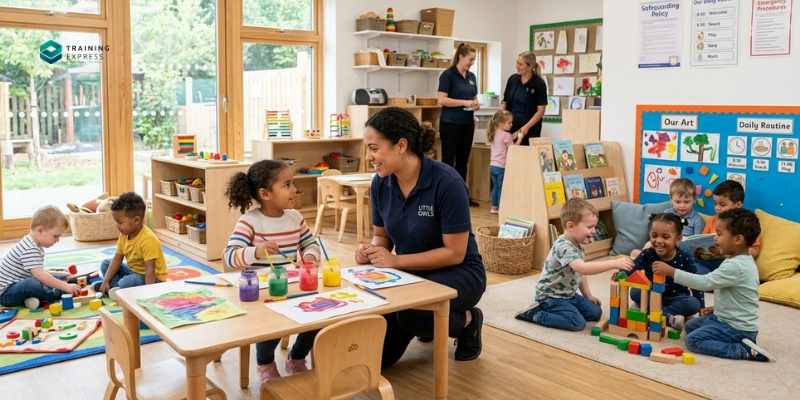
While qualifications are important, employers also look for professionals who demonstrate strong interpersonal and professional skills when working with young children.
Key Skills for Early Years Professionals
Successful childcare professionals often demonstrate:
- Strong communication skills
- Patience and empathy
- Creativity and enthusiasm
- Understanding of safeguarding responsibilities
- Ability to work well in teams
- Organisation and time management
These skills help professionals create supportive environments where children can learn, explore, and develop confidently.
Final Thoughts
Completing an EYFS Level 3 diploma can open the door to a wide range of rewarding career opportunities in the childcare sector. From becoming an early years practitioner to working as a nursery practitioner, teaching assistant, or childminder, this qualification provides the knowledge and foundation needed to work confidently with young children.
Early childhood education is a meaningful profession that allows individuals to support children’s development during some of the most important years of their lives. With the right training and experience, childcare professionals can build fulfilling careers while making a positive impact on children’s learning and well-being.
Frequently Asked Questions (FAQ)
What jobs can you get with an EYFS Level 3 diploma?
Common roles include early years practitioner, nursery practitioner, teaching assistant, nursery room leader, and childminder.
Is EYFS Level 3 recognised in the UK childcare sector?
Yes. The qualification is widely recognised and helps professionals work in early years settings that follow the EYFS framework.
Can you progress to higher roles after EYFS Level 3?
Yes. With experience and further training, professionals may progress to roles such as nursery manager, early years teacher, or childcare coordinator.
Is EYFS Level 3 enough to work in a nursery?
Many nurseries require Level 3 qualified staff because the qualification demonstrates understanding of child development, safeguarding, and early years practice.
How long does it take to complete an EYFS Level 3 Diploma?
The time required to complete an EYFS Level 3 diploma depends on the learning format and study schedule. Many learners complete the qualification within 6 to 12 months, depending on whether they study full-time or part-time.

Robert Lawrence
Author | Specialises in EYFS
Robert Lawrence is an e-learning specialist and tutor at Training Express, with experience creating practical resources and strategies to support learners and enhance their professional development.