Food Hygiene
 Health & Safety
 Safeguarding
 First Aid
 Business Skills
 Personal Development


Imagine a small café nestled in the heart of a busy town. The owner, Sarah, has built a passionate team: a head chef, two kitchen assistants, a front-of-house staff member, and a delivery driver. Business is booming—her reputation for freshly baked pastries and friendly service has spread, and orders keep coming in. But as the weeks go by, small mistakes start to accumulate across her workforce, creating operational risks that directly impact productivity, customer satisfaction, and revenue:
- The front-of-house staff forgets a VIP customer’s allergy preferences.
- A delivery order gets sent to the wrong office building.
- The kitchen accidentally overbakes a batch of bread meant for a corporate client.
Each mistake may seem minor individually, but collectively they affect customer satisfaction, staff morale, and ultimately, Sarah’s bottom line. What went wrong? While she hired enthusiastic and capable employees, Sarah had not invested in structured training.
This scenario isn’t unique. Small business owners often assume that hiring talented people is sufficient. They believe staff will “figure it out” on the job. But without training, even the most capable employees struggle.
Table of Contents
The Cost of Not Training Your Team
When your staff lack proper training, mistakes multiply. For small businesses, these gaps quickly turn into operational risk, compliance exposure, and lost productivity. Here’s how the cost of an untrained team manifests:
- Operational errors: Minor mistakes escalate into bigger problems. For instance, failing to complete Risk Assessment Training could result in overlooked hazards, leading to accidents or legal complications.
- Lost productivity: Staff spend more time correcting mistakes rather than focusing on growth-oriented tasks.
- High staff turnover: Employees who feel unsupported or unsure of their role may leave, causing recruitment and onboarding costs.
- Customer dissatisfaction: Poor service can damage a business’s reputation, particularly for small businesses that rely on word-of-mouth referrals.
Research indicates that businesses investing in staff training experience a 30% increase in productivity. Additionally, employee retention improves significantly when teams feel supported and competent in their roles.
Mini Case Study:
A boutique catering company ignored training for their kitchen staff. A lack of Food Hygiene Level 2 Training led to an allergy incident at a client event. Though no one was harmed, the client contract was lost, and the company faced significant reputational damage. After investing in structured online training for all staff, incidents dropped to zero, client satisfaction increased, and repeat business grew by 35% in one year.
Training equips employees with the knowledge, skills, and confidence to perform effectively. In small businesses, where every decision, task, and interaction matters, training can be the difference between growth and stagnation.
The Hidden Costs of an Untrained Team
Untrained teams can create far-reaching challenges that extend beyond simple mistakes. For small businesses, these hidden costs often appear in the form of compliance failures, efficiency losses, and reputational risk, all of which place additional pressure on limited budgets and management time. Even small errors in day-to-day operations can accumulate over time, reducing efficiency and productivity. Without proper training, employees may struggle to perform tasks correctly, slowing workflows and creating hidden costs that affect the business as a whole.

Compliance and legal risks are another significant concern. When staff lack the necessary knowledge in areas such as data protection, workplace safety, or industry regulations, businesses can face fines, penalties, and other legal complications. These risks are not always immediately visible, but the consequences can be costly and damaging to reputation.
Staff turnover and morale also suffer when employees feel unsupported or unprepared for their roles. Untrained employees may become frustrated or disengaged, leading to higher attrition rates. Replacing staff not only incurs direct recruitment costs but also disrupts operations and slows overall growth.
Finally, customer satisfaction and brand reputation are directly affected by untrained teams. Mistakes, inconsistent service, and lapses in professionalism can erode trust with clients and customers. Over time, this can damage the business’s reputation, affect repeat business, and limit opportunities for growth. Investing in structured training ensures employees are equipped to perform confidently, protects compliance, supports retention, and helps maintain a positive reputation in the marketplace.

Why Online Learning Works for Small Businesses
Online learning is ideal for small businesses because it helps business owners and team leaders train their workforce efficiently while managing time constraints, limited budgets, and compliance requirements. It offers flexibility, affordability, and access to role-specific training without disrupting daily operations.
Flexibility
Employees can complete training at their own pace, fitting it around busy schedules.
- Example: A small IT support firm assigns Cyber Security Awareness Training to employees working different shifts. Staff complete modules without disrupting client support schedules.
Affordability
Online training is often cheaper than classroom-based courses. Subscription or pay-per-user models allow small businesses to scale training without breaking the budget.
- Example: A boutique hotel provides Fire Safety Training and Legionella Awareness Training for all staff using a subscription model. Costs are significantly lower than hiring external trainers for group sessions.
Variety
Online platforms offer courses across compliance, soft skills, professional development, and wellbeing.
- Compliance: COSHH Training, Asbestos Awareness Training
- Professional Development: Time Management, Resilience Training
- Wellbeing: Mental Health Awareness Training, Equality, Diversity and Inclusion (EDI)

Watch Now: “Find out the key to building successful teams and why training and development makes all the difference—watch now!”
Choosing the Right Online Course
Selecting the right course can feel overwhelming, but a structured approach helps.
Step 1: Identify Roles and Needs
- Map out each employee’s responsibilities.
- Example: Front-of-house staff may need Customer Service Training, while operations staff may require Risk Assessment Training.
Step 2: Set Clear Objectives
- Define what the training should achieve: compliance, productivity, skill enhancement, or employee wellbeing.
Step 3: Check Accreditation
- Accredited courses ensure quality and provide certificates, motivating staff and validating skills externally.
Step 4: Evaluate Usability and Tracking
- Choose platforms with intuitive dashboards for managers to track completion, quiz scores, and engagement.
Affordable, High-Impact Training Options
Small businesses can access world-class training at a cost that fits their budgets. Courses are designed to improve efficiency, enhance service quality, support employee wellbeing, promote safe working practices, and foster an inclusive workplace culture.
Training in Food Hygiene Level 2 Training helps employees understand proper food safety practices, maintain high standards, and prevent contamination. Similarly, Unconscious Bias Training equips staff to recognise and address hidden biases, creating a fairer and more inclusive workplace.
Conflict Resolution Training teaches employees how to manage disagreements professionally and maintain a collaborative work environment. Environmental Awareness Training encourages sustainable practices within the business, promoting responsibility and efficiency.
Manual Handling Training provides staff with the knowledge to move items safely, reducing workplace injuries and operational disruptions. Courses such as Abrasive Wheel Safety Training help ensure compliance and safety in specialised operational areas, while Equality, Diversity and Inclusion (EDI) create an inclusive workplace where all employees feel valued and respected.
By providing access to these courses, small businesses can significantly improve staff performance, enhance safety, build confidence, and achieve better overall business outcomes, all while keeping costs manageable.
Creating a Learning Culture
Even the best courses fail if staff aren’t engaged. A strong learning culture integrates training into daily operations.

Strategies for Engagement
- Micro-learning: Short, focused modules fit naturally into workdays.
- Peer challenges: Encourage quizzes and knowledge-sharing.
- Recognition: Celebrate completions with certificates or announcements.
- Integration: Schedule weekly learning sessions to build consistency.
Practical Implementation Tips
- Dedicate learning time during work hours.
- Mix compliance courses with professional development.
- Use incentives to motivate completion.
- Track progress via LMS dashboards.
- Gradually assign courses to avoid overwhelm.
Common Challenges and How to Overcome Them
Small businesses often face budget constraints when implementing training programmes, but subscription-based platforms and free trial options make high-quality courses more accessible. Time constraints can also be an issue, so short modules that are integrated into work hours allow employees to learn without disrupting daily operations.
Low engagement is another common challenge, which can be addressed when managers lead by example and actively recognise employee achievements. Measuring the impact of training is essential, and this can be done by tracking course completions, quiz scores, and observable changes in behaviour, as well as collecting feedback from staff to continuously refine and improve the training programme.
Maximising ROI From Training: Why Every Pound Counts
For small businesses, every pound invested matters. Training isn’t just an expense—it’s a strategic investment that delivers measurable returns in productivity, compliance, staff retention, and operational efficiency, all of which directly affect profitability.
The Financial Impact of Effective Training
Consider a small retail business with ten staff members. By investing £200 per employee annually in online courses like Time Management, Customer Service Training, and Mental Health Awareness Training the business sees:
- Reduced errors: 20% fewer customer complaints.
- Improved productivity: Staff complete tasks faster, reducing overtime costs.
- Increased retention: Fewer staff leaving, saving recruitment costs.
The return on investment (ROI) can be calculated by comparing savings from fewer errors and reduced turnover against the cost of training. Many small businesses report ROI figures as high as 300–400% within the first year when training is targeted effectively.
Training Express B2B: Scalable, Smart, and Simple
For small businesses seeking an effective way to train their teams, Training Express B2B offers a flexible and scalable solution. Designed with businesses of all sizes in mind, the platform combines comprehensive online courses, intuitive management tools, and expert support to make team development straightforward and impactful.
A Platform You Can Trust
Training Express Team Training gives your workforce access to flagship CPD-accredited courses through one central platform. Trusted by over one million learners worldwide, it enables business owners and managers to assign courses, track completion, download reports for audits, and issue certificates—all in one place. Every team member can access a wide range of online training, all of which comes with accredited certificates, helping staff develop professionally while supporting business compliance and quality standards.
Flexible Pricing for Every Team
Whether you have a handful of employees or a growing workforce, Training Express B2B adapts to your needs. Pricing is transparent and scalable, with small teams of five to twenty staff paying £47.90 per user per year, mid-sized teams of twenty-one to fifty staff at £34.60 per user per year, and larger teams of fifty-one to 250 staff at £27.90 per user per year. For businesses with over 250 employees, bespoke enterprise options are available to accommodate complex requirements.
Benefits That Make a Difference
One of the platform’s standout features is access to all flagship courses, including Customer Service Training, Resilience Training, Food Hygiene Level 2 Training, Equality, Diversity and Inclusion (EDI), Conflict Resolution Training, and Environmental Awareness Training. This comprehensive offering ensures that every team member, regardless of role, can build the skills they need.
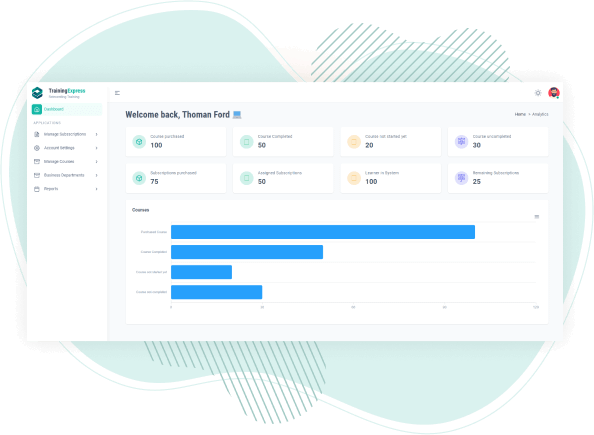
Every business account is supported by a dedicated account manager, providing guidance on course assignment, monitoring progress, and generating reports. The intuitive dashboard allows managers to assign courses, track completion, and view detailed insights with ease, while integration options ensure the platform fits seamlessly into existing workflows.
Why It Works for Small Businesses
By combining flexibility, credibility, and comprehensive training options, Training Express B2B empowers small businesses to invest in their teams confidently. Employees receive recognised certificates they can add to CVs or professional profiles, managers can measure progress in real time, and the business benefits from a more skilled, motivated, and confident workforce.
With Training Express B2B, scaling your team’s development doesn’t have to be complicated or costly. It’s a practical, professional, and results-driven way to ensure your employees grow alongside your business.
Training Express Team Training gives your whole workforce access to our flagship CPD-accredited courses from as little as £2.33 per user/month. You get a business dashboard to assign courses, track completion, download reports for audits and issue certificates – all in one place.
Trusted by organisations including the NHS, Marks & Spencer and many UK SMEs
Conclusion
Investing in your team’s training is no longer a luxury for small businesses—it is essential for managing risk, compliance, productivity, and sustainable growth. When training is structured, trackable, and aligned with business goals, it delivers measurable value across every area of the organisation.
From preventing costly errors and compliance issues to boosting productivity, employee confidence, and client satisfaction, training shapes the foundation of a successful business. Through both parts of this guide, we have seen how structured learning, when implemented thoughtfully, transforms teams and creates measurable impact.
Online learning has emerged as a practical and cost-effective solution for small businesses, providing flexibility for employees to learn at their own pace, access to accredited courses, and the ability to scale training as the team grows. Courses covering core skills, compliance, professional development, wellbeing, and inclusivity equip employees to handle everyday challenges more effectively and build the confidence to thrive in their roles.
Platforms like Training Express B2B take this a step further by offering all flagship courses in one place, a dedicated account manager for support, progress tracking dashboards, and accredited certificates for employees. This makes it easy for small businesses to implement training programmes that are both manageable and impactful, regardless of team size.
Ultimately, the value of training extends beyond immediate skill gains. It fosters a culture of continuous learning, strengthens team cohesion, increases loyalty, and empowers employees to contribute their best. Small businesses that prioritise training cultivate not only capable and confident teams but also resilient, adaptable organisations prepared to meet challenges, grow sustainably, and achieve long-term success.
Training is an investment in your people and in the future of your business. By giving your team access to quality courses, tracking their progress, and nurturing a culture of learning, you create the conditions for a workforce that is motivated, skilled, and ready to excel. The impact is felt across every aspect of the business—from operational efficiency to client satisfaction, and from employee retention to overall growth.
With the right training, small businesses can transform their workforce into a high-performing, confident, and capable team that drives success today and prepares the company for the challenges of tomorrow.
Frequently Asked Questions (FAQ)
Why is team training important for small businesses?
It improves skills, reduces errors, boosts morale, and supports business growth.
Can small businesses afford online training?
Yes, online training is cost-effective and scalable for teams of any size.
How do I choose the right courses for my team?
Match courses to roles, check accreditation, and focus on relevant skills or compliance needs.
How can I ensure employees complete their training?
Assign courses gradually, track progress, offer support, and recognise achievements.
How long does online training take to deliver results?
Some improvements appear in weeks; full benefits usually take a few months.
Will online training work for all types of businesses?
Yes, it suits retail, hospitality, IT, construction, consultancy, and more.
How do I measure the success of training?
Track completion, quiz scores, behavioural changes, and business outcomes.
What makes Training Express B2B different?
Access to all flagship courses, accredited certificates, dedicated support, and progress tracking.
Can training help with employee retention?
Yes, investing in skills and growth increases loyalty and engagement.
How often should I update training programmes?
Regularly, based on compliance requirements, evolving roles, and business needs.