Food Hygiene
 Health & Safety
 Safeguarding
 First Aid
 Business Skills
 Personal Development

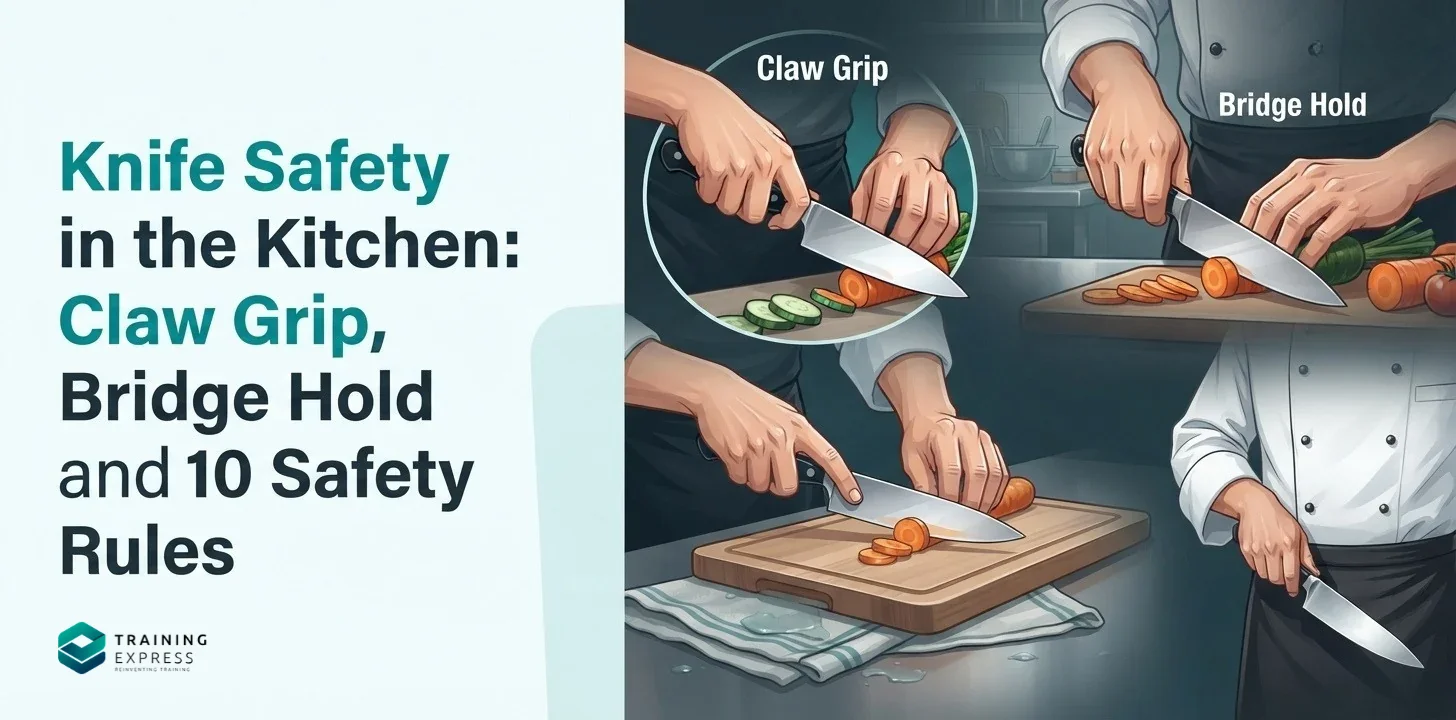

To use a knife safely, keep it sharp, put your chopping board on a damp cloth so it can’t slip, and hold the food with the claw grip or bridge hold so your fingers stay clear of the blade. Always cut away from your body, carry knives pointing down and never leave them in a sink of soapy water.
Knife safety in the kitchen comes down to a sharp knife, a steady board and the right grip. The claw grip and bridge hold are the first two techniques every cook learns, from GCSE Food students to professional chefs.
Table of Contents
Why Knife Safety Matters
Knife cuts are one of the most common hazards in any kitchen, and they cause problems beyond the injury itself. A deep cut can mean stitches and time off work, and blood on food or a work surface is a food safety problem too.
Most knife accidents happen when people rush, use a blunt knife, cut on a sliding board or reach into a sink of soapy water. Knife cuts are the first hazard in our guide to 17 kitchen hazards and how to avoid them.
The Claw Grip: How to Do It
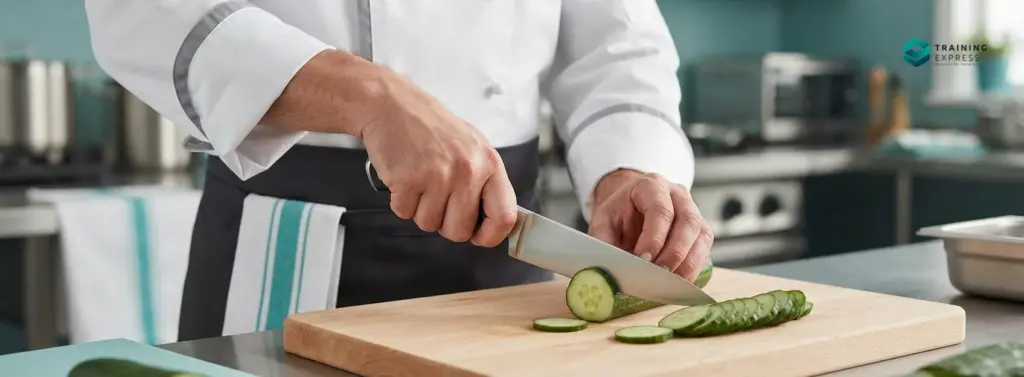
The claw grip is a way of holding food with your fingers curled under, so the knife can’t reach your fingertips. You use it for slicing and dicing, such as cutting a cucumber, carrot or onion into slices.
- Curl the fingers of your non-knife hand inwards, like a claw, with your fingertips tucked under.
- Rest your fingertips on the food, just behind where you want to cut. Tuck your thumb in behind your fingers.
- Hold the knife in your other hand and cut in front of your fingers, keeping the flat side of the blade against your knuckles.
- After each slice, move your claw back a little along the food and cut again.
The most common mistake is letting your fingertips creep out in front of your knuckles. BBC Bitesize has a short video if you’d like to see it in action.
The Bridge Hold: How to Do It
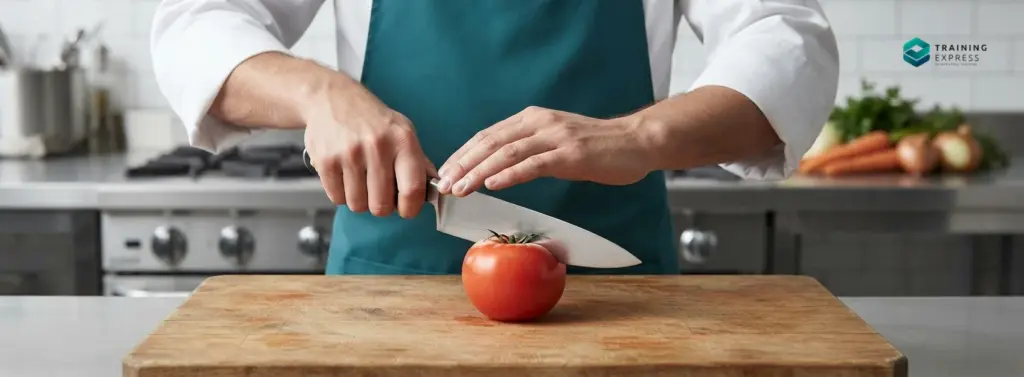
The bridge hold is a way of holding round food steady, with your hand forming an arch over it, so you can cut it in half safely. It’s best for things like tomatoes, apples, onions and potatoes before you slice them further.
- Make a bridge with your non-knife hand: thumb on one side of the food, fingers on the other, with your palm raised above it.
- Keep your fingers together and hold the food firmly.
- Pass the knife under the bridge, between your thumb and fingers.
- Cut down through the food slowly, keeping the blade well away from your hand.
If round food wobbles, cut a thin slice off one side first to give it a flat base.
How to Hold a Kitchen Knife Safely
Hold a kitchen knife firmly by the handle in your dominant (writing) hand, with dry hands and a clean, dry handle. A greasy handle is easy to lose grip on.
Beginners usually wrap all four fingers round the handle. Many chefs use a pinch grip, holding the blade just in front of the handle between thumb and forefinger, which gives more control once you’re confident.
10 Knife Safety Rules for the Kitchen
These 10 knife safety rules cover cutting, carrying, washing and storing knives. They’re the habits we suggest every kitchen trains new starters on, and they match the advice in the Food for Life knife safety handout used in schools.
- Keep knives sharp. A sharp knife needs less force, so it’s less likely to slip.
- Use a stable board. Put your chopping board on a damp cloth or non-slip mat so it can’t move.
- Use the right knife for the job. A small knife on a big job, or a big knife on a fiddly one, makes slips more likely.
- Cut away from your body. Keep your other hand in the claw grip or bridge hold.
- Never try to catch a falling knife. Step back and let it drop.
- Carry knives point down. Hold the knife by your side with the blade pointing down and backwards, and call out “knife” or “behind” as you pass people.
- Pass knives safely. Put the knife down on the work surface for the other person to pick up, rather than handing it over.
- Never leave knives in soapy water. Someone could reach into the sink and grab the blade.
- Clean and store knives straight away. Wash and dry them carefully, wiping from the spine, and keep them in a knife block, rack or magnetic strip, not loose in a drawer.
- Only use knives for cutting food. Don’t use them to open tins, boxes or packaging.
Choosing the Right Knife for the Job
Choosing the right knife makes cutting easier and safer, because you don’t have to force the blade. These are the knives most kitchens use.
| Knife | What it's for |
|---|---|
| Chef's knife | General chopping, slicing and dicing of vegetables and meat |
| Paring knife | Small, fiddly jobs such as peeling, trimming and deseeding |
| Serrated (bread) knife | Bread, cakes and foods with a hard outside and soft inside, such as tomatoes |
| Boning knife | Removing bones from meat and poultry |
| Filleting knife | Filleting fish, with a thin, flexible blade |
Colour-Coded Chopping Boards and Knives
Many UK kitchens use colour-coded chopping boards, and sometimes knife handles, to keep raw and ready-to-eat food apart. It’s a common industry system, not a legal requirement, and the colours can vary between kitchens, so always follow your own kitchen’s chart.
| Colour | Commonly used for |
|---|---|
| Red | Raw meat |
| Blue | Raw fish |
| Yellow | Cooked meat |
| Green | Salad and fruit |
| Brown | Vegetables |
| White | Bakery and dairy |
| Purple | Allergen-free food |
The legal point behind it is keeping raw and ready-to-eat food apart. The Food Standards Agency’s E. coli cross-contamination guidance explains how to separate raw and ready-to-eat food, including using separate utensils and equipment. Our guide to the types of food contamination explains why it matters.
Sharpening vs Honing
Sharpening grinds a new edge onto a blunt knife, while honing straightens the edge you already have. A sharp knife is safer because it cuts with less pressure, so it’s less likely to skid off food and into your hand.
Most chefs hone often and sharpen on a whetstone or sharpener only when honing no longer brings the edge back. We suggest resting the steel point-down on a damp cloth and drawing the blade down it, away from your body.
What to Do If You Cut Yourself
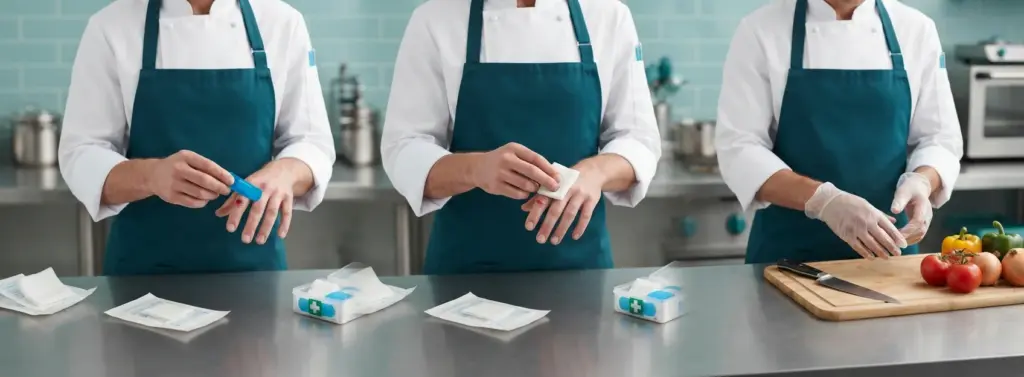
If you cut yourself, stop the bleeding by pressing on the wound, clean it and cover it. This follows the NHS advice on cuts and grazes:
- Press on the wound with a clean cloth or bandage to stop the bleeding.
- Once the bleeding slows, rinse the cut with tap water or use sterile wipes, then pat it dry.
- Cover it with a sterile dressing or plaster.
Call 999 or go to A&E if you can’t stop the bleeding, blood is spurting, you lose feeling near the wound, the cut is very large or deep, it’s a bad cut to the palm or face, or something is stuck in it (don’t pull it out). Don’t drive yourself. For a cut larger than about 5cm, or one that looks infected, get an urgent GP appointment or call NHS 111.
In a kitchen, three extra steps matter. The FSA’s Safer Food, Better Business pack says cuts should be completely covered with a brightly coloured waterproof dressing, so it’s easy to spot if it falls into food. Most kitchens use blue plasters, and many add a glove on top. We also suggest throwing away any food that blood may have touched, cleaning and disinfecting the board and knife, and telling your manager so it’s recorded.
Knife Safety Rules at Work
At work, your employer must assess the risks from knives and make sure you’re trained to use them safely. Under the Health and Safety at Work etc. Act 1974, employers must protect staff so far as is reasonably practicable, and you must take reasonable care and follow your training.
In practice, knife risks belong in your kitchen risk assessment, and new starters and trainees should be shown the rules and supervised until they’re confident. For the wider set of rules every kitchen should follow, see our kitchen safety rules, which also cover hot oil and what to do in a chip pan fire.
Build Safe Knife Habits
Good knife skills are faster and safer, and they’re easy to learn with the right guidance. Our kitchen assistant course covers safe kitchen practice for new starters, and our Level 2 Food Hygiene and Safety for Catering course covers the food safety side, including cross-contamination. Both are online and include a certificate.
Knife Safety FAQs
What is the claw grip?
The claw grip is a way of holding food for slicing, with the fingers of your non-knife hand curled under like a claw and your thumb tucked behind them. You cut in front of your fingers with the blade resting against your knuckles, then move your hand back after each slice. It keeps your fingertips away from the blade.
What is the bridge hold used for?
The bridge hold is used to cut round or awkward food in half safely, such as tomatoes, apples, onions and potatoes. You make an arch over the food with your thumb on one side and fingers on the other, then pass the knife under the arch and cut down slowly. Your hand stays above the blade.
Why is a sharp knife safer than a blunt knife?
A sharp knife cuts with less pressure, so it’s easier to control. A blunt knife needs more force, which makes it more likely to skid off the food, especially on smooth skins like tomatoes or peppers, and slip towards your hand. Keeping knives sharp and honed is one of the simplest ways to prevent cuts.
How should you carry a knife in a kitchen?
Carry a knife by the handle, close to your side, with the blade pointing down and slightly backwards. Walk, don’t rush, and call out “knife” or “behind” so people know you’re passing. Never carry knives in a pile of other equipment, and put the knife down on a surface rather than handing it to someone.
Why should you never leave a knife in the sink?
A knife left in a sink of soapy water is hidden under the bubbles. Anyone reaching into the sink, often a kitchen porter in a hurry, can grab the blade and cut their hand badly. Wash knives on their own straight after use, dry them and put them away, or leave them in plain view beside the sink.
What colour chopping board is used for raw meat?
In most UK kitchens that use colour coding, red chopping boards are used for raw meat. Blue is often used for raw fish, yellow for cooked meat and green for salad and fruit. This is a common industry system, not a legal requirement, and colours can vary, so always follow your own kitchen’s colour chart.
What should you do if you cut yourself in the kitchen?
Press on the cut to stop the bleeding, rinse it and cover it with a brightly coloured waterproof dressing, usually a blue plaster. Throw away any food the blood may have touched, clean the area and tell your manager. Call 999 or go to A&E if the bleeding won’t stop or the cut is deep.