Food Hygiene
 Health & Safety
 Safeguarding
 First Aid
 Business Skills
 Personal Development


Quick Answer: Most oil changes typically take 15 to 45 minutes at a professional service center. If you’re doing it yourself, expect the process to take 45 to 60 minutes, especially if it’s your first time. The exact time depends on the vehicle type, engine size, oil type, shop workload, and whether additional services such as inspections or tire rotations are included.
Keeping up with regular oil changes is one of the simplest yet most important maintenance tasks for any vehicle. Fresh engine oil reduces friction, protects engine components, improves fuel efficiency, and extends engine life. One of the most common questions drivers ask is, “How long does an oil change take?” While the answer may seem straightforward, several factors can affect the total time spent getting your oil changed.
This guide covers everything you need to know, including professional service times, DIY oil changes, costs, risks of low oil, and how to choose the right engine oil for your vehicle.
Table of Contents
Time Comparison: Oil Change Service Options
| Service Type | Typical Service Time | Total Time Including Wait | Best For |
|---|---|---|---|
| Quick-Lube Chain (Jiffy Lube, Valvoline, etc.) | 15–30 minutes | 20–45 minutes | Fast service |
| Independent Mechanic | 30–45 minutes | 45–90 minutes | Personalized service |
| Dealership Service Center | 30–60 minutes | 1–2 hours | Manufacturer expertise |
| DIY Oil Change | 45–60 minutes | 45–90 minutes | Cost savings |
Factors That Affect How Long an Oil Change Takes
Several factors determine how long your oil change will take:
- Vehicle Type: Trucks and SUVs often require more oil and may take longer than sedans.
- Oil Type: Synthetic oil changes may involve additional inspections and premium filters.
- Engine Accessibility: Some vehicles have oil filters that are difficult to reach.
- Additional Services: Tire rotations, fluid top-offs, and multi-point inspections add time.
- Shop Traffic: Peak hours can significantly increase wait times.
- Appointment vs. Walk-In: Scheduled appointments generally reduce delays.
Can You Wait at the Shop?

In many cases, yes. Quick-lube centers are designed for customers who want to wait while the service is completed. Most customers spend between 20 and 45 minutes in the waiting area. However, dealerships and busy repair shops may require longer waits, particularly during weekends and seasonal maintenance periods.
If your vehicle is being serviced at a dealership, dropping it off may be more convenient than waiting, especially if additional maintenance is recommended.
How Long Should an Oil Change Take If You Do It Yourself?
A DIY oil change usually takes 45 to 60 minutes, though first-time vehicle owners may spend up to 90 minutes completing the process. The advantage of doing it yourself is cost savings and the ability to inspect your vehicle while performing maintenance.
DIY Oil Change Time Breakdown
| Step | Estimated Time |
|---|---|
| Gather Tools and Supplies | 5–10 minutes |
| Raise Vehicle and Secure It | 5–10 minutes |
| Drain Old Oil | 10–15 minutes |
| Replace Oil Filter | 5–10 minutes |
| Add New Oil | 5 minutes |
| Check Oil Level | 5 minutes |
| Cleanup and Disposal | 10–15 minutes |
Before starting, ensure you have the correct oil type, oil filter, drain pan, wrench set, gloves, and safety equipment. Working on a level surface also helps speed up the process and ensures accurate oil level readings.
Experienced DIY mechanics can often complete the entire job in under 45 minutes.
What Happens During an Oil Change?

An oil change involves more than simply replacing old oil with new oil. Professional technicians typically perform several tasks during the service to help maintain vehicle reliability.
The process generally includes:
- Draining the old engine oil.
- Removing the old oil filter.
- Installing a new oil filter.
- Refilling the engine with fresh oil.
- Checking oil levels.
- Inspecting fluids and belts.
- Resetting the oil life monitoring system.
Many service centers also conduct a complimentary multi-point inspection. This may include checking tire pressure, coolant levels, battery condition, windshield washer fluid, and visible leaks.
Fresh oil helps maintain proper engine lubrication, reduces wear on moving parts, and assists in temperature control. Without regular oil changes, contaminants can build up and cause premature engine damage.
Where Should You Go for an Oil Change?
Choosing the right location for an oil change depends on your budget, convenience, and vehicle requirements.
Quick-Lube Centers
Quick-lube shops specialize in fast service. They are ideal for drivers who need an oil change completed quickly and without an appointment.
Advantages:
- Fast service
- Convenient locations
- Minimal waiting
Disadvantages:
- Limited vehicle-specific expertise
- Upselling of additional services
Independent Mechanics
Independent repair shops often provide personalized service and competitive pricing.
Advantages:
- Experienced technicians
- Competitive costs
- Trusted local reputation
Disadvantages:
- Longer scheduling times
- Variable service quality
Dealership Service Centers
Dealerships are often the best choice for newer vehicles and warranty-covered maintenance.
Advantages:
- Factory-trained technicians
- Genuine manufacturer parts
- Service records maintained
Disadvantages:
- Higher prices
- Longer wait times
DIY Oil Change
For mechanically inclined vehicle owners, DIY maintenance offers significant savings and complete control over materials used.
How much does an oil change cost?
Oil change costs vary based on vehicle type, oil quality, and service provider.
| Oil Change Type | Average Cost |
|---|---|
| Conventional Oil | $35–$75 |
| Synthetic Blend | $50–$90 |
| Full Synthetic Oil | $70–$150 |
| Luxury or Performance Vehicles | $120–$250+ |
Several factors affect pricing:
- Engine size
- Oil capacity
- Oil brand
- Filter quality
- Labor rates
- Geographic location
While synthetic oil costs more initially, it generally lasts longer and offers better engine protection under extreme temperatures.
How Often Do You Need an Oil Change?
Modern vehicles often require oil changes every:
- Conventional Oil: 3,000–5,000 miles
- Synthetic Blend: 5,000–7,500 miles
- Full Synthetic: 7,500–15,000 miles
Always follow the maintenance schedule listed in your owner’s manual.
Risks of using the wrong engine oil
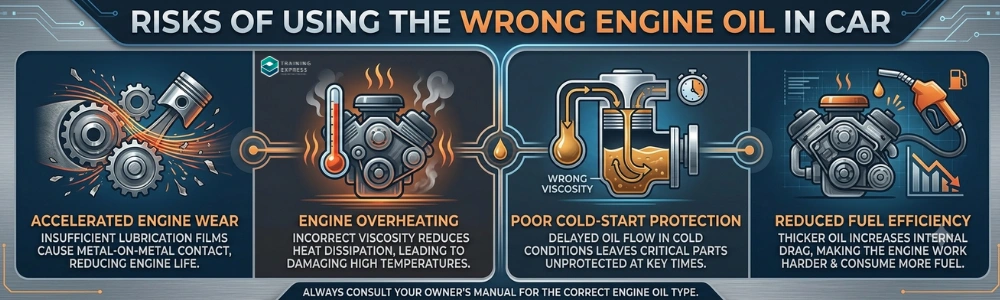
Using the wrong engine oil can cause serious engine problems over time. Every vehicle manufacturer specifies a particular viscosity and oil standard to ensure optimal engine performance.
Potential risks include:
- Reduced lubrication
- Increased engine wear
- Poor fuel economy
- Higher engine temperatures
- Oil pressure problems
- Engine sludge formation
For example, using oil that is too thick can restrict flow during cold starts. Using oil that is too thin may fail to protect engine components under high temperatures.
Always verify the recommended oil grade before adding or replacing engine oil.
How will a car act if it's low on oil?
Low engine oil can produce noticeable symptoms that should never be ignored.
Common warning signs include:
- Oil pressure warning light
- Engine knocking noises
- Increased engine temperature
- Burning oil smell
- Reduced acceleration
- Rough engine operation
Oil acts as a protective barrier between moving metal parts. When oil levels drop, friction increases dramatically, leading to accelerated wear and possible engine failure.
Modern vehicles often provide dashboard warnings when oil levels become critically low. Responding quickly can prevent expensive repairs.
How quickly can low oil damage an engine?
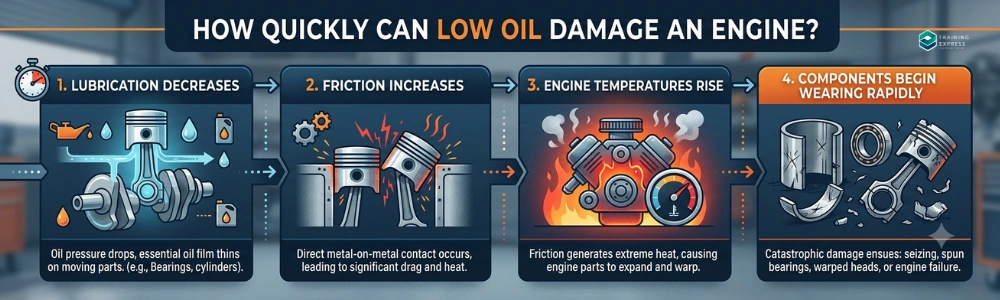
Engine damage from low oil can occur surprisingly fast. The exact timeframe depends on how low the oil level is and how heavily the vehicle is being driven.
When oil drops below safe levels:
- Lubrication decreases.
- Friction increases.
- Engine temperatures rise.
- Components begin wearing rapidly.
In severe cases, catastrophic engine damage can occur within minutes of driving with extremely low oil levels. Bearings, pistons, camshafts, and crankshaft components are particularly vulnerable.
Even if immediate failure does not occur, repeated operation with insufficient oil significantly shortens engine lifespan.
If the oil warning light appears, checking the oil level should become a priority before continuing normal driving.
Choosing the right engine oil
Selecting the correct engine oil is essential for performance, efficiency, and engine longevity.
Key Factors to Consider
Viscosity Rating
Viscosity indicates how thick or thin the oil is at different temperatures. Common examples include:
- 0W-20
- 5W-20
- 5W-30
- 10W-30
The manufacturer’s recommendation should always be followed.
Conventional vs. Synthetic Oil
| Feature | Conventional Oil | Synthetic Oil |
|---|---|---|
| Cost | Lower | Higher |
| Engine Protection | Good | Excellent |
| High-Temperature Performance | Moderate | Superior |
| Cold Weather Performance | Moderate | Excellent |
| Oil Change Interval | Shorter | Longer |
Synthetic oil is generally preferred for modern engines because it provides superior protection and longer service intervals.
Manufacturer Certifications
Many manufacturers require oils meeting standards such as:
- API SP
- ILSAC GF-6
- ACEA specifications
Using approved oil helps maintain warranty compliance and optimal engine protection.
Expert Recommendation
According to many automotive technicians, the best approach is simple: use the exact oil grade and specification listed in your owner’s manual rather than selecting oil based solely on marketing claims or price.
Final Thoughts
Most oil changes take 15 to 45 minutes at a service center and 45 to 60 minutes when performed at home. Factors such as vehicle type, oil type, technician workload, and additional maintenance services can influence the total time. Regular oil changes remain one of the most cost-effective ways to protect your engine, improve performance, and extend vehicle life.
Whether you choose a quick-lube shop, independent mechanic, dealership, or DIY approach, maintaining proper oil levels and using the correct engine oil specification is critical for keeping your vehicle running smoothly for years to come.
Frequently Asked Questions (FAQ)
Can you still drive if engine oil is low?
Yes, but only for a very short distance and only if the oil level is slightly below the recommended range. Driving with significantly low oil can cause severe engine damage and expensive repairs. Check the oil level immediately and add the correct oil if necessary.
What are the first signs of low oil?
The earliest signs usually include the oil pressure warning light, engine ticking sounds, increased engine temperature, and reduced performance. Some vehicles also display low oil level warnings on the dashboard.
How long does it actually take to do an oil change?
Most professional oil changes take between 15 and 45 minutes. DIY oil changes typically require 45 to 60 minutes, depending on experience and vehicle design.
How low is too low for oil in a car?
If the oil level falls below the minimum mark on the dipstick, it is considered too low. Driving at this level increases the risk of inadequate lubrication and engine wear.
Does low oil make your car slower?
Yes. Low oil can increase internal engine friction, causing reduced efficiency, poor acceleration, and overall performance loss.
Can engine oil go low without a leak?
Yes. Oil can be consumed naturally during combustion, especially in older engines or high-mileage vehicles. Evaporation and internal engine wear can also contribute to gradual oil loss.
Is it normal for engine oil to decrease?
A small decrease between oil changes is normal. Most manufacturers consider some oil consumption acceptable, particularly in turbocharged and high-performance engines. Significant or rapid oil loss, however, should be inspected by a mechanic.

Robert Lawrence
Author | Specialises in compliance.
Robert Lawrence is an e-learning specialist and tutor at Training Express, with experience creating practical resources and strategies to support learners and enhance their professional development.