GET THIS COURSE AND 2500+ OTHERS FOR ONLY £49 FIND OUT MORE
When someone collapses or gets hurt at work, the first few minutes matter most. This workplace first aid training helps you stay calm and know exactly what to do.
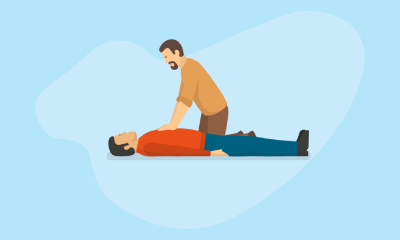
You’ll learn CPR, the recovery position, how to treat common injuries and when to call 999. It’s a fully online course in plain English that needs no medical knowledge, and you’ll get an instant CPD certificate when you pass.
The course is split into 12 short modules that follow a real emergency step by step, from taking charge and checking the casualty to treating injuries and calling for help.
- Instant Free CPD Accredited Certificate
- Developed by Qualified Professionals
- Online and Self-paced
- Access On All Devices
- Meets Industry Standard
- Discounts on Bulk Purchases
- Full Audio Voiceover
- Free Retake Exam
- 24/7 Learning Assistance
- Instant Assessment & Result
£26,600 Average Salary, Up to £37,500/yr for this skill according to top UK career sites.
Sneak Peek
Learning Outcomes
By the end of this workplace first aid training, you will be able to:
- Explain what a workplace first aider does, and what they shouldn't try to do
- Understand the basics of UK first aid law and what your employer has to provide
- Take charge calmly at an incident and keep yourself and others safe
- Carry out a primary survey to find and deal with life-threatening problems first
- Do a secondary survey to check for other injuries and illnesses
- Put someone in the recovery position and give CPR when they're not breathing normally
- Help someone with breathing problems
- Treat minor injuries such as small cuts, grazes, burns and sprains
- Support a suspected fracture or dislocation until help arrives
- Know when to call 999 or 112, and what information to give
What is Workplace First Aid?
Workplace first aid is the help you give someone who’s hurt or taken ill at work, from the moment it happens until a paramedic or doctor takes over. It isn’t about diagnosing anything. It’s about keeping the person safe, stopping things getting worse and getting the right help on the way, and workplace first aid training teaches you how to do exactly that. Under the Health and Safety (First-Aid) Regulations 1981, every employer in Great Britain must provide “adequate and appropriate” first aid, which the Health and Safety Executive (HSE) explains in more detail. In practice, that means carrying out a first aid needs assessment, keeping a properly stocked first aid kit and having the right people in place. That’s either an appointed person who looks after first aid arrangements and calls the emergency services, or trained first aiders for larger or higher-risk workplaces.
Who Should Take The Course
This first aid training for the workplace suits anyone who wants to know what to do when something goes wrong at work. It’s especially useful for:
- Office and admin staff who want to feel ready if something happens at their desk
- Appointed persons who look after first aid arrangements at work
- Managers and team leaders who others turn to in an emergency
- HR and health and safety staff who plan first aid cover
- Retail, hospitality and warehouse workers in busy, hands-on jobs
- Care and support workers who look after people every day
- Small business owners who want to protect their team
- Volunteers and sports clubs who look after members and the public
- Trained first aiders who need a quick refresher
Why Take This Course?
First aid is one of those skills you hope you’ll never need but you’ll be glad to have when it counts. Here’s why it’s worth a few hours of your time:
- In an emergency, the first few minutes count and someone at work might need you.
- A simple step-by-step order helps you act calmly instead of freezing.
- Wider first aid training in the workplace means better cover during holidays, sickness and shift changes.
- You can learn on any device at your own pace, with lifetime access.
- It pairs well with our health and safety courses for wider safety know-how.
- The same skills help at home, on the school run, at the gym or on holiday.
- It's a great way to learn the theory before an EFAW or FAW course.
A few hours now could make all the difference to a colleague, a customer or someone you love.
Job Opportunities & Average Salary in UK
First aid knowledge won’t land you a job on its own, but it’s something employers really value. In plenty of roles it’s expected, and it can help your CV stand out. Here are some roles where first aid training is especially useful, with typical UK salaries:
- Health and Safety Adviser: £26,000 to £48,000 per year
- Office Manager: £25,000 to £40,000 per year
- Events Manager: £23,000 to £40,000 per year
- Security Officer: £20,000 to £35,000 per year
- Care Worker: £20,000 to £25,000 per year
- Nursery Worker: £16,000 to £24,000 per year
Salary figures from the National Careers Service. Actual pay may vary depending on your location, experience, employer and industry.
Entry Requirements
You don’t need any medical knowledge or previous training. This workplace first aid training is built for complete beginners.
- No previous qualifications or experience needed
- A basic understanding of English
- A laptop, tablet or smartphone with an internet connection
Assessment of Workplace First Aid
At the end of the Workplace First Aid Training course, there will be an online assessment, which you will need to pass to complete the course. Answers are marked instantly and automatically, allowing you to know straight away whether you have passed. If you haven’t, there’s no limit on the number of times you can take the final exam. All this is included in the one-time fee you paid for the course itself.
Accreditation of Workplace First Aid
All of our courses, including this Workplace First Aid Training is fully accredited, providing you with up-to-date skills and knowledge and helping you to become more competent and effective in your chosen field.
CPD Accredited
All of our courses are accredited by the CPD Certification Service as conforming to universally accepted Continuing Professional Development (CPD) guidelines.
RoSPA Membership
RoSPA Membership recognises commitment to health and safety excellence, offering guidance, resources, and credibility to organisations aiming to reduce risks and improve workplace safety standards.
British Safety Council Member
A British Safety Council Member demonstrates commitment to high health, safety, and wellbeing standards, promoting best practices and safer workplaces across industries.
Workplace First Aid Certification
Once you’ve successfully completed your course, you will immediately be sent a digital certificate. Also, you can have your printed certificate delivered by post (shipping cost is only £5.99). All of our courses are fully accredited, providing you with up-to-date skills and knowledge and helping you to become more competent and effective in your chosen field.
Our certifications have no expiry dates, but we recommend renewing them to stay up to date with industry best practices.
Course Curriculum
Module 01: Introduction to Workplace First Aid
Module One introduces the basic principles of First Aid in the workplace and the important responsibilities that a First-Aider must own. It also looks at the requirements of a good First Aid kit and the importance of preventing cross-infection. It also provides a pointer towards initial actions to take when an emergency is encountered.
Module 02: Legal Framework for Workplace First Aid
In Module Two, we explain the legal duties of an employer (and employee) has in regards to providing First Aid equipment and facilities. It also covers the UK legislation that is currently in place, to ensure that the appropriate workers are trained in First Aid skills, along with further health and safety directives. The importance of accident reporting is examined as well.
Module 03: Incident Management at Work
In Module Three, we look at the way in which First Aid personnel should take charge during incidents and guide events. This naturally leads to the recommended actions to take during an emergency, where they will be influential in conducting safety during accidents involving fire, electricity, and water. This module also emphasises the need for self-safety as a First-Aider.
Module 04: Primary Survey
In Module Four, we look at the importance of a Primary Survey during an incident. It emphasises the importance of recording and understanding all the information that can be taken from the casualty and the incident. The module also instructs the way a Recovery Position can be applied to a patient.
Module 05: Secondary Survey
Module Five explains the purpose of a Secondary Survey and why it may not always be necessary. It covers the benefits of a more protracted examination and detailed investigation into an incident. We explain the procedural steps of the survey and just how much it can influence the treatment of the casualty.
Module 06: Basic First-Aid Techniques
Module Six comprehensively describes the most commonly used First Aid techniques. We cover the “Chain of Survival”, and the key recommendations in an emergency. The components of a First Aid kit are also explored, with descriptions of how to apply dressings, bandages, and slings. The life-extending procedures involving CPR and AEDs are highlighted as well.
Module 07: Dealing with Minor Injuries at the Workplace
Module Seven describes the majority of minor injuries that a First-Aider can expect to encounter. It looks at the wide variety of common ailments and wounds that can occur easily, and how best to deal with them. The module also highlights the injuries that can escalate in severity and what to do to ensure the safety of the casualty.
Module 08: Secondary Illness Loss of Responsiveness and CPR
Module Eight starts to cover the Secondary Illnesses that a First-Aider can come across. This module specifically explains the actions required when an adult, child, or baby becomes unconscious. It also goes into detail on how to check for breathing problems and apply resuscitation techniques.
Module 09: Secondary Illness Breathing Problems
Module Nine continues the theme of treating Secondary illness in a casualty. This module covers the conditions that can cause severe breathing difficulties in an individual, how they should be appropriately treated, and when emergency services should become involved.
Module 10: Secondary Illnesses and Injuries
Module Ten continues to look at Secondary Injuries that arise from long-time medical conditions or injuries. This covers a range of issues from complications caused by excessive bleeding, to the effects of Epilepsy, and the causes of Heart Attacks. The module also covers the different types of diabetes, and what causes the body to go into shock.
Module 11: Dealing With Fractures and Dislocations
Module Eleven comprehensibly covers the different types of fractures and dislocations. It looks at the different ways bones can break or splinter, along with the appropriate treatment a First-Aider can perform. We also cover the risks behind head injuries and how bone displacement should be handled.
Module 12: Call for an Emergency
Module Twelve covers and summarises the different types of emergency services that are available in the UK. This final module will affirm the responsibilities of a First-Aider and instructs the learner on how and when to call the appropriate services.
FAQs About Workplace First Aid Training
Is first aid training mandatory in the workplace?
Yes, first aid at work training is required by UK law for many workplaces. Employers must provide trained staff to manage injuries and emergencies and ensure compliance with health and safety regulations.
What first aid course do I need for work?
For most workplaces, an emergency first aid at work course is suitable. Some high-risk workplaces may require a full first aid at work training course. This course meets industry standards and is CPD accredited.
What are the 7 principles of first aid?
The 7 principles of first aid guide emergency response: preserve life, prevent further injury, protect the unconscious, promote recovery, provide comfort, get expert help, and ensure safety. Learning these is part of workplace first aid training.
What does the 3 P's stand for in first aid?
In first aid, the 3 P’s stand for Preserve life, Prevent further injury, and Promote recovery. These principles are taught in workplace first aid training to help learners respond effectively to emergencies.
Can I give first aid without training?
While anyone can provide basic help in an emergency, formal first aid training ensures you act correctly and safely. Workplace first aid training gives confidence and meets legal requirements.
How long is a workplace first aid course?
This emergency first aid at work course is 4 hours and 4 minutes long. It is self-paced, online, and mobile-friendly, allowing learners to complete it at their own convenience.
Do I get a certificate after first aid training?
Yes, upon completion of this first aid at work training, you receive an instant CPD-accredited certificate. This certificate is recognised in the UK and can be used to show compliance with workplace safety regulations.
Can beginners take this first aid course?
Absolutely. This workplace first aid training is designed for beginners with no prior experience. The course is easy to understand and suitable for employees, managers, and anyone responsible for workplace safety.
What topics are covered in emergency first aid training?
The course covers legal requirements, incident management, primary and secondary surveys, CPR, breathing problems, minor injuries, fractures, dislocations, and when to call for an emergency.
How does online first aid training work?
This first aid course is fully online and self-paced. Learners can access interactive modules on any device. The course includes assessments and provides an instant CPD-accredited certificate on completion.
Workplace First Aid Training Reviews
Excellent
4.9 Average 1480 Reviews
Reviews
Course Curriculum
| Workplace First Aid | |||
| Introduction to Workplace First Aid | 00:25:00 | ||
| Legal Framework for Workplace First Aid | 00:20:00 | ||
| Incident Management at Work | 00:25:00 | ||
| Primary Survey | 00:15:00 | ||
| Secondary Survey | 00:15:00 | ||
| Basic First-Aid Techniques | 00:20:00 | ||
| Dealing with Minor Injuries at the Workplace | 00:25:00 | ||
| Secondary Illness Loss of Responsiveness and CPR | 00:12:00 | ||
| Secondary Illness Breathing Problems | 00:15:00 | ||
| Secondary Illnesses and Injuries | 00:15:00 | ||
| Dealing With Fractures and Dislocations | 00:10:00 | ||
| Call for an Emergency | 00:07:00 | ||
| Mock Exam | |||
| Mock Exam – Workplace First Aid Training | 00:20:00 | ||
| Final Exam | |||
| Final Exam – Workplace First Aid Training | 00:20:00 | ||
| Transcript and Certificate | |||
| Transcript and Certificate | 00:00:00 | ||
| Submit a Review | 00:00:00 | ||
SAVE 84% - OFFER ENDS SOON
Or
£125.00Original price was: £125.00.£20.00Current price is: £20.00. ex Vat- 1 year
- Level 2
- Course Certificate
- 4 hours, 4 minutes Gift this course
Buying more than one of the same courses?
- 50% discount for orders of 10+ courses
- 60% discount for orders of 50+ courses
- 70% discount for orders of 100+ courses
Food Hygiene
Health & Safety
Safeguarding
First Aid
Business Skills
Personal Development