GET THIS COURSE AND 2500+ OTHERS FOR ONLY £49 FIND OUT MORE
Busy kitchens, dining areas and hotel environments can quickly become hazardous when floors are wet, walkways are obstructed or cleaning procedures are poorly managed. The Slips, Trips & Falls Prevention Training for Hospitality & Catering Staff course develops the knowledge needed to recognise these hazards and apply suitable workplace controls.
Spilled liquids, grease, uneven surfaces, trailing cables, poor lighting and unsuitable footwear can contribute to serious workplace incidents. HSE guidance requires hospitality and catering employers to assess slip and trip risks and take reasonable precautions to protect workers, visitors and customers.
This slips trips and falls training covers risk assessment, floor selection, cleaning science, footwear programmes and incident investigation. Learners will also study RIDDOR, surface testing, entrances, stairs and strategic safety governance. Training Express provides flexible online access for hospitality workers, catering teams, supervisors and business managers.
Key Features
- CPD Accredited
- Fully online, self-paced learning
- Interactive modules for better engagement
- Audio and visual learning materials
- Assessment included
- Accessible on mobile, tablet, and desktop
- 24/7 tutor support
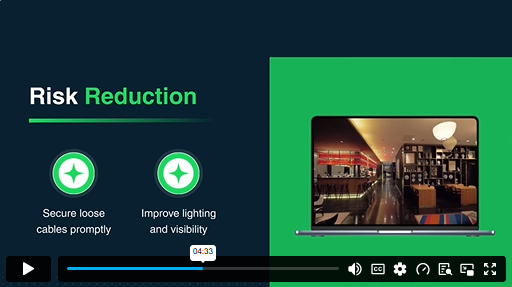
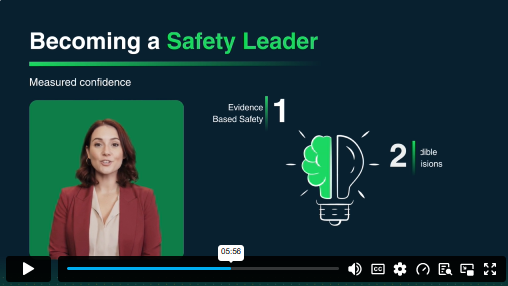
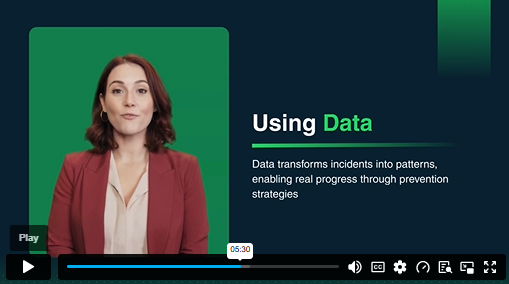
Sneak Peek
Learning Outcomes
Develop the awareness needed to recognise slip, trip and fall hazards, select suitable controls and support safer hospitality workplaces.
- Explain how slips, trips and falls occur in hospitality environments.
- Recognise common hazards affecting kitchens, entrances, stairs and dining areas.
- Understand key UK workplace safety duties and reporting responsibilities.
- Complete structured slip, trip and fall risk assessments.
- Select suitable flooring, entrance and stair safety controls.
- Improve cleaning procedures without creating additional floor hazards.
- Consider footwear performance when managing workplace slip risks.
- Investigate incidents and identify underlying causes accurately.
- Use safety records and performance data to guide improvements.
- Promote stronger leadership and shared responsibility for workplace safety.
Certification
- Instant digital certificate available upon completion
- Printed certificate available for delivery (postal charges may apply)
- Certification is recommended to be renewed every 3 years to stay updated
Accreditation
This course is fully accredited by CPD and endorsed by QLS, ensuring recognised standards of quality and learning.
Who Should Take This Course
This workplace safety training is suitable for employees and managers across hospitality, catering and food service environments. It can support anyone responsible for cleaning, maintenance, customer service, food preparation or workplace supervision.
- Chefs, cooks and kitchen assistants
- Kitchen porters and cleaning staff
- Waiting staff and front-of-house teams
- Bar staff and restaurant employees
- Hotel housekeepers and porters
- Catering supervisors and managers
- Restaurant, café and pub managers
- Facilities and maintenance employees
- Health and safety representatives
- Hospitality business owners
No previous health and safety qualification is required. The course begins with core accident prevention principles before progressing towards technical controls, investigations and workplace governance.
Why Take This Course
Slips and trips can occur when contamination, flooring, footwear, human behaviour and workplace systems interact. Staff awareness is valuable, but training alone cannot correct poor flooring, ineffective cleaning or badly organised work areas.
This slips and trips training helps learners understand how engineering controls, housekeeping procedures and staff responsibilities work together. It also introduces evidence gathering, surface assessment and performance monitoring for organisations seeking lasting improvements.
By enrolling, learners will benefit from:
- CPD-accredited online training
- Hospitality and catering-focused safety content
- Guidance on slip, trip and fall risk assessments
- Coverage of UK health and safety responsibilities
- Floor, entrance, stair and lighting safety awareness
- Cleaning and housekeeping management knowledge
- Guidance on selecting slip-resistant footwear
- Incident reporting and investigation awareness
- Introduction to RIDDOR reporting requirements
- Dedicated tutor support throughout the course
- An Instant FREE CPD Certificate after successful completion
- Flexible, self-paced and mobile-friendly study
- Lifetime access to all course materials
The course can complement workplace inductions and existing hospitality experience. It may also help teams improve housekeeping, record keeping and communication around frequently changing hazards.
Job Opportunities & Salary Expectations in the UK
| Job Role | Indicative UK Salary |
|---|---|
| Kitchen Porter | £17,000–£25,000 per year |
| Waiting Staff | £17,000–£27,000 per year |
| Hotel Housekeeper | £19,000–£28,000 per year |
| Hotel Porter | £21,000–£27,000 per year |
| Chef | £22,000–£40,000 per year |
| Catering Manager | £20,000–£34,000 per year |
| Restaurant Manager | £26,000–£40,000 per year |
| Hotel Manager | £30,000–£60,000 per year |
| Facilities Manager | £26,000–£50,000 per year |
| Health and Safety Adviser | £26,000–£48,000 per year |
Entry Requirements
This online course is accessible to learners from different educational and professional backgrounds.
- No formal qualification is required.
- Previous hospitality experience is unnecessary.
- Learners need an internet-enabled computer, tablet or smartphone.
- An interest in hospitality safety or accident prevention is recommended.
Course Curriculum
The detailed curriculum outline of ourSlips, Trips & Falls Prevention Training for Hospitality & Catering Staff is as follows:
This module introduces the scale and consequences of slips, trips and falls across UK and international workplaces. Learners examine the physical and biomechanical processes that cause people to lose balance or fall. The module also introduces HSE models for assessing slip and trip potential. Common situations involving kitchens, front-of-house areas, stairs and entrances demonstrate why awareness must be supported by reliable controls.
Learners examine the Health and Safety at Work etc. Act 1974 and the Management of Health and Safety at Work Regulations 1999. The module also introduces RIDDOR 2013 and explains how reporting duties relate to qualifying workplace incidents. British testing methods, HSE guidance and reasonably practicable controls are also considered. Learners examine procurement specifications, due diligence and the records organisations may use to demonstrate responsible decision-making.
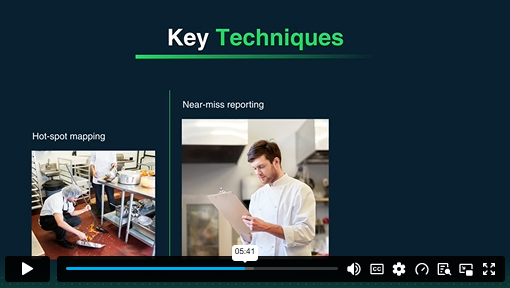
This module introduces a five-step approach to workplace risk assessment. Learners examine evidence gathering, observational audits and tools that help organisations recognise floor and walkway hazards. Human factors such as distraction, fatigue, time pressure and carrying loads are also addressed. The module explains how hotspot maps, near-miss information, risk registers and trend analysis can support stronger controls.
Learners examine flooring requirements for kitchens and other areas exposed to water, grease or food contamination. The module introduces pendulum test values and surface information used when considering floor performance. Entrance matting, canopies, drainage and contaminant control are also covered. Learners consider stair consistency, visual contrast, handrails, lighting and wayfinding when reducing fall risks.
This module examines how detergents, degreasers, chemical residues and drying methods affect floor conditions. Learners also consider cleaning schedules, cable management and post-cleaning checks. The footwear section introduces slip-resistance information, staff trials and replacement cycles. Learners study how contractor arrangements, overshoes, stock controls and workplace policies can support consistent footwear management.
Learners study immediate incident response, including first aid, containment and scene control. The module then covers evidence gathering, witness information, images, CCTV and root-cause analysis. RIDDOR responsibilities, reporting decisions and internal record keeping are also examined. The course concludes with safety performance indicators, leadership, continuous improvement and alignment with ISO 45001 principles.
FAQs
What is slips trips and falls training?
Slips trips and falls training teaches learners how to identify floor hazards, complete risk assessments and apply suitable controls. It covers flooring, cleaning, footwear, stairs, entrances, incident reporting and workplace responsibilities.
Who should take this hospitality safety training?
The course suits kitchen staff, cleaners, chefs, waiting staff, hotel employees, catering managers and business owners. It is also relevant to facilities workers and health and safety representatives.
Why are slips and trips common in catering workplaces?
Hospitality workplaces regularly experience water, food, grease and cleaning residues on floors. Busy walkways, time pressure, carried loads and changing conditions may increase risk when suitable controls are absent.
What hazards are covered in the course?
Learners examine wet floors, spillages, grease, uneven surfaces, loose mats, trailing cables and poor lighting. Stairs, entrances, unsuitable footwear and ineffective cleaning procedures are also covered.
Does the course explain risk assessments?
Yes. Learners study a structured risk assessment process involving hazard identification, evidence collection, control selection and review. The course also considers near misses, hotspot mapping and risk registers.
What is the HSE STEP tool?
STEP is HSE learning material developed to improve awareness of slips, trips and falls. Its sector options include catering and hospitality, alongside content designed for different workplace responsibilities.
Does the course cover floor slip-resistance testing?
Yes. Learners are introduced to the pendulum test, surface roughness and the interpretation of test information. HSE describes the pendulum test under BS 7976 as its preferred method for assessing slip resistance, particularly when evaluating wet conditions.
Will I learn how to select safer footwear?
Yes. The course covers footwear trials, performance, comfort and replacement arrangements. HSE advises employers to consider slip resistance alongside comfort, durability and any other required protective features.
Does the course cover cleaning procedures?
Yes. Learners study detergents, degreasing, chemical residue and drying. The curriculum also addresses cleaning schedules, zone controls and checking floor conditions after cleaning.
What is RIDDOR?
RIDDOR is the Reporting of Injuries, Diseases and Dangerous Occurrences Regulations. It requires responsible persons, such as employers or people controlling work premises, to report specified workplace incidents and maintain relevant records.
Does every workplace slip need to be reported under RIDDOR?
No. A slip, trip or fall is reportable only when it meets a relevant RIDDOR category, such as causing a specified injury or another qualifying outcome. Internal workplace reporting procedures may still require less serious incidents and near misses to be recorded.
Does the course cover incident investigations?
Yes. Learners examine immediate scene control, witness accounts, images, CCTV, measurements and root-cause analysis. They also study how findings can guide corrective action and future prevention.
Is this course available online?
Yes. Training Express delivers the course entirely online. Learners can access the content using a computer, tablet or smartphone and study at their preferred pace.
Is the course CPD accredited?
Yes. This slips trips and falls training course is CPD accredited and supports continuing professional development within hospitality, catering and workplace safety roles.
Will I receive a certificate?
Yes. Learners receive an Instant FREE CPD Certificate after successfully completing the course. The certificate can be added to a CV or professional development record.
Course Curriculum
| Slips, Trips & Falls Prevention Training for Hospitality & Catering Staff | |||
| Module 1 Foundations Of Slips, Trips, And Falls In Hospitality | 00:09:00 | ||
| Module 2 UK Legal Duties and Standards | 00:10:00 | ||
| Module 3 Hazard Identification and Risk Assessment | 00:09:00 | ||
| Module 3 Hazard Identification and Risk Assessment(TRASH) | 00:09:00 | ||
| Module 3 Hazard Identification and Risk Assessment(TRASH)(1) | 00:09:00 | ||
| Module 4 Engineering Controls—Floors, Entrances, and Stairs | 00:09:00 | ||
| Module 5 Cleaning Science and Footwear Programmes | 00:08:00 | ||
| Module 6 Incident Response, Metrics, And Strategic Governance | 00:08:00 | ||
SAVE 84% - OFFER ENDS SOON
£125.00Original price was: £125.00.£20.00Current price is: £20.00. ex Vat- 1 year
- Intermediate
- Course Certificate
- 1 hour, 11 minutes Gift this course
Buying more than one of the same courses?
- 50% discount for orders of 10+ courses
- 60% discount for orders of 50+ courses
- 70% discount for orders of 100+ courses
Looking for a more personalised package?
contact us nowInstructors


Food Hygiene
Health & Safety
Safeguarding
First Aid
Business Skills
Personal Development