GET THIS COURSE AND 2500+ OTHERS FOR ONLY £49 FIND OUT MORE
The Introduction to HACCP in Food Safety course provides a practical understanding of Hazard Analysis and Critical Control Points (HACCP), the internationally recognised food safety management system used to identify, assess and control food safety hazards. Whether you work in food production, catering or hospitality, this course helps you understand how HACCP protects consumers and supports legal compliance.
Food businesses are expected to produce safe, high-quality food while meeting strict industry regulations. Understanding the HACCP principles is essential for preventing biological, chemical and physical hazards before they become food safety incidents. This course explains every stage of the HACCP process in a simple, practical and easy-to-follow way.
Developed by qualified industry professionals, this CPD accredited HACCP course combines interactive learning with real-world examples to help you build confidence in food safety management. By the end of the course, you’ll understand how to develop a HACCP plan, apply HACCP principles in different food businesses and contribute to a stronger food safety culture.
Learning Outcomes
Develop the knowledge and practical skills needed to understand HACCP principles, identify food safety hazards and support effective food safety management systems across the food industry.
- Understand what HACCP is and why it is essential for food safety.
- Explain the seven HACCP principles and twelve implementation steps.
- Identify biological, chemical, physical and allergen hazards.
- Understand how prerequisite programmes support HACCP systems.
- Learn how to develop and implement a practical HACCP plan.
- Recognise Critical Control Points (CCPs) and establish critical limits.
- Apply monitoring, verification and corrective action procedures.
- Understand how HACCP is applied across the food supply chain.
Certification
- Instant digital certificate available upon completion
- Printed certificate available for delivery (postal charges may apply)
- Certification is recommended to be renewed every 3 years to stay updated
Accreditation
This course is fully accredited by CPD and endorsed by QLS, ensuring recognised standards of quality and learning.
Who Should Take This Course
This HACCP course is ideal for anyone responsible for producing, preparing, handling, transporting or managing food. Whether you’re starting a career in food safety or looking to improve your existing knowledge, this course provides practical skills that can be applied across a wide range of food businesses.
- Food Handlers
- Kitchen Staff
- Restaurant Managers
- Catering Professionals
- Food Production Operatives
- Food Manufacturing Staff
- Quality Assurance Officers
- HACCP Team Members
- Food Business Owners
- Anyone interested in food safety management
Whether you work in restaurants, catering, manufacturing, retail or food processing, this course will help you understand HACCP principles and improve food safety practices within your organisation.
Why Take This Course
Food safety is everyone’s responsibility, and HACCP is recognised worldwide as the most effective preventive approach to managing food safety risks. Learning how to identify hazards and implement appropriate control measures can help protect consumers, reduce food waste and support legal compliance.
This course includes:
- CPD accredited professional training.
- Comprehensive introduction to HACCP principles.
- Learn how to create a practical HACCP plan for restaurant and food businesses.
- Interactive learning modules.
- Beginner-friendly lessons with simple explanations.
- Developed by qualified food safety professionals.
- Tutor support throughout the course.
- Instant FREE CPD Certificate.
- Online, self-paced and mobile-friendly learning.
- Lifetime access to course materials.
- Content aligned with current UK food safety standards.
Whether you’re looking to improve workplace food safety, meet regulatory requirements or enhance your career prospects, this HACCP course provides practical knowledge that can be applied immediately across the food industry.
Job Opportunities & Salary Expectations in the UK
A strong understanding of HACCP principles is highly valued throughout the food industry. Completing this course can support career development across food manufacturing, hospitality, catering, quality assurance and food safety management.
| Job Role | Average UK Salary |
|---|---|
| Food Safety Officer | £32,000–£48,000 per year |
| Quality Assurance Officer | £28,000–£40,000 per year |
| HACCP Coordinator | £35,000–£50,000 per year |
| Food Production Supervisor | £30,000–£42,000 per year |
| Food Quality Manager | £38,000–£55,000 per year |
| Technical Compliance Officer | £35,000–£52,000 per year |
| Food Manufacturing Manager | £40,000–£60,000+ per year |
| Environmental Health Officer | £36,000–£55,000 per year |
HACCP knowledge is recognised across the global food industry and can improve your employability while supporting progression into food safety, quality assurance and management roles.
Entry Requirements
This course has been designed for learners of all experience levels.
- No formal qualifications required.
- Suitable for beginners and professionals.
- Computer, tablet or smartphone with internet access.
- A willingness to learn food safety and HACCP principles.
Course Curriculum
The detailed curriculum outline of our Introduction to HACCP in Food Safety is as follows:
Start by building a solid understanding of modern food safety management and the development of HACCP as the world’s leading preventive food safety system. This module explains why HACCP was introduced, explores the different types of food safety hazards and introduces the internationally recognised HACCP principles that form the foundation of effective food safety management.
Before a HACCP plan can be successful, strong prerequisite programmes must already be in place. In this module, you’ll discover how good manufacturing practices, hygiene standards and food safety culture work together to support hazard prevention. You’ll also understand why leadership and employee commitment are essential for maintaining consistently high food safety standards.
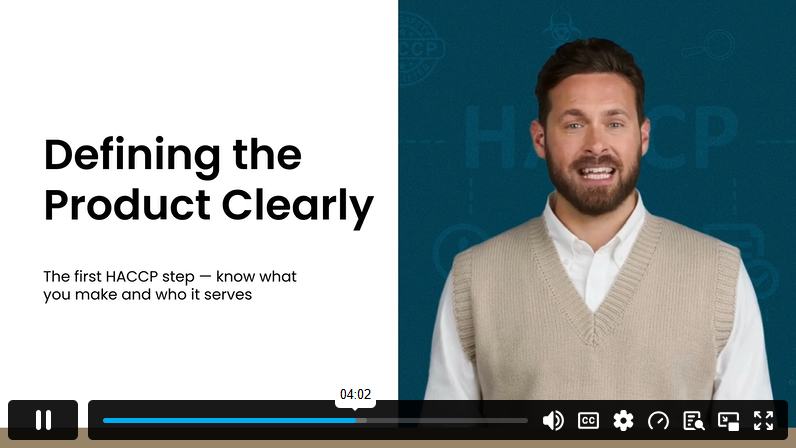
Successful HACCP implementation begins with careful planning. This module explains how organisations prepare for HACCP by developing the right team, understanding products and production processes, creating accurate process flow diagrams and assessing existing food safety systems. These essential planning activities provide the foundation for an effective HACCP programme.
This module focuses on one of the most important stages of HACCP implementation—identifying hazards and determining where they can be effectively controlled. You’ll learn how food businesses assess risks, establish Critical Control Points and select appropriate control measures that help minimise food safety risks throughout production.
Putting a HACCP plan into practice requires effective monitoring, documentation and continuous improvement. This module explores how food businesses monitor Critical Control Points, respond to deviations, verify system performance and maintain accurate records that demonstrate ongoing compliance with food safety requirements.
HACCP principles apply throughout every stage of the food supply chain, from farms to consumers. This module demonstrates how different sectors—including food manufacturing, restaurants, catering services, retail businesses and distribution networks—apply HACCP to manage food safety risks while maintaining product quality and regulatory compliance.
The food industry continues to evolve through technological innovation, changing regulations and increasing consumer expectations. In this final module, you’ll explore how digital technologies, sustainability initiatives and modern food safety practices are shaping the future of HACCP while addressing the challenges faced by today’s food businesses around the world.
FAQs
What is HACCP in food safety?
HACCP (Hazard Analysis and Critical Control Point) is an internationally recognised food safety management system that identifies, evaluates and controls hazards throughout the food production process. Instead of relying on end-product testing, HACCP focuses on preventing food safety risks before they occur, helping businesses produce safe, high-quality food.
What are the 7 HACCP principles?
The seven HACCP principles include conducting a hazard analysis, identifying Critical Control Points (CCPs), establishing critical limits, monitoring procedures, corrective actions, verification procedures and record-keeping. Together, these principles create a structured approach to managing food safety risks across the food supply chain.
What is a HACCP plan?
A HACCP plan is a documented food safety system that outlines how hazards will be identified, monitored and controlled throughout food production. It includes critical control points, monitoring procedures, corrective actions and verification activities to ensure food remains safe for consumers.
Why is a HACCP plan for a restaurant important?
A HACCP plan for a restaurant helps prevent food contamination by identifying food safety risks at every stage of food preparation and service. It enables restaurants to maintain high hygiene standards, comply with food safety regulations and protect customers from foodborne illnesses.
Who should take a HACCP course?
This course is suitable for food handlers, chefs, catering staff, restaurant managers, food manufacturers, quality assurance professionals, food business owners and anyone involved in handling or producing food. It is also ideal for individuals looking to start a career in the food industry.
Do I need previous experience to learn HACCP?
No. This beginner-friendly course explains HACCP principles in a simple and practical way, making it suitable for learners with little or no previous food safety experience. The content gradually builds your understanding through interactive learning.
Does this course explain how to create a HACCP plan?
Yes. You’ll learn how HACCP plans are developed, how hazards are assessed, how Critical Control Points are identified and how monitoring, verification and documentation support an effective food safety management system.
Is HACCP a legal requirement in the UK?
Yes. UK food businesses are required to implement food safety procedures based on HACCP principles. While the exact requirements vary depending on the type of food business, having an effective HACCP-based system is an essential part of demonstrating compliance with food safety legislation.
Will I receive a certificate after completing this course?
Yes. After successfully completing the course, you’ll receive an Instant FREE CPD Certificate. This certificate demonstrates your knowledge of HACCP and food safety management and can strengthen your CV and professional development.
Why choose this online HACCP course?
This CPD accredited HACCP course from Training Express combines expert-written content, tutor support, interactive learning and flexible online study. With lifetime access and practical guidance aligned with UK food safety standards, it provides an excellent foundation for anyone responsible for food safety and hygiene.
Course Curriculum
| Introduction to HACCP in Food Safety | |||
| Module 1 Foundations of Food Safety & HACCP | 00:11:00 | ||
| Module 2 Prerequisite Programs (PRPs) and Food Safety Culture | 00:07:00 | ||
| Module 3 Preparation and Planning for HACCP | 00:07:00 | ||
| Module 4 Conducting Hazard Analysis and Identifying CCPs | 00:07:00 | ||
| Module 5 Implementing the HACCP Plan | 00:06:00 | ||
| Module 6 HACCP in Practice Across the Food Supply Chain | 00:07:00 | ||
| Module 7 Emerging Trends, Challenges, and Future Directions | 00:06:00 | ||
SAVE 84% - OFFER ENDS SOON
£125.00Original price was: £125.00.£20.00Current price is: £20.00. ex Vat- 1 year
- Intermediate
- Course Certificate
- 51 minutes Gift this course
Buying more than one of the same courses?
- 50% discount for orders of 10+ courses
- 60% discount for orders of 50+ courses
- 70% discount for orders of 100+ courses
Looking for a more personalised package?
contact us nowInstructors


Food Hygiene
Health & Safety
Safeguarding
First Aid
Business Skills
Personal Development