Hearing Conservation and Protection

4.9 (18 REVIEWS)
141 STUDENTS

GET THIS COURSE AND 2500+ OTHERS FOR ONLY £49 FIND OUT MORE

Excessive workplace noise can have lasting effects on hearing, health, and overall wellbeing. Without appropriate control measures, prolonged occupational noise exposure may lead to permanent hearing damage, reduced communication, lower productivity, and increased workplace safety risks. Protecting hearing is therefore an essential part of maintaining a safe and compliant working environment across many industries.

The Hearing Conservation and Protection course is a comprehensive online Hearing Protection Training programme designed to develop an understanding of workplace noise hazards, hearing loss prevention, and effective hearing conservation practices. The course explores the science of hearing, types of noise, hearing protection devices, noise measurement, conservation programmes, monitoring techniques, and employer responsibilities under UK health and safety legislation.

Delivered through flexible online learning, this course provides valuable knowledge of Hearing Conservation, workplace noise management, risk assessment, and preventive strategies that support healthier working environments. Whether you work in construction, manufacturing, engineering, logistics, healthcare, or facilities management, this course helps you understand how effective hearing protection contributes to long-term workplace safety.

Sneak Peek

Learning Outcomes

By the end of this course, you’ll have developed a strong understanding of workplace noise hazards, hearing protection measures, and hearing conservation programmes that support health, safety, and legal compliance.

You will be able to:

  • Understand how hearing works and the causes of hearing loss.
  • Explain the effects of occupational noise exposure on hearing health.
  • Recognise different types of workplace noise and their associated risks.
  • Understand methods used to measure workplace noise levels.
  • Identify suitable hearing protection devices for different environments.
  • Explain the correct use, maintenance, and storage of hearing protection equipment.
  • Understand the key components of an effective hearing conservation programme.
  • Recognise the importance of noise risk assessments and worker education.
  • Understand methods for monitoring hearing health and evaluating programme effectiveness.
  • Promote safer workplace practices that support long-term hearing loss prevention.

Certification

  • Instant digital certificate available upon completion
  • Printed certificate available for delivery (postal charges may apply)
  • Certification is recommended to be renewed every 3 years to stay updated
Training-Express-Certificate-CPD-QS-1-1

Accreditation

This course is fully accredited by CPD and endorsed by QLS, ensuring recognised standards of quality and learning.

Who Should Take This Course

This course is suitable for anyone working in environments where workplace noise may present a health and safety risk.

It is ideal for:

  • Construction Workers
  • Factory and Manufacturing Employees
  • Engineers
  • Maintenance Technicians
  • Warehouse Operatives
  • Health and Safety Officers
  • Facilities Managers
  • Site Supervisors
  • Employers and Business Owners
  • Anyone responsible for workplace safety

No previous knowledge of hearing conservation is required.

Why Take This Course

Preventing hearing loss is an important part of workplace health and safety. Understanding noise hazards, selecting appropriate hearing protection, and implementing effective conservation programmes help organisations protect employees while supporting compliance with workplace safety requirements.

Throughout this course, you’ll explore Hearing Conservation, workplace noise hazards, hearing protection devices, noise measurement techniques, hearing conservation programmes, monitoring strategies, and the principles of Noise Awareness Training. You’ll also gain an understanding of how proactive hearing protection contributes to safer and healthier working environments.

Designed for flexible online learning, the course includes lifetime access, tutor support, and an Instant Free CPD Certificate upon successful completion, allowing you to study at your own pace while strengthening your workplace safety knowledge.

Job Opportunities & Salary Expectations in the UK

Knowledge of hearing conservation and workplace noise management supports a wide range of roles where occupational health and safety is a key responsibility.

Job Role

Average UK Salary

Health and Safety Assistant

£25,000–£32,000 per year

Health and Safety Officer

£32,000–£45,000 per year

Site Supervisor

£35,000–£50,000 per year

Facilities Manager

£38,000–£55,000 per year

Health and Safety Manager

£45,000–£65,000 per year

Compliance Manager

£50,000–£75,000 per year

This training also benefits employees in construction, manufacturing, engineering, logistics, utilities, and other sectors where Workplace Noise Safety is an important part of daily operations.

Entry Requirements

This course is suitable for learners of all experience levels.

  • No previous health and safety knowledge is required.
  • A basic understanding of English is recommended.
  • Access to a computer, tablet, or smartphone with an internet connection.
  • An interest in workplace safety, hearing protection, or occupational health.

Course Curriculum

The detailed curriculum outline of our Hearing Conservation and Protection is as follows:

Develop a strong understanding of hearing health and the importance of protecting it in occupational environments. This module explores the physics of sound, the anatomy of hearing, different types of hearing loss, common causes of hearing damage, the impact of Occupational Noise Exposure, and the legal and ethical responsibilities associated with effective Hearing Conservation in the workplace.

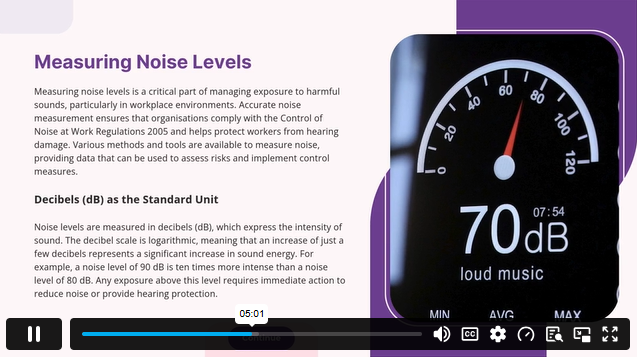
Examine how workplace noise affects hearing and overall wellbeing. This module covers different categories of noise, methods for measuring sound levels using decibels and monitoring equipment, frequency weighting, and the short-term and long-term health effects of prolonged noise exposure. You’ll also gain an understanding of why Noise Risk Assessment plays a vital role in maintaining workplace safety.

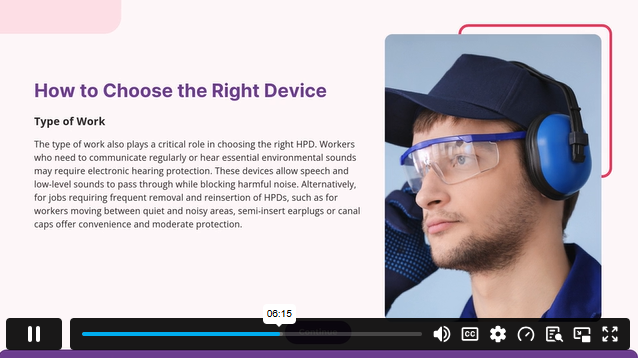
Learn how to select, use, and maintain hearing protection equipment suitable for different working environments. This module introduces various types of hearing protection devices, including earplugs, earmuffs, and electronic protectors, while explaining factors such as attenuation, comfort, fit, durability, maintenance, inspection, replacement, and storage to support effective Hearing Loss Prevention.

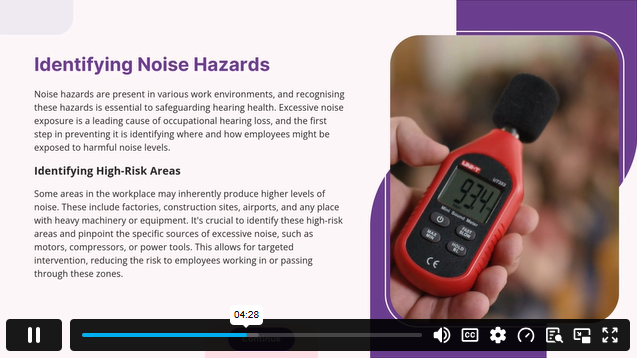
Explore the essential components of an effective workplace hearing conservation programme. This module explains hearing protection policies, audiometric testing, employee education, hazard identification, evaluation of workplace noise exposure, worker engagement, continuous programme improvement, reporting systems, and data-driven approaches that strengthen Workplace Noise Safety and organisational compliance.

Complete the course by examining how organisations assess the effectiveness of hearing conservation initiatives. This module covers hearing health monitoring, early detection of hearing loss, employer responsibilities, programme evaluation, noise exposure data analysis, productivity benefits, cost-benefit assessment, and continuous improvement strategies that support long-term compliance with the Noise at Work Regulations and promote safer working environments.

FAQs

1. What is hearing conservation?

Hearing conservation involves measures that protect workers from excessive noise exposure and help prevent permanent hearing loss in the workplace.

2. Who should take this course?

The course is suitable for employees, supervisors, health and safety professionals, employers, and anyone working in noisy environments.

3. What causes noise-induced hearing loss (NIHL)?

NIHL occurs when prolonged or repeated exposure to high noise levels damages the sensitive structures within the inner ear.

4. What types of hearing protection are covered?

The course explains earplugs, earmuffs, semi-insert devices, and electronic hearing protection, including their appropriate workplace applications.

5. Why is workplace noise monitoring important?

Noise monitoring helps identify hazardous exposure levels, supports risk assessments, and ensures suitable control measures are implemented.

6. Does the course explain noise measurement?

Yes. You’ll learn about decibels, sound level meters, personal dosimeters, and techniques used to assess workplace noise.

7. What is a hearing conservation programme?

It is a structured approach that combines noise assessment, hearing protection, employee training, audiometric testing, and ongoing programme evaluation.

8. Is this course suitable for beginners?

Yes. The course explains hearing conservation principles in a clear and accessible way, making it suitable for learners with no previous experience.

Yes. It introduces employer responsibilities and the importance of complying with workplace noise safety requirements and relevant regulations.

10. How can this course support my career?

It strengthens your knowledge of hearing protection, workplace noise management, and health and safety practices, supporting roles across construction, manufacturing, engineering, facilities management, and occupational health.

Course Curriculum

Hearing Conservation and Protection
Module 1 Introduction to Hearing Conservation 00:10:00
Module 2(E) Understanding Noise and Its Effects 00:10:00
Module 3(E) Hearing Protection Devices 00:11:00
Module 4(E) Creating a Hearing Conservation Program 00:09:00
Module 5(E) Monitoring and Evaluating Hearing Conservation Efforts 00:10:00
Hearing Conservation and Protection
ex Vat

SAVE 84% - OFFER ENDS SOON

TAKE THIS COURSE

OR

🔥 129 units sold in last 24 hours
  • Original price was: £125.00.Current price is: £20.00. ex Vat
  • 1 year
  • Course Certificate
  • 50 minutes
  • Gift this course
£20 /Unit Price
Total:
£100.00
Quantity:

Buying more than one of the same courses?

  • 50% discount for orders of 10+ courses
  • 60% discount for orders of 50+ courses
  • 70% discount for orders of 100+ courses

Looking for a more personalised package?

contact us now

Instructors

141 STUDENTS ENROLLED