GET THIS COURSE AND 2500+ OTHERS FOR ONLY £49 FIND OUT MORE
This Handyman: Appliance and Skills course is designed for Handyman, Handyperson, Electricians, Plumbers, Welders, Carpenters, Painters, Decorators, and Technicians.
Through this course, you will learn about the roles and responsibilities of a handyperson and the work they do, taking you through their basic tools and equipment, electrical work, appliance repairing and maintenance, carpentry, plumbing, basic maintenance, painting, decorating, drilling, tiling and welding.
Furthermore, you will know the benefits and drawbacks of being a handyperson, how handyperson is as a job, license requirements, and how to maintain health and safety by following health and safety regulations. By the end of this course, you will also know how to start your own business successfully as a handyperson by knowing how to find customers and gaining customer satisfaction.
- Instant Free CPD Accredited Certificate
- Developed by Qualified Professionals
- Online and Self-paced
- Access On All Devices
- Meets Industry Standard
- Discounts on Bulk Purchases
- Full Audio Voiceover
- Free Retake Exam
- 24/7 Learning Assistance
- Instant Assessment & Result
Learning Outcomes
By the end of the course, learners will be able to:
- Know why homeowners need handyperson and the benefits of their services
- Know the role handyperson along with its pros and cons
- Become familiar with basic tools and equipment like cement work, electrical, plumbing, painting, and measuring tools
- Learn how to do various flawless electric work
- Demonstrate knowledge of plumbing skills to take care of all the plumbing in a house
- Learn how to work, fix and repair various types of appliances around the house
- Familiarise themselves with basic carpentry like framing walls, roofs, doors, and floors
- Gain basic maintenance skills for equipment and appliances around the horse
- Display knowledge on how to repair, fix, patch, and replace damaged walls and floor tile
- Acquire the skills needed to paint and decorate walls & edges and covering & removing marks & lumps
- Learn about different types of tiling, welding, and drilling
- Grasp how to manage construction projects and maintain health and safety at work at all times
- Be aware of how to start their own business as a handyperson
Who Should Take This Handyman Course?
- Beginners interested in handyman work
- Property maintenance staff
- Landlords and property managers
- Facilities and site support staff
- Individuals wanting to improve DIY knowledge
- Those exploring self-employed handyman opportunities
Why Take This Handyman Course?
Many repair and maintenance jobs require broad knowledge across different tasks rather than one single trade. This course helps you understand how common handyman work is approached safely, efficiently, and professionally.
- Clear, beginner-friendly modules that are easy to follow
- Learn how tools and equipment are used for common tasks
- Understand plumbing, appliance upkeep, and electrical basics
- Explore carpentry, flooring, walls, and fitting work
- Learn painting, decorating, drilling, and tiling methods
- Gain awareness of welding basics and repair applications
- Understand health and safety across maintenance environments
- Discover how to start and grow a handyman business
This course is ideal for anyone who wants broader maintenance knowledge that can be useful at home, in the workplace, or in self-employed roles.
Job Opportunities & Salary Expectations in the UK
This course may support progression into a range of maintenance and support roles across residential, commercial, and facilities settings. Earnings can vary depending on location, experience, workload, and whether you are employed or self-employed.
- Handyman / Handyperson – typically £22,000 – £35,000 per year
- Property Maintenance Operative – typically £24,000 – £35,000 per year
- Maintenance Operative – usually £22,000 – £32,000 per year
- Facilities Assistant – commonly £22,000 – £30,000 per year
- Facilities Operative – typically £23,000 – £32,000 per year
- Caretaker – usually £21,000 – £30,000 per year
- Multi-Skilled Operative – typically £26,000 – £36,000 per year
- Estates Maintenance Worker – commonly £22,000 – £31,000 per year
For those who build strong experience, regular clients, or operate independently, earning potential can increase depending on workload, pricing, and reputation. Progression into supervisory roles or facilities management positions is also possible with experience.
Salaries vary based on region, employer, experience, and self-employed workload.
Entry Requirements for Handyman Training
- No formal entry requirements
- Basic understanding of English recommended
- Interest in maintenance, repairs, or DIY work
- Willingness to learn safe working practices
Accreditation of Handyman Training
All of our courses, including this Handyman Course is fully accredited, providing you with up-to-date skills and knowledge and helping you to become more competent and effective in your chosen field.
CPD Accredited
All our courses are CPD accredited, meeting recognised Continuing Professional Development (CPD) standards.
RoSPA Membership
RoSPA membership shows commitment to health and safety and helps organisations maintain strong safety standards and reduce workplace risks.
British Safety Council Member
A British Safety Council Member demonstrates commitment to high health, safety, and wellbeing standards and safer workplaces.
Certification of Handyman Course
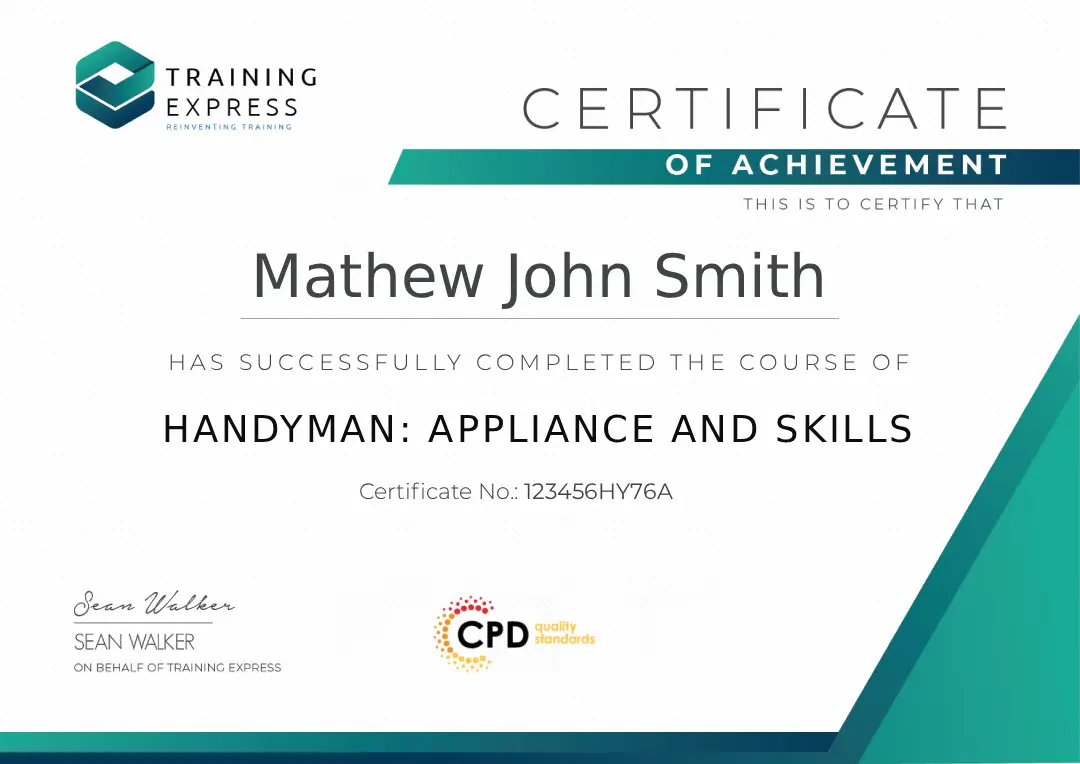
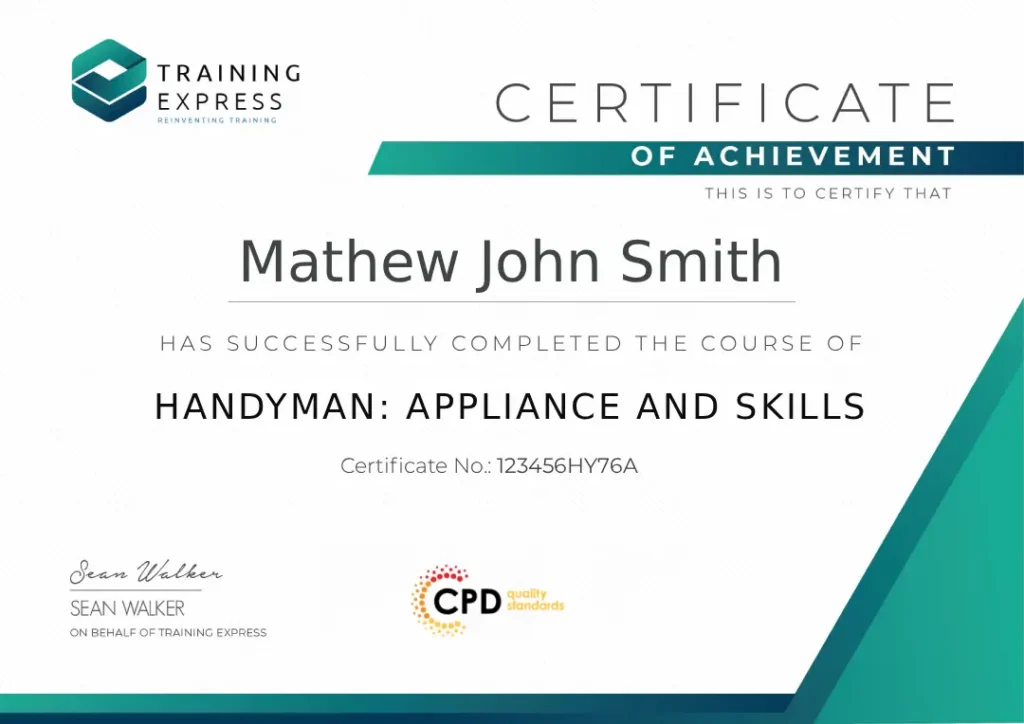
Once you’ve successfully completed your Handyman Training Course online, you will immediately be sent a digital certificate. Also, you can have your printed certificate delivered by post (shipping cost £5.99). All of our courses are fully accredited, providing you with up-to-date skills and knowledge and helping you to become more competent and effective in your chosen field.
Our certifications have no expiry dates, but we recommend renewing them to stay up to date with industry best practices.

Course Curriculum
Module 01: Introduction to Handyperson
- Introduction to Handyperson
Module 02: Basic Tools and Equipment
- Basic Tools and Equipment
Module 03: Electrical Work
- Electrical Work
Module 04: Plumbing Skills
- Plumbing Skills
Module 05: Appliances
- Appliances
Module 06: General Carpentry
- General Carpentry
Module 07: Basic Maintenance Skills
- Basic Maintenance Skills
Module 08: Walls and Floors
- Walls and Floors
Module 09: Painting and Decorating
- Painting and Decorating
Module 10: Drilling, Tiling and Welding
- Drilling, Tiling and Welding
Module 11: Construction Projects
- Construction Projects
Module 12: Health and Safety at Work
- Health and Safety at Work
Module 13: Starting Own Business for Handyperson
- Starting Own Business for Handyperson
Handyman Course Reviews
Excellent
4.8 Average 309+ Reviews
Reviews
Frequently Asked Questions (FAQs)
What does a handyman do in the UK?
A handyman in the UK carries out a variety of repair, maintenance, and installation tasks for homes, rental properties, and workplaces. Common handyman jobs include fixing shelves, assembling furniture, painting, minor plumbing repairs, replacing fittings, basic carpentry, and general property maintenance. Many people hire handyman services for smaller jobs that do not require a specialist contractor.
How much does a handyman earn in the UK?
Handyman salary in the UK can vary depending on location, experience, and whether you are employed or self-employed. Employed handyman roles often range from £22,000 to £35,000 per year, while experienced self-employed handymen may earn more based on workload, pricing, and repeat customers. Earnings can increase with a strong local reputation and a wider range of services.
Can anyone become a handyman in the UK?
Yes, many people start handyman work by learning common repair and maintenance tasks, then building experience over time. A handyman course can help beginners understand tools, safety practices, appliance upkeep, decorating, and general property repairs. Good problem-solving and reliability are also valuable in handyman work.
What skills do you need to be a handyman?
A handyman benefits from knowledge in several areas, including basic plumbing, carpentry, decorating, appliance maintenance, drilling, tiling, and minor repair work. Customer service, time management, communication, and safe tool handling are also important handyman skills in the UK.
Do handymen need qualifications in the UK?
General handyman work in the UK does not always require formal qualifications for everyday repair and maintenance tasks. However, specialist areas such as gas work, advanced electrical installations, or regulated building work may require approved training, registration, or legal compliance depending on the job.
Is handyman work in demand in the UK?
Yes, handyman work remains in demand across the UK because homes, offices, shops, and rental properties regularly need repairs and maintenance. Many landlords, homeowners, and businesses prefer hiring reliable handyman services for cost-effective and convenient upkeep.
Can a handyman do plumbing or electrical work in the UK?
A handyman may carry out basic plumbing or minor maintenance tasks such as changing taps, fixing leaks, replacing fixtures, or simple repairs. Some electrical or specialist plumbing work may require qualified professionals to meet UK safety regulations and legal standards.
What tools does every handyman need?
Common handyman tools include a drill, hammer, screwdrivers, spirit level, tape measure, spanners, ladder, sealant gun, utility knife, and safety equipment. Having the right handyman tools helps complete jobs safely, efficiently, and to a good standard.
Is a handyman business profitable in the UK?
A handyman business can be profitable depending on location, pricing, reputation, and the range of services offered. Many successful handymen increase earnings through repeat customers, landlord contracts, referrals, and offering multiple property maintenance services.
Course Curriculum
| Module 01: Introduction to Handyperson | |||
| Introduction to Handyperson | 00:20:00 | ||
| Module 02: Basic Tools and Equipment | |||
| Basic Tools and Equipment | 00:22:00 | ||
| Module 03: Electrical Work | |||
| Electrical Work | 00:23:00 | ||
| Module 04: Plumbing Skills | |||
| Plumbing Skills | 00:19:00 | ||
| Module 05: Appliances | |||
| Appliances | 00:18:00 | ||
| Module 6: General Carpentry | |||
| General Carpentry | 00:26:00 | ||
| Module 07: Basic Maintenance Skills | |||
| Basic Maintenance Skills | 00:14:00 | ||
| Module 08: Walls and Floors | |||
| Walls and Floors | 00:19:00 | ||
| Module 09: Painting and Decorating | |||
| Painting and Decorating | 00:17:00 | ||
| Module 10: Drilling, Tiling and Welding | |||
| Drilling, Tiling and Welding | 00:22:00 | ||
| Module 11: Construction Projects | |||
| Construction Projects | 00:16:00 | ||
| Module 12: Health and Safety at Work | |||
| Health and Safety at Work | 00:27:00 | ||
| Module 13: Starting Own Business for Handyperson | |||
| Starting Own Business for Handyperson | 00:27:00 | ||
SAVE 84% - OFFER ENDS SOON
£125.00Original price was: £125.00.£20.00Current price is: £20.00. ex Vat- 1 year
- Intermediate
- Course Certificate
- 4 hours, 30 minutes Gift this course
Buying more than one of the same courses?
- 50% discount for orders of 10+ courses
- 60% discount for orders of 50+ courses
- 70% discount for orders of 100+ courses
Looking for a more personalised package?
contact us nowInstructors


Food Hygiene
Health & Safety
Safeguarding
First Aid
Business Skills
Personal Development