GET THIS COURSE AND 2500+ OTHERS FOR ONLY £49 FIND OUT MORE
Are you looking to learn UK GDPR? Do you know that sending one email to the wrong person can count as a reportable data breach?
Most people have sat through a GDPR module at some point. The trouble is that UK data protection law has moved on, and a lot of training hasn’t. The Data (Use and Access) Act 2025 brought in the biggest set of changes since the UK GDPR arrived, and most of them took effect in February 2026.
This GDPR course teaches you the law as it stands now. Across six short modules you’ll learn what counts as personal data, the seven principles behind the law, the lawful bases for using someone’s information, the rights people have over their own data, and exactly what to do when something goes wrong. Most lessons take only a few minutes, so you can study over a lunch break.
By the end, you’ll spot a subject access request when it lands in your inbox and know that the clock has started on a breach. It’s written in plain English for people who handle personal data as part of an ordinary working day, not for lawyers. Pass the online assessment and you’ll receive a CPD-accredited certificate to show for it.
Learning Outcomes
By the end of this course, you’ll be able to:
- Explain what the UK GDPR is, who it applies to and why it exists
- Identify personal data and special category data in your own work
- Apply the seven data protection principles to everyday decisions
- Choose the right lawful basis for using someone’s personal information
- Gather and record consent that meets the standard
- Recognise individual rights and know how to respond to each one
- Handle a subject access request within the correct timescale
- Spot a personal data breach and start the reporting process without delay
- Describe the duties of controllers, processors and data protection officers
- Apply good data protection habits to email, cloud storage and remote work
Certification
Once you’ve successfully completed your GDPR 2026 Training Course online, you will immediately be sent a digital certificate. Also, you can have your printed certificate delivered by post (shipping cost £5.99). All of our courses are fully accredited, providing you with up-to-date skills and knowledge and helping you to become more competent and effective in your chosen field.
What Is GDPR?
GDPR is the law that governs how organisations collect, store, use and share information about living people. In the UK it takes the form of the UK GDPR, which works alongside the Data Protection Act 2018 and the Privacy and Electronic Communications Regulations.
It applies to almost every organisation, from a sole trader with a customer list to a national employer with thousands of records. If you hold information that can identify a person — a name, an email address, a photo, a staff file, even an IP address — the law applies to what you do with it. The regulator is the Information Commission, which took over from the Information Commissioner in September 2026 and is still known as the ICO.
Who Should Take This GDPR Course?
This course is for anyone who handles personal information at work. You don’t need a background in law, IT or compliance. Either way, you’ll fit right in.
It’s particularly useful for:
- HR, recruitment and payroll teams who handle staff records
- Office and admin staff who manage files and correspondence
- Customer service teams who take details over the phone and by email
- Marketers and sales professionals working with contact lists
- Teachers, teaching assistants and school office staff
- Care workers, healthcare administrators and practice managers
- Small business owners and freelancers responsible for their own compliance
- Charity staff, trustees and volunteers
- Managers who need to brief and support a team
If you collect, view, store, share or delete information about people, you’re ready to start.
Why Take This GDPR Course?
Data protection is one of those subjects everyone is expected to understand and very few people are ever properly taught. That’s exactly what this course fixes.
Here’s what you’ll get out of it:
- Confident decisions: know whether you can send that list, keep that file or answer that question.
- Current knowledge: learn the law as it stands in 2026, not as it stood in 2018.
- Evidence for your employer: organisations must show they comply, and trained staff are the clearest proof.
- Fewer costly mistakes: most breaches start with a person, not a system.
- A recognised certificate: CPD-accredited proof for your CV or training record.
- Career value: data protection awareness is expected across HR, admin, marketing, education and care.
- Flexible learning: short, self-paced lessons with a full year’s access.
You don’t need to become a data protection officer to benefit. You just need a handful of good habits that keep personal data safe every day, and this course helps you build them.
Job Opportunities & Salary Expectations in the UK
GDPR knowledge supports roles where handling personal information is part of everyday work. Here are eight relevant UK careers and their typical annual salary ranges, from starter to experienced level:
- Data Entry Administrator — £21,000–£28,000
- Compliance Administrator — £23,000–£32,000
- HR Officer — £26,000–£38,000
- Information Governance Officer — £28,000–£42,000
- GDPR Officer — £32,000–£45,000
- Records Manager — £30,000–£48,000
- Compliance Manager — £40,000–£60,000
- Data Protection Officer — £40,000–£65,000
These National Careers Service salary ranges vary by experience, employer and location. GDPR training can support useful workplace skills, but completing this course alone does not qualify you for these roles or guarantee employment.
Entry Requirements for GDPR 2026 Training Course
There are no formal entry requirements for this course. To get the most out of it, you’ll need:
- A device with a reliable internet connection
- Basic computer skills, like browsing and saving files
- Good enough English to follow the lessons
- To be 16 or over
That’s all. You don’t need any previous legal, compliance or IT knowledge.
Accreditation
All of our courses, including this GDPR 2026 Training Course, are fully accredited, providing you with up-to-date skills and knowledge and helping you to become more competent and effective in your chosen field.
- CPD Accredited — All our courses are CPD accredited, meeting recognised Continuing Professional Development (CPD) standards.
- RoSPA Membership — RoSPA membership shows commitment to health and safety and helps organisations maintain strong safety standards and reduce workplace risks.
- British Safety Council Member — British Safety Council membership demonstrates commitment to high health, safety and wellbeing standards and safer workplaces.
Course Curriculum
The detailed curriculum outline of our GDPR 2026 Training Course is as follows:
What the UK GDPR is, where it came from and who it applies to. Recognising personal data and special category data, the seven data protection principles, and how the UK GDPR, the Data Protection Act 2018 and the regulator fit together.
The six lawful bases for using personal data, when consent is the right choice and when it isn’t, and what valid consent looks like in practice — freely given, specific, informed and easy to withdraw.
The rights people hold over their own information, including the right to be informed, the right of access, and the rights to rectification, erasure, restriction, portability and objection. How to recognise a request, including a verbal one, and how the one-month deadline works.
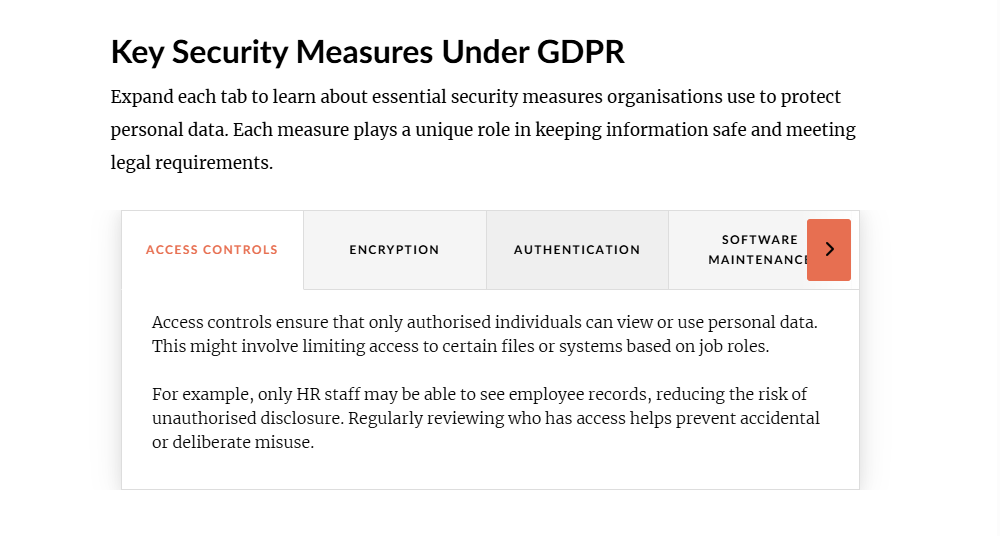
What a personal data breach really is — lost devices and misdirected emails count, not just hacking. Practical security habits, assessing risk, the 72-hour reporting deadline, and why every breach must be recorded whether or not it’s reported.
Controllers, processors and data protection officers, and what the accountability principle asks of an organisation. Privacy notices, records of processing, data protection impact assessments, and the penalties for getting it wrong.
Data protection where it actually bites: email and messaging, cloud storage and file sharing, working from home, CCTV and photos, social media, cookies and marketing. Finishes with the habits that prevent most breaches before they start.
FAQs
1. What will I learn in this GDPR course?
You’ll learn the seven UK GDPR principles, the lawful bases for processing personal data, the rights individuals have over their information, how to handle subject access requests, and how to recognise and report a personal data breach. The course has six modules and takes about [duration].
2. Is GDPR training a legal requirement in the UK?
No law names a specific course. However, the UK GDPR requires organisations to keep personal data secure and to be able to demonstrate that they comply, and training staff is the standard way of doing both.
3. Has GDPR changed recently?
Yes. The Data (Use and Access) Act 2025 amended the UK GDPR, with most changes taking effect on 5 February 2026. A new duty on organisations to handle data protection complaints applied from 19 June 2026, and on 30 September 2026 the Information Commission took over from the Information Commissioner as the regulator, with the same powers and still known as the ICO.
4. Who needs GDPR training at work?
Anyone who collects, views, stores, shares or deletes information about people — HR, customer service, finance, marketing, IT, management, and front-line staff in health, care and education.
5. How often should GDPR training be refreshed?
The law doesn’t set a fixed interval. Most organisations refresh it annually, and also when someone changes role, after an incident, or when the law changes.
6. How long do I have to respond to a subject access request?
One calendar month from receiving it, extendable by up to two further months for complex or repeated requests as long as you tell the person within the first month.
7. How quickly must a data breach be reported?
Without undue delay and, where feasible, within 72 hours of becoming aware of it. If the breach is likely to result in a high risk to the people affected, they must be told directly as well.
8. What is the maximum GDPR fine in the UK?
£17.5 million or 4% of total worldwide annual turnover, whichever is greater, for the most serious infringements. The standard maximum is £8.7 million or 2%.
9. Do I need any experience to take this course?
No. There are no formal entry requirements and no previous legal, compliance or IT knowledge is needed.
Course Curriculum
| GDPR 2026 | |||
| Module 01: Introduction to GDPR | 00:15:00 | ||
| Module 02: Lawful Processing and Consent | 00:00:00 | ||
| Module 03: Individual Rights Under GDPR | 00:00:00 | ||
| Module 04: Data Security and Personal Data Breaches | 00:10:00 | ||
| Module 05: Responsibilities and Compliance Under GDPR | 00:15:00 | ||
| Module 06: GDPR in Everyday Digital Life | 00:10:00 | ||
SAVE 84% - OFFER ENDS SOON
Or
£125.00Original price was: £125.00.£20.00Current price is: £20.00. ex Vat- 1 year
- Intermediate
- Course Certificate
- 50 minutes Gift this course
Buying more than one of the same courses?
- 50% discount for orders of 10+ courses
- 60% discount for orders of 50+ courses
- 70% discount for orders of 100+ courses
Food Hygiene
Health & Safety
Safeguarding
First Aid
Business Skills
Personal Development