GET THIS COURSE AND 2500+ OTHERS FOR ONLY £49 FIND OUT MORE
Safeguarding plays a critical role in protecting children, young people, and vulnerable adults from abuse, neglect, exploitation, and harm. This designated safeguarding lead level 5 course helps learners understand safeguarding responsibilities, legal duties, reporting procedures, and protection processes within UK settings.
This designated safeguarding lead training covers safeguarding vulnerable adults, child protection, safeguarding legislation, abuse and neglect awareness, communication in care, responding to disclosures, referrals, record keeping, and safeguarding responsibilities. It is designed to support safeguarding practice across education, childcare, healthcare, social care, and support environments.
Study this designated safeguarding lead course online at your own pace and develop greater confidence in managing safeguarding concerns effectively. This dsl safeguarding training strengthens your understanding of safeguarding responsibilities across both child and adult safeguarding settings.
- Instant Free CPD Accredited Certificate
- Developed by Qualified Professionals
- Online and Self-paced
- Access On All Devices
- Meets Industry Standard
- Discounts on Bulk Purchases
- Full Audio Voiceover
- Free Retake Exam
- 24/7 Learning Assistance
- Instant Assessment & Result
£29,900 Average Salary, Up to £48,500/yr for this skill according to top UK career sites.
“Every school and college should have a designated safeguarding lead who will provide support to staff to carry out their safeguarding duties.”
UK Department for Education , Keeping Children Safe in Education.
Sneak Peek
Learning Outcomes
By the end of the designated safeguarding lead course, learners will be able to:
- Explain the key principles and importance of safeguarding vulnerable adults and children.
- Understand the main UK safeguarding laws, regulations, and statutory guidance.
- Recognise the signs, indicators, and risk factors of abuse, neglect, and exploitation.
- Identify different types of abuse affecting adults and children, including child sexual exploitation.
- Understand the roles and responsibilities of professionals involved in safeguarding.
- Demonstrate effective communication skills when supporting vulnerable individuals and responding to concerns.
- Respond appropriately to disclosures of abuse while following safeguarding procedures.
- Share information safely and lawfully in line with safeguarding and confidentiality requirements.
- Conduct risk assessments and identify actions needed to reduce safeguarding risks.
- Follow correct reporting, referral, and record-keeping procedures to help protect vulnerable adults and children.
What is Designated Safeguarding Lead Level 5?
A designated safeguarding lead level 5 course provides advanced safeguarding knowledge for individuals responsible for safeguarding children, young people, and vulnerable adults. It focuses on recognising abuse, responding to concerns, understanding safeguarding legislation, managing disclosures, maintaining records, and following safeguarding procedures.
This designated safeguarding lead training covers both child safeguarding and safeguarding vulnerable adults, helping learners understand how to identify risks, support protection processes, and promote safer environments within education, healthcare, childcare, and social care settings.
Who Should Take The Designated Safeguarding Lead Level 5 Course
This Designated Safeguarding Lead Level 5 course is designed for anyone who works with or supports children and vulnerable adults and has a responsibility for safeguarding their wellbeing. It is suitable for both beginners and experienced professionals who want to strengthen their safeguarding knowledge and practice in line with UK guidance.
Suitable for:
- Designated Safeguarding Leads (DSLs)
- Deputy Designated Safeguarding Leads
- Teachers and education staff
- Childcare and nursery practitioners
- Healthcare professionals
- Care workers and support workers
- Social care staff
- Youth workers
- Community support workers
- Anyone with safeguarding responsibilities
Why Take This Designated Safeguarding Lead Level 5 Course
Safeguarding responsibilities require a strong understanding of protection procedures, legislation, reporting processes, and risk management. This level 5 safeguarding training course helps learners develop a broader understanding of safeguarding practice across both child and adult safeguarding settings.
This course helps you:
- Improve safeguarding awareness
- Understand safeguarding legislation
- Recognise abuse and neglect indicators
- Learn safeguarding reporting procedures
- Understand safeguarding referrals
- Improve safeguarding record keeping
- Develop confidence in responding to disclosures
- Understand safeguarding vulnerable adults
- Strengthen child protection knowledge
- Study designated safeguarding lead training online
This course is ideal for learners seeking a deeper understanding of safeguarding responsibilities and safeguarding leadership within UK settings.
Job Opportunities & Salary Expectations in the UK
Safeguarding knowledge is highly valued across education, childcare, healthcare, social care, and support services throughout the UK. Completing this level 5 safeguarding training may support progression into roles involving safeguarding responsibilities, welfare protection, and safeguarding coordination.
Potential roles include:
- Designated Safeguarding Lead (DSL) – typically £30,000 – £55,000 per year
- Deputy Designated Safeguarding Lead – usually £28,000 – £45,000 per year
- Safeguarding Officer – commonly £27,000 – £45,000 per year
- Education Welfare Officer – typically £28,000 – £42,000 per year
- Family Support Worker – usually £24,000 – £38,000 per year
- Youth Support Worker – commonly £23,000 – £35,000 per year
- Care Coordinator – typically £26,000 – £40,000 per year
- Support Worker – usually £22,000 – £32,000 per year
- Community Support Worker – commonly £23,000 – £35,000 per year
Salary levels can vary depending on sector, employer, location, experience, and responsibilities. Safeguarding knowledge may also support wider responsibilities within education, healthcare, childcare, and social care environments.
Entry Requirements for DSL Course
- No formal qualifications are required
- Basic English reading and communication skills are recommended
- Interest in safeguarding and welfare protection
- Willingness to learn safeguarding procedures
Certification of Level 5 Safeguarding Training (DSL)
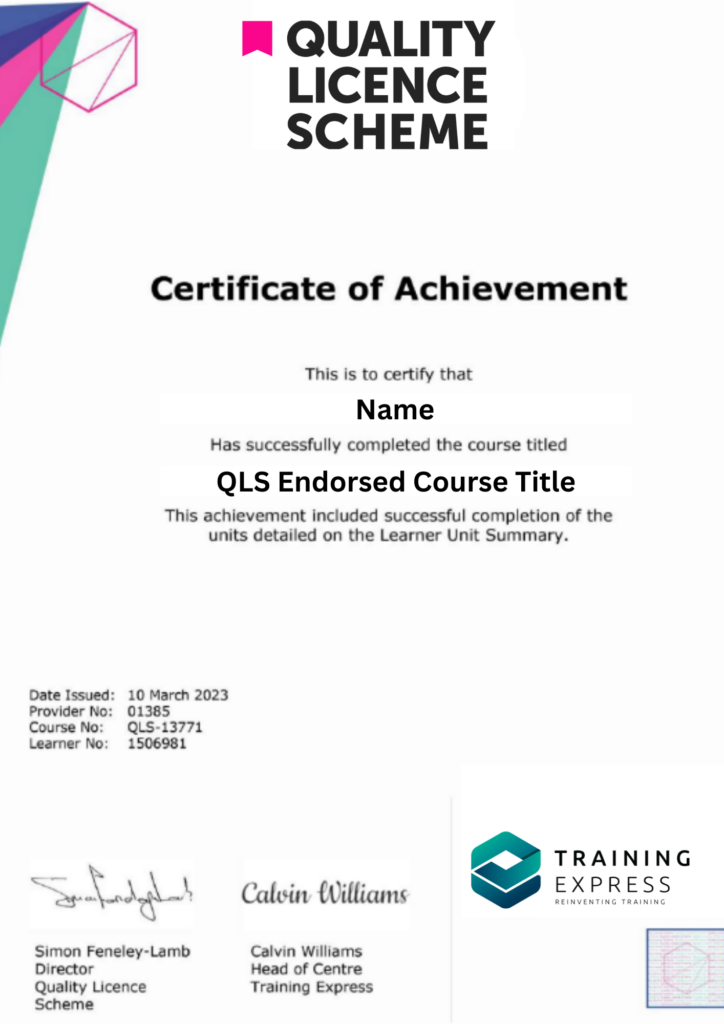
After successfully completing QLS certified Designated Safeguarding Lead Level 5 course, learners will be able to order an endorsed certificate as proof of their achievement. This certificate of achievement endorsed by the Quality Licence Scheme. Additionally, you can have endorsed certificates delivered to your home via post for just £109.
Also, once you’ve successfully completed your course, you will immediately be sent a CPD Accredited FREE Digital Certificate. You can have your FREE printed CPD Accredited Certificate delivered by post (shipping cost £5.99).
Our certifications have no expiry dates, but we recommend renewing them to stay up to date with industry best practices.
Course Curriculum
Safeguarding Vulnerable Adults
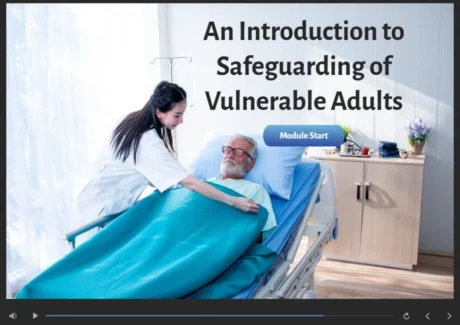
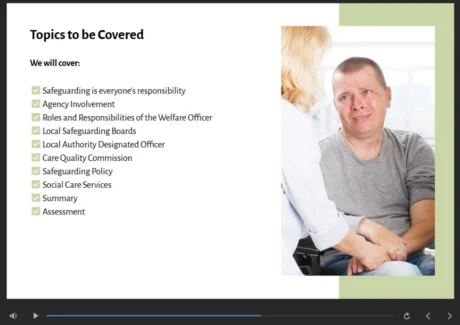
Module 01: An Introduction to Safeguarding of Vulnerable Adults
In Module one, we will focus on what safeguarding vulnerable adults involves and detail the basic things we need to know about safeguarding.
Module 02: Safeguarding Legislations
In module two, we will start to look into the key legislations and why they are relevant to safeguarding as well as the key points to each act.
Module 03: Understanding Abuse and Neglect
In module three, we will look into more detail about what constitutes as abuse or neglect and learn how to recognise the signs of abuse.
Module 04: Safeguarding Vulnerable AdultsPolicy, Roles and Responsibilities
In module four we will look at the responsibilities that you will have in ensuring a vulnerable adults safety and wellbeing.
Module 05: Understanding the Importance of Communication in Care
In module 5, we will look at communication methods within a care setting, and why it is important to build respectful and trusting relationships.
Module 06: Sharing Information and Responding To a Disclosure
In module six, we will look at how we respond to a safeguarding concern.We will learn how we share the information we have, and who to report your concerns to.
Module 07: Reporting Your Concern
In module seven, we will look at your responsibilities when raising a concern in more depth.
You will learn the specifics of what you must report and when and how you should do so.
Safeguarding Children
Module 01: Introduction to Safeguarding
In module one, we will learn what safeguarding means and why children may require safeguarding. It explores key safeguarding practices and principles.
Module 02: Laws and Guidance
In module two, we will get an in-depth understanding of child safeguarding laws, exploring key legislation and guidance. It covers the fundamental principles of The Children Act 1989.
Module 03: Child Abuse
In module three, we will learn about the different types of child abuse and neglect, taking a look at both emotional and physical abuse. We will also learn how to identify the signs of abuse, through case studies and audio-visual guidance.
Module 04: Child Sexual Exploitation
In module four, we will take a detailed look at the different types of child sexual exploitation and their impact on children. We will also learn how to identify the signs of sexual exploitation in children.
Module 05: Responding to Disclosure and Reporting
In module five, we will learn what to do when a child makes a disclosure and how to handle that personal information. It also discusses why children may be reluctant to make a disclosure.
Module 06: Risks and Risk Assessment
In module six, we will be guided through each step of the child safeguarding risk assessment and will learn how to identify child protection and safeguarding risk.
Module 07: Things to Do after Referral
In module seven, we will learn what should be included in a child safeguarding referral and how to report a child at risk of harm. It explores action to be taken after a referral to child’s social care.
Module 08: Record Keeping
In this final module, we will explore best practice procedures for child safeguarding record-keeping, why record keeping is important and how to fill out a safeguarding report.
DSL Course Reviews
Excellent
4.8 Average 340 Reviews
Reviews
FAQs About Level 5 Safeguarding Training
What is a Designated Safeguarding Lead (DSL)?
A Designated Safeguarding Lead (DSL) is the person responsible for overseeing safeguarding and child protection procedures within an organisation. The DSL helps ensure safeguarding concerns are managed appropriately, records are maintained, and referrals are made when necessary to protect children and vulnerable individuals.
What is designated safeguarding lead training?
Designated safeguarding lead training provides knowledge of safeguarding responsibilities, safeguarding legislation, reporting procedures, record keeping, disclosures, referrals, and child protection processes. It is designed for individuals who have safeguarding responsibilities within their organisation.
Who needs designated safeguarding lead training?
This training is suitable for Designated Safeguarding Leads, Deputy DSLs, teachers, childcare practitioners, healthcare staff, care workers, support workers, managers, and anyone responsible for safeguarding children or vulnerable adults.
What is a designated safeguarding lead level 5 course?
A designated safeguarding lead level 5 course provides advanced safeguarding awareness covering child protection, safeguarding vulnerable adults, safeguarding legislation, responding to disclosures, referrals, reporting concerns, and safeguarding responsibilities within UK settings.
What are the responsibilities of a Designated Safeguarding Lead?
A DSL is responsible for managing safeguarding concerns, maintaining safeguarding records, supporting staff, responding to disclosures, making referrals where required, and helping ensure safeguarding policies and procedures are followed effectively.
What types of abuse are covered in this course?
This course covers physical abuse, emotional abuse, sexual abuse, neglect, domestic abuse, bullying, exploitation, child abuse, and abuse affecting vulnerable adults. It also explores safeguarding indicators, risk factors, and reporting responsibilities.
What safeguarding topics are included in this course?
This course covers safeguarding legislation, child protection procedures, safeguarding vulnerable adults, abuse and neglect awareness, risk assessment, communication in care, record keeping, responding to disclosures, information sharing, referrals, and reporting safeguarding concerns.
Can I study a designated safeguarding lead course online?
Yes, learners can complete this designated safeguarding lead course online and study safeguarding responsibilities, safeguarding legislation, disclosure handling, record keeping, and reporting procedures flexibly at their own pace.
What should you do if someone discloses abuse?
If someone discloses abuse, it is important to listen carefully, remain calm, avoid making promises, record the information accurately, and follow safeguarding procedures. Concerns should be reported through the appropriate safeguarding channels to help ensure the individual receives suitable protection and support.
Why is safeguarding important?
Safeguarding helps protect children, young people, and vulnerable adults from abuse, neglect, exploitation, and harm. Effective safeguarding practices promote wellbeing, support safer environments, protect individual rights, and help organisations meet their safeguarding responsibilities.
Course Curriculum
| Safeguarding Vulnerable Adults Training | |||
| Module 01: An Introduction to Safeguarding of Vulnerable Adults | 00:15:00 | ||
| Module 02: Safeguarding Legislations | 00:25:00 | ||
| Module 03: Understanding Abuse and Neglect | 00:25:00 | ||
| Module 04: Safeguarding Vulnerable AdultsPolicy, Roles and Responsibilities | 00:23:00 | ||
| Module 05: Understanding the Importance of Communication in Care | 00:20:00 | ||
| Module 06: Sharing Information and Responding To a Disclosure | 00:20:00 | ||
| Module 07: Reporting Your Concern | 00:17:00 | ||
| Safeguarding Children | |||
| Module 01: Introduction to Safeguarding | 00:21:00 | ||
| Laws and Guidance. | 00:42:00 | ||
| Module 02: Child Abuse | 00:48:00 | ||
| Child Sexual Exploitation. | 00:39:00 | ||
| Risks and Risk Assessment. | 00:16:00 | ||
| Module 03: Responding to Disclosure and Reporting | 00:32:00 | ||
| Things To Do After Referral | 00:22:00 | ||
| Record Keeping. | 00:17:00 | ||
| Assignment | |||
| Assignment – Diploma in Designated Safeguarding Lead at QLS Level 5 | 2 weeks, 1 day | ||
| Get Your QLS Endorsed Certificate | |||
| Get Your Level 5 QLS Endorsed Certificate | 00:00:00 | ||
| Transcript and Certificate | |||
| Share Your Feedback | 00:00:00 | ||
| Transcript and Certificate | 00:00:00 | ||
SAVE 84% - OFFER ENDS SOON
£125.00Original price was: £125.00.£20.00Current price is: £20.00. ex Vat- 1 year
- Level 5
- Course Certificate
- 2 weeks, 1 day Gift this course
Buying more than one of the same courses?
- 50% discount for orders of 10+ courses
- 60% discount for orders of 50+ courses
- 70% discount for orders of 100+ courses
Looking for a more personalised package?
contact us nowInstructors


Food Hygiene
Health & Safety
Safeguarding
First Aid
Business Skills
Personal Development