GET THIS COURSE AND 2500+ OTHERS FOR ONLY £49 FIND OUT MORE
This online course covers the practical, legal, and ethical aspects of caregiving, including assisting loved ones and clients with meals, personal care, transportation, and other physical and emotional needs. You will learn how to deal with dementia, manage the impact of age, disease, and injury, and provide comfort to those in need.
The course begins by introducing you to the roles and responsibilities of caregivers. You will study the legal and ethical issues involved in caregiving, learn how to communicate with individuals with disabilities and cover stress management, body mechanics, and organisational skills. You will also know the purpose of observing, reporting, and documenting the condition of those in your care and the importance of cultural awareness and competency to create a respectful work environment.
The course also examines various ailments and illnesses you may encounter and describes their treatment and prevention. You will learn about dementia disease, and how to cope with these conditions sensitively. You will also learn how to work with patients’ families. The course then studies end-of-life care, the emotional impact of disease and traumatic injuries, and the steps involved in preparing for a patient’s death.
Caring for the aged and people suffering from physical and emotional disabilities requires compassion and understanding. This course provides the knowledge and skills needed to provide effective care to any client or family member in your charge, including the ability to deal with emergencies calmly. Whether you intend to look after a loved one yourself or want to become a professional caregiver, this course will help you take care of those who need it most.
Key Features
Our trusted, high quality and affordable Diploma in Caregiving trains individuals to become experts in their field.
- Accredited by CPD
- Free Certificate
- Instant e-certificate and hard copy dispatch by next working day
- Fully online, interactive course with audio voiceover
- Developed by qualified professionals
- Assignment & Quiz
- Related regulations & prerequisites added
- Free Retake Exams
- Self-paced learning and laptop, tablet, smartphone-friendly
- 24/7 Learning Assistance
- Closed Caption Document & Interpretive Information Included (Multilanguage)
£33,700 Average Salary, Up to £48,600/yr for this skill according to top UK career sites.
“To improve outcomes for both caregivers and care recipients, targeted training for caregivers is needed.”
(Oxford Academic), Innovation in Aging.
Sneak Peek
Learning Outcomes
By completing this Diploma in Caregiving, learners will be able to:
- Understand the principles of adult care across different life stages
- Provide safe and effective personal care to vulnerable individuals
- Apply infection prevention and control practices in care settings
- Demonstrate knowledge of safeguarding adults and legal responsibilities
- Support individuals with mental health, dementia, and complex needs
- Administer care safely including medication awareness and monitoring
- Communicate effectively with service users, families, and professionals
- Recognise and respond appropriately to emergencies and disclosures
- Promote dignity, respect, and person-centred care at all times
- Understand end-of-life care and emotional support practices
What is Diploma in Caregiving?
A Diploma in Caregiving is a structured qualification that trains individuals in providing safe, compassionate, and professional care to adults in residential, community, or home-based settings. It covers essential areas such as personal support, health care basics, safeguarding, communication, and clinical awareness to prepare learners for real-world caregiving roles.
Who Should Take The Caregiver Diploma Course?
This caregiver diploma course is designed for anyone who wants to build a career or improve skills in the care sector.
Ideal learners include:
- Aspiring caregivers with no previous experience
- Career changers looking to enter the UK healthcare sector
- Healthcare assistants and support workers seeking formal qualifications
- International students aiming to work in UK care roles
- Family members caring for elderly or disabled relatives
- Existing care staff wanting to upskill or progress into senior roles
This course is suitable for anyone aged 16+ with a passion for helping others and improving lives.
Why Take This Diploma in Caregiving Course?
Taking this Diploma in Caregiving gives you the essential foundation to start a stable and rewarding career in health and social care. The UK care sector continues to grow, and qualified caregivers are in high demand across hospitals, care homes, and home care services.
This course helps you develop both practical caregiving skills and professional confidence. You learn how to handle real-life care situations, from personal hygiene support to mental health care and safeguarding responsibilities.
Most importantly, it prepares you for meaningful work where you can make a real difference in people’s lives every day. It is not just a qualification—it is a pathway to long-term career growth and job security.
Job Opportunities & Salary Expectations (UK)
After completing this caregiver course, learners can explore a variety of roles in the UK care sector:
- Care Assistant – £20,000 to £26,000 per year
- Domiciliary Care Worker – £21,000 to £27,000 per year
- Support Worker – £20,000 to £28,000 per year
- Healthcare Assistant – £21,000 to £29,000 per year
- Live-in Carer – £22,000 to £35,000 per year
- Senior Care Worker – £25,000 to £32,000 per year
- Mental Health Support Worker – £23,000 to £33,000 per year
- Residential Care Worker – £21,000 to £30,000 per year
Entry Requirements for Caregiver Diploma
- No formal qualifications required (beginner-friendly course)
- Basic understanding of English language
- Passion for caring and supporting vulnerable individuals
Why This Qualification Matters
This qualification is important because it provides the essential foundation needed to work safely and effectively in the caregiving profession. Employers in the UK care sector increasingly require trained staff who understand safeguarding, communication, health and safety, and person-centred care.
It also builds confidence for real-world caregiving situations, helping you respond appropriately to emergencies, emotional needs, and complex care requirements. This makes you more competent and employable in a highly competitive job market.
Ultimately, it is a stepping stone toward long-term career progression in health and social care, opening doors to higher-level qualifications and senior roles.
Accreditation of Caregiver Diploma
All of our courses, including this Diploma in Caregiving, are fully accredited, providing you with up-to-date skills and knowledge and helping you to become more competent and effective in your chosen field.
CPD Accredited
All of our courses are accredited by the CPD Certification Service as conforming to universally accepted Continuing Professional Development (CPD) guidelines.
RoSPA Membership
RoSPA Membership recognises commitment to health and safety excellence, offering guidance, resources, and credibility to organisations aiming to reduce risks and improve workplace safety standards.
British Safety Council Member
A British Safety Council Member demonstrates commitment to high health, safety, and wellbeing standards, promoting best practices and safer workplaces across industries.
Certification of Caregiver Diploma
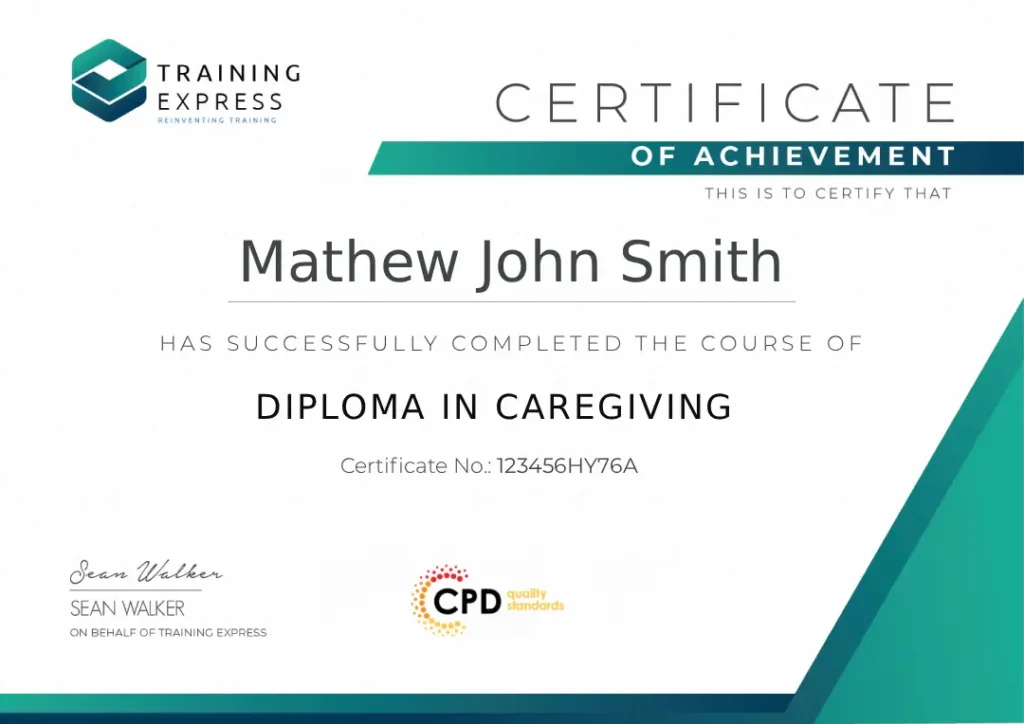
Once you’ve successfully completed your course, you will immediately be sent a digital certificate. Also, you can have your printed certificate delivered by post (shipping cost £5.99). All of our courses are fully accredited, providing you with up-to-date skills and knowledge and helping you to become more competent and effective in your chosen field.
Our certifications have no expiry dates, but we recommend renewing them to stay up to date with industry best practices.
Course Curriculum
The detailed curriculum outline of our Diploma in Caregiving is as follows:
Prerequisite Document
- Prerequisite Document
Diploma in Caregiving
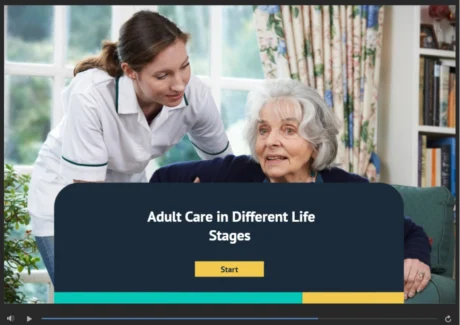
- Module 1: Adult Care in Different Life Stages
- Module 2: Working with Adults
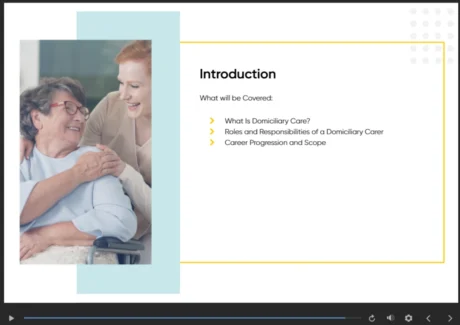
- Module 3: Introduction to Domiciliary Care
- Module 4: Health and Safety for Domiciliary Carers
- Module 5: CSTF Infection Prevention and Control
- Module 6: CSTF Resuscitation – Basic Life Support
- Module 7: Medication Management and Administration
- Module 8: Mental Health Care
- Module 9: Safeguarding of Vulnerable Adults
- Module 10: Safeguarding Legislations
- Module 11: Safeguarding Vulnerable Adults Policy, Roles and Responsibilities
- Module 12: Importance of Communication in Care
- Module 13: Sharing Information and Responding to a Disclosure
- Module 14: Reporting Your Concern
- Module 15: Adult Nursing
- Module 16: Health and Safety
- Module 17: Hygiene
- Module 18: Rest and Sleep Management
- Module 19: Mobility and Immobility Issues of Patients
- Module 20: Pain Management
- Module 21: Nutrition
- Module 22: Assisting with Elimination
- Module 23: Oxygenation
- Module 24: Introduction to End of Life Care
- Module 25: Health and Social Care
- Module 26 : Principles, Theories, and Values of Person-Centred Care
- Module 27: Complexities of Consent
- Module 28: Caregiving for Dementia
- Module 29: How Care Environments can Promote and Undermine People’s Dignity and Rights
Diploma in Caregiving Reviews
Excellent
4.9 Average 5311 Reviews
Reviews
Frequently Asked Questions (FAQs)
What is a Diploma in Caregiving?
A Diploma in Caregiving is a structured professional qualification that trains individuals to provide safe, compassionate, and effective care to adults, elderly people, and vulnerable individuals in home care, residential, and healthcare settings. It covers essential topics such as personal care, safeguarding, communication, mental health support, and clinical awareness.
What does a caregiver do in the UK?
A caregiver in the UK supports individuals who cannot fully care for themselves due to age, illness, disability, or mental health conditions. Their duties include assisting with personal hygiene, medication reminders, mobility support, meal preparation, emotional support, and ensuring dignity and safety in daily life.
What is the minimum salary of a caregiver in the UK?
The minimum salary of a caregiver in the UK typically starts from around £20,000 per year, depending on experience, employer, and location. Entry-level roles such as care assistants may start slightly lower, while experienced carers or live-in carers can earn significantly more.
How much is a caregiver paid monthly in the UK?
On average, caregivers in the UK earn between £1,700 and £2,500 per month. Live-in carers or those working overtime or night shifts can earn higher monthly incomes, especially in private care or agency roles.
What are the top 3 qualities of a good caregiver?
The three most important qualities of a caregiver are:
- Compassion – showing genuine care and empathy
- Patience – handling challenging situations calmly
- Communication skills – understanding and responding effectively to patients and families
These qualities ensure safe, respectful, and person-centred care.
What are the 4 main types of caregivers?
Caregivers are generally classified into:
- Informal caregivers – family or friends providing unpaid care
- Home caregivers – professionals providing care at home settings
- Residential caregivers – working in care homes or assisted living facilities
- Specialist caregivers – focused on dementia, mental health, or palliative care
What are the 10 key duties of a caregiver?
A caregiver’s core responsibilities include:
- Personal hygiene assistance
- Medication support and reminders
- Meal preparation and nutrition support
- Mobility and physical assistance
- Emotional and psychological support
- Monitoring health conditions
- Maintaining hygiene and cleanliness
- Reporting changes in patient condition
- Supporting communication with families and healthcare teams
- Ensuring dignity, safety, and safeguarding compliance
What skills are needed to become a caregiver in the UK?
Key skills include empathy, communication, observation, time management, basic medical awareness, safeguarding knowledge, and the ability to handle emotional and physical care responsibilities effectively.
How to pass a caregiver interview in the UK?
To pass a caregiver interview, candidates should demonstrate understanding of care principles, show empathy, provide examples of handling difficult situations, and explain how they ensure dignity, safety, and confidentiality in care settings.
Is a Diploma in Caregiving worth it for career growth?
Yes, a Diploma in Caregiving is highly valuable as it improves employability, meets UK care standards, and provides a pathway into roles such as care assistant, support worker, and senior care worker, with opportunities for long-term career progression in health and social care.
Course Curriculum
| Prerequisite Document | |||
| Prerequisite Document | 00:20:00 | ||
| Diploma in Caregiving | |||
| Module 1: Adult Care in Different Life Stages | FREE | 00:16:00 | |
| Module 2: Working with Adults | 00:30:00 | ||
| Module 3: Introduction to Domiciliary Care | 00:15:00 | ||
| Module 4: Health and Safety for Domiciliary Carers | 00:33:00 | ||
| Module 5: CSTF Infection Prevention and Control | 00:37:00 | ||
| Module 6: CSTF Resuscitation – Basic Life Support | 00:24:00 | ||
| Module 7: Medication Management and Administration | 00:18:00 | ||
| Module 8: Mental Health Care | 00:23:00 | ||
| Module 9: Safeguarding of Vulnerable Adults | 00:15:00 | ||
| Module 10: Safeguarding Legislations | 00:25:00 | ||
| Module 11: Safeguarding Vulnerable Adults Policy, Roles and Responsibilities | 00:23:00 | ||
| Module 12: Importance of Communication in Care | 00:20:00 | ||
| Module 13: Sharing Information and Responding to a Disclosure | 00:20:00 | ||
| Module 14: Reporting Your Concern | 00:17:00 | ||
| Module 15: Adult Nursing | 00:15:00 | ||
| Module 16: Health and Safety | 00:45:00 | ||
| Module 17: Hygiene | 00:28:00 | ||
| Module 18: Rest and Sleep Management | 00:17:00 | ||
| Module 19: Mobility and Immobility Issues of Patients | 00:15:00 | ||
| Module 20: Pain Management | 00:22:00 | ||
| Module 21: Nutrition | 00:23:00 | ||
| Module 22: Assisting with Elimination | 00:28:00 | ||
| Module 23: Oxygenation | 00:28:00 | ||
| Module 24: Introduction to End of Life Care | 00:18:00 | ||
| Module 25: Health and Social Care | 00:19:00 | ||
| Module 26 : Principles, Theories, and Values of Person-Centred Care | 00:14:00 | ||
| Module 27: Complexities of Consent | 00:15:00 | ||
| Module 28: Caregiving for Dementia | 00:10:00 | ||
| Module 29: How Care Environments can Promote and Undermine People’s Dignity and Rights | 00:18:00 | ||
| Assignment | |||
| Assignment – Diploma in Caregiving | 00:00:00 | ||
SAVE 84% - OFFER ENDS SOON
£125.00Original price was: £125.00.£20.00Current price is: £20.00. ex Vat- 1 year
- Level 3
- Course Certificate
- 10 hours, 51 minutes Gift this course
Buying more than one of the same courses?
- 50% discount for orders of 10+ courses
- 60% discount for orders of 50+ courses
- 70% discount for orders of 100+ courses
Looking for a more personalised package?
contact us nowInstructors


Food Hygiene
Health & Safety
Safeguarding
First Aid
Business Skills
Personal Development