Credit Risk Management Fundamentals

4.9 (18 REVIEWS)
137 STUDENTS

GET THIS COURSE AND 2500+ OTHERS FOR ONLY £49 FIND OUT MORE

Managing credit risk is essential for maintaining financial stability and supporting responsible lending decisions. Financial institutions and businesses must continually assess the likelihood of borrower default, monitor changing risk profiles, and comply with regulatory requirements to protect their financial position.

The Credit Risk Management Fundamentals course is a comprehensive online Credit Risk Management Course designed to introduce the principles, techniques, and frameworks used to identify, assess, monitor, and mitigate Credit Risk. From credit assessment and scoring models to portfolio management, regulatory compliance, and risk evaluation, this course provides a structured understanding of modern credit risk practices.

Delivered through flexible online learning, the course explores Credit Risk Analysis, portfolio modelling, financial statement analysis, Basel regulations, IFRS 9 requirements, and technology-driven monitoring techniques. Whether you’re beginning a career in banking, finance, compliance, or risk management, this course provides valuable knowledge of effective Financial Risk Management.

Sneak Peek

Learning Outcomes

By the end of this course, you’ll have developed a practical understanding of the principles and techniques used to manage credit risk within financial institutions and commercial organisations. You’ll also gain knowledge of credit assessment, portfolio management, regulatory compliance, and modern risk monitoring practices.

You will be able to:

  • Understand the fundamentals of credit risk and its impact on financial organisations.
  • Identify different types and causes of credit risk.
  • Explain the responsibilities of Credit Risk Managers.
  • Apply basic Credit Risk Assessment principles using financial information.
  • Understand the role of credit scoring models and assessment techniques.
  • Explore strategies used to mitigate and manage credit risk.
  • Monitor credit performance using early warning indicators and stress testing.
  • Understand portfolio risk management concepts and capital allocation principles.
  • Recognise common challenges that affect credit risk evaluation.
  • Understand key regulatory frameworks, including the Basel Accords and IFRS 9.

Certification

  • Instant digital certificate available upon completion
  • Printed certificate available for delivery (postal charges may apply)
  • Certification is recommended to be renewed every 3 years to stay updated
Training-Express-Certificate-CPD-QS-1-1

Accreditation

This course is fully accredited by CPD and endorsed by QLS, ensuring recognised standards of quality and learning.

Who Should Take This Course

This course is suitable for individuals seeking to understand how organisations evaluate, monitor, and manage credit-related risks within regulated financial environments.

It is ideal for:

  • Credit Analysts
  • Risk Analysts
  • Banking Professionals
  • Compliance Officers
  • Financial Crime Professionals
  • Commercial Lending Officers
  • Finance Graduates
  • Internal Auditors
  • Corporate Finance Professionals
  • Anyone interested in credit risk management

Whether you’re entering the financial services sector or expanding your existing expertise, this course provides a strong foundation in modern credit risk management.

Why Take This Course

Every lending decision involves uncertainty. Effective credit risk management enables organisations to make informed decisions, reduce potential losses, strengthen regulatory compliance, and improve long-term financial resilience.

Throughout this course, you’ll explore Credit Analysis, credit scoring techniques, portfolio risk management, risk mitigation strategies, stress testing, regulatory frameworks, and technology used in modern Commercial Credit Risk management. You’ll also examine real-world case studies, financial reporting requirements, and the role of high-quality data in supporting reliable credit decisions.

Designed for flexible online learning, the course includes lifetime access, tutor support, and an Instant Free CPD Certificate upon successful completion, allowing you to build practical financial risk knowledge at your own pace.

Job Opportunities & Salary Expectations in the UK

Credit risk professionals are employed across banks, financial institutions, insurance companies, investment firms, fintech organisations, and corporate finance departments.

Job Role

Average UK Salary

Credit Risk Analyst

£34,000–£48,000 per year

Credit Analyst

£35,000–£50,000 per year

Commercial Credit Analyst

£40,000–£58,000 per year

Risk & Compliance Analyst

£42,000–£60,000 per year

Credit Risk Manager

£60,000–£85,000 per year

Enterprise Risk Manager

£75,000–£105,000 per year

As your knowledge and experience grow, opportunities may also arise in banking risk leadership, regulatory compliance, portfolio management, financial crime risk, and enterprise risk management.

Entry Requirements

This course is suitable for learners from a wide range of academic and professional backgrounds.

  • No previous credit risk management experience is required.
  • A basic understanding of English is recommended.
  • Access to a computer, tablet, or smartphone with an internet connection.
  • An interest in banking, finance, compliance, or financial risk management.

Course Curriculum

The detailed curriculum outline of our Credit Risk Management Fundamentals is as follows:

Begin by exploring the foundations of Credit Risk Management and its importance within financial institutions and commercial organisations. This module introduces different types and causes of credit risk, the responsibilities of Credit Risk Managers, the relationship between business and credit risk, and the role of effective risk management in protecting lending activities. You’ll also examine a portfolio-based case study to understand how credit risk is evaluated in practice.

Develop an understanding of the methods used to evaluate creditworthiness and lending risk. This module explores the purpose of Credit Risk Assessment, sources of financial information, the importance of financial statements, commonly used assessment models, structured credit evaluation processes, and the principles behind designing reliable credit scoring models.

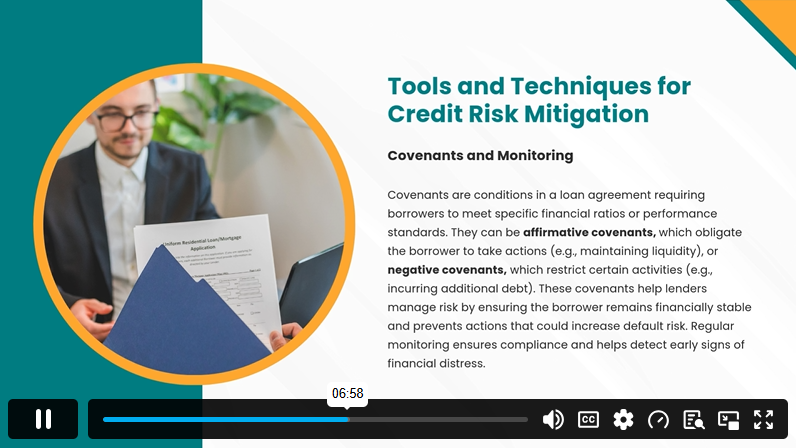
Learn how organisations reduce exposure to potential credit losses through effective planning and control measures. You’ll examine the objectives of credit risk mitigation, the influence of reputation risk, practical mitigation techniques, diversification strategies, risk pooling concepts, and the development of effective credit policies that support consistent lending decisions.

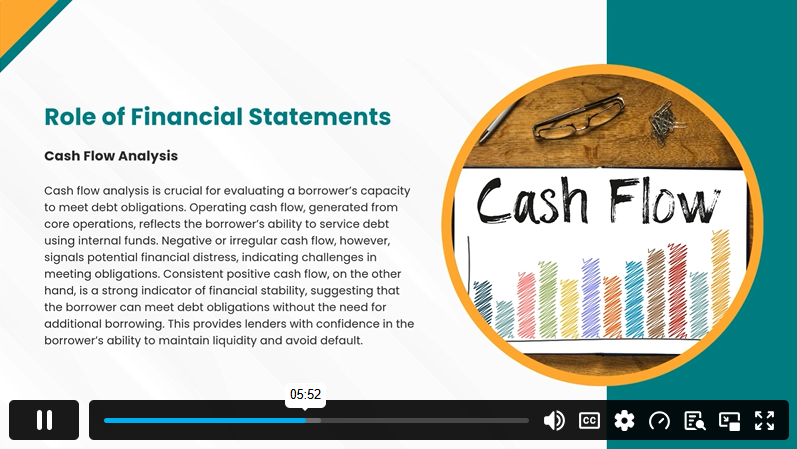
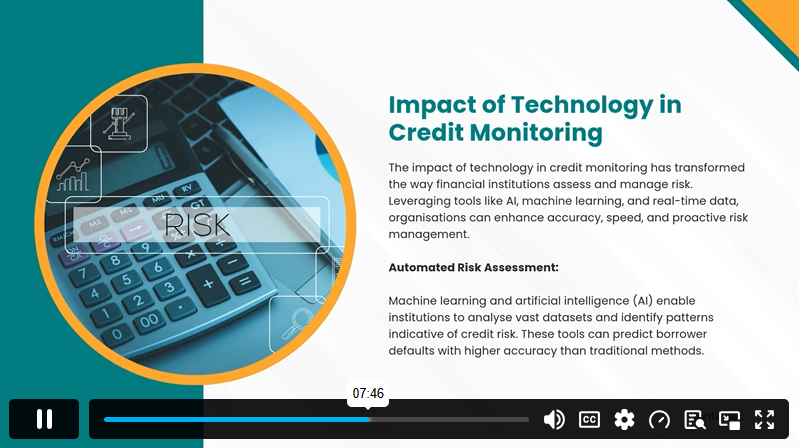
Discover how continuous monitoring helps organisations identify emerging risks before they become significant financial problems. This module covers ongoing performance evaluation, early warning indicators, default prediction techniques, stress testing, scenario analysis, the growing role of technology in credit monitoring, and the challenges associated with managing credit risk in dynamic financial environments.

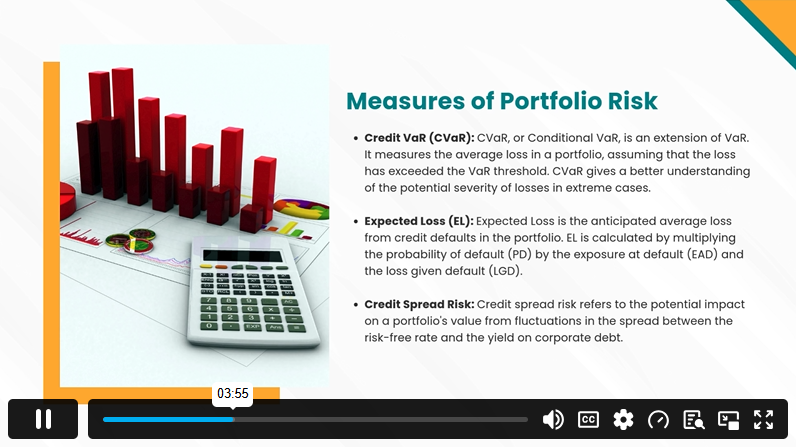
Explore how financial institutions manage risk across an entire lending portfolio rather than focusing on individual borrowers. You’ll examine portfolio risk measurement, loss distribution, concentration and correlation risk, widely recognised industry portfolio models, implementation strategies, and the role of economic capital and capital allocation in supporting sound financial management.

Examine the practical challenges that can influence the accuracy of Credit Risk Analysis. This module explores the importance of high-quality data, the impact of incomplete or unreliable information, external economic factors, bankruptcy risk, lessons learned from notable financial failures, and practical approaches to improving the reliability of credit risk evaluations.

Complete the course by developing an understanding of the regulatory environment that governs modern credit risk management. You’ll explore regulatory requirements for financial institutions, the Basel I, II, and III Accords, Risk-Weighted Assets (RWA), IFRS 9 reporting requirements, disclosure obligations, and the importance of maintaining compliance while supporting responsible and sustainable lending practices.

FAQs

What is Asbestos Awareness Training for Educational Institutions?

Asbestos Awareness Training for Educational Institutions is an online course that teaches staff how to recognise asbestos hazards, understand the risks of exposure, and follow safe reporting procedures. It focuses on preventing accidental disturbance of asbestos-containing materials rather than removing them. The training helps create safer schools, colleges, and universities while supporting legal compliance.

Who should take an asbestos awareness course in a school or college?

This course is suitable for teachers, caretakers, cleaners, maintenance staff, site managers, contractors, and anyone who may encounter asbestos-containing materials during their work. It is also beneficial for facilities teams and school leaders responsible for health and safety. No prior knowledge is required, making it ideal for beginners.

Under UK health and safety legislation, asbestos awareness training is required for workers who may come into contact with asbestos during their duties. Educational institutions have a duty to manage asbestos risks and ensure relevant staff understand how to avoid exposure. Proper training helps organisations meet these responsibilities and reduce workplace hazards.

Can this course qualify me to remove or dispose of asbestos?

No, this course does not provide permission or qualifications to remove, repair, or dispose of asbestos-containing materials. Instead, it teaches learners how to identify potential risks, avoid disturbing asbestos, and report concerns appropriately. Licensed asbestos work must only be carried out by authorised professionals.

Why is asbestos still found in many educational buildings?

Many schools and educational facilities built before the asbestos ban were constructed using materials that contained asbestos because of its durability and fire-resistant properties. Although these materials may remain safe if left undisturbed, they can become dangerous when damaged or deteriorated. Awareness training helps staff recognise and manage these risks responsibly.

What are the health effects of asbestos exposure?

Inhaling asbestos fibres can lead to serious illnesses such as asbestosis, lung cancer, and mesothelioma. These diseases often develop many years after exposure, meaning symptoms may not appear until decades later. Understanding the health risks highlights the importance of preventing fibre release and avoiding unnecessary disturbance.

What should I do if I suspect asbestos has been disturbed?

If you believe asbestos-containing material has been damaged, stop work immediately and keep yourself and others away from the area. Do not attempt to clean, repair, or remove the material yourself. Report the incident through the correct procedures so trained personnel can assess and manage the situation safely.

How can I identify asbestos-containing materials in a school?

It is often impossible to confirm asbestos simply by looking at a material, as many products appear similar. The safest approach is to consult asbestos registers, surveys, and management plans provided by the institution. If there is any doubt, treat the material as potentially hazardous and report it rather than disturbing it.

Is this online asbestos awareness course suitable for beginners?

Yes, the course is designed for learners with little or no previous knowledge of asbestos safety. The content is presented in an easy-to-understand format with practical examples that relate to educational environments. Self-paced learning allows participants to study whenever it is convenient for them.

What certificate will I receive after completing the course?

After successfully completing the training, learners receive an Instant Free CPD Certificate to demonstrate their achievement and commitment to workplace safety. The course is CPD accredited and developed to meet recognised industry standards. The certificate can strengthen professional development and support ongoing compliance within educational settings.

Course Curriculum

Credit Risk Management Fundamentals
Module 1 Introduction to Credit Risk 00:14:00
Module 2 Credit Risk Assessment Techniques 00:13:00
Module 3 Credit Risk Mitigation Strategies 00:12:00
Module 4 Credit Risk Monitoring and Management 00:12:00
Module 5 Portfolio Models for Credit Risk 00:13:00
Module 6 Challenges of Credit Risk Assessment and Evaluation 00:13:00
Module 7 Regulatory Frameworks and Compliance 00:15:00
Credit Risk Management Fundamentals
ex Vat

SAVE 84% - OFFER ENDS SOON

TAKE THIS COURSE

OR

🔥 129 units sold in last 24 hours
  • Original price was: £125.00.Current price is: £20.00. ex Vat
  • 1 year
  • Course Certificate
  • 1 hour, 32 minutes
  • Gift this course
£20 /Unit Price
Total:
£100.00
Quantity:

Buying more than one of the same courses?

  • 50% discount for orders of 10+ courses
  • 60% discount for orders of 50+ courses
  • 70% discount for orders of 100+ courses

Looking for a more personalised package?

contact us now

Instructors

137 STUDENTS ENROLLED