GET THIS COURSE AND 2500+ OTHERS FOR ONLY £49 FIND OUT MORE
Working in confined spaces presents unique health and safety challenges that require careful planning, hazard identification, and strict adherence to safe working procedures. Whether in construction, manufacturing, utilities, water treatment, or industrial maintenance, understanding confined space risks is essential for protecting workers and ensuring compliance with workplace safety regulations.
The Confined Space Entry course is a comprehensive online Confined Space Training programme designed to develop a practical understanding of confined space hazards, entry procedures, risk assessment, emergency planning, and legal responsibilities. The course explores safe systems of work, permit-to-work procedures, atmospheric monitoring, rescue planning, and the specialist equipment used to support safe confined space operations.
Delivered through flexible online learning, this course provides valuable knowledge of Confined Space Safety, hazard control, Personal Protective Equipment (PPE), gas detection, emergency preparedness, and UK health and safety legislation. Whether you work in construction, engineering, utilities, facilities management, or industrial operations, this course supports safer decision-making when working in confined spaces.
- CPD Accredited
- Fully online, self-paced learning
- Interactive modules for better engagement
- Audio and visual learning materials
- Assessment included
- Accessible on mobile, tablet, and desktop
- 24/7 tutor support
Learning Outcomes
By the end of this course, you’ll have developed a practical understanding of the principles, procedures, and legal requirements associated with confined space entry. You’ll gain knowledge of hazard identification, risk assessment, safe systems of work, emergency planning, and the equipment used to support safe confined space operations.
You will be able to:
- Understand what constitutes a confined space and the associated workplace hazards.
- Recognise atmospheric, physical, biological, and chemical hazards found in confined spaces.
- Explain the purpose of confined space risk assessments and safe systems of work.
- Understand the role of Permit to Work systems in controlling confined space activities.
- Identify the Personal Protective Equipment (PPE) and specialist equipment used during confined space entry.
- Understand atmospheric monitoring, ventilation, and gas detection principles.
- Explain isolation procedures, including Lockout/Tagout (LOTO) systems.
- Recognise the importance of emergency rescue planning and effective communication systems.
- Understand UK legal responsibilities relating to confined space work.
- Explore emerging technologies that improve confined space monitoring and worker safety.
Certification
- Instant digital certificate available upon completion
- Printed certificate available for delivery (postal charges may apply)
- Certification is recommended to be renewed every 3 years to stay updated
Accreditation
This course is fully accredited by CPD and endorsed by QLS, ensuring recognised standards of quality and learning.
Who Should Take This Course
This course is suitable for anyone involved in planning, supervising, or carrying out work in confined spaces.
It is ideal for:
- Construction Workers
- Maintenance Engineers
- Health and Safety Officers
- Site Supervisors
- Facilities Management Staff
- Utilities Workers
- Industrial Operatives
- Mechanical and Electrical Engineers
- Safety Managers
- Anyone responsible for confined space safety
Whether you’re new to confined space work or refreshing your existing knowledge, this course provides valuable guidance on safe working practices and regulatory compliance.
Why Take This Course
Confined space work involves significant hazards that require careful preparation, appropriate equipment, and effective emergency procedures. Understanding these requirements helps reduce workplace risks while supporting legal compliance and safer working environments.
Throughout this course, you’ll explore Confined Space Entry, hazard identification, permit-to-work systems, atmospheric monitoring, gas detection, emergency rescue planning, isolation procedures, communication systems, and modern technologies used to improve confined space safety. You’ll also gain an understanding of the responsibilities shared by employers and employees under UK health and safety legislation.
Designed for flexible online learning, the course includes lifetime access, tutor support, and an Instant Free CPD Certificate upon successful completion, allowing you to strengthen your health and safety knowledge while studying at your own pace.
Job Opportunities & Salary Expectations in the UK
Confined space safety knowledge is valuable across construction, utilities, manufacturing, oil and gas, facilities management, transport, and industrial maintenance sectors.
Job Role | Average UK Salary |
Construction Operative | £28,000–£36,000 per year |
Maintenance Technician | £30,000–£42,000 per year |
Utilities Technician | £32,000–£45,000 per year |
Health and Safety Officer | £35,000–£50,000 per year |
Site Supervisor | £38,000–£55,000 per year |
Health and Safety Manager | £50,000–£75,000 per year |
Knowledge of confined space safety can also support career progression into site management, safety leadership, industrial operations, compliance, and specialist rescue or maintenance roles.
Entry Requirements
This course is suitable for learners of all experience levels.
- No previous confined space experience is required.
- A basic understanding of English is recommended.
- Access to a computer, tablet, or smartphone with an internet connection.
- An interest in workplace safety, construction, engineering, or industrial operations.
Course Curriculum
The detailed curriculum outline of our Confined Space Entry is as follows:
Build a strong foundation in Confined Space Safety by understanding what constitutes a confined space and why these environments require specialised safety measures. This module explores the definition of confined spaces, common workplace hazards, industry-specific examples, legal responsibilities under the Confined Spaces Regulations 1997 (UK), employer and employee duties, hazard identification, risk assessment processes, and the development of safe systems of work to minimise operational risks.
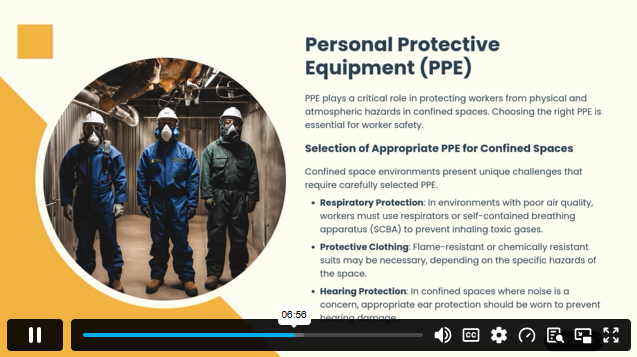
Learn the essential procedures that support safe Confined Space Entry before, during, and after work activities. This module covers permit-to-work systems, entry preparation, pre-entry inspections, emergency exit arrangements, atmospheric monitoring, selecting appropriate Personal Protective Equipment (PPE), equipment maintenance, gas detection devices, ventilation systems, and rescue and retrieval equipment used to protect workers in confined environments.
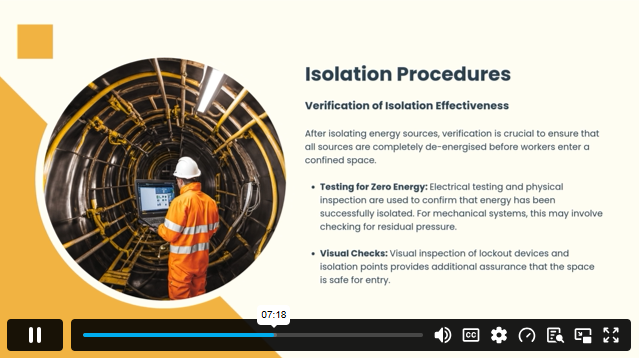
Develop an understanding of the control measures used to reduce confined space risks and prepare for emergency situations. This module examines atmospheric monitoring techniques, calibration of monitoring equipment, ventilation methods, Lockout/Tagout (LOTO) procedures, isolation of hazardous energy sources, emergency rescue planning, rescue team readiness, communication systems, and technologies that support effective coordination during confined space operations.
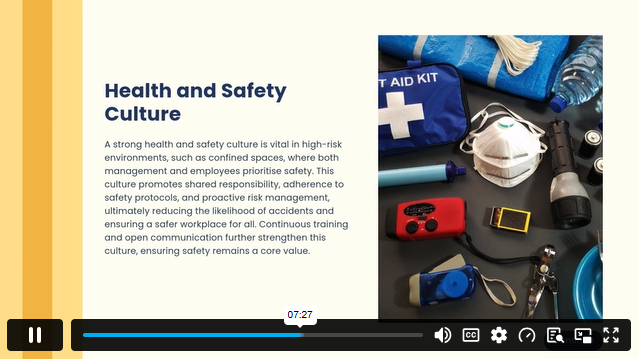
Explore the health, safety, and organisational factors that contribute to safe working in confined spaces. This module explains the health effects of toxic gases such as carbon monoxide and hydrogen sulphide, heat stress management, ergonomic hazards, competency and training requirements, promoting a positive safety culture, behavioural safety principles, incident investigation procedures, root cause analysis, and reporting requirements under UK health and safety legislation.
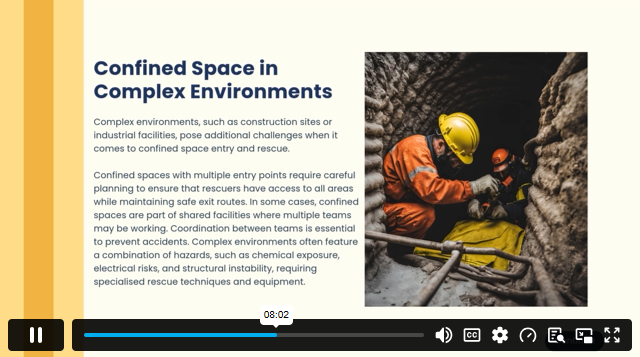
Complete the course by examining advanced approaches that enhance modern confined space operations. This module explores specialist rescue techniques, rope-based recovery systems, breathing apparatus, rescue team coordination, drone-assisted inspections, remote sensing technologies, digital monitoring solutions, managing complex multi-hazard environments, industry-specific entry procedures, post-entry reviews, and continuous improvement strategies that strengthen long-term Confined Space Risk Assessment and workplace safety performance.
FAQs
1. What is a confined space?
A confined space is an area that is substantially enclosed and may present hazards such as limited oxygen, toxic gases, restricted access, or other conditions that increase the risk to workers.
2. Who should take this course?
The course is suitable for construction workers, maintenance personnel, engineers, supervisors, health and safety professionals, and anyone involved in confined space operations.
3. What is a Permit to Work system?
A Permit to Work is a formal safety procedure that authorises specific high-risk work, ensuring hazards are identified and appropriate control measures are in place before entry.
4. Why is atmospheric monitoring important?
Atmospheric monitoring helps detect dangerous gases, oxygen deficiencies, or flammable atmospheres before and during confined space work, reducing the risk of serious incidents.
5. Does the course explain confined space regulations?
Yes. The course introduces the Confined Spaces Regulations 1997 (UK) along with employer and employee responsibilities for safe working.
6. What equipment is commonly used during confined space entry?
You’ll learn about PPE, gas detectors, ventilation equipment, communication devices, rescue systems, and other specialist equipment used to improve safety.
7. Are emergency rescue procedures covered?
Yes. The course explains rescue planning, emergency response arrangements, communication methods, and the importance of preparing for confined space emergencies.
8. What is Lockout/Tagout (LOTO)?
LOTO is a safety procedure used to isolate hazardous energy sources before maintenance or entry into confined spaces, helping prevent accidental equipment activation.
9. Is this course suitable for beginners?
Yes. The course introduces confined space principles before progressing to more advanced topics such as rescue techniques, hazard control, and emerging safety technologies.
10. How can this course support my career?
It develops knowledge of confined space safety, risk assessment, regulatory compliance, and emergency procedures, supporting careers in construction, engineering, utilities, facilities management, and workplace health and safety.
Course Curriculum
| Confined Space Entry | |||
| Module 1 Introduction to Confined Spaces | 00:12:00 | ||
| Module 2 Entry Procedures and Equipment | 00:11:00 | ||
| Module 3 Hazard Control and Emergency Preparedness | 00:13:00 | ||
| Module 4 Health and Safety Considerations | 00:12:00 | ||
| Module 5 Advanced Techniques & Emerging Technologies | 00:14:00 | ||
SAVE 84% - OFFER ENDS SOON
£125.00Original price was: £125.00.£20.00Current price is: £20.00. ex Vat- 1 year
- Intermediate
- Course Certificate
- 1 hour, 2 minutes Gift this course
Buying more than one of the same courses?
- 50% discount for orders of 10+ courses
- 60% discount for orders of 50+ courses
- 70% discount for orders of 100+ courses
Looking for a more personalised package?
contact us nowInstructors


Food Hygiene
Health & Safety
Safeguarding
First Aid
Business Skills
Personal Development