GET THIS COURSE AND 2500+ OTHERS FOR ONLY £49 FIND OUT MORE
 16 others bought this course in the last 24 hours!
Community Mental Health: Youth Work and Social Care Course teaches you everything on the topic thoroughly from scratch so you can achieve a professional certificate for free to showcase your achievement in professional life. This Community Mental Health: Youth Work and Social Care Course is a comprehensive, instructor-guided course, designed to provide a detailed understanding of the nature of the related sector and your key roles within it.
To become successful in your profession, you must have a specific set of skills to succeed in today’s competitive world. In this in-depth training course, you will develop the most in-demand skills to kickstart your career, as well as upgrade your existing knowledge & skills. The training materials of this course are available online for you to learn at your own pace and fast-track your career with ease.
Key Features of the Community Mental Health: Youth Work and Social Care Training Course
Our trusted, high quality and affordable Community Mental Health: Youth Work and Social Care Training Course trains individuals to become experts in their field.
- Accredited by CPD
- Instant e-certificate and hard copy dispatch by next working day
- Fully online, interactive course with audio voiceover
- Developed by qualified professionals in the field
- Self-paced learning and laptop, tablet, smartphone-friendly
- 24/7 Learning Assistance
- Discounts on bulk purchases
Sneak Peek
Who should take the Community Mental Health: Youth Work and Social Care course
Anyone with a knack for learning new skills can take this Community Mental Health: Youth Work and Social Care Course. While this comprehensive training is popular for preparing people for job opportunities in the relevant fields, it also helps to advance your career for promotions.
Accreditation
All of our courses, including this Community Mental Health: Youth Work and Social Care Online course, are fully accredited, providing you with up-to-date skills and knowledge and helping you to become more competent and effective in your chosen field.
Assessment
At the end of the course, there will be an online assessment, which you will need to pass to complete the course. Answers are marked instantly and automatically, allowing you to know straight away whether you have passed. If you haven’t, there’s no limit on the number of times you can take the final exam. All this is included in the one-time fee you paid for the course itself.
Certification
Once you’ve successfully completed your Community Mental Health: Youth Work and Social Care Online Course, you will immediately be sent a digital certificate. Also, you can have your printed certificate delivered by post (shipping cost £3.99). Our certifications have no expiry dates, although we do recommend that you renew them every 12 months.
Course Curriculum
The detailed curriculum outline of our Community Mental Health: Youth Work and Social Care course is as follows:
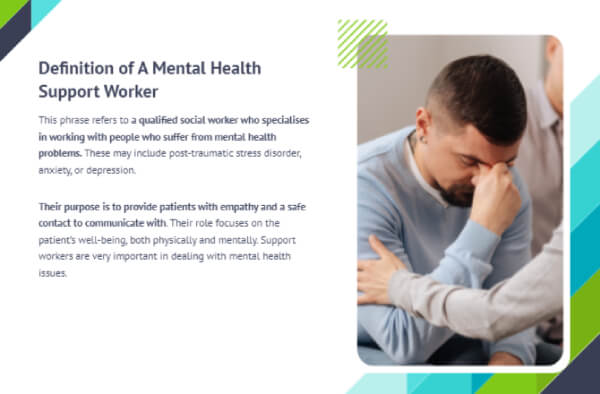
- Definition of Mental Health Support WorkerÂ
- Duties & Responsibilities of a Mental Health Support WorkerÂ
- Qualities of A Great Support WorkerÂ
- Why become a Mental Health Support Worker?Â
- Experience And QualificationsÂ
- Salary & Working HoursÂ
- Code of ConductÂ
- Summary/Keynotes of the Module
- Assessment
- What are Community Mental Health Teams (CMHTs)?Â
- Who makes up a CMHT?Â
- Referral to CMHTÂ
- Procedures after the ReferralÂ
- Care Programme Approach (CPA)Â
- Discharge from the CMHTÂ
- Issues with CMHTÂ
- ConfidentialityÂ
- What can I Expect as a Support Worker, Friend or Relative?
- Summary/Keynotes of The Module
- Assessment
- Who is a Service User?Â
- What does Involving Service User mean?Â
- Benefits of Service User InvolvementÂ
- Methods for Involving Patients )
- Focus groups
- Patient as Teacher
- Patient shadowing
- Patient diaries
- Discovery interviews
- Improving Practice Questionnaire (IPQ) and Critical Friends Groups (CFGs)
- Importance of Service User InvolvementÂ
- Summary/Keynotes of The Module
- Assessment
- Necessity of Communication in Health and Social CareÂ
- Communication in the context of CaregivingÂ
- One-to-one communicationÂ
- Group Communication
- Informal CommunicationÂ
- Formal Communication
- Communication between colleagues
- Communication between professional people and people using servicesÂ
- Communication with professionals
- Multi-agency workingÂ
- Multi-professional workingÂ
- Degrees of formality in different contextsÂ
- Forms of CommunicationÂ
- Types of interpersonal interaction
- Speech/Verbal CommunicationÂ
- Non-verbal communicationÂ
- Communication and language needs and preferences
- British Sign LanguageÂ
- MakatonÂ
- BrailleÂ
- Use of signs and symbolsÂ
- Written communicationÂ
- Pictures and objects of referenceÂ
- FingerspellingÂ
- Communication passports
- Technological aids to communicationÂ
- Human aids to communicationÂ
- Variation between culturesÂ
- Building RapportÂ
- Environmental factors that influence communicationÂ
- Barriers to communicationÂ
- Barriers associated with personality, self-esteem, anxiety and depressionÂ
- Barriers associated with aggression and submissivenessÂ
- Barriers associated with assumptions
- Barriers associated with values and belief systemsÂ
- Barriers associated with cultural variationÂ
- Use and abuse of powerÂ
- Barriers associated with the effects of alcohol/drugsÂ
- Strategies for overcoming communication barrier
- Summary
- What is Health and Social Care?Â
- Healthcare OverviewÂ
- Who provides Healthcare?Â
- Social care overviewÂ
- Social care needs assessmentÂ
- What is a social care need assessment?Â
- When must the local authority assess?Â
- Who provides social care?Â
- Healthcare vs Social CareÂ
- Why is the health and social carer a valuable career?
- Summary
- Role of Health and Social Care WorkersÂ
- Additional Duties of Health and Social Care Workers
- Can carers be charged for support?Â
- Ways to Improve Quality of ServiceÂ
- Information SourcesÂ
- Any Research Should Have
- ReliabilityÂ
- ValidityÂ
- Types of ResearchÂ
- MediaÂ
- People in same professionÂ
- Conferences
- Any Research Should Have
- Reflective Practice
- Reflection on Practice
- Reflective in Practice
- How it is doneÂ
- Uses of reflective practiceÂ
- Development
- Professional Development
- Personal DevelopmentÂ
- Relationships and Personal DevelopmentÂ
- How to evaluate your own performanceÂ
- Reflective writingÂ
- TrainingÂ
- Planning our Personal DevelopmentÂ
- Effects of Learning on DevelopmentÂ
- What are your rights as a carer?Â
- What social care rights do I have as a carer?Â
- What is a carer’s assessment?Â
- What are the eligibility criteria for carers?Â
- What happens if you are found to have eligible needs?Â
- Conflicting Rights and ResponsibilitiesÂ
- Clash of RightsÂ
- Conflict between rights and responsibility
- Safety vs privacyÂ
- Safety vs equalityÂ
- Job responsibility vs right to private lifeÂ
- Responsibility to others vs right to chooseÂ
- Summary
- Understand concepts of equality, diversity and rights in relation to health and social careÂ
- The benefits of diversityÂ
- Social and Cultural benefits of diversityÂ
- The economic benefits of diversityÂ
- Health and social care settingsÂ
- Residential careÂ
- Day-careÂ
- Nursing careÂ
- Domiciliary careÂ
- Active promotion of equality and individual rightsÂ
- The principles of the care value baseÂ
- Promoting the rights, choices and well-being of individualsÂ
- Anti-discriminatory practise – empowering individualsÂ
- Individual rightsÂ
- The right to be respectedÂ
- The right to be treated equally and not discriminated againstÂ
- The right to be treated as an individualÂ
- The right to be treated in a dignified wayÂ
- The right to be allowed privacyÂ
- The right to be protected from danger and harmÂ
- The right to be allowed access to information about themselvesÂ
- The right to able to communicate using their preferred methods of communication and language
- The right to have their choices taken into account and be protectedÂ
- Discriminatory practices in health and social care
- Bases of discriminationÂ
- CultureÂ
- DisabilityÂ
- AgeÂ
- social classÂ
- genderÂ
- sexualityÂ
- health statusÂ
- family statusÂ
- cognitive abilityÂ
- Discriminatory practiceÂ
- Bases of discriminationÂ
- The effects of discriminatory practice in health and social careÂ
- Marginalisation (treat a person or group as insignificant)Â
- Disempowerment (make a person or group less powerful or confident)Â
- Low self-esteem and self-identity
- Restricted opportunitiesÂ
- Negative behaviours such as aggression or criminalityÂ
- How anti-discriminatory practise is promoted in health and social care settings
- The active promotion of anti-discriminatory practiseÂ
- Ethical principles
- Putting the individual at the heart of service provisionÂ
- Providing active support consistent with the beliefs, culture and preferences of the individualÂ
- Mental health support – coping strategiesÂ
- Supporting individuals to express their needs and preferencesÂ
- Promoting individuals’ rights, choices and well-beingÂ
- Balancing individual rights with the rights of othersÂ
- The active promotion of anti-discriminatory practiseÂ
- Personal beliefs and value systemsÂ
- Influences on cultureÂ
- Influences on beliefsÂ
- Past eventsÂ
- SocialisationÂ
- Environmental influences
- Health and well-beingÂ
- Developing greater self-awareness and tolerance of differencesÂ
- Committing to the care value baseÂ
- Careful use of languageÂ
- Working within legal, ethical and policy guidelinesÂ
- Summary
- What Does a Youth Worker Do?Â
- The Foundation of Youth WorkÂ
- Youth Workers CompetenceÂ
- Summary
- Assessment
- Youth Work Practice
- Practice in Different SettingsÂ
- Youth Development Work as a ProfessionÂ
- Summary
- Assessment
Â
- A Unique ProfessionÂ
- Selecting a Career in Social Work
- Education and the Social Work Career Ladder
- Employment OpportunitiesÂ
- Salary and Demand for Social Worker
Â
- Summary
- Assessment
- Social Change in Youth Development WorkÂ
- Social Change Can Occur on Three Levels:Â
- policy change
- changes in social relations
- political action.
- Paulo Freire and social changeÂ
- Applying Freire’s ideasÂ
- Summary
- Assessment
- SafeguardingÂ
- Who are vulnerable individuals?Â
- Dealing with safeguarding issuesÂ
- What Is Abuse?
- Types and Signs of AbuseÂ
- Types of Abuse
- Signs of Different Types of AbuseÂ
- Adults, Young People and Children at Risk from AbuseÂ
- Environmental factors that may make abuse more likelyÂ
- Care services with institutional practicesÂ
- Adults and children residing in health and social care settingsÂ
- Health servicesÂ
- Independent living facilitiesÂ
- HomelessnessÂ
- How to Deal with Suspected Cause of Abuse and Disclosure of Abuse
- People who might suspect or be told about abuseÂ
- Peers
- FamilyÂ
- SiblingsÂ
- TeachersÂ
- Social WorkersÂ
- Other ProfessionalsÂ
- Other Members of the PublicÂ
- Dealing with Disclosures of Abuse and Suspected Abuse
- Duty to ReportÂ
- Report AppropriatelyÂ
- Report ProceduresÂ
- Support and ComfortÂ
- Don’t JudgeÂ
- Maintain ConfidentialityÂ
- Protect SelfÂ
- People who might suspect or be told about abuseÂ
- Minimising the Risk of AbuseÂ
- Person-centred planningÂ
- Duty of careÂ
- Effective record keepingÂ
- Following policies and proceduresÂ
- Building a trusting professional relationshipÂ
- Effective communication channelsÂ
- Continuing professional developmentÂ
- Summary
Â
- History
- Components of the Criminal Justice SystemÂ
Â
- Law Enforcement
- The Courts
- The Correctional System
- The Juvenile Justice System
Â
- Social Welfare Policy in Criminal JusticeÂ
- Conclusion
Â
- The legal responsibilityÂ
- Other duties and principlesÂ
- NeedsÂ
- Basic NeedsÂ
- Physical NeedsÂ
- Emotional Needs
- Social NeedsÂ
- Intellectual NeedsÂ
- Conflicts and DilemmaÂ
- Consent for care or for treatmentÂ
- Consent ValidityÂ
- CapacityÂ
- VoluntaryÂ
- Informed
- Ethical Dilemmas and Care ConflictsÂ
- Complaints
- Who gets to make a complaint?Â
- The complaints processÂ
- Policies in Dealing with ComplaintsÂ
- ConfidentialityÂ
- Equality PolicyÂ
- Others
- Summary
- Doctor Patient Confidentiality or Implementation of P.L.R.CÂ
- Health & Social Care Act 2012
- An Overview of the Health & Social Care Act 2012Â
- Health & Social Care workers Roles and ResponsibilitiesÂ
- Changes made through Health & Social Care Act 2012Â
- Key Legislative ChangesÂ
- Caldicott Principles & Data Protection Act [1998] [2018] updated in accordance with GDPR [2018]
- Caldicott PrinciplesÂ
- The 7 Caldicott principlesÂ
- The 8 principles of Data ProtectionÂ
- Overview of the Data Protection Act 1998Â
- Overview of the Data Protection Act 2008Â
- How does the act differ from GDPR?Â
- Caldicott PrinciplesÂ
- Health & Social Care Act 2012
- Access to the Patient Records LegislationsÂ
- Access to Medical Reports Act 1988 (England, Scotland and Wales) & Access to Personal Files and Medical Reports (Northern Ireland) OrderÂ
- Summary of the ActsÂ
- Code of PracticeÂ
- When Access should be limited or refusedÂ
- Aim and Extent of LegislationÂ
- Administrative DutiesÂ
- Individuals Right
- Employee’s RightÂ
- Access to Health Records Act 1990 (England, Scotland and Wales)Â
- Overview of the ActÂ
- Â Access to Health Records (Northern Ireland) Order 1993
- Overview of the OrderÂ
- Access to Medical Reports Act 1988 (England, Scotland and Wales) & Access to Personal Files and Medical Reports (Northern Ireland) OrderÂ
- Adult safeguarding and support LegislationsÂ
- Adult Support and Protection (Scotland) Act 2007Â
- Overview of the ActÂ
- Principles underlying the Act
- What safeguards are in place to protect the rights of individuals?
- Care Act 2014 (England)Â Â
- Overview of the ActÂ
- Principles of the Act 2014
- Carers Act 2016 (Scotland)Â Â
- Overview of the ActÂ
- What will change?Â
- How will the Carer Act improve the quality of services available?Â
- Social Services and Well-being (Wales) Act 2014Â Â
- Overview of the ActÂ
- Principles of the Act
- Adult Support and Protection (Scotland) Act 2007Â
- Abortion LegislationsÂ
- Abortion Act 1967
- Overview of the ActÂ
- Human Fertilisation and Embryology Act (1990) amended in 2008
- Overview of the ActÂ
- Abortion Act 1967
- Summary
- Mental Capacity & Mental Health LegislationsÂ
- Adults with Incapacity (Scotland) Act 2000
- Overview of the ActÂ
- Principles of the ActÂ
- The duties and responsibilities of interveners and guardiansÂ
- Adults with Incapacity (Scotland) Act 2000
- Mental Capacity Act 2005 (England and Wales)
- Overview of the ActÂ
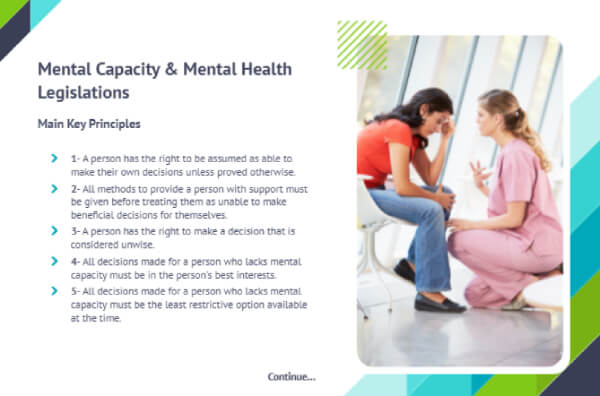
- Main key principlesÂ
- Code of PracticeÂ
- Mental Health Act 1983 amendment 2007Â
- Overview of the ActÂ
- The five overreaching principlesÂ
- The main changes introduced in the 2007
- Mental Health (Care and Treatment) (Scotland) Act 2003 updated in 2015Â
- Overview of the ActÂ
- Millan principlesÂ
- Mental Health (Northern Ireland) Order 1986Â
- Overview of the ActÂ
- Mental Capacity Act (NI) 2016Â
- Overview of the ActÂ
- Principles of the ActÂ
- Mental Health (Discrimination) Act 2013Â
- Overview of the ActÂ
- Drugs Control, Supervision, management & Health Protection LegislationsÂ
- The Controlled Drugs (Supervision of Management and Use) Regulations 2013 (England and Scotland); 2009 amended in 2015 (Northern Ireland) & Regulations 2008 (Wales)Â
- An overview of the RegulationsÂ
- General PrinciplesÂ
- Single Operating Model coversÂ
- The Health Protection (Notification) Regulations 2010 (England)
- Overview of the RegulationsÂ
- The Public Health (Northern Ireland) Act 1967
- Overview of the act
- Public Health (Scotland) Act 2008
- Overview of the actÂ
- The Health Protection (Notification) (Wales) Regulations 2010Â
- Overview of the Regulations
- The Controlled Drugs (Supervision of Management and Use) Regulations 2013 (England and Scotland); 2009 amended in 2015 (Northern Ireland) & Regulations 2008 (Wales)Â
SAVE 84% - OFFER ENDS SOON
£125.00Original price was: £125.00.£20.00Current price is: £20.00. ex Vat- 1 year
- Level 2
- Course Certificate
- 8 hours, 29 minutes Gift this course
Subscribe to this course and 2,000+ top‑rated Training Express courses for your organization.
Try Training Express Business- For teams of 5 or more users
- 2,000+ fresh & in-demand courses
- Learning Engagement tools
- SSO and LMS Integrations
Food Hygiene
Health & Safety
Safeguarding
First Aid
Business Skills
Personal Development