Basic Life Support and CPR

4.7 (7 REVIEWS)
649 STUDENTS

GET THIS COURSE AND 2500+ OTHERS FOR ONLY £49 FIND OUT MORE

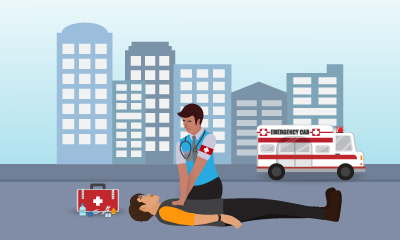
Basic life support skills can help individuals respond quickly and effectively during life-threatening emergencies. Imagine one of your family members grasping for air, and you have no idea what to do. If you don’t want to fall into such a situation, get basic life support training and learn how to manage emergencies. This basic life support and CPR course provides essential knowledge of emergency response procedures, cardiopulmonary resuscitation (CPR), and life-saving interventions that may help support a casualty before professional medical assistance arrives.

This basic life support training covers key topics including CPR awareness, recovery position procedures, cardiac arrest response, emergency assessment, airway management, and AED awareness. It is designed to help learners understand the principles of emergency care and appropriate responses during critical situations.

Along with life-saving skills, the course will provide you with a certificate of achievement. This certificate will elevate your resume and increase your employability in the relevant job market. Enrol now!

This basic life support course helps strengthen your understanding of emergency response procedures used across workplaces, healthcare environments, and everyday situations.. Along with life-saving skills, the course will provide you with a certificate of achievement. This certificate will elevate your resume and increase your employability in the relevant job market.

Last audited and updated on: 1st June 2026
“Basic life-saving skills are more important than ever before. For every minute that passes without treatment, your chance of survival reduces by up to 10%.”

Aero Healthcare UK , Medical equipment supplier.

Sneak Peek

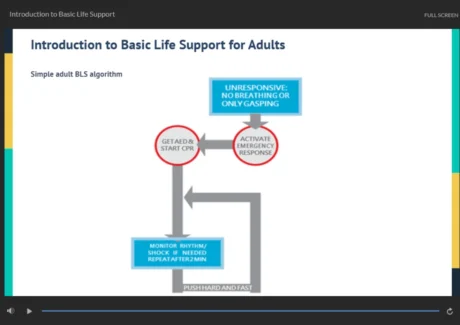
Sneak Peek of Basic Life Support and CPR

Learning Outcomes

By the end of this course, you will be able to:

What is Basic Life Support and CPR?

Basic life support and CPR refers to the emergency procedures used to help someone experiencing a life-threatening condition such as cardiac arrest or loss of breathing. These procedures focus on maintaining circulation, supporting breathing, and helping preserve life until emergency medical assistance arrives.

A basic life support course provides knowledge of CPR procedures, emergency assessment, recovery position techniques, and AED awareness. It helps learners understand how to recognise emergencies and respond appropriately while awaiting professional support.

Who Should Take This Course

Basic life support knowledge can help individuals respond more effectively during medical emergencies and may support safer environments at work, at home, and in public settings. This basic life support and CPR course is suitable for anyone looking to improve their emergency response awareness.

Suitable for:

Why Take This Course

Medical emergencies can happen without warning, and understanding how to respond appropriately can make a significant difference. This basic life support training helps learners develop awareness of CPR procedures, emergency assessment, choking response, and life support principles used in a variety of situations.

This course helps you:

This basic life support course is ideal for learners seeking greater confidence and awareness when responding to emergency situations.

Job Opportunities & Salary Expectations in the UK

Basic life support and CPR knowledge is valued across healthcare, care, education, sports, security, and workplace safety environments. While this course alone may not qualify learners for specialist clinical roles, it can support responsibilities where emergency response awareness is beneficial.

Potential roles include:

Salary levels can vary depending on industry, employer, location, experience, and additional training. Basic life support awareness may also support workplace health and safety responsibilities.

Entry Requirements

Accreditation

All of our courses, including this Basic Life Support and CPR are fully accredited, providing you with up-to-date skills and knowledge and helping you to become more competent and effective in your chosen field.

CPD Accredited

All our courses are CPD accredited, meeting recognised Continuing Professional Development (CPD) standards.

RoSPA Membership

RoSPA membership shows commitment to health and safety and helps organisations maintain strong safety standards and reduce workplace risks.

British Safety Council Member

A British Safety Council Member demonstrates commitment to high health, safety, and wellbeing standards and safer workplaces.

Assessment

At the end of the course, there will be an online assessment, which you will need to pass to complete the course. Answers are marked instantly and automatically, allowing you to know straight away whether you have passed. If you haven’t, there’s no limit on the number of times you can take the final exam. All this is included in the one-time fee you paid for the course itself.

Certification

Once you’ve successfully completed your course, you will immediately be sent a digital certificate. Also, you can have your printed certificate delivered by post (shipping cost £5.99). All of our courses are fully accredited, providing you with up-to-date skills and knowledge and helping you to become more competent and effective in your chosen field.

Certification of Basic Life Support and CPR
Recommended renewal: 3 years.
Our certifications have no expiry dates, but we recommend renewing them to stay up to date with industry best practices.
Course Curriculum

  • Basic Life Support
  • Key steps in BLS
  • Duty of Care
  • Chain of Survival
  • Emotional Stress and Fear of Doing Something Wrong
  • Introduction to Basic Life Support for Adults
  • One Rescuer BLS/CPR for Adults
  • Two-Rescuer BLS/CPR for Adults
  • Adult Mouth-to-Mask and Bag-Mask Ventilation
  • Adult Basic Life Support (BLS) Algorithm
  • Use of the Automated External Defibrillator (AED)
  • BLS Differences for Adults and Children
  • One-rescuer BLS for Children
  • Two-rescuer BLS for Children
  • Pediatric BLS Algorithm
  • Child Ventilation


  • Differences between BLS for Children and Infants
  • One-rescuer BLS for infants
  • Two-rescuer BLS for infants
  • Automated External Defibrillator Infants and Children


  • Starting CPR — Support Circulation 
  • Drowning 
  • Ventilations
  • Full CPR 
  • Use of Oxygen During Resuscitation 
  • Special Circumstances with Resuscitation
  • The Airway Management
  • Mouth-To-Mouth Rescue Breathing
  • Rescue Breathing
  • What is Choking?
  • Choking in an Adult or Child Older than One Year
  • Choking in Infants

  • Head injuries or Concussions 
  • Neck & Back Injuries
  • Ankle and Foot Injuries
  • Fractures 
  • Dislocations
  • Bleeding
  • Heart Attack
  • Stroke
  • Asthma Attack
  • Diabetic Hyperglycemia & Hypoglycemia
  • Seizures 
  • Summary 
  • The Underlying Principles
  • The Three Steps to the Assessment Sequence 
  • Assessing Responsiveness 
  • Recovery Position
  • Log Roll

EFAW Course Reviews

Excellent

4.8 Average 297 Reviews

  Reviews

Sheryl Bailey
📍GB
This course was excellent, easy to follow, well presented and very interesting.
Samantha Okoh
📍GB
I found this course very informative , interesting and i like the multiple choice options for the exam
Eseovwe Osaro
📍GB
It was ever so helpful to inform me of my errors and consequently allowed me to know which topics and subjects i need to focus more on
Barbara
📍GB
Very good course, lots of information included easy to understand and learn

Frequently Asked Questions (FAQs)

What is basic life support?

Basic life support (BLS) refers to the emergency care provided to a person experiencing a life-threatening condition such as cardiac arrest, choking, or breathing difficulties. Basic life support focuses on maintaining circulation, supporting breathing, and preserving life until professional medical help arrives.

What is CPR?

CPR stands for cardiopulmonary resuscitation. It is an emergency procedure that combines chest compressions and rescue breathing to help maintain blood flow and oxygen supply when a person has stopped breathing or their heart has stopped beating.

What is included in basic life support training?

This basic life support training covers CPR procedures, airway management, choking response, AED awareness, casualty assessment, recovery position techniques, medical emergencies, and basic life support procedures for adults, children, and infants.

Why is CPR important?

CPR is important because it can help maintain circulation and oxygen delivery to vital organs during cardiac arrest. Early intervention may improve survival outcomes while emergency medical services are on the way

Does this course cover CPR for adults, children, and infants?

Yes. This basic life support training includes CPR and basic life support procedures for adults, children, and infants. It explains the key differences between age groups, including CPR techniques, ventilation procedures, choking response, and AED awareness, helping learners understand how emergency response may vary depending on the casualty.

When should CPR be used?

CPR may be required when a person is unresponsive and not breathing normally. Recognising these signs quickly and following appropriate emergency procedures can be an important part of basic life support.

What is an AED?

An Automated External Defibrillator (AED) is a device used to help restore a normal heart rhythm during certain cardiac emergencies. AEDs provide voice-guided instructions and are commonly used alongside CPR during cardiac arrest situations.

What is the recovery position?

The recovery position is a technique used to help maintain an open airway in an unconscious person who is breathing normally. It helps reduce the risk of airway obstruction while waiting for emergency assistance.

Can I study CPR training online?

Yes, learners can complete CPR training online and develop an understanding of CPR procedures, basic life support principles, airway management, choking response, and emergency awareness at their own pace.

What will I learn in this Basic Life Support and CPR course?

This course covers the essential principles of basic life support and CPR, including CPR procedures for adults, children, and infants, airway management, choking response, AED awareness, casualty assessment, recovery position techniques, and responding to common medical emergencies such as heart attacks, strokes, asthma attacks, and seizures.

Course Curriculum

Module 01: Introduction to Basic Life Support
Introduction to Basic Life Support 00:23:00
Module 02: Basic Life Support for Adults
Basic Life Support for Adults 00:30:00
Module 03 Basic Life Support for Children
Basic Life Support for Children 00:12:00
Module 04: Basic Life Support for Infants
Basic Life Support for Infants 00:25:00
Module 05: Cardiopulmonary Resuscitation Objectives
Cardiopulmonary Resuscitation Objectives 00:17:00
Module 06: Airway Management
Airway Management 00:18:00
Module 07: Relief of Choking
Relief of Choking 00:17:00
Module 08: Major Injuries
Major Injuries 00:43:00
Module 09: Medical Emergency
Medical Emergency 00:17:00
Module 10: Initial Assessment Objectives
Initial Assessment Objectives 00:12:00
Mock Exam
Mock Exam – Basic Life Support and CPR 00:20:00
Final Exam
Final Exam – Basic Life Support and CPR 00:20:00
Basic Life Support and CPR
ex Vat

SAVE 84% - OFFER ENDS SOON

TAKE THIS COURSE

OR

🔥 83 units sold in last 24 hours
  • Original price was: £125.00.Current price is: £20.00. ex Vat
  • 1 year
  • Course Certificate
  • 4 hours, 14 minutes
  • Gift this course
£20 /Unit Price
Total:
£100.00
Quantity:

Buying more than one of the same courses?

  • 50% discount for orders of 10+ courses
  • 60% discount for orders of 50+ courses
  • 70% discount for orders of 100+ courses

Looking for a more personalised package?

contact us now

Instructors

649 STUDENTS ENROLLED